


Wyoming’s top energy development agency has recommended Gov. Mark Gordon allocate a combined $7.8 million in taxpayer money from the state’s Energy Matching Funds program to Rocky Mountain Power and one of its engineering partners.
The Rocky Mountain Power and 8 Rivers projects slated for funding focus on building engineering designs to determine whether it is technically and economically feasible to retrofit coal-fired power plants with carbon capture to meet a controversial mandate imposed by the Legislature and championed by Gordon.
The Wyoming Energy Authority, which vets Energy Matching Funds applications, has also recommended $4.7 million to HF Sinclair to upgrade and expand a gasoline-production unit at its Parco Refinery in Sinclair.
The agency provides only 10 days for public comment. Comments on the grant recommendations, which can be viewed at this link, can be submitted through Monday via email to wea@wyo.gov.
Wyoming conservation groups have long criticized the state for its coal-carbon capture mandate, as well as utilities for dipping into Wyoming pockets to pay for it.
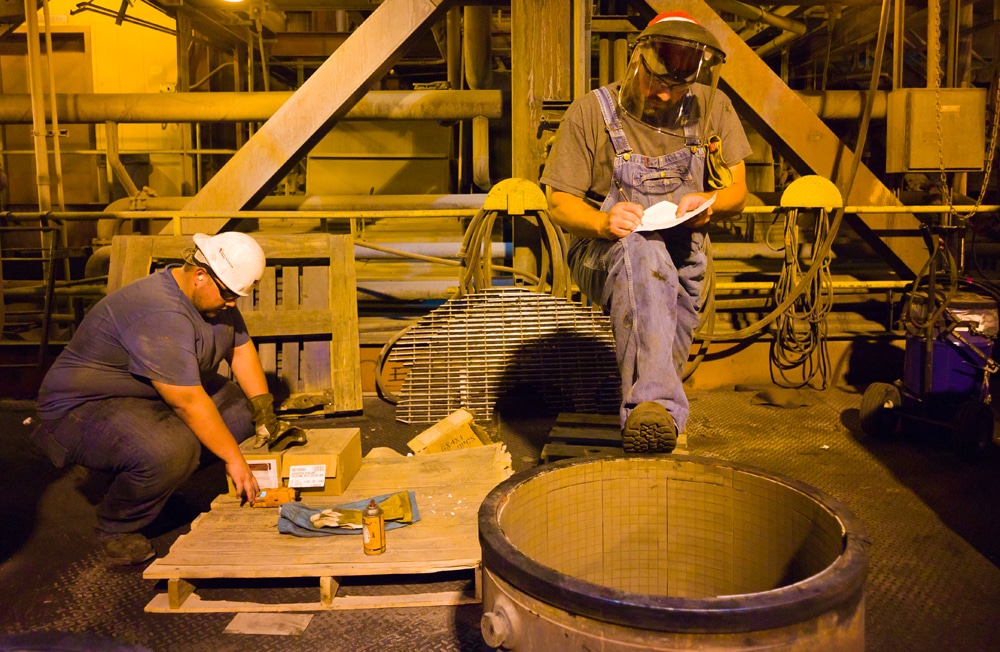
“PacifiCorp is an investor-owned utility backed by some of the wealthiest people in the world, including Warren Buffett,” Sierra Club Wyoming Chapter Director Rob Joyce said of the PacifiCorp/Rocky Mountain Power bid for Energy Matching Funds. “Their proposal to spend over $6 million in Wyoming taxpayer money just to test carbon capture technology at one of their oldest coal plants is dubious at best, especially on their proposed timeline. Wyoming’s dollars could be put to far better use by helping modernize our grid and investing in proven, cost-effective clean energy solutions.”
The Legislature’s far-right faction, the Wyoming Freedom Caucus, has also criticized the policy. Earlier this year, the group attempted to de-fund the Energy Matching Funds program based on the repeatedly debunked claim that human-caused greenhouse gas emissions do not contribute to the climate crisis, and therefore, scrubbing carbon dioxide from Wyoming coal plants is unnecessary.
Carbon capture proposals
Rocky Mountain Power — a division of Buffett’s electric utility giant PacifiCorp — wants $6.3 million for its Jim Bridger Carbon Capture Front-End Engineering Design Study. The effort will help determine the economic and technical feasibility of retrofitting the two remaining coal-burning units at the 50-year-old power plant outside Rock Springs, the utility says.
“The project will include the evaluation of processing the flue gas to achieve pipeline-ready CO2 and the transportation and storage of the CO2,” according to the project’s description. “If the results of the study are positive, there is regulatory support, and adequate partners, the project will proceed to the next phase of development.”

The company hopes to remove 90% “or more” of planet-warming carbon dioxide generated by the two coal-burning units, it said.
Earlier this year, Rocky Mountain Power announced it had signed an agreement with North Carolina-based 8 Rivers and South Korea’s SK Group to analyze the feasibility of applying carbon capture to its Wyodak coal-fired power plant near Gillette and the Dave Johnston coal plant outside Glenrock.
8 Rivers‘ $1.5 million pitch for Energy Matching Funds would support efforts to refine its Allam-Fetvedt Cycle method of capturing carbon dioxide from burning Wyoming coal, according to the company. “The technology captures nearly 100% of the carbon dioxide produced during the energy generation process,” 8 Rivers stated in its application.
Rocky Mountain Power has said it continues to analyze the potential of applying carbon capture technologies to several of its coal-burning power units in the state, despite initial estimates of astronomical costs.
Carbon capture mandate
Wyoming is the only state to force electric utilities to either install carbon capture on existing coal-burning power plants or sell the facilities to a third party willing to do so. The effort is intended to extend the operational life of coal-burning power plants in the state as well as promote the technology to convince coal-burning utilities outside the state to keep buying Wyoming coal.
Wyoming’s coal industry — a pillar of the state’s economy for decades — has been in significant decline since 2016 with grim prospects for the future.
Utilities subject to the mandate may win an exemption if they convince state regulators that full engineering analyses prove carbon capture technically or economically infeasible.
Initial analysis by Black Hills Energy and Rocky Mountain Power — the only two Wyoming utilities subject to the mandate — have suggested it could cost $500 million to beyond $1 billion to retrofit each of the four coal-burning units now subject to Wyoming’s mandate, according to the companies. Those costs would be passed on to their Wyoming ratepayers, who’ve already experienced significant rate hikes in the recent past.
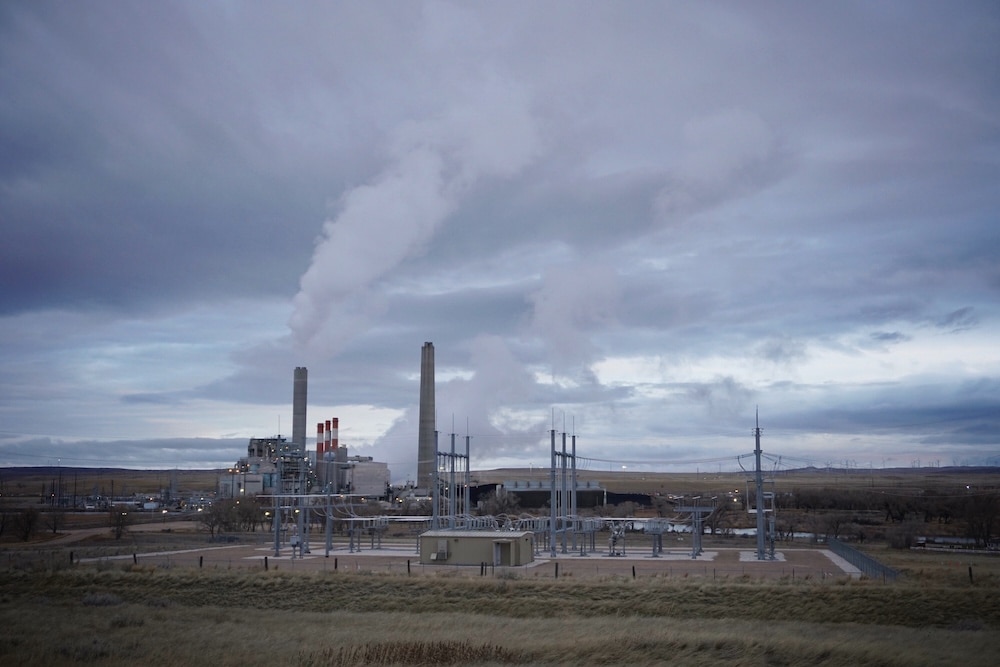
Their Wyoming customers are already paying to cover the cost of the utilities’ ongoing mandated engineering analysis without any guarantees the technology will ultimately be applied to the coal power plants. Black Hills Energy taps its Wyoming customers for an annual $1.1 million “low carbon” surcharge to cover the costs of the mandated feasibility studies, while Rocky Mountain Power customers pay an annual $2 million.
“We’re being asked to pay for unproven research and development-type of projects that, at least at this time, do not show a viable path toward being implemented,” Office of Consumer Advocate Administrator Anthony Ornelas said in opposition to the surcharges in January.
The partnership between 8 Rivers and Rocky Mountain Power is intended to shift a portion of those “upfront” analysis costs to 8 Rivers rather than leave the expense to Rocky Mountain Power to pass on to its ratepayers, according to 8 Rivers Vice President of Public Affairs Jennifer Diggins. And that includes applying for state and federal funds for carbon capture.
“There are so many new mechanisms within the Department of Energy that we’re exploring,” Diggins told WyoFile. “We certainly hope we are able to partner with the federal government on grants because, with these projects that are first-of-a-kind, the way to make them economical is through things like the [Inflation Reduction Act] and then matching state and federal grants.”
The Legislature passed Senate File 42 – Low-carbon reliable energy standards-amendments in March, which moved the compliance deadline for the carbon capture mandate back from 2030 to 2033. It also clarified that Wyoming ratepayers are on the hook for any uncovered costs of analyzing the feasibility of retrofitting coal plants and the cost of construction and operation.
So far, Gordon has approved about $67.5 million in Energy Matching Funds grants, according to state data.


We are slobs, especially industry? Why should taxpayers pay anyone to operate with the best available technology?
Since their inception these companies have shown total disregard for the environment where they operate.
Put science aside. Don’t you think we should all be good neighbors?
Apparently not. Our highways and streets are littered with trash. Many refuse to recycle and think they are entitled to be slobs.
Our numbers and our impacts on the places we live are growing day by day. It will take the efforts of all of us to keep from being buried in our garbage and emissions.
How about a 20 percent income tax on those earning over $200,000 annually? Their kind can afford it.
Mr. Luthi’s comment falsely implies that CCUS will rescue our coal industry. He states, “Simply put, if [Wyoming’s coal-fired power plants] are shut down, so is the coal industry.” Politics aside, I’m afraid there is no substitute for quantitative reasoning. In 2023 Wyoming produced 230 million tons of coal, only 6.1% of which was burned in Wyoming power plants. Is Mr. Luthi pinning his hopes on the coal industry only losing 94% of its market? It gets worse: only 1.9% of the coal produced in Wyoming is burned in power plants deemed by the state to be potential candidates for carbon capture. So less than 2% of Wyoming coal production would be preserved by the proposed CCUS retrofits, and then only until the 12-year tax credits run out.
Mr. Smith: good points for discussion. Wyoming sends coal to over 20 states, which if the EPA rules stick, will need to make the same choices facing Wyoming coal fired plants. Technology developed in Wyoming, such as at the Integrated Test Center, may be incorporated in plants througout the mid-west. Petra Nova works, but there are other technologies, if industry and science has time to implement. As the need for more 24 hour power increases, I believe we can keep fossil fuels in the game.
What a load! That research has been conducted a hundred times in various nations around the world. The results are in. You don’t need millions of dollars to look it up using Google.
Once more Dustin Bleizeffer has wandered into the editorial/opinion space and attempts to portray it as a news story. That is certainly the prerogative of WyoFile to allow the writer to do so, but this article could have been a well-balanced discussion of Wyoming’s energy future. It wasn’t.
Wyoming indeed was the first state to require utilities to evaluate the potential for carbon capture use on coal fired power plants. Why? Wyoming produces more coal than any other state, we are leaders in coal technology. This current federal administration is making every effort to end coal fired power plants. Out of state consumers of Wyoming electricity want lower carbon produced electricity.
Wyoming has about 17 coal fired power units. Simply put, if they are shut down, so is the coal industry. More than 10,000 jobs are connected to the coal industry. How is the federal government forcing the end of coal? Largely through EPA regulations requiring the vast reduction of CO2 emissions.
HB200 identified the standard necessary for companies to qualify for what is known as the 45(q) tax credit; again a federal requirement, not a state created mandate. HB200 requires regulated utilities to evaluate how to produce reliable, reasonably affordable lower carbon energy through carbon capture. At the end of this process, if the utilities find there is not a reasonable way to do so, that is what they will report to the Wyoming Public Service Commission. However, if they don’t evaluate it, Wyoming consumers will never know.
The Legislature limited the increase to customers’ bills for the cost of this evaluation to 2%. To date, utilities have not asked for more than 1%.
The Legislature created the Energy Matching Funds for exactly this purpose. Utilities can evaluate whether there is a market for CO2 and conduct feed studies while not passing all those costs on to consumers. Without the Energy Matching Funds, any federal requirement utilities have to meet will be borne solely by the rate payers.
This approach is consistent with Wyoming spending funds on the Integrated Test Center at the Dry Fork power plant to provide a testing place for new CO2 capture technologies.
Now here’s the kicker. Just yesterday, one of the most conservative Supreme Courts in our history denied Wyoming (along with about 20 other states and industries) a stay on the EPA rule known as the Clean Power Plan Version 2. That means until the lower courts make a decision on the legality of the four or five rules aimed to shut down coal fired power plants, companies and states must assume the rules are valid, and must take steps to meet their requirements. For Wyoming, that means by about 2030, plants will need to decide whether to shut down coal fired plants, switch to gas (which might still require carbon capture) or use carbon capture on coal fired plants. Since most of the coal fired power plants in Wyoming are over 40 years old, if they don’t have accurate information on the feasibility of carbon capture, it is most likely they will shut down.
Now, here is the opinion part of my point. It would be unfair to the people of Gillette, Glenrock, Rock Springs, Wheatland and Kemmerer to fail to do everything we can to keep our industries.
How do you reconcile your statement “Wyoming has about 17 coal fired power units. Simply put, if they are shut down, so is the coal industry. ”
against Mr. Ronn G Smith’s statement “In 2023 Wyoming produced 230 million tons of coal, only 6.1% of which was burned in Wyoming power plants.”
Yes, I don’t mind. I like to breathe.
And on the substance, let’s review the results of Enchant’s proposal for CCS at the San Juan Generating Station: https://www.youtube.com/watch?v=oznVsuGDzOc (for background: https://www.sanjuancitizens.org/energy-transition/enchant-energy-update-2023 ) Interestingly enough Enchant is not mentioned in the 1 page summary of the Jim Bridger project on the WEA website. And yet, this was the big news only a few months ago: https://www.eenews.net/articles/pacificorp-weighs-hiring-ccs-company-with-ties-to-its-ceo/ So. Many. Questions.
Policy choices aside (and there is plenty to say about them), let’s focus on the laughably short comment period offered to the public about these proposals. Similar to past rounds of the Energy Matching Funds, there is barely time for someone to provide comments. Plus, the applications are held as confidential, so all the public gets to see is a summary sheet on the WEA website – hardly enough info to review especially when it comes to the financials and whether the state should take a bet on these projects or not. And btw there is still not a process for responding to comments submitted. Why waste your time saying anything? So, regardless of how you feel about the substance of the projects, the process is not good for anyone and is not designed to inform the state making better decisions, but rather is designed to allow the state to keep making the decisions it was going to make no matter what.
I look upon the sordid politics that created Wyoming’s carbon capture mandate about the same way as the lesson imparted in the Uncle Remus ” Tar Baby ” folk tale. The State is getting inextricably tangled in its own mess – the coal tar and turpentine doll – like B’rer Fox trying to trap B’rer Rabbit but eventually being outsmarted even though the rabbit was trapped willingly. We the Rabbit People need to extricate ourselves from the mess the State tried to fox us with , deceptively. Carbon Capture is tar and turpentine all dolled up for the 19th century.
Wyoming would do a whole lot better investing its energy fortune in something truly beneficial and forward thinking. Maybe using our soverign wealth to incentivize working technologies to recycle wind turbine blades, recycle solar panels, reclaim rare earths from E-waste. Using tax money to prolong dependence on fossil fuels is a double negative.
The entire “Anthropomorphic Climate Change” debate is a “Tar Baby.” A record of 400,000 years of Earth’s atmosphere is preserved in the ice cores at the National Core Facility in Denver. These cores, through direct measurements, show that atmospheric carbon dioxide levels, before the Industrial Revolution was approximately 280 parts per million (That’s 280 thousandths of one percent!). Carbon levels DID begin to rise during the Industrial Revolution. So now our atmosphere contains around 400 parts per million, or 400 thousandths of one percent. Therefore, If one totally ignores the most recent natural warming of the planet that began (again) only14,000 years ago, the maximum increase of carbon dioxide in our atmosphere that can possibly be attributed to human activity comes to 120 parts per million, or 120 thousandths of one percent!!!! That’s infinitesimal. I wish the media at large would report this FACT instead of shilling for the “Climate Crisis” crowd and using labels like “climate deniers.” Studies of ocean cores are not as precise as the data directly derived from the ice cores, but current methodology tells us that atmospheric carbon levels were four to five times higher during the Jurassic Period 200 million years ago. So, we are still experiencing an almost all-time planetary carbon low!!!! A great mass of humanity are wasting their time, money, and life energy on a canard.
Robert you are right on. But point you miss out on? This C02 farce is all about curtailing our freedom to move about freely. It about using fear of extinction to control the mindless puppets. All this legal pot? Grown in greenhouses where they flood the greenhouse to 1000 ppm of CO2. When no humans working inside the C02 is higher. It gets faster plant growth. Odd how no one screams about that. Keep telling the lie often enough people start to believe it. Hillary Clinton quote there folks.
Thanks, Larry. Everything you’ve written is spot-on. Climate change, as a planetary phenomenon, is presently being used as a political weapon wielded by those whose lifestyles will remain unchanged by energy shortages, unlike the lives of those whom they wish to control. (I learned something of actual climate science while working with Lead Scientists for nine years at the former Central Region Headquarters of the U.S. Geological Survey in Denver. I also observed that our National Renewable Energy Laboratory in Golden, CO didn’t accomplish much more than generate a continuous array of very colorful charts and graphs relating the strengths and weakness of known sources of energy.)
So what hinting at is the military and law enforcement will have the hydrocarbons and the civilians will have the bicycle?
RLK – 97 to 99.5 percent of scientists disagree with you. I’m with them. Have been since 1972.
A good starting point : https://en.wikipedia.org/wiki/Scientific_consensus_on_climate_change
That’s a terrible starting point, Dewey! Thermometers useful for scientific purposes have only been around for several hundred years. Direct temperature measurements consistently taken in specific locations around the globe have only been recorded for something less than one hundred fifty years!! That’s not much data for a planet around 4,543,000,000 years old!! This is too complex a subject for this forum, but if one examines charts compiled by geologists who have derived information from ocean cores, one can see that average global temperatures were around 120 degrees F around 250 million years ago. Since you’ve done a quick check using Google “university,” examine these graphs on Wikipedia: https://en.wikipedia.org/wiki/List_of_periods_and_events_in_climate_history You’ll observe that the temperatures we’re experiencing on the planet today are in-line with the planetary temperature cycles that have taken place many times for hundreds of thousands and millions of years ago!