

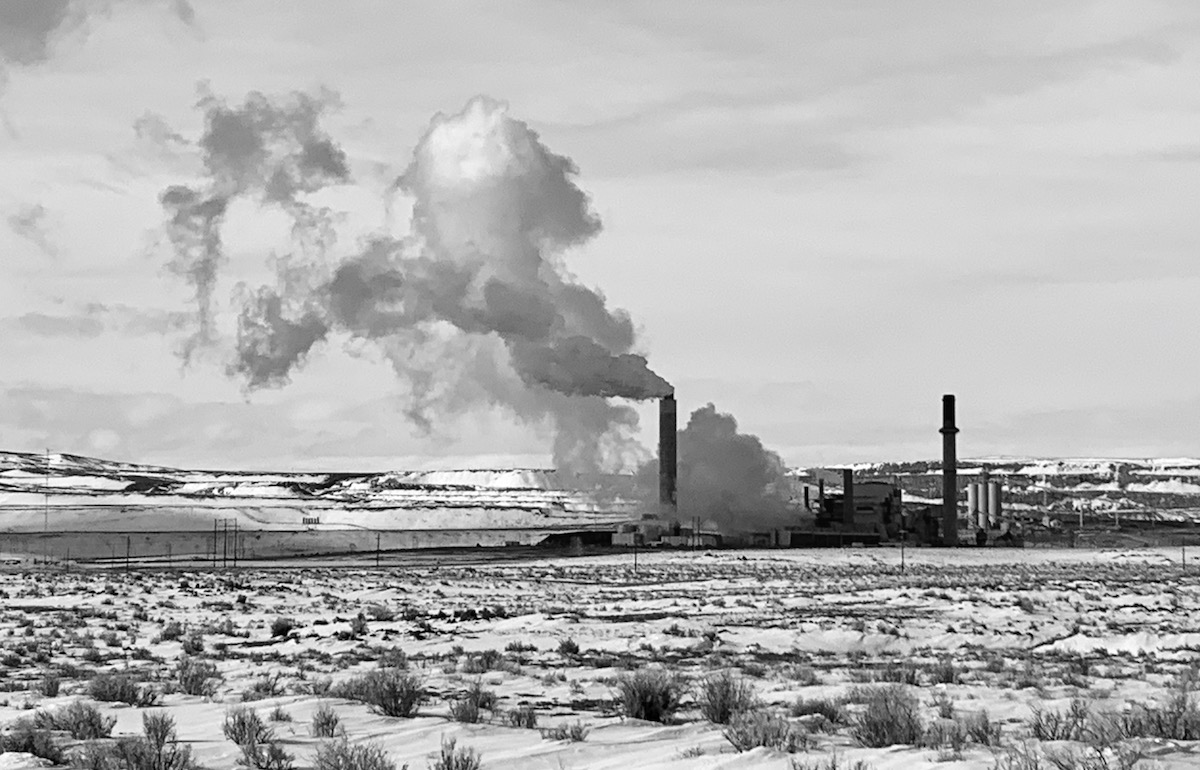
Wyoming electric power provider Black Hills Energy was supposed to file a “final plan” in March for how it will meet a state mandate to retrofit two coal-fired power plants to capture carbon dioxide by 2030.
But the company recently requested a one-year extension, noting that its analysis so far still indicates it can meet 0% of the state’s 80% carbon capture standard, based on available technology and long-enshrined utility regulatory standards of “just and reasonable” rates for customers of monopolistic utilities.
“The research and studies regarding low-carbon energy portfolios, and specifically carbon capture, are quickly developing,” Black Hills Energy attorney Jana Smoot White told the Wyoming Public Service Commission on Thursday. “They’re probably not at a state where we would be comfortable presenting a final plan at the end of next month.”
The three-member commission said it would revisit the company’s request for an extension in about 90 days because the Legislature is currently considering legislation that might change timelines under the mandate. The extension, however, does not apply to Rocky Mountain Power, which operates three coal-fired power units that are also subject to Wyoming’s mandate and must file its “compliance plan” in March — because it didn’t ask for an extension, commissioners said.
Carbon capture mandate reforms
The commission’s move essentially buys enough time to see what happens with Senate File 42 – Low-carbon reliable energy standards-amendments, which passed out of the Senate on Friday on a voice vote and goes to the House for consideration next week.
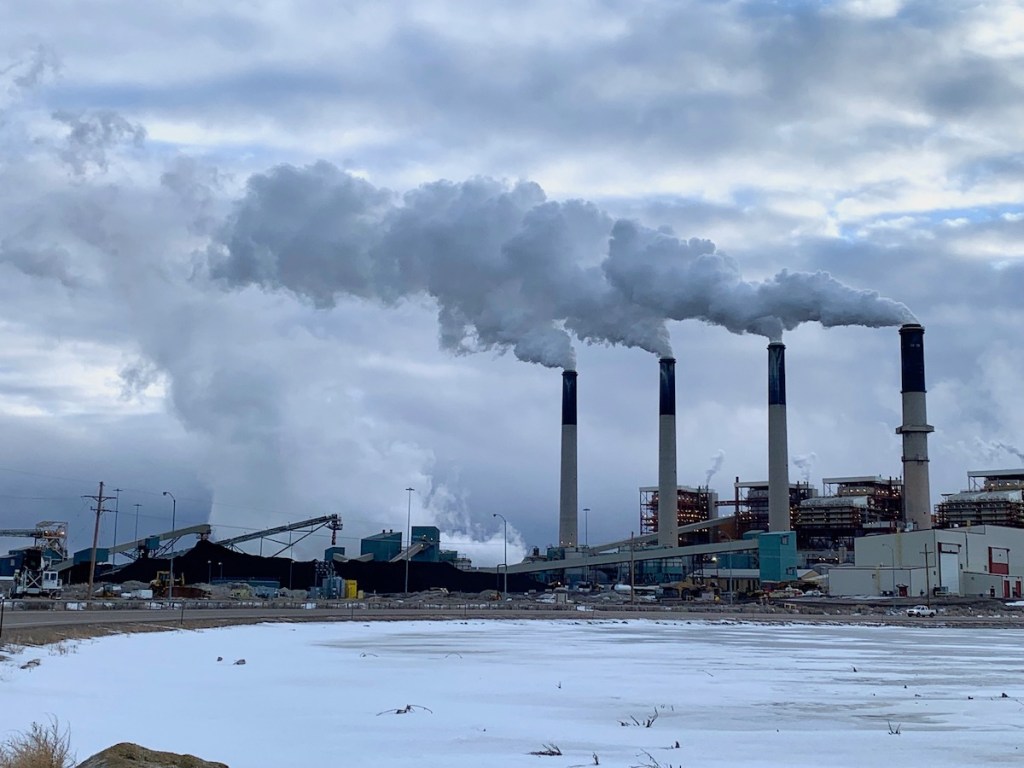
The bill would amend statutes created by House Bill 200 – Reliable and dispatchable low-carbon energy standards, passed in 2020.
Primarily, lawmakers want to push back the deadline for compliance from 2030 to 2033. Proponents say more time is needed to allow the technology to advance further toward economic viability. More time is also needed to attract third-party operators who might assume the business side of the carbon capture, and the potential sale of carbon dioxide, from the utilities that own the coal plants.
Senate File 42 also fixes ambiguous language in existing law regarding how much of the cost of retrofitting coal plants can be passed onto Wyoming ratepayers. It clarifies that the total cost incurred by a utility can be passed on to its ratepayers, but not all at once. The amount the utilities charge annually must stay below the 2% approved “rate base.”
In other words, the more utilities are forced to pay to retrofit coal plants with carbon capture, the more years their ratepayers will foot the bill.
And so far, cost estimates range from $500 million to $1 billion per coal unit, according to filings with the state.
But those estimates should come down over time, according to proponents of the mandate and SF 42. They claim that Black Hills Energy and Rocky Mountain Power haven’t fully considered passing the carbon capture business to a third party, nor have they fully calculated the potential revenue from federal tax credits for capturing carbon dioxide or selling it for “enhanced oil recovery.”
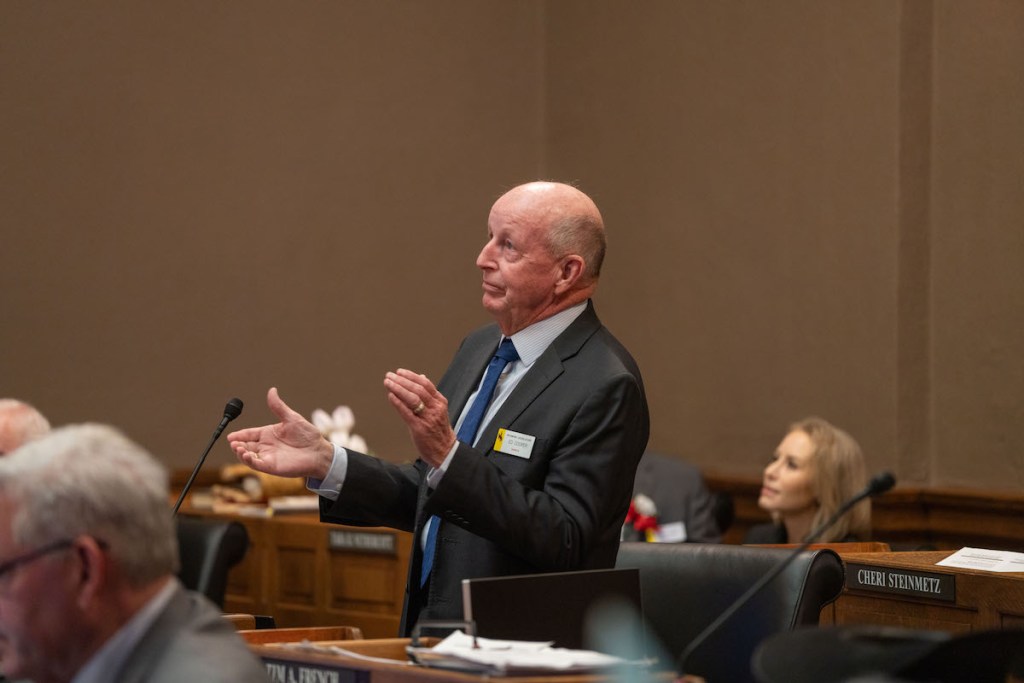
Wyoming, and utilities that operate coal-fired power plants in the state, could reap billions of dollars from federal tax credits, from the sale of carbon dioxide and from extra oil that’s produced from injecting the gas into aging oil fields, said Sen. Ed Cooper (R-Ten Sleep).
“You’re talking 3.5 to 4 years to pay off the carbon capture [retrofit investment] under existing technology,” Cooper told his colleagues Friday on the Senate floor.
Other lawmakers aren’t so sure.
Sen. Chris Rothfuss (D-Laramie) said he had problems with Wyoming’s coal carbon capture mandate all along, even though he supports the desired outcome.
Senate File 42, however, does make the end goal of realizing carbon capture at an existing coal-fired power plant in the state “more plausible,” Rothfuss said.
“I still have concerns, but [SF 42] is [moving] in the right direction.”


Q: What’s worse than Wyoming leadership using Fossil Thinking to keep promoting Fossil Fuels ?
A: using Magical Fossil Thinking.
Wyoming’s offical State-sanctioned fervancy in believing in some enchantment of coal-fired Carbon Capture is a perfect analogy to Medieval alchemy beginning in the 13th century. The alchemists used philosophy and mysticism to finds pathways to miraculous transformations and the creation of panaceas. Alchemists believed they could convert lead into gold; find elixirs that imparted immortaility ; holistically purify the mind body and spirt all at the same time. Alchemy was more art than science ; more cult than culture ; more marketing to the rich by dubious practicioners than salvation for all by altruists.
Then a couple centuries later along came Chemistry , and away went Alchemy. Except here in contemporary Wyoming we are still in the Old World feudal Alchemy era . We persist in trying to turn carbon into gold, even though 500 years of science says that ain’t really gonna happen.
Those who do not learn from history are doomed . Period. Even if they serve in the Wyoming state legislature.
Carbon capture from the burning of coal cannot ever be economical. Can’t even break even. That’s basic physics and thermodynamics: it takes more energy to put the genie back in the bottle than you get from releasing it. We have to admit it: combining carbon with oxygen to produce carbon dioxide is only worth doing, energy-wise and money-wise, if we can release the carbon dioxide. Which means that we must either live with the CO2 that’s released or give up on burning coal. No amount of political posturing can change the science.
That is physical fact. You stated exactly what I was going to.
Yes, and no, Brett. You are correct that separating O₂ and C out of CO₂ takes at least as much energy released during combining (combusting) them. Losses involved will take even more energy (damn thermo). HOWEVER, sequestering it, or using it for EOR, is different than letting the genie out of the bottle. It is more like filling a Pandora’s Box with it and then keeping your fingers crossed it stays put.
That said, the auxiliary (aka, “house”) power and heat energy consumed to operate a typical amine-based process consumes about 10-20% of the generating unit output. THAT makes a difference in the cost of power actually SOLD from a generating unit. You have less power to sell, because so much power (and heat) is consumed by the process, PLUS you gotta pay the mortgage on the capital costs of the new “muffler”, AND pay to operate it and maintain that “muffler”.
Saskatchewan Power has that experience, in spades, and it ain’t good, IMO.
Unless some alternative CO₂ removal process arises that uses far less energy (and capital costs) to perform, I don’t see the current path being taken as successful.