

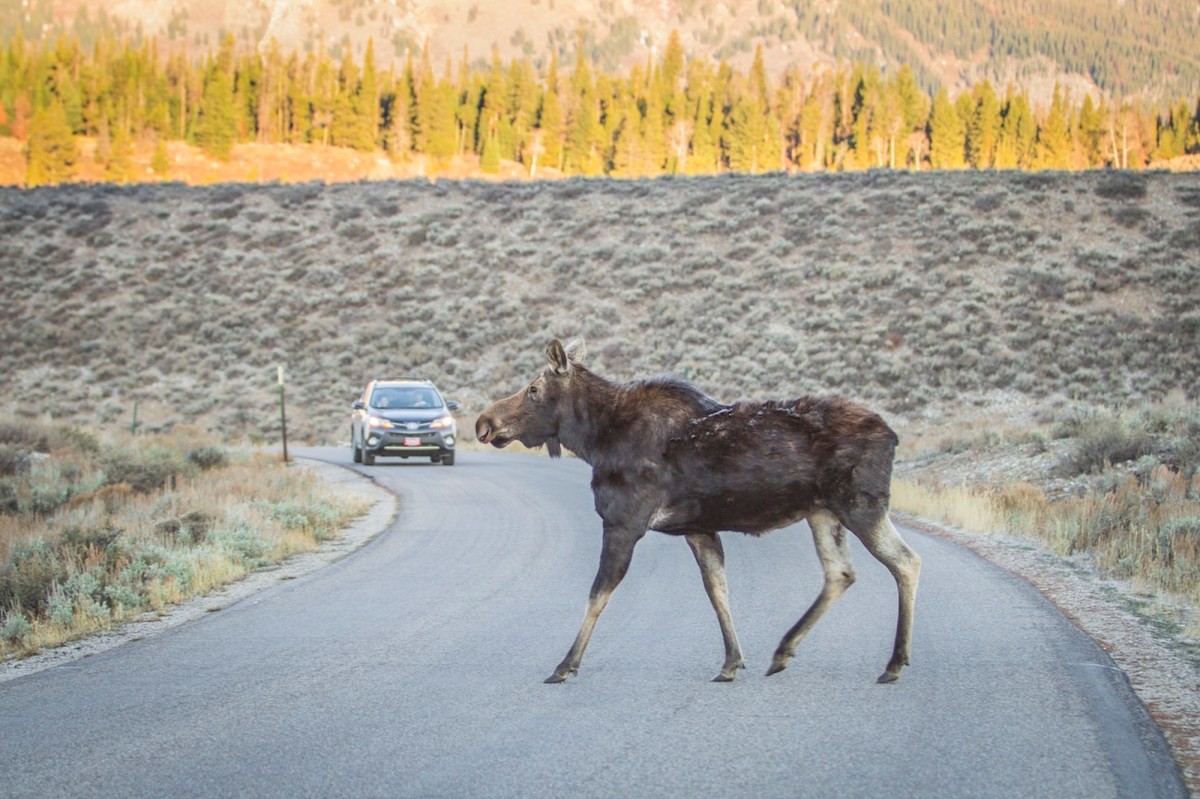
Teton County officials are unhappy with the Trump administration’s reversal of a 2016 management plan directive that paves the way for a pathway in a wildlife-rich Grand Teton National Park corridor.
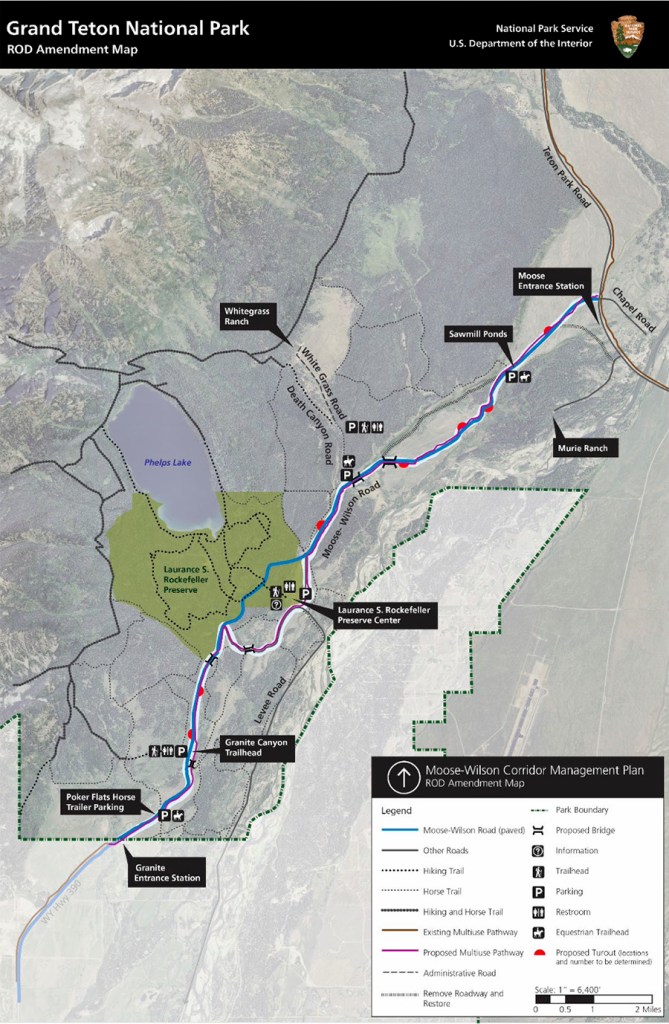
The board of county commissioners approved a letter Monday to Interior Secretary Doug Burgum underscoring the body’s dismay at being excluded from the process that resulted in an August amendment to a 2016 management plan. The amendment calls for construction of a multi-use pathway along roughly 7 miles of the Moose-Wilson Road in the park.
“We ask the Department to reconsider the corridor-length pathway decision and include Teton County’s input as a cooperating agency before proceeding,” the letter states.
The letter signifies a win for Friends of the Moose-Wilson Corridor. The volunteer group reformed this year in explicit response to the pathway’s revival. The Friends organization previously opposed the pathway during the public process that resulted in the 2016 Moose-Wilson Corridor Comprehensive Management Plan record of decision.
“We remain hopeful that the NPS will be allowed to press pause on this destructive project and seek other ways to manage visitation in the Moose-Wilson Corridor in Grand Teton National Park,” group member Joan Anzelmo told WyoFile in an email.
Teton area residents are not uniformly against the pathway’s revival. Transportation advocate Tim Young, who has long championed the pathway as an important safety upgrade for the congested corridor, told WyoFile he thought the development was “outstanding.”
A road much-traveled
The road is the main artery through what’s known as the Moose-Wilson Corridor — a swath of roughly 10,300 acres that provides access to destinations like the Death Canyon trailhead, Laurance S. Rockefeller Preserve and Murie Ranch historic district.
Located between Teton Village and park destinations, it’s a major starting point for visitors eager to spot wildlife, including bears and moose. Area locals also use it as a shortcut to bypass the town of Jackson, and it’s popular with cyclists.
In 2016, the park service estimated that roughly 400,000 visitors traveled the Moose-Wilson corridor annually. The narrow roadway is closed to RVs and mostly signed for 25 miles per hour.
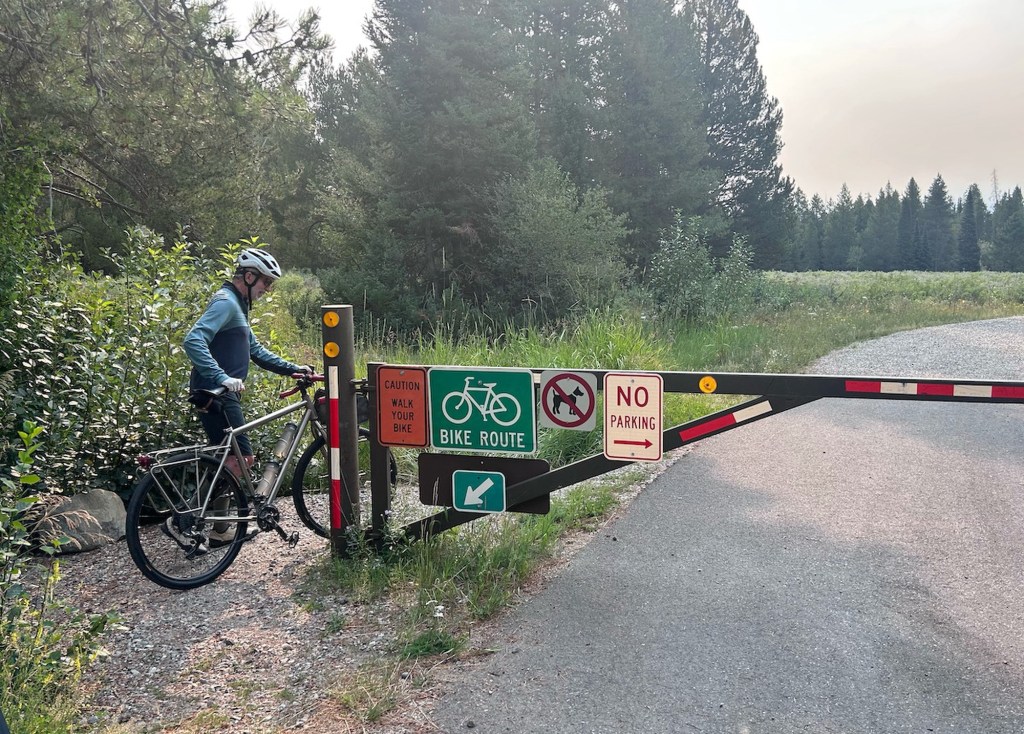
In the late 2000s, Young led an effort to develop an extensive network of bike pathways around Jackson — including Moose to Jenny Lake and Jackson to Moose. His advocacy followed high-profile cycling deaths.
In 2013, the National Park Service initiated the Moose-Wilson Corridor Comprehensive Management Plan process, proposing four ways, or alternatives, to manage the corridor. During the ensuing public process, stakeholders litigated the concept of a separate pathway. Advocates argued that it would create safer access to the park for the vehicles and bikes traveling the winding roadway at various speeds, while opponents claimed a pathway would unduly harm the corridor’s rich wildlife habitat and archaeological sites.
In its 2016 record of decision, the park service selected alternative C, which generally restricted development within the corridor to the existing footprint. Notably left out of that alternative was the separate pathway proposal.
“The emphasis of the selected action is to balance preservation and public use and enjoyment by exemplifying conservation legacies within the corridor,” the agency’s record of decision read.
When the federal agency announced in June that it was revisiting the pathway portion of the 2016 decision, it cited a 2025 executive order that “calls for improving visitor services, enhancing access, and reviewing policies that may unnecessarily restrict recreation in national parks.” Recreational opportunities, newly stipulated by President Donald Trump’s order, were not considered during the previous scoping process, the draft stated.
The park service identified additional scoping work related in part to pathway construction and opened a 15-day public comment period.
With the amendment calling for the path’s construction in August, the park service reopened those old rifts over its obligation to balance multiple concerns, including wildlife protection, archeological preservation, recreation and safe visitor access.
Not so fast
Anzelmo, who worked for the park service for 35 years, was dismayed when she heard of the plan’s amendment. Friends of the Moose-Wilson Corridor had already participated in a robust public process, arguing that a separate paved pathway would damage rich wildlife habitat at a ridiculous cost to taxpayers, she said.
The Friends group supports bike paths in certain places, Anzelmo said. “But there are places in national parks that are not appropriate or compatible with bike paths, most especially in grizzly bear habitat.”
Of particular concern to the group was the absence of a supplemental environmental impact statement or meaningful public involvement in the new reversal.


In the wake of the amendment, the Friends group reorganized and began its campaign anew, teaming up with the Jackson Hole Conservation Alliance and lobbying local, state and federal officials in an attempt to slow the process. That included the Teton County Board of Commissioners.
In the letter it approved Monday, the board asked the Interior Department to “conduct further analysis of alternatives that support recreational access other than a separate pathway” and requested that it and other local stakeholders be engaged in the process as cooperating agencies.

In addition to this proposed pathway harming wildlife and archeology sites, this area is also used heavily by horseback riders. The Park recognized this recreational use and spent millions in the last couple of years to build horse trailer parking near the southern entrance to enhance horseback riding in this corridor. Why they think adding bicycle to the same trails as horseback riders is a good idea, I can only imagine. Unfortunately, bicyclists currently bypass the Park’s warnings to stay off the horse trails and create dangerous conflicts. Horses and bicycles just don’t get along. You can imagine if more bicycles roam this area even more conflicts will develop. Bicycles are currently allowed on Moose-Wilson Road, so recreational opportunities already exist. This road, however is windy and hilly and is currently posted by the Park to be advanced bicycle riding. The separate bicycle path will create a safer experience, but to what extent of destruction of trees, wildlife resources and archeological sites for the reported benefit on only 3% of this road’s users.
Unfortunately this article and the letter Teton County sent to Doug Burgum both fail to mention that the amendment to the Record of Decision for the Moose-Wilson Corridor Comprehensive Management Plan includes not one, but two projects: (1) construction of a separated multiuse pathway along the corridor and (2) realignment and restoration of a 1.3 mile segment of Moose-Wilson Road between Sawmill Ponds and Death Canyon Road.
According to the Record of Decision, removing the old road will restore wetland functions, improve habitat connectivity and provide forage and habitat for black and grizzly bears. It will also reduce bears’ exposure to vehicle disturbance and possible collisions.
The separated pathway will give people of all ages and abilities a safe place to walk and bike between Moose and the Granite Canyon Entrance. Today, cyclists must share the narrow road with vehicles.
Together, the road relocation, wetland restoration and separated pathway represent a major improvement to the Moose-Wilson Corridor.
There is real irony in opposing a low-impact travel option in the name of conservation while defending a road-centered status quo that exposes wildlife – and people – to vehicle disturbance and collisions.
… Speaking of places to start – read the press release from August 17, 2026 here: https://www.nps.gov/grte/learn/news/record-of-decision-amendment-signed-for-moose-wilson-road.htm
This story unfortunately presents the false premise that Moose-Wilson Corridor planning started with the 2016 EIS, and even worse, the notion that misguided effort was somehow a good plan.
The story needs to begin with the National Park Service 2001-2007 Grand Teton National Park Transportation Plan EIS process, which approved a park pathway system, including one along the Moose-Wilson Road, and the decision to move the MW road out of the wetland section it damages. It also included a forward-looking plan to study ways transit options could benefit park visitors.
During that initial process, Teton County fully supported a robust pathway system in Grand Teton National Park, including the Moose-Wilson Road, as did the Governor and WY Delegation. An independent analysis by NPCA of all public comments showed over 90% favored a significant pathway system in Grand Teton National Park.
By contrast, the Moose-Wilson Road 2016 EIS was a highly flawed process, rigged from the start with the intent to walk back certain aspects of the long-studied and approved NPS 2007 EIS. Some individuals in the Park Service despised that progressive plan, especially the pathways, and especially the Moose-Wilson Pathway. The former Park Superintendent, supported by former Park Spokeswoman Joan Anzelmo, heavily pushed an anti-pathway narrative that included a highly overblown claim of damage to cultural resources, and exaggerated claims of severe impacts to wildlife. The NPS then eliminated the approved pathway, and to top it off, decided to keep the road where it goes right though the wetland, which continues to impact 70 acres of the best habitat along the corridor, just so visitors can create traffic jams trying to see moose and bears right out the car window. Separately, the park also killed the notion of adding any park transit options.
Of note, during the scoping process in 2014, Teton County fully supported the pathway, and actually met with the NPS Director twice to press for a complete pathway along Moose-Wilson, along with moving the road out of the wetland, and to begin looking at small scale transit to help ease the crush of motor vehicles on wildlife and park resources.
Also in 2014, the Wyoming Legislature approved and the Governor signed Joint Resolution HJ0005 (House 58-1, Senate 28-2), to the Secretary of the Interior, the Director of the National Park Service, and the Superintendent of Grand Teton National Park, which strongly supported the Moose-Wilson Pathway.
Positions can and do change with better understanding of the full story, and I hope the Teton County Commissioners reconsider this and renew their support to both a complete pathway for people biking and walking, and to engage in travel and transit planning necessary to create better options for visitors than adding even more cars to the mile long line of parked motor vehicles at Jenny Lake.
It should have been left a gravel road to begin with.
The sooner trump is gone the better off this country will be.