
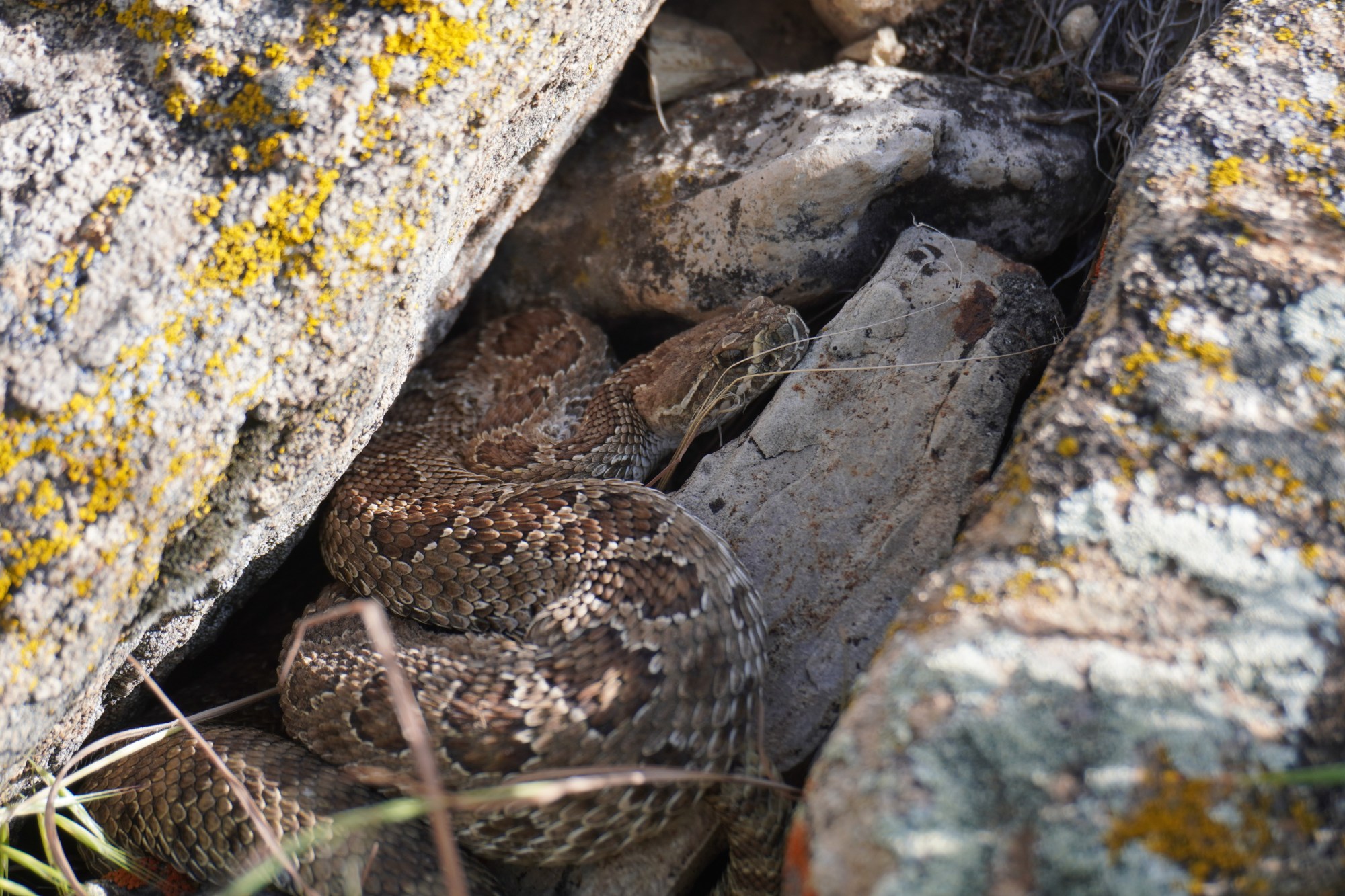

Sinks Canyon State Park Superintendent Jessica Moore was responding to a call that she’s quite familiar with — a snake was on the trail — when WyoFile rang on Tuesday, incidentally to inquire about rattlesnakes.
A colleague’s call had alerted Moore “that we need the bucket,” without specifying why. But she knew the drill.
“We want to make sure, in case guests are overhearing, that they’re not going to the location where the snake is,” Moore recounted from her office a couple hours later.
In what’s a routine operation at Sinks Canyon State Park, seasonal staffer Conner Gregory gently seized the venomous viper with a dedicated snake grabber along the trail leading to where the Popo Agie River goes subterranean. The snake in his grip looked to be about 8 years old, based on the beads on its rattle. It was pretty chill.
“It didn’t actually start to rattle,” Moore said, “until we were putting it into the bucket.”
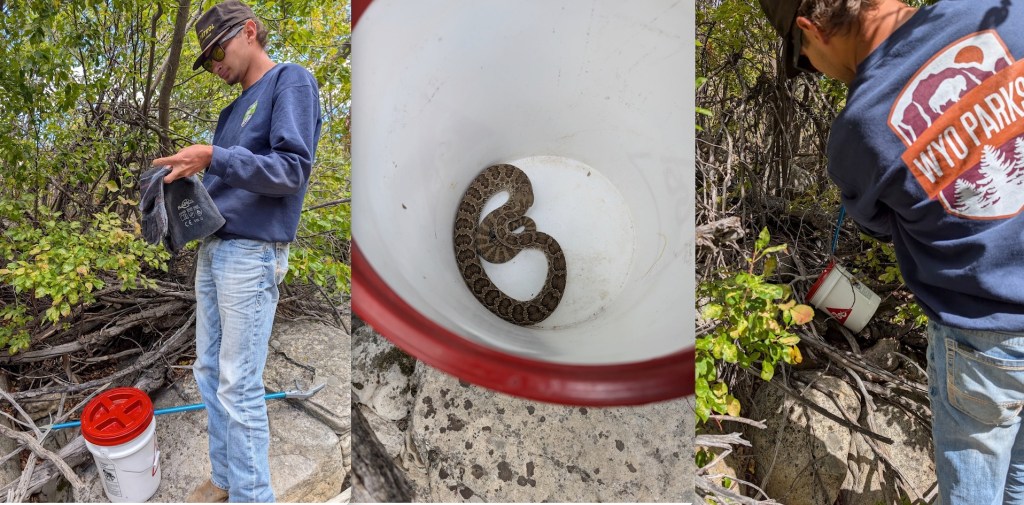
It was a low-drama affair, even with a handful of intrigued park tourists watching. The snake-moving crew carried the rattler a stone’s throw away from the trail, set it free and that was that.
A couple years earlier, the snake would have been given a ride to the higher-elevation west end of Sinks Canyon State Park. But for the snake’s own well-being, they’re now moved much shorter distances.
“That procedure has changed based on the research that Emily’s provided for us,” Moore said.
Emily is Emily Martin, a Ph.D. candidate at the University of Idaho’s College of Natural Resources Idaho Cooperative Fish and Wildlife Research Unit. She just completed three years of field research on prairie rattlesnakes in Sinks Canyon, one of the more likely places to see a rattlesnake. Yet, little was understood about the population, which numbers in the hundreds.
“No one had done any research in Sinks Canyon before,” Martin said.
Moore encouraged Martin to dig in, and she did. For the next three years, the biologist visited the state park regularly searching for and capturing rattlers. Early on, she realized the snakes of Sinks have their quirks.
“In a lot of places in Wyoming, you get these big dens where you’ve got hundreds of snakes,” Martin said. “In Sinks Canyon, they don’t really do that. It very much seems that they’re hibernating singly, or in very, very small groups, which is really unusual.”
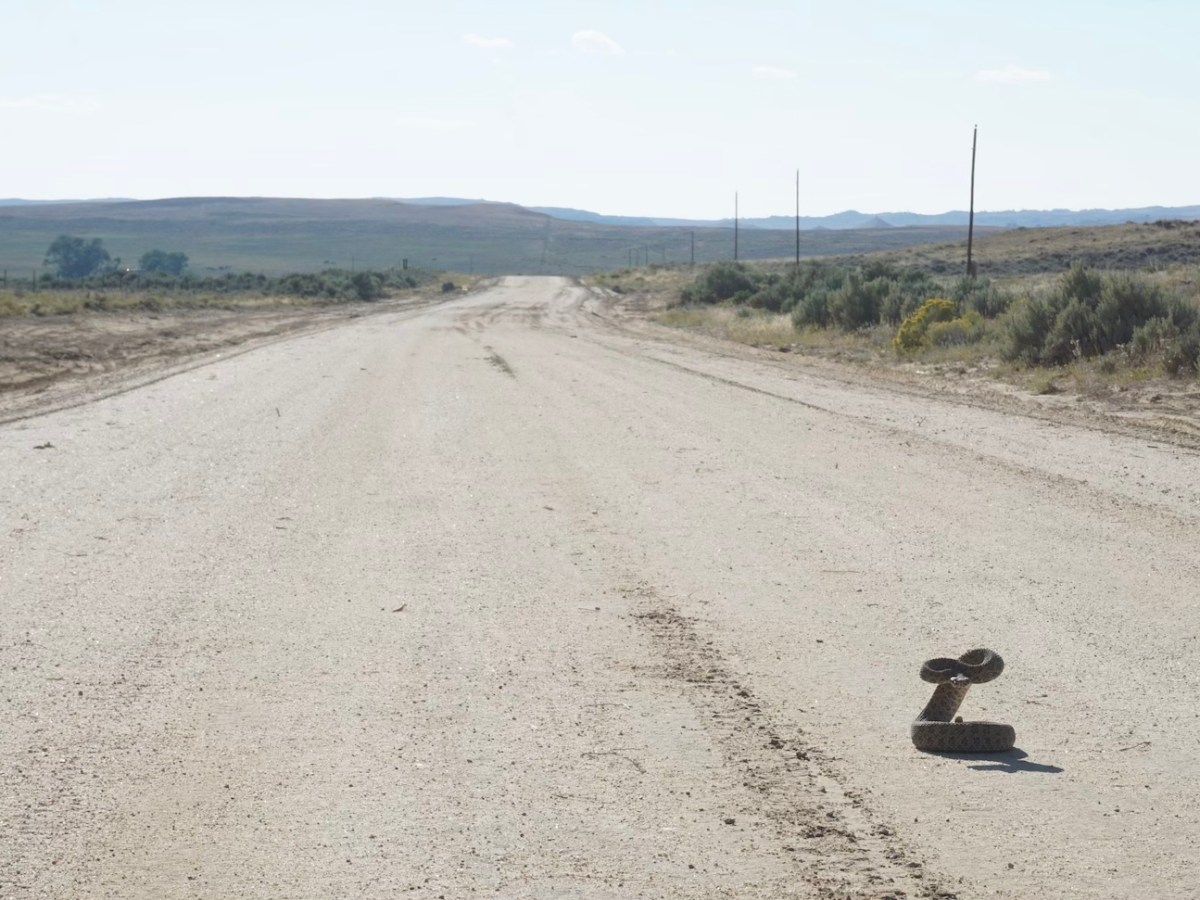
That wasn’t the only atypical behavior. Rattlesnakes are renowned for providing some level of maternal care.
“A rattlesnake will have her babies, and then often babies will hang out with mom until they have their first shed,” Martin said. “I never observed that in Sinks, which I thought was really odd.”
Even in the immediately adjacent Sawmill Creek drainage, she said, communal dens and mothering behavior were much more common. From a research standpoint, the quirks were initially challenging.
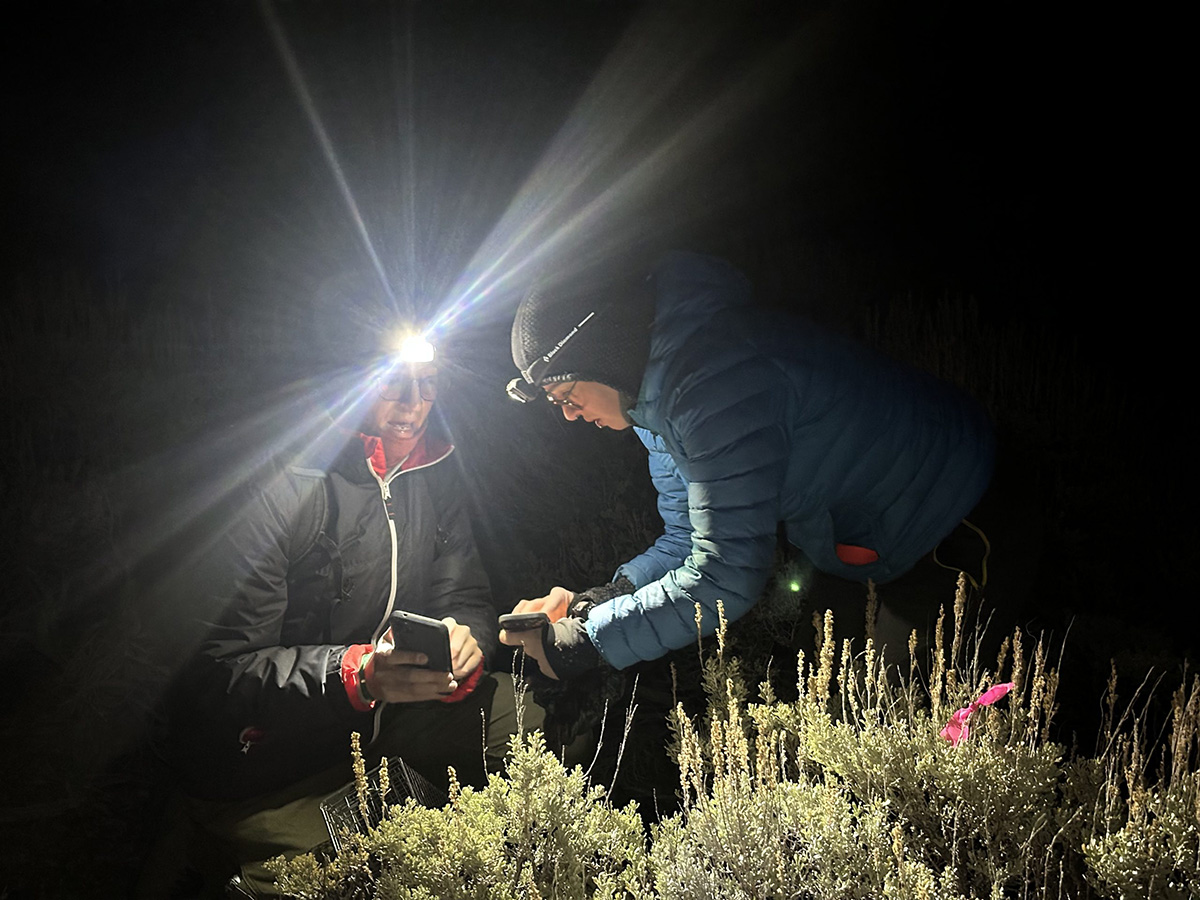
“I worked on rattlesnakes in California, and was used to being able to walk up to a den and sample 20 or 30 snakes,” Martin said. “Whereas at Sinks, I’m out there 10 hours a day for six months and I catch 100 snakes, which is pretty low return.”
That’s not to say there are few snakes in Sinks. They’re everywhere, but just dispersed around the landscape, she said. Martin encountered rattlesnakes basking in the snow, and coiled up in pine needles. A few snakes even hibernated in the talus on the shady, north-facing side of the canyon, which isn’t typically thought of as good habitat.
“I have no idea what they’re doing up there,” Martin said. “But it seems to be working for them.”
Moore, the park superintendent, confirmed that the snakes of Sinks are just about everywhere. Early this summer, which brought record-breaking heat, the park was fielding a lot of calls about snakes along trails that cut through the timbered slopes along the south side of the canyon.
“We were speculating: Is it because it was so hot that they were using more of that shady side?” Moore said.
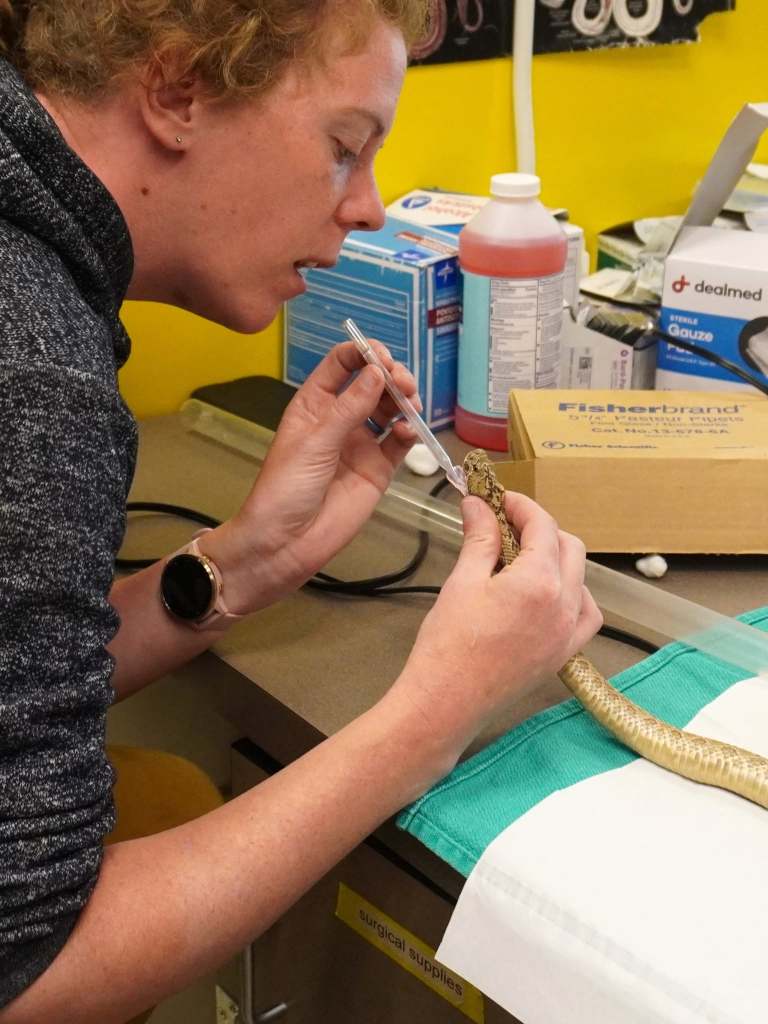
Martin’s study also provided some clues about exactly what the Sinks serpents were up to. Although their reptilian body shape doesn’t lend itself well to exterior tracking equipment, researchers are able to embed transmitters into snakes’ body cavities using a minor surgery.
“It actually sits underneath the rib cage,” Martin said. “I suture it to a rib, and then the antenna runs subcutaneously, just under the skin along the body wall.”
During field seasons from 2024 to 2026, she implanted 31 Sinks Canyon prairie rattlesnakes with the transmitters. It was through this research that Martin learned that snakes particularly struggled when state park workers moved them long distances.
“We found that they had decreased survival,” she said. “They weren’t doing well.”
Specifically, she found that three of the 11 translocated snakes died over the months and years ahead. Comparatively, only three of the 20 snakes that didn’t get moved died in the months ahead.
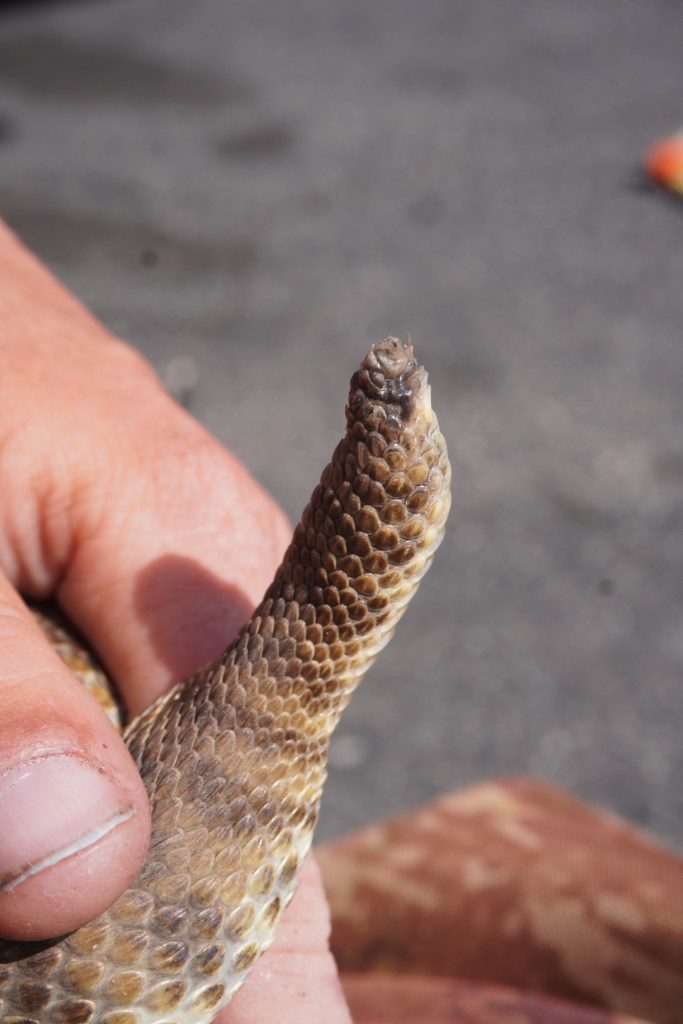
Over the course of the study, Martin also picked up some other oddities about the snakes of Sinks. About 3% she encountered didn’t have rattles. Although other studies have investigated rattleless rattlesnakes, the cause of the trait in Fremont County snakes seems to be different.
“We found that it was associated with skeletal and reproductive abnormalities,” Martin said, “which is not something that’s been reported before.”
An academic paper about those rattleless rattlers is in the works, and Martin’s aiming to publish it in the Herpetological Review. That’s not the only part of her research that she’s pushed through the peer-review process. This spring, the University of Idaho scientists published a research article about Sinks Canyon snakes’ proclivity to aggregate when they’re shedding their skins.
“To my knowledge, it’s the first observation of shedding aggregations in prairie rattlesnakes, so that was exciting,” Martin said.
An average of 2.4 snakes gathered together during periods of skin shedding, but a handful amassed during the largest groupings. Sometimes groups were all females, other times there were bisexual aggregations.
Why they gather when they slough their skin remains a bit of a mystery, Martin said.
“As with a lot of science,” she said, “I think we’re not totally sure what they’re up to.”
One behavior that the Sinks Canyon research did not document among the rattlers: conflict with people and their pets. Only one of the study subjects got into trouble.
“I had one that we translocated after a dry bite to a dog,” she said. “She was set up under a picnic table, and unfortunately somebody had their little dog on a leash, and the dog came in and got tagged in the face. But luckily, the snake elected not to use any venom.”
That fits with Moore’s experience managing a heavily recreated square-mile state park that’s squarely in dense prairie rattlesnake habitat. She’s only been aware of the one dog bite in four years, and hasn’t heard of a human being struck.
“There are hundreds of rattlesnakes here in Sinks Canyon, and we see a couple dozen a year,” Moore said. “That speaks to the fact that we can all share this space, and for the most part, the snakes don’t really want to interact with people.”
Presenting her research at the Saving Yellowstone conference hosted by billionaire Bondurant resident Joe Ricketts last month, Martin made her case for the value and importance of rattlesnakes. They help protect native vegetation from rodents, she said, and provide a food source for small carnivores and raptors.
“I think more importantly, rattlesnakes are emblematic of the things we really value about nature, about wild spaces like the Greater Yellowstone,” Martin said. “The strong feelings that rattlesnakes inspire, including fear for some people, is a good reminder of what we value about nature as a society.”

Nicely dine Mike! Thanks for providing community with important info for both safety and ecological significance.