

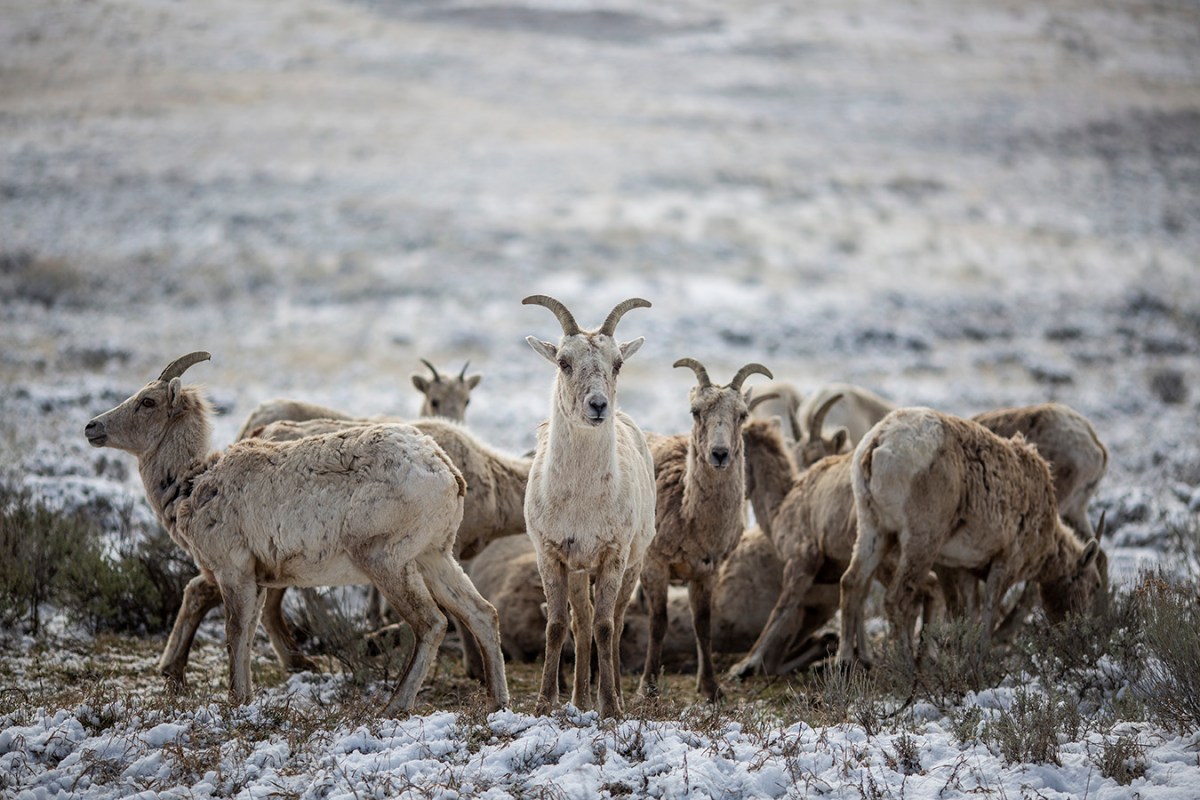
A coalition of federal land livestock grazing lessees, trophy hunters and Wyoming politicians is drafting federal legislation aimed at limiting when and how federal agencies can modify livestock grazing permits. The proposed changes would hurt efforts to protect bighorn sheep from lethal disease transmission.
Opinion
Domestic sheep contact with bighorn sheep can trigger pneumonia outbreaks in the native bighorns. The current protections mitigate the threat of massive bighorn sheep die-offs.
By mandating federal compliance with the Wyoming Statewide Bighorn Sheep/Domestic Sheep Interaction Working Group plan, the draft language transfers effective decision-making authority over bighorn sheep conservation on federal public lands to a state plan designed to accommodate existing livestock grazing. This would restrict federal agencies’ discretion to adjust grazing permits or allotment management to address bighorn sheep’s presence and would preempt future bighorn reintroduction efforts on federal public lands. It specifies that federal agencies are “precluded from imposing or implementing policies, rules, or regulations that modify land use plans, allotment management plans, livestock grazing permits and leases, or other grazing terms and conditions due to the presence of bighorn sheep in areas other than those designated as Core Native Herds.”
The geographic scope of “Core Native Herds” is narrow, meaning these prohibitions on federal management would apply broadly. The four core bighorn sheep herds that would still merit federal consideration under the new legislation are in northwest Wyoming within the Absaroka, Teton, Gros Ventre and Wind River mountain ranges. Bighorn sheep herds outside those areas would be significantly less protected under the draft federal restriction. Those “non-core” herds include smaller populations in the Snowy, Sierra Madre, Laramie and Wyoming ranges, as well as the Seminoe and Ferris mountains, the southern end of the Wind River Mountains, the west slope of the Bighorn Mountains, the Black Hills and Wind River Canyon. The Seminoe bighorn sheep herd is currently at risk from the $3-5 billion Seminoe pumped storage water project on the Seminoe Reservoir, proposed in their habitat.
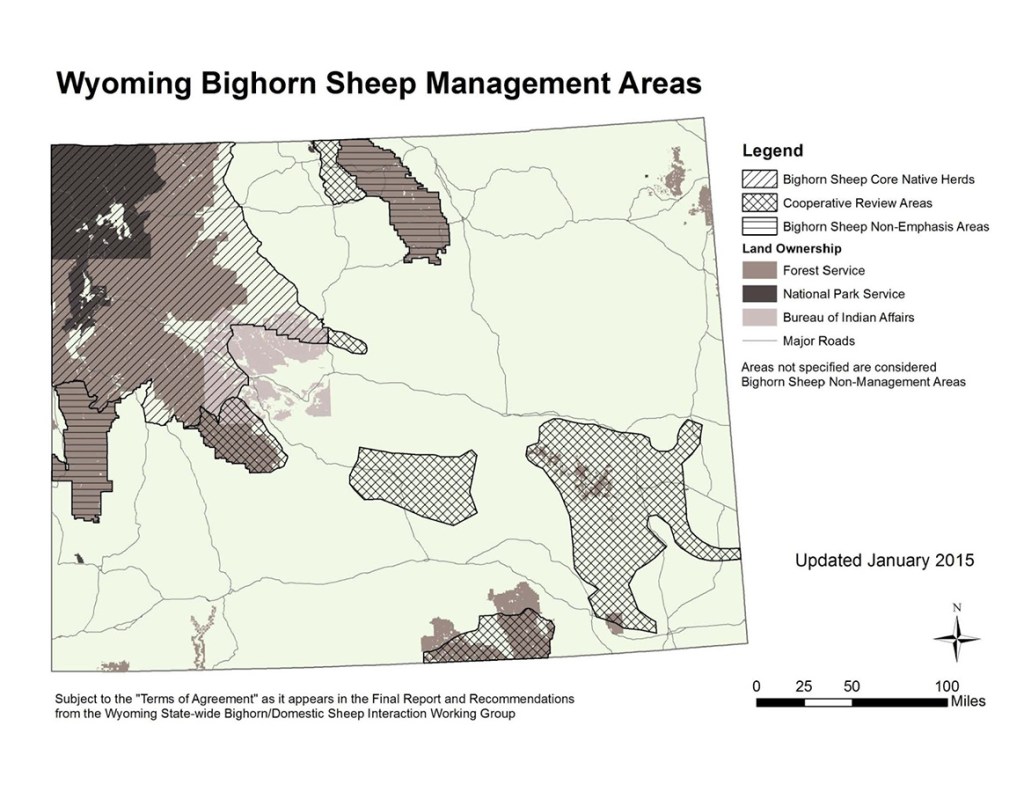
The proposed restriction would limit the tools that agencies have to reduce the likelihood of contact between domestic sheep and bighorns, including retiring domestic sheep allotments, converting domestic sheep allotments to cattle, adjusting seasons of use, closing or re-routing trailing routes, and establishing spatial separation buffers. These tools are rarely used in Wyoming under current agency practice, but restricting them further with federal law ties the hands of federal workers and hobbles their management of public lands.
Domestic sheep transmit respiratory pathogens that can trigger pneumonia outbreaks in the native bighorns, resulting in widespread die-offs, lingering issues with lamb deaths, and prolonged population suppression. When proximity between domestic and bighorn sheep is suspected, the Wyoming Game and Fish Department has historically lethally removed bighorn sheep. The draft language also raises questions about how federal agencies could respond to updated science, new risk-of-contact analyses or revised regional guidance (including work associated with western wildlife health coordination efforts) outside the defined core areas.
Game and Fish leadership has reportedly acknowledged the paramount importance of the pathogen issue, noting that if effective methods for treating, controlling or eradicating key pathogens were available at scale, many of the current conflicts would diminish. The department’s leadership has also indicated that the expertise needed to make progress on pathogen control is not concentrated within the 50-member Wyoming Statewide Bighorn Sheep/Domestic Sheep Interaction Working Group — a revelation that suggests a more accurate group name of “State Control of Bighorn Sheep in Deference to Livestock Grazing Permittees on Federal Land Group.” Participants in the working group report that U.S. Rep. Harriet Hageman has been briefed and is preparing to introduce the bill once the language is finalized.
Given the scope of the proposed federal restriction and its serious implications for the state’s bighorn sheep herds, the draft language and supporting materials warrant public examination. At minimum, that means releasing unredacted draft language to the public, clearly identifying participants and meetings, and providing an opportunity for public and scientific scrutiny before any bill is introduced.

Hey PUBLIC land owners. Do you want Bighorn sheep or range maggots on OUR lands?
This opinion makes it sound like the entire 50 person group is comprised solely of ranchers, trophy hunters, and politicians. Nobody else. I can’t believe this is true. Surely WYGF biologists and other groups are represented?!?
It also states that WYGF indicated that pathogen expertise is “not concentrated” within the working group. What the heck does “not concentrated” mean?
To me, it means that these environmental groups cry wolf so often that I don’t know if this is a legitimate concern.
Some research shows it looks like it also includes the Wyoming Wild Sheep Foundation, Wyoming Wildlife and Natural Resources Trust, National Wild Sheep Foundation, biologists from WYGF, evidently Wyoming Wildlife Federation based on someone else’s previous comment, and other conservation groups as well.
I wonder what they think of Western Watersheds referring to them as the “State Control of Bighorn Sheep in Deference to Livestock Grazing Permittees on Federal Land Group.”
Why would the trophy hunters be part of this coalition? I don’t like trophy hunting, or any hunting for that matter but especially trophy hunting, but I don’t understand why they would push for more livestock instead of more trophy animals to kill.
I am speaking out as a resident hunter against any new legislation drawn up and introduced that would threaten the existing big horn sheep population in the state. The existing plan works to prevent the spread of disease in our bighorn sheep population and was drafted and is supported by knowledgeable biologists.
Harriet Hageman and her small group of short sighted profit minded opportunists are trying to leverage management control of our bighorn sheep. This would undoubtedly devastate the herd population that has always been prone and fragile to diseases introduced by domestic livestock.
Many years ago Bighorn sheep were planted in what had been historic range of rugged canyons terrain on the eastern side of the Bighorn Mountains south of Buffalo.
It was a serious effort to re establish them, but failed because of the proximity to domestic sheep grazing areas.
History proves they need protection.
I immediately knew something was off by the passive-aggressive slam at “trophy hunters” in the first sentence. You won’t find a stauncher advocate for wildlife than the hunting community.
This opinion have a lot more merit if it came from a true conservation group like Wild Sheep Foundation instead of this environmental group. Environmental groups are famous for taking data out of context, leaving out pertinent information, and making millions by abusing EAJA.
It’s frustrating. I don’t trust Harriet Hageman at all. I think there are legitimate reasons for concern regarding our bighorn sheep. But I don’t trust environmental groups either. I wish this was coming from a more reliable source of information.
As the person who built that map, I’m still appalled at how it’s being used. If you believe that politics and wildlife are comparable, you’re living in your own reality….
This legislation is simply outrageous! Public Lands belong to all Americans, NOT a few public land ranchers who already get so many taxpayer subsidies. This legislation would prohibit the BLM and Forest Service from managing the land on behalf of all Americans and instead prioritise the wishes of a few ranchers. However, perhaps the most flagrantly deplorable aspect of it is that our own Wyoming Game & Fish Department and the Wyoming Wildlife Federation helped craft the wording of this truly awful legislation.