
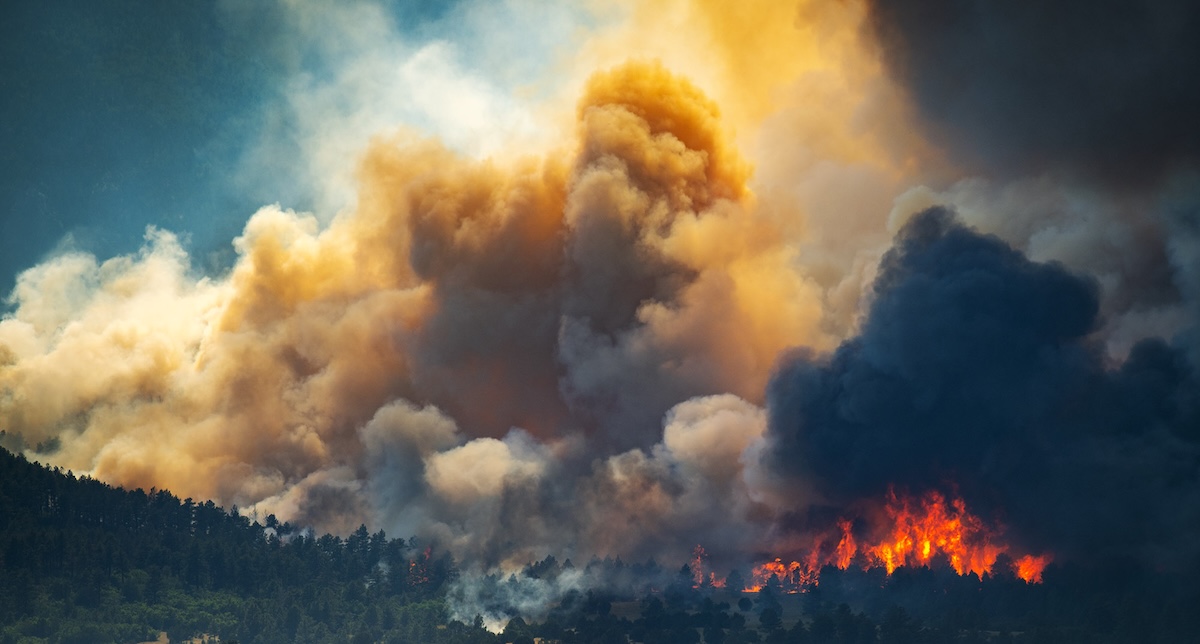
Four firefighters, two helicopter pilots and a contractor bulldozing a fireline have died in Colorado, Utah and Oregon this year.
Fast-moving fires have burned millions of acres and destroyed hundreds of homes and buildings in the West. California, which is having an unusually quiet fire summer, has deployed engines and crews to fight fires raging in Colorado and the Pacific Northwest — but even this well-resourced state continues to feel vulnerable.
The U.S. has been at Preparedness Level 5 since July 18, a status that means the federal government is committing the highest possible level of crews, aircraft and firefighting resources to wildfires across the country. And yet requests for help or equipment are going unanswered.
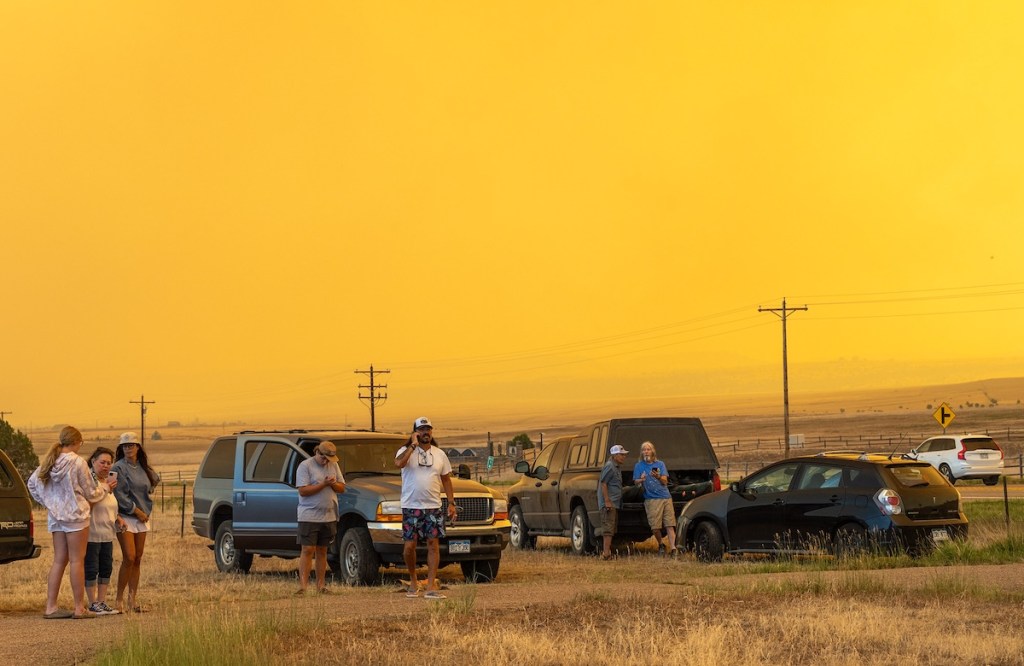
This dangerous fire season hit as the Trump administration has reshaped how America fights wildfire — consolidating crews from across Interior Department agencies into a new U.S. Wildland Fire Service. The new agency and the U.S. Forest Service are pursuing “full suppression” of every new blaze.
Administration officials say the aggressive approach is essential to protect firefighters and communities during a hazardous summer in an abnormally hot and dry West. Critics, though, worry it could worsen a long-standing problem: Decades of extinguishing wildfires and climate change-induced drought have left Western forests full of dry fuels, contributing to conditions that can produce catastrophic fires. Making full suppression the default response, they argue, could perpetuate that problem while demanding more firefighting resources than the government has available.
A coalition of nonprofit newsrooms in six Western states conducted roughly two dozen interviews with federal and state officials, former agency leaders and firefighters, experts and advocates. Reporting from CalMatters, The Colorado Sun, Montana Free Press, the Mountain Journal, the Nevada Independent, The Salt Lake Tribune, and WyoFile shows how on-the-ground changes made by the Trump administration have affected our ability to fight fires amid increasingly destructive conditions.
Federal officials dispute that the reorganization played any role in the deaths of firefighters this year. And while officials in several Western states say the new fire service has so far caused few disruptions on the ground, interviews with former government officials, firefighters and researchers show there are concerns about what the administration’s broader changes could mean for how the country lives with fire over the long term.

The 10 a.m. rule
Some see the full suppression strategy as the return of a discredited 1930s-era “10 a.m. rule,” a former Forest Service directive to put out new fires by the next morning. Today, that strategy demands vast resources, critics point out, while removing the option used by the agency in more recent years to allow carefully chosen fires to burn naturally for the benefit of forests. They argue that will leave forests more vulnerable to catastrophic fires in the future.
Planned burning, or “prescribed fire is never even going to scratch the surface of the number of acres that need to burn every year,” said Johanna Nosal, a professional forester who worked for the U.S. Forest Service in California, Colorado and Montana for 15 years before accepting a federal buyout in 2025.
“We’re putting these fires out, and sometimes we’re successful at it … but it’s just a year-to-year Band-Aid,” Nosal told The Nevada Independent, “and what eventually happens is you have a lack of resources and these weather periods that will create these huge blazes that no matter what you will do will keep spreading.”
U.S. Forest Service Chief Tom Schultz argues full suppression is essential for this hazardous summer. And Brian Fennessy, director of the new U.S. Wildland Fire Service, defends a policy shift it’s made: Federal officials who want to promote forest health can no longer make the final call about whether to let a fire burn.
Previously at the Interior Department, “when it was a fire for resource benefit, fire [officials] may have had a say, but they did not hold the final decision,” which was made by agency land managers, he told The Colorado Sun. “Now, we hold, on the fire side, that final decision.”
At the Forest Service, underlying policies still provide the authority to manage wildfire to benefit forests. But a proposal to move the Forest Service (USDA) firefighting program into the U.S. Wildland Fire Service is stoking fears that could change.
This summer, Schultz said, the Forest Service has not revived the 10 a.m. rule: “We aren’t making any commitment to that time frame.”
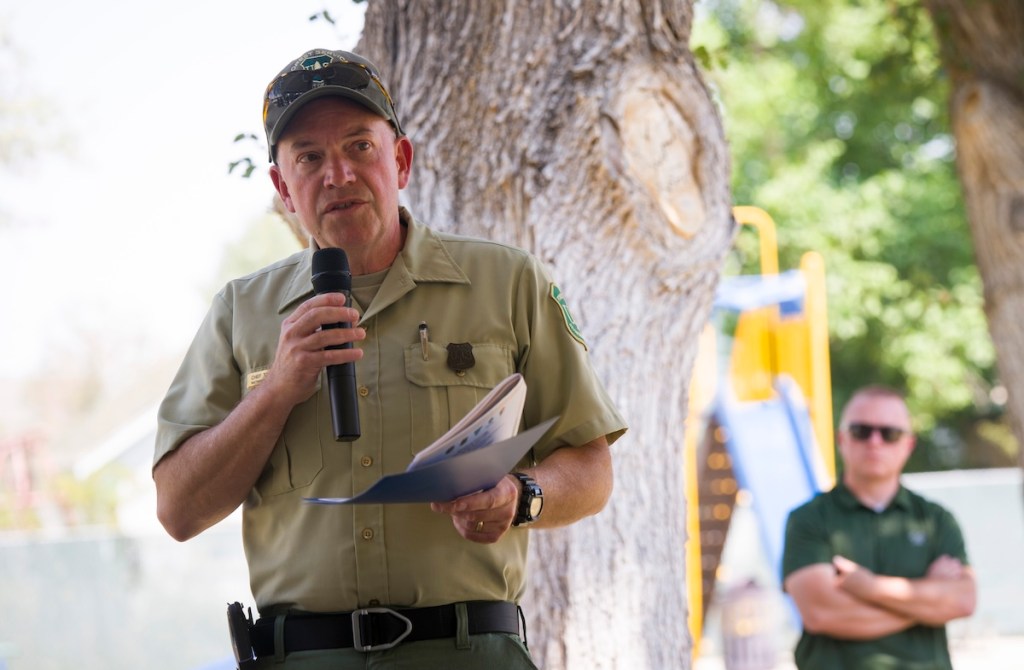
Instead, he told The Salt Lake Tribune, its full suppression strategy includes two approaches: Direct and indirect.
“Direct is when you go right at it. Indirect is when you look at the topography,” he said. “The tactics will be different. Firefighter safety is critical, but also looking at the values at risk. We’re looking at structures. We’re looking at timber. We’re looking at grass. We’re looking at fencing. All of those things go into how we prioritize,” he said.
Utah supports the full suppression policy, “mainly because of where we’re at condition-wise, the historical drought, the dry fuels, and the intensity of these fires,” to protect firefighters and communities, said Jamie Barnes, recently appointed as director of the Department of Natural Resources.
“We will never put people in an area that is unsafe for firefighters. We will always take an indirect approach from that if we have to,” she said.
With the country at its highest level of preparedness, resource allocation will vary by fire, Schultz acknowledged.
“But in terms of this time of the year, right now, we are not going to just sit back and let fire go and achieve other objectives,” Schultz said. “We’re going to be aggressively suppressing.”
‘Fear of fire’
Bobbie Scopa is a 45-year firefighting veteran who worked for local, state and federal agencies, primarily in Western states. When she began in 1974, blazes were smaller, she said. “They weren’t ripping like they do now.”
The Forest Service shifted away from the 10 a.m. policy and began allowing some fires to burn for landscape health in 1971. But pressure from states has sometimes discouraged that federal policy, said Nosal, who now lives in Butte, Mont.
“Pretty much every administration I worked under,” she said, “there’s been at least one year when they’re like, ‘We’re not gonna let managed fires happen, we want to get everything under control as soon as possible.’”

Nosal spent her 15 years with the Forest Service removing and thinning trees and other vegetation that would have been cleared out by smaller fires, she said. In the sagebrush ecosystems that cover the Great Basin, suppression has led to encroachment by pinyon-juniper woodlands and other trees.
“Even in those really dry forest types, you’re seeing denser forests and more continuous forests than would have been there,” she said. “That means when a fire does roll through … you just get these really intense fires that burn everything, which historically isn’t the natural fire regime.”
In other areas, such as the Sierra Nevada, the forests are just too dense, she said.
The spread of homes and other development into the wildland-urban interface (WUI) also has changed firefighting, Scopa said. “If a fire starts before there are houses, and firefighters show up, the Hot Shots cut lines, firefighters lay lines along the edge of the fire, they have a simple fire,” she said. “They’re going to come up with a strategy to anchor and flank the fire while it’s small.”
Add just a few houses, and “some of the firefighters are going to go to the houses and start prepping to protect the properties,” she said. “Now, you have fewer firefighters on the fire. It totally complicates work for the firefighters. And it requires more people.”
Scopa estimated federal agencies would need another 30,000 to 40,000 firefighters to be able to implement full suppression, “and you still wouldn’t be successful.”
Multiple requests for hand crews and engines went unfilled on the Widemouth 2 Fire, Tony DeMasters, incident commander of Great Basin Team 2, told The Tribune. The fire has burned nearly 130,000 acres in western Utah.
“We’re getting international help,” he continued. “That’s just how severe the fire season is, and we’re only in August. We got another 8, 10, maybe 12 weeks to go.”
It’s common for resources to be this scarce, DeMasters added, when the Great Basin region and nation are at Preparedness Level 5. “When we go to those planning levels, that means everything is strapped.”
The Forest Service has roughly 14,000 employees who manage and respond to fires, including around 11,800 firefighters.
The Wildland Fire Service employs fewer than 6,000 federal personnel and supports around 900 tribal personnel to cover more than 500 million acres of public and tribal lands across the country.
A new fire service
To create the new U.S. Wildland Fire Service, the Trump administration combined firefighters from four Department of the Interior agencies: Bureau of Land Management, National Park Service, U.S. Fish and Wildlife Service and the Bureau of Indian Affairs.
“The goal of this is to reduce internal redundancy,” Brock Uhlig, a chief at the new service, told Nevada lawmakers at a May interim committee meeting. “Members of the public will see the exact same product.”
By July in Nevada, it was “kind of business as usual and everyone’s still collaborating and responding to fires,” said Ryan Shane, State Forester Firewarden. But, he acknowledged, it was early in the season. “Time is going to tell what improvements we are going to see … or if there are any gaps.”
Utah officials have seen the transition go “very smoothly,” Barnes said. “We haven’t seen any issues with firefighters on the ground or financial resources.”
In Wyoming, the migration of Interior firefighting crews and resources into the new federal agency hasn’t altered what goes down when a wildfire is sparked, said state Fire Management Officer Jarod DeLay, who works closely with the regional chief for the U.S. Wildland Fire Service. They share a goal, he said, of ensuring the transition does not impact on-the-ground firefighting operations.
“They’re working through everything,” DeLay told WyoFile, “but there really hasn’t been any real hiccups.”
The “field-level folks” who have spoken with Grassroots Wildland Firefighters, a nonprofit based in Sparks, Nevada, haven’t seen any negative impact, president Riva Duncan told Montana’s Mountain Journal.
“But speaking to fire managers, they said it was pretty clunky for them,” Duncan said. “They’ve restructured decision-making authority, so there’s a lot of ‘Where do I go to now if I need something approved?’ There’s not as much communication as folks had hoped for.”
“Clunky” communication may be occurring at times, Fennessy said. “I mean, we’re talking about thousands of people. I’m sure that probably occurs. But that’s not the feedback I’m getting and it’s not from my people.”
Officials are still investigating whether the transition played any role in the late June deaths of three federal firefighters who were killed while battling the Knowles Fire in Colorado and a fourth who died later from his injuries. Fennessy said he finds the suggestion that there may be a connection “offensive. It is absolutely wrong. … It’s just ludicrous.”
There is “absolutely zero connection between the rollout, the unification and these fatalities,” he said. “I am close enough to the investigation that is still ongoing, to certainly say that.”
The firefighters were part of a helitack crew that got trapped near the Colorado-Utah border when high winds drove small, lightning-started wildfires in Utah. Sydney Watson, 27, of Warrior, Alabama, worked for the Wildland Fire Service, as did a fourth firefighter, Nathan Matthews, 43, of Lincoln, Nebraska, who was injured in the burnover and died later.
Emily Barker, 38, of Clinton Township, Michigan, and Nick Hutcherson, 27, of Glendale, Arizona, worked for the Forest Service.
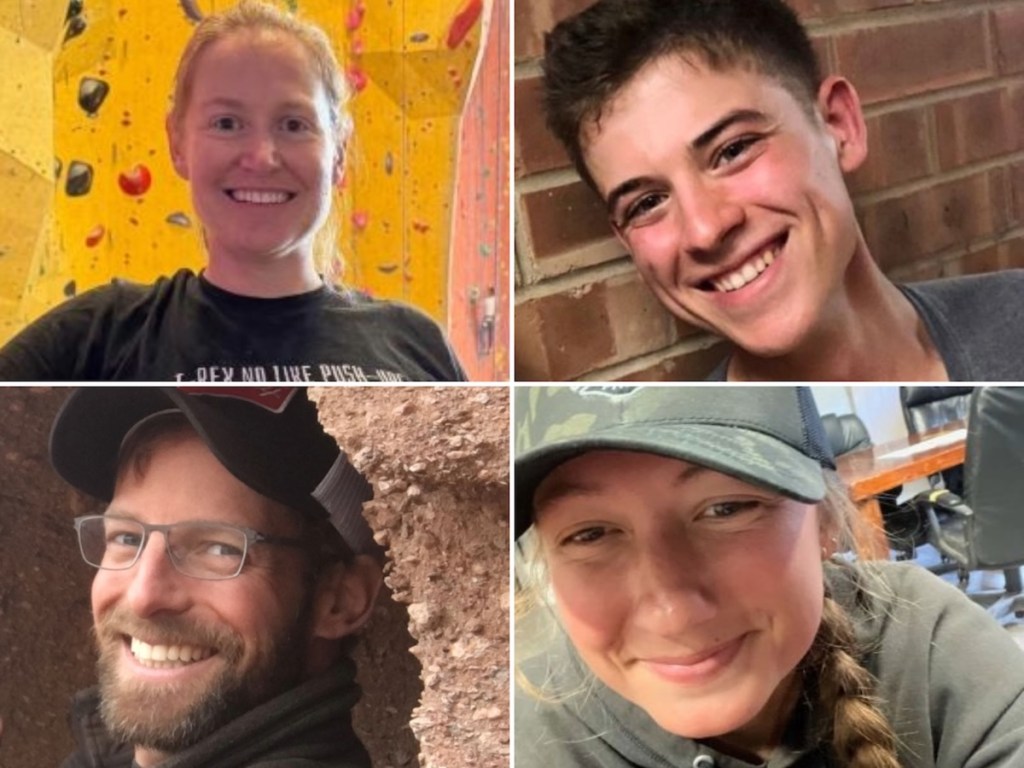
Duncan stressed that investigations remain ongoing and no conclusions are available. “But fatalities really affect the workforce,” Duncan said. “There’s a lot of fire season left and people are fearful. The investigations take a long time to come out, and it’s frustrating if there are important lessons to learn.”
Fears for the future
Rep. Andrea Salinas, an Oregon Democrat, pointed out to Schultz in July that removing fire personnel from the four Interior agencies separates them from former colleagues who are responsible for restoring forests and reducing fuels.
“This proposal would fracture the critical communications link between land management and fire management,” Salinas said at a July 22 House Agriculture Committee hearing.
The disconnect could mean that decisions once made between colleagues will have to be negotiated among agencies, said Brad Washa, an assistant professor of Wildland Fire Science at Utah State University.
“Down the road, will [fire personnel] be sitting in a different office and not next to the folks that are managing the natural resource?” asked Washa, a former BLM firefighter.
“And that can become an impact when making decisions on how to manage a fire, to what they’re doing fuels work wise … it could also impact just recruiting people from outside a fire to help support the fire effort,” he said.
When working together, for example, a land manager could easily alert firefighters to not bulldoze lines in areas that could affect endangered species or cultural resources, he said. That may become more difficult now. “The land management agency might lose some of its ability to exert its authority in managing the natural resource,” Washa said.
Professor Larissa Yocom, director of USU’s Utah Forest Restoration Institute, said she also wonders how much input land managers will be able to provide during an active fire — particularly in providing guidance about future times when it would benefit an ecosystem to let a fire burn.
“We do have a lot of science showing that fire is beneficial in a lot of our ecosystems,” she said. “For example, aspen is a tree that a lot of people love, and it thrives after fire. And the lack of fire during the 20th century may be part of the reason that we have been seeing a decline in aspen cover across the West.”
These issues are why the National Association of Forest Service Retirees opposes the creation of the new fire agency, president Bill Avey said.
“We don’t think wildfire should be divorced from the land — that’s been a policy failure,” he said. “We continue to stand on the fact that this national wildland fire service is the wrong solution.”
But Fennessy argues there is no disconnect.
“We’ve not moved anybody on the Interior side out of where they are stationed. Offices that hold both land managers and executive firefighters, those offices haven’t changed,” he said. “They talk to each other every day. … I question the motive or intent of those that want to make that argument.”
Fennessy said his agency recognizes that “land managers are the resource experts” and that they are “intimately involved and engaged.” Fire officials and land managers “need to be in lockstep,” he said, “when we’re doing prescribed fire or preparing for whatever treatment it may be.”
The Forest Service is undergoing its own reform right now. Its headquarters are moving west from Washington, D.C., to Salt Lake City and regional centers will be closed, with research consolidated in Fort Collins, Colorado. The Forest Service has lost 16% of its workforce since 2024, Salinas noted.
“This sweeping reorganization creates more questions than answers and the fact that it’s being implemented right as wildfire season is upon us is alarming,” Salinas told Schultz. “Doing so threatens the Forest Service overall — the loss of staff, and the institutional knowledge they have, should not be casualties in the Trump administration’s reorganization of the Forest Service. Each is too valuable to be lost.”
Few states are better equipped to weather the federal firefighting changes than California.
California has invested billions in firefighting, a strategy that has carried through multiple administrations, with different emphases at different times. But it all amounts to this: California has its own people and equipment to rely on, including the world’s largest aerial firefighting fleet.
Cal Fire — officially the California Department of Forestry and Fire Protection — is the largest state-run fire department. As California experienced some of its most destructive wildfires on record, Cal Fire’s staffing skyrocketed — climbing past more than 12,000 employees, according to the agency.
It now employs more wildland firefighters than any agency in the world besides the U.S. Forest Service, according to a 2025 white paper led by researchers with Stanford University’s Climate & Energy Policy Program.
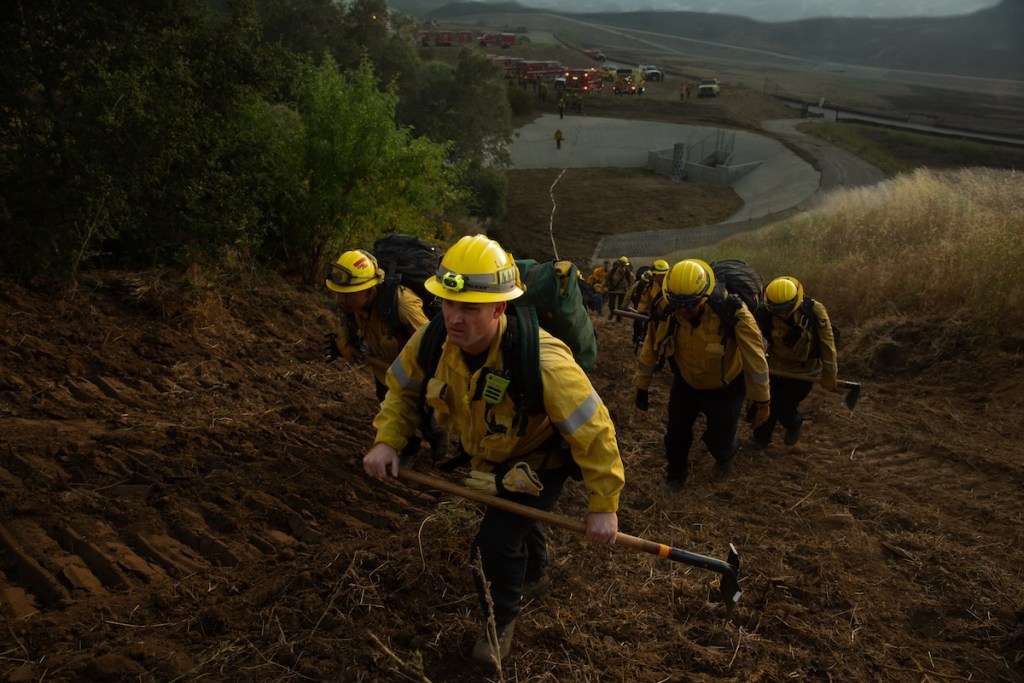
The department is primarily responsible for rural, mostly privately owned wildlands that make up about one-third of the state’s acreage.
But federal agencies are tasked with protecting about half of the state, and California’s leadership is concerned about the Trump administration’s reorganization of the Forest Service, its staff cuts and its closure of research facilities.
“While I understand the intention to operate a more efficient federal agency, many of these changes could impact our state’s wildfire readiness and create added public safety risks,” California Secretary of Natural Resources Wade Crowfoot said in a May letter to U.S. Secretary of Agriculture Brook Rollins.
Adequate investment and attention to federal lands in California, along with “strong collaboration” with state agencies, “is critical to protect California’s communities, economies, and natural resources from catastrophic fire,” Crowfoot wrote.
No simple answer
The Department of Agriculture’s 2027 budget proposes transferring the departments, which includes the Forest Service, wildland firefighting resources and responsibilities into the new Wildland Fire Service.
The department awarded a $1.16 million contract to study consolidating all federal wildland fire operations into the new agency, according to a statement on Aug. 4. The department expects the report to be complete by Feb. 15, 2027, which means its results won’t be available for the fiscal 2027 budgeting that begins in September.
The idea of unifying the Forest Service with other agencies would challenge the “cultural difference in how we approach fires,” said Andy Norman, who retired from firefighting for the Bridger-Teton National Forest in 2023 after a 37-year career.
“Fire is considered a land management activity. It’s addressed in the forest plans,” he said, which call for occasionally managing wildfires rather than immediately extinguishing them in designated wilderness and in some backcountry settings.
The Forest Service extinguishes more than 95% of the fires on its forests, Scopa said, but pursuing full suppression permanently wouldn’t be realistic.
“There’s no simple answer. We’re not gonna put [out] all the fires,” she said. “We’re never going to be successful. … The environment is not conducive to that, the fuels are not conducive to that, the staffing is not conducive to that.”
— Amy Alonzo, The Nevada Independent, Rachel Becker, CalMatters, Robert Chaney, Montana Free Press / Mountain Journal, Mike Koshmrl, WyoFile, Brooke Larsen, The Salt Lake Tribune, Joseph T. O’Connor, Montana Free Press / Mountain Journal, Olivia Prentzel, The Colorado Sun







When is WyoFile going to track down the bigger issue – years of fire suppression and eliminating all logging in forest service lands. For years you have fuels build up and now the situation is in a critical phase. Too dry to have prescribed burns with far too much fuel in the forest. Far too much fuel to allow fire to do it’s work because environmentalists were against any logging. Selective logging, forest thinning and some level of prescribed burns would have significantly reduced the risk – but we took that tool out of the toolbox and now we have forest full of fuel.
Had Biden administration taken this approach, nobody in the media would have said a word. But the Trump administration makes the decision and you all freak out. What do you want, out of control fires during seriously dry periods or fire suppression before we end up with fires as big as the state of Rhode Island.
Lastly, a couple of commenters have pointed out the ongoing personal attacks on anybody who makes even a slight reference to supporting anything conservative. If you want true unbiased reporting and interaction with your readers, follow your policies. Otherwise you just become another echo chamber like CNN and MSNOW.
Why does WyoFile continue to omit data? There is obvious bias in most articles. Trying to make a point by continuing to omit important data is misleading, at best. Calling Trump a pedophile by the bootlicking followers (to use a term that is CONTINUALLY used by the relentless Trump-hating readers of WyoFile) is ridiculous, and as stated before my post, should not be allowed by staff. Same couple of guys-CONSTANTLY; ad nauseum. The constant hate gets old. Omitting the fact that logging these areas could prevent such catastrophic fires is insulting to those of us who see the data and also see the omission of same. Do better, please.
you should enforce your rules on comments not related to the subject, Chad Guenter’s “trump is a pedophile” should not have posted lets keep to the subject too many left wing hate speech comments. Ok so 59 million acres are off limits to fire management, this means we cant get axcess to federal land for thinning overgrown stands, prescribed burnes, removing insect killing timber and responsible logging. Wildfires on Federal lands are 5 times the size the ones on non federal land, same climate same lighting same country? hum? our tax dollars fund war on logging and having axcess to these lands to midigate fire conditions. Call it what you want like climate change it looks like we need common sense approach to this disaster instead of just blaming trump i do know buracracy has consequnces so look at all options and keep politics out of it there will always be fires so how do we manage them best?
Trump is a pedophile, but to somehow blame decades of forest mismanagement and a growing number of arsonist psychopaths on him is laughable.
42 thousand people were evacuated in Reno Nevada Yesterday, human caused has already been stated whether intentional or not we dont know.
The United States of America is literally bankrupt.
It’s going to get worse before it gets worse.
One thing about the Trump administration, they don’t know much about anything except grifting. If and when they start building roads into roadless areas, there will be more fires.
As for the deaths of these fine fire fighters, rest in peace.
This article leaves out a lot of facts. 1) 84% of wildfire is idiot caused. So 16% is natural. Combined with that a high % start within a very short distance from roads 2) Most acres burn during fire weather and during fire weather no matter how much money and resources and planes you throw at it it makes no difference. Once a fire starts during fire weather the only thing that allows control is the end of fire weather. Once fire weather is over then our efforts do something. 3) Out by 10am only works when its not fire weather and it would likely go out anyway.
Fire fighting is now a self perpetuating industry.
For example, the Dollar Lake fire last year cost nearly $27,000,000 for 19,000 acres, nearly $1,400 per acre and I watched that closely and all that money and the 550 people working on it likely didnt change the burned acres by more than 1% compared to if nothing was spent on the fire. The only thing that turned that around was 3 days of rain followed by a week of low wind and high humidity.