


Federal proposals have reignited the decades-old debate over the installation of permanent climbing anchors in the wilderness, reopening a rift between climbing advocates and conservationists about what kind of human impact is appropriate in congressionally protected wild places.
The outcome could impact Wyoming climbing routes in popular destinations like the Wind River Range — where climbers often rely on fixed anchors. “So this should be very concerning to Wyoming climbers,” said Access Fund Interim Executive Director Erik Murdock, whose group is opposed to bolting bans in the wilderness.
Conservationists, however, say wilderness designations deserve the most stringent protections.
The United States Forest Service and National Park Service proposed guidelines in November for managing climbing. The directives explicitly prohibit fixed anchors as “installations” in wilderness areas. Both federal agencies are gathering comments on the proposals through Jan. 16.
The issue comes as the sport’s explosive growth has prompted land managers and officials to forge nationwide regulations to protect natural resources. Wyoming has experienced the issue firsthand in Tensleep Canyon, where Bighorn National Forest officials enacted a route development moratorium in 2019 in response to climber conflicts.
Federal maneuvering is not expected to impact the Tensleep Canyon Climbing Management Plan proposal, which officials have been developing since the moratorium was enacted. Forest officials collected scoping comments this fall on that plan, and it moves next toward the environmental analysis stage.
But on other Wyoming crags, the policies could change what tools and safety measures are available to alpinists.
A tangled history
The draft federal directives conflict with legislation introduced earlier this year in Congress, which can make it difficult to follow the thread on a sport already clouded by jargon and nuance.
Complicating the issue even more is a long history of push and pull regarding fixed anchors in wilderness that has entailed prohibitions on new bolts, advisory group negotiation efforts and flare-ups at parks like Joshua Tree.
Here’s the latest:
In March, U.S. Reps. Joe Neguse (D-Colorado) and John Curtis (R-Utah) introduced the Protect America’s Rock Climbing Act.
Climbing glossary:
Bolting: Installing a permanent safety anchor in a drilled hole in a rock face. Route developers install these anchors — typically stainless steel hangers and bolts — with hand drills or power drills.
Traditional climbing: A type of rock climbing where the lead climber places temporary protection equipment, such as chocks and cams, while ascending the route. A climbing partner who follows then removes the equipment. Protecting a climb with traditional or “trad” techniques requires specific rock features, meaning not all routes are suitable.
Sport climbing: A type of rock climbing where the lead climber clips into pre-installed permanent bolts for their protection while ascending a route.
Anchor: A point of attachment for a climbing rope, made with slings, runners, the rope itself or bolted equipment.
Wilderness: The Wilderness Act of 1964 defines wilderness as “an area of undeveloped Federal land retaining its primeval character and influence, without permanent improvements or human habitation, which is protected and managed so as to preserve its natural conditions.” The act generally prohibits motorized and mechanical access, and roads, structures and other facilities within wilderness areas.
The legislation directs the heads of the Forest Service and Interior Department to create a uniform policy and issue guidance that allows “the placement, use and maintenance of fixed anchors” for climbing in all of the country’s federal wilderness areas.
The same month, U.S. Sens. John Barrasso (R-Wyoming) and Joe Manchin (D-West Virginia) introduced America’s Outdoor Recreation Act. That legislation would also recognize that recreational climbing “is an appropriate recreational use” in wilderness and mandates that guidance allows fixed anchors along routes. Climbing advocacy groups like the Access Fund championed both bills. Darin Westby, who directed Wyoming State Parks and Cultural Resources when Barrasso’s bill was introduced, also voiced support.
But wilderness advocates like former executive director of the Jackson Hole Conservation Alliance Franz Camenzind say the legislation undermines the Wilderness Act’s foundations. By making exceptions for what are permanent installations on the landscape, he said, it sets a dangerous precedent. There’s no place for anchors in the wilderness, he maintains.
“What’s the next one, bikes in wilderness?” Camenzind said. “I think it’s an incredibly slippery slope.”
Then in November, the park and forest services issued proposed recreation guidelines that would have different implications for wilderness climbing. While both provide that climbing is appropriate, even in wilderness, they consider fixed anchors and other permanent equipment prohibited “installations.” There could be exceptions; directives would allow a forest supervisor to authorize placement based on what’s known as a “minimum requirement analysis” review process.
Simply put, this means climbers cannot place permanent gear in wilderness without earning an exception.
This time, conservation champions showed support while climbing and outdoor recreation advocates cried foul.
“For generations, we’ve agreed that some places are so special that their remoteness, wildlife, and natural and cultural resources should be preserved for visitors to enjoy,” Kristen Brengel with the National Parks Conservation Association said in a statement about the NPS policy. “The Park Service’s guidance is a critical step to reaffirm the Wilderness Act, while also providing opportunities for visitors to enjoy rock climbing in these beautiful, wild places.”
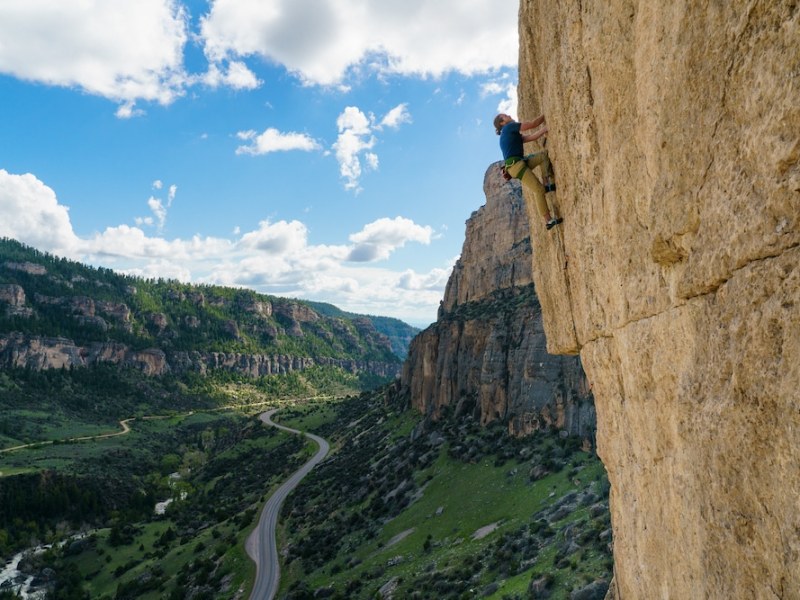
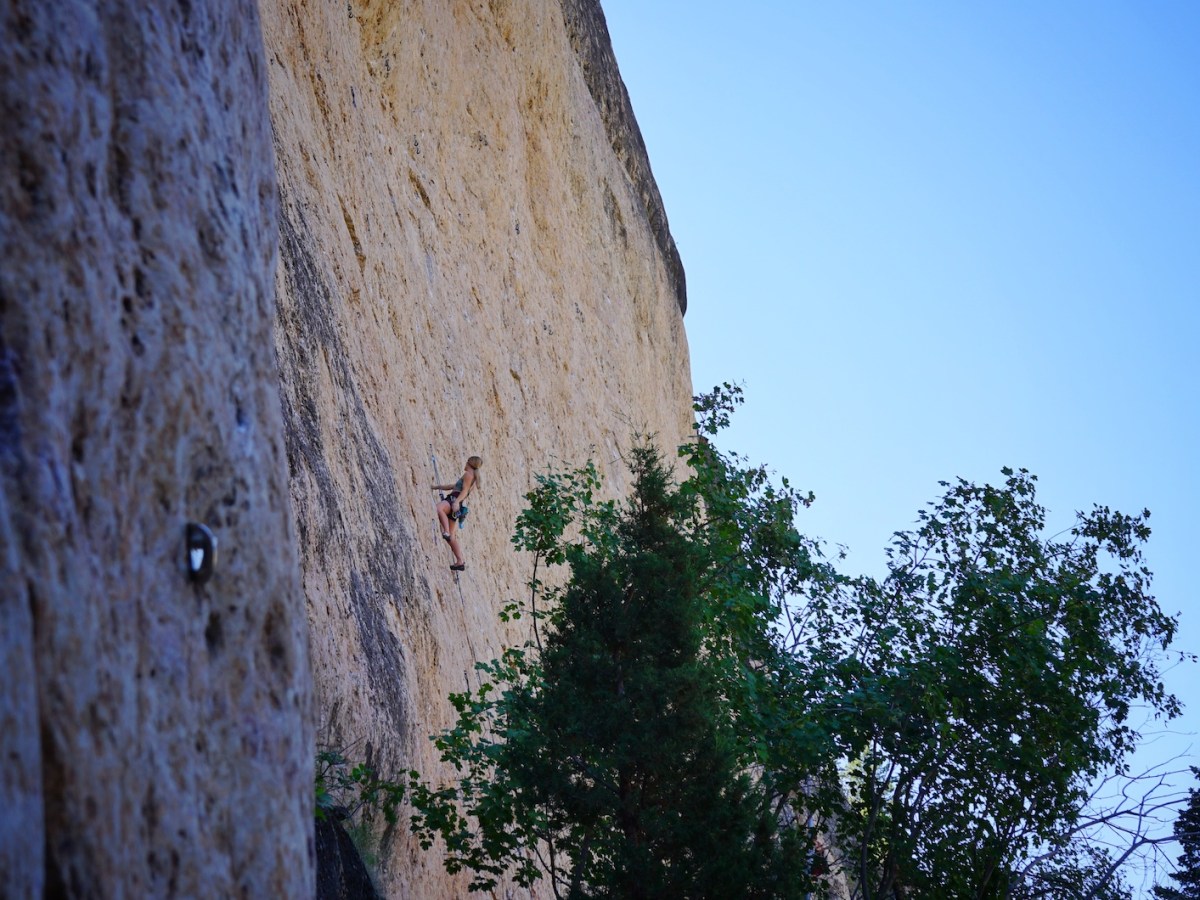
Climbers, however, say it appears to misunderstand the fundamental ways fixed gear ensures safety, because sometimes it’s used even on routes where most of the gear is placed in a “traditional” temporary fashion. Bolted top anchors used for rappelling down, for example, are common, even on routes otherwise protected with removable “trad” gear. That makes the guidance a de facto ban that creates onerous red tape, they say.
Murdock with the Access Fund argues the language represents an entirely new interpretation of the 1964 Wilderness Act by classifying bolts as prohibited “installations.”
“The federal agencies have been not only allowing but managing climbing in wilderness and fixed anchors as an appropriate and acceptable activity since the Wilderness Act was passed,” Murdock said, “and many of those areas included climbing even before they were designated as wilderness. So this basically flips the management model on its head.”
That leads to several problems, he said. The proposed directives jeopardize the sport’s safety and threaten iconic routes including El Capitan in Yosemite, The Diamond on Longs Peak in Colorado and USFS areas like the Wind River Range. And though it allows for exceptions, that process would be onerous for climbers and land managers alike.
“So if someone wants to replace a sling at the top of a mountain that you cannot get down to otherwise, that would require a minimum requirement analysis,” Murdock said in an example of how it “is not a good fit for the practical nature of managing climbing and wilderness.”
Several climbing and outdoor recreation groups have lodged opposition to the agency wilderness proposals. These include American Alpine Club, Outdoor Industry Association and Outdoor Alliance.
Camenzind, however, maintains that wilderness exploration should be for those who are self-reliant, experienced and prepared enough that they don’t need the kind of assistance fixed gear provides.
“In wilderness, recreation is supposed to be of a primitive nature,” Camenzind said. “It’s very clear if you’re not an experienced climber, that you have your limits. And that some rock faces just may not be meant to be climbed.”
Wyoming wilderness climbing
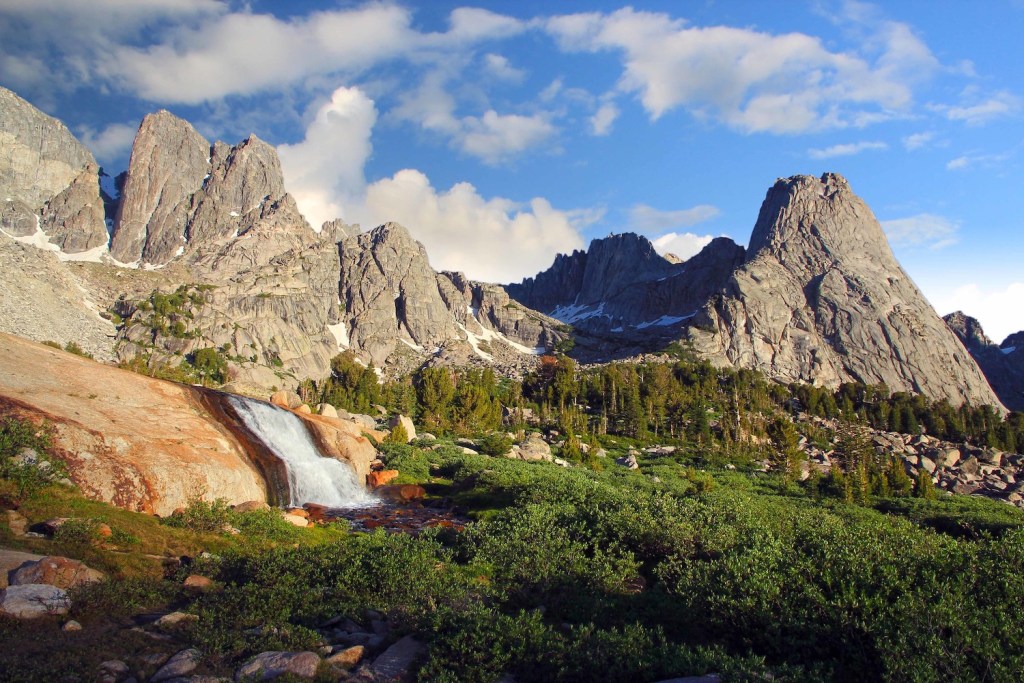
There are many climbing routes in Wyoming wilderness. The Wind River Range is home to three federally designated wilderness areas and numerous high-profile climbing destinations like the Cirque of the Towers. “You need to have fixed anchors to get off of those peaks,” Murdock said of many Wind River routes.
Fixed anchors in the Winds are typically small, stainless steel bolts, said Nate Liles with the Central Wyoming Climbers Alliance. It’s not a big eyesore, he said. “It’s virtually invisible until you are right on top of it.”
Liles thinks that offers one example of general confusion around climbing in wilderness areas. Climbers don’t want to pepper wilderness routes with bolts, he said. “We want our ability to use fixed anchors to be protected.”
The Bighorn Mountains and Absarokas are also home to wilderness designations. Neither Yellowstone nor Grand Teton National Park have congressionally designated wilderness.
The USFS language also mandates that climbing management plans be developed where forest officials determine climbing is causing adverse resource impacts or use conflicts — on both wilderness and non-wilderness lands.
A process that fits that description has been underway in Tensleep Canyon for years. Bighorn National Forest this fall released a draft Tensleep Canyon Management Plan — a document it hopes will help guide development and address management challenges related to the canyon’s growing popularity.

The proposal for the non-wilderness area home to more than 1,300 established sport-climbing routes could spell the end of a route development ban that’s been in place since 2019. Instead, the plan proposes actions to more selectively manage the proliferation of bolted sport climbing routes along the canyon’s cliffs. Proposed actions address growing use (improving parking lots, installing vault toilets) as well as climbing-specific regulations (prohibiting the manufacture or manipulation of natural climbing holds, closing some walls to route development.)
The plan received more than 130 public comments. While some quibbled with the finer points of development closure standards, the overall tenor was supportive of the plan.
“I will say that the biggest takeaway is really excitement around additional resourcing to Tensleep Canyon,” Bighorn Climbers’ Coalition President Christa Melde said, adding “we are excited to see that moratorium lifted.”
Powder River District Ranger Thad Berrett does not expect the federal proposals to impact the Tensleep plan. “I think that we did a really good job of being in line with what the directives are saying,” Berrett said.
Tensleep’s is a good example of a plan tailored to the specific qualities of its area, Murdock said. It likely helped that the climbing community has been very involved in developing the plan.
“On the flip side, you can see that the national guidance does not do that,” he said. “So we have to give some credit to the folks at the Bighorn for actually addressing all of the different elements that you need to manage a successful climbing infrastructure.”
General guidance for managing climbing across the country is overdue, he said. Through the decades, regulation of climbing on America’s public lands has been inconsistent, piecemeal or absent.
Liles with Central Wyoming Climbers echoed Murdock’s view. “We don’t want [climbing] to go wild West,” he said, “we want reasonable, sensible management that isn’t a de facto ban.”

Could or should current routes be grandfathered in ?
Hey Franz – why are horses allowed in Wilderness and bikes not? Horses cause more damage, packs of horses can disrupt hikers more than bikes and could even harm hikers.
The human monkey, who created and imbued its gods with human natures–some even in its own image–fortunately will become extinct before it can leave its mark on every square inch of the planet. The destructive nature of the beast is insatiable.
From the Wilderness Act of 1964, Definition of Wilderness, in part, (c), “An area of wilderness is further defined to mean in this Act an area of undeveloped Federal land retaining its primeval character and influence, without permanent improvements or human habitation, which is managed so as to preserve its natural conditions…”
Are bolts permanent improvements? To me they are.
I am a long-time climber and guide, both on front-country crags and wilderness peaks. I think what Franz Camenzind and other conservationists are trying to say, and I agree with them 100%, is this: as climbing grows and boundaries are pushed onto blanker and blanker walls deeper and deeper into designated wilderness, we need regulations that prevent these walls from becoming overrun with running-belay bolts and bolted top-anchors on every pitch. There are two big reasons that we don’t want this scenario: 1) for the commonly stated reason non-climbers give: too many “permanent installations” physically eroding and visually marring the rock surface. As a lover of wilderness, I get that. And secondly, much more importantly in my opinion, we need to draw the line on how far mankind is allowed to force his way wherever he wants to go. Imagine the north face of Mount Hooker with dozens of side-by-side bolt-ladder routes. That would be a real bummer if that was allowed to happen. Similar to snowmobiling, heli-skiing, and electric snowboards—glue-on holds and sewn-up bolted routes represent man’s seemingly unstoppable push to use technology, gadgets, and other crutches to force their way into wild places. This is what needs to be stopped.
I don’t think anyone with a clue cares about climbers leaving behind rappel-anchor slings on rock horns and trees to get themselves down off wilderness summits. What we need is a law that respects the nuances of this issue, and gives land managers the ability to make regulations based on the wilderness ethic, or in the case of Tensleep Canyon, a non-wilderness local backcountry ethic that manages for carrying capacity and desired conditions. In the wilderness, land managers need to be able make distinctions between traditional, primitive, and commonly accepted minimalistic practices—and the sad situations when these practices taken too far.
“Drill Baby Drill!!!!” ~ Sarah Palin
Excellent article! I favor trying to keep wilderness “wilderness”–leave no trace. Let people truly experience sense of wilderness! Loss of this will experience will make Wyoming (and other western states) much less attractive to both state residents and visitors.
I should add:
Also a thorough and impartial walk through a matter that evokes strong feelings for nearly all.
Thank you for that great piece of Wyoming journalism.
Bravo!
Very good coverage of this vital topic.