


Nearly 6,000 federal workers living in Wyoming may soon be required to sign non-disclosure agreements to keep their jobs with the U.S. government.
That’s a proposal that the Trump administration’s Office of Personnel Management released this week. The NDA, which would apply to new and existing employees, is open to public comment until June 26.
One employee who could be forced to sign the agreement if it moves forward told WyoFile on Wednesday that the NDA would “just be another layer” to Trump’s efforts to clamp down on the free flow of information about federal government activities.
“I don’t understand this,” said the employee, who’s on staff with the U.S. Fish and Wildlife Service. “I think the public and the agencies benefit from sharing more and speaking freely. I don’t think secrecy improves decision making or people doing the right thing.”
WyoFile granted anonymity because the employee did not have permission to comment on the policy and feared retaliation. The Fish and Wildlife Service has not yet given its workforce any guidance about the proposed NDA, the employee said.
The NDA intends to “safeguard non-public, confidential, or proprietary information, created or obtained” through the “official duties” of federal government workers, according to the Office of Personnel Management.
The NDA would be “governmentwide.” The federal government’s civilian workforce in Wyoming numbers 5,857 employees, according to OPM data. That’s down 16% from 6,941 workers the previous fiscal year, the result of Trump administration directives and policies that have shrunk the federal workforce to the smallest size in over a decade.
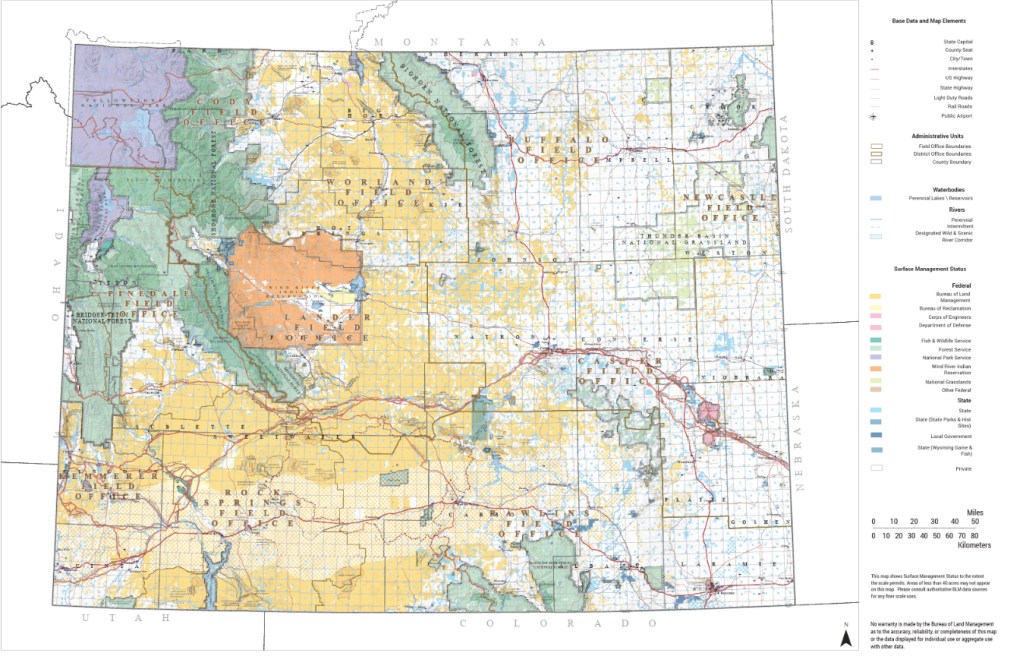
Other Wyoming-based federal workers not part of those tallies could also be subject to the NDA. OPM workforce data excludes active military personnel, the U.S. Postal Service, most of the judicial branch and others.
The proposed NDA is part of a Trump administration crackdown on leaks to the media.
The OPM noted “several recent instances” where internal agency communications related to rulemaking and policy development were disclosed without authorization. It also discussed specific instances in which federal employees at the FBI and the Department of Homeland Security disclosed information about planned immigration enforcement actions without authorization.
In one case, The New York Times and The Washington Post received unauthorized information on the U.S. raid on Venezuela this past January and delayed “publishing what they knew to avoid endangering U.S. troops,” the OPM request for comment said.
A Washington Post spokesperson declined to comment to the Associated Press.
Charles Stadtlander, executive director of Media Relations and Communications for the Times, said in an email that the paper had extensive reporting on operations targeting Venezuela and preparations for land-based military operations. “Contrary to some claims, however, The Times did not have verified details about the pending operation to capture Maduro or a story prepared, nor did we withhold publication at the request of the Trump administration.”
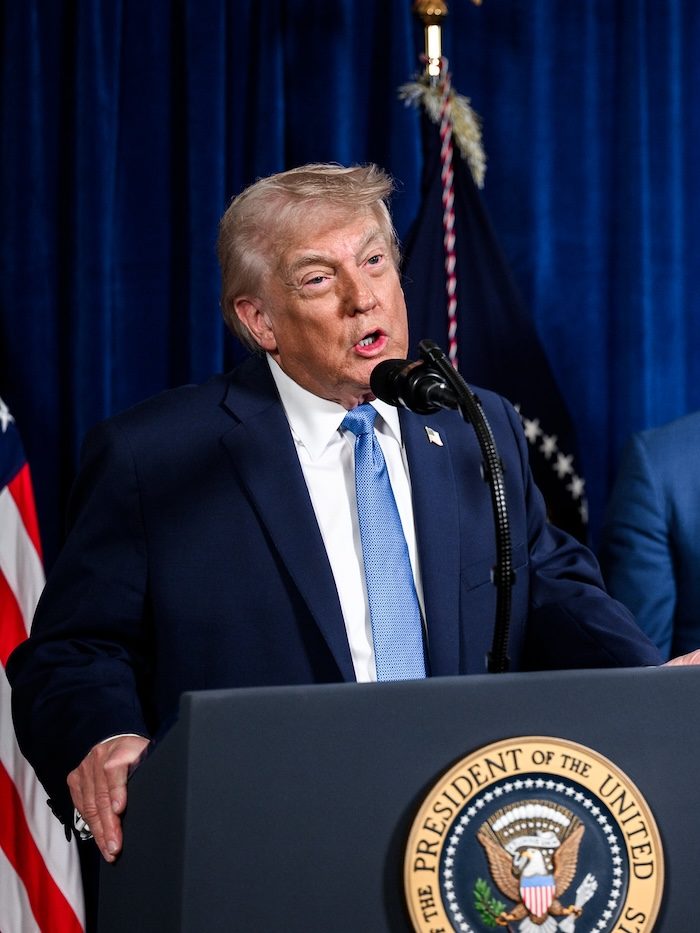
Ferreting out leaks that the administration deems harmful to its messaging has been a priority across multiple agencies since President Donald Trump returned to the White House. As part of that crackdown, the FBI in January seized the electronic devices of a Washington Post reporter, a move that alarmed media organizations and advocates of press freedom.
Attorneys who specialize in federal employment law say that the proposed NDA is overly broad and appears to prohibit the free flow of information about the federal government’s activities to the general public.
“The parameters are unclear,” said Michael Fallings, managing partner at the Austin, Texas-based law firm Tully Rinckey. “It says you can’t discuss anything about government communications, about decisions being made, about work being done.”
Federal workforce attorneys and union groups are worried that the NDA amounts to “restricted speech,” Fallings said.
“The parameters are unclear. It says you can’t discuss anything about government communications, about decisions being made, about work being done.”
Michael Fallings, attorney
Michael L. Vogelsang Jr., an attorney at the Employment Law Group, said he has questions, among them: “What gap is an NDA supposed to fill that doesn’t already exist?”
He noted that statutes already exist regarding the leaking of classified and sensitive information. There’s also a law passed by Congress, he noted, that prohibits employers from implementing or enforcing an NDA.
Vogelsang added: “So Congress has already said NDAs are a no-go. So how can OPM make a regulation that violates the law?”

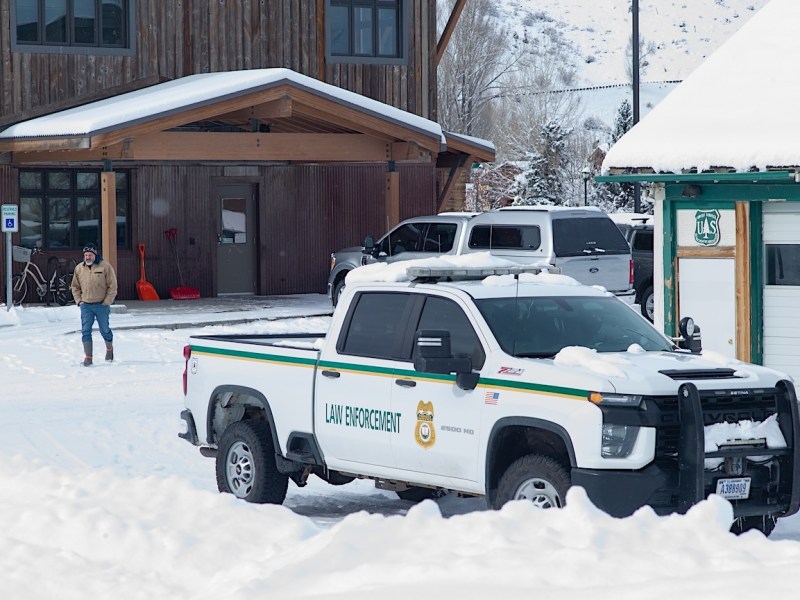
The American Federation of Government Employees National President Everett Kelley said in a statement that OPM’s proposed rule is part of a continuing effort to silence federal employees.
“This proposed NDA is another attempt by the administration to purge the civil service of nonpartisan career employees and replace them with loyalists who won’t speak out against waste, fraud, and abuse,” Kelley said.
Joe Knouff, OPM’s suitability director, is listed in the Federal Register notice as the contact for more information. He did not respond to WyoFile’s interview request Wednesday.

The federal mandate to wear masks and the demand that some federal employees must get vaccines brought freedom loving wyomingites out in droves to complain, the same people supporting this atrocity.
You must be kidding. Police, firefighters, teachers, election officials, highway construction workers, game and fish, etc. Which of these are non-essential workers?
P.S. I’ve long felt the Americans don’t deserve any tax reductions until such time as they stop demanding ever increasing services from their governments.
Sure smells like 1930s Germany. Already blame is being placed at the feet of those whose skin color is not white and whose relegion does not align with Judeo Christian majorities. A country ruled by a criminal despot wanna be dictator will surely fail. We still have a right to vote, at least for a little while. Please get out there and vote while we still can!
Sounds like a plan to silence whistle blowers also. MAGA loves to do and say all the things out load, but doesn’t like when other people question or bring to light all the illegal activity.
Obviously, non-public, confidential, or proprietary information doesn’t require a NDA. I think this is an effort to suppress information that really isn’t confidential or sensitive.
I guess the most transparent administration in history needs NDAs to maintain transparency.
That’s right keep us in the dark and feed us pulp .
Is this part of project 2025? The public deserves to know what’s going on in our federal agencies. We need to flush MAGA down the toilet.
hmm, just another attempt from this administration to silence the people. Thanks a bunch, MAGA crowd and the NoFreeDumb types. You’ll be hearing back from us starting this coming Aug. 18th
Government jobs should offer the least amount of benefits, job security, etc. Sadly the opposite is true.
Govt employees are paid with money extorted from the American people
Government workers are the backbone of our democracy. The Republican politicians and syncophants – who have no spine whatsoever when it comes to the orange felon – are the reason our civil and other rights are crumbling under this self-serving, criminal and incompetent Administration. The comment immediately above clearly aligns the commentor as a syncophant and blindly following idiots.
John, and Roger as well.
“Government workers are the backbone of our democracy.” this is laughable. “Government” was never intended to be the number one employer in the country.
This nation is BANKRUPT, do you honestly believe that 40 Trillion dollars of debt is survivable?
John, your obsession with the Orange boogeyman obviously affects your ability to correctly perceive those you disagree with. I am not and never was a trump supporter.
Roger, those never seem to “think” immediately knee jerk into assuming everything and everyone they disagree with are MAGA.
I dont want to pay anyone’s salary unless it is an Employee of mine helping my business. Having a portion of my money stolen every 2 weeks and handed out to others is not “paying a salary” it is being a victim of extortion.
They should collect money from people that believe conspiracy theories and change their name so they can post more comments. I can’t think of a worst employee than that type of person.
Well, I enjoy electricity, water, sewer, paved roads, and other services from our government, which I seriously doubt that your employees are able to provide.
So, Chad. You would be happy paying lower salaries to government employees? You already love to bitch and moan about public employees. Do you ever think?
Would you please expand on why you think government jobs should be the lowest paid, least secure and most bereft of benefits? I’m sure you must have some underlying theory of why that’s the way it should be, please share it with those of us that are less enlightened than you.
So the US government should be the worst employer in the country? Makes sense – lets run our country with the bottom of the barrel employees that can’t get better jobs/benefits somewhere else. Sounds like the government you deserve.
Riki and Van, the US Govt is the largest employer in the country, by far, employing 2x that of the next largest Walmart.
“Government” in the USA was never intended to become the behemoth it is. It is wholly unsustainable. We have essentially become the Soviet Union of the late 80s.
It is inefficient, corrupted, and funds it’s existence through extortion of the people it is supposed to represent.
The country is financially Bankrupt, 40 Trillion dollars in debt is insurmountable. Corrupt politicians never doing a single thing to right the sinking ship.
You guys go ahead and keep idolizing a dying empire that “voted” itself into its own destruction.
When the Federal Reserve printing press finally burns up and you are paying 58$ for a bottle of water, you ask yourself if the millions of well paid civil “servants” (lol) with golden benefits packages were worth it.
There is no disputing SOME of what you say, our Federal Guv’mint is terribly bloated and inefficient, but making government jobs the least desirable in the country is absolutely not going to do anything to improve that reality, it will in fact only exacerbate it.
As with any rational person, I am mortified by our national deficit and even more so by the staggering size of the debt. If the deficit isn’t eliminated and the debt isn’t reduced in the very, very near future the consequences almost certainly will be catastrophic. But the deficit will only be eliminated if a majority of ‘Murikans agree on a reprioritization of our national goals. Are we going to continue to have the most advanced, powerful and effective military in the world or are we going to relinquish that role to China and let them expand their hegemony to every corner of the world? Are we going to continue the relentless expansion of the nanny state? The US doesn’t have the tax revenues to have both the most powerful military and our current level of social spending and still have a balanced budget – even with the Orange Jesus’ tariffs. The only way to do all three is raise taxes somewhere, on someone, and we all know how well proposing that would go over.
An interesting fact that I come across some time back was that the expected transfer of wealth from the Boomer generation to their heirs is expected to be over $100,000,000,000,000 – yes, that’s 10 Trillion dollars. The exact amount can only be guessed at but the 100T was at the low end of the estimates, more than double the current National debt. I can’t speak for anyone but myself, but IF, and it is the deal killer IF, the US had a balanced budget amendment that couldn’t be Shenaniganed by congress, and IF every other American was required to do so, I’d gladly hand over as much as 1/3 of my net worth to retire the debt. I have no doubt that the economic benefits of a debt free US, if not squandered by a spendthrift congress would in a matter a less than a decade fully reimburse me for my investment in America. Of course, such a thing will never happen in the America we now live in.
While I am inclined to suspect that in many cases Guv’mint jobs are much better compensated for proportionally less production demand than comparable non-union, private sector jobs, going to the opposite extreme and making government workers into a new class of serfs accomplishes exactly nothing.
Using your plan doesnt fix the broken corrupt Govt. that has gotten us where we are, and the Private banking system that Taxes every single American through inflation.
Eventually there will be a reset on our debt, and what comes next will be even worse.
Payroll for federal civilian employees is less than 5% of total federal spending. The huge cuts to jobs in the past year has only reduced federal spending by 1%. A bachelor’s degree starts a federal employee at the GS-5 level for $16.23 per hour. You think that’s overpaid?!? To put things in perspective, our local Wal-Mart starts new employees with no experience or higher education at $17.00 per hour. Yes, we have a huge deficit problem but employees aren’t causing it.
Chad lives in another realm
Most transparent administration in history huh? If you MAGA guys out there can’t see all of the corruption that the Trump administration is trying to bury by blatant acts like these to silence federal employees, you’re dumber than I ever gave you credit for. Open your eyes and get off Fox News. You can thank me later.