

This commentary was originally published by Writers on the Range.
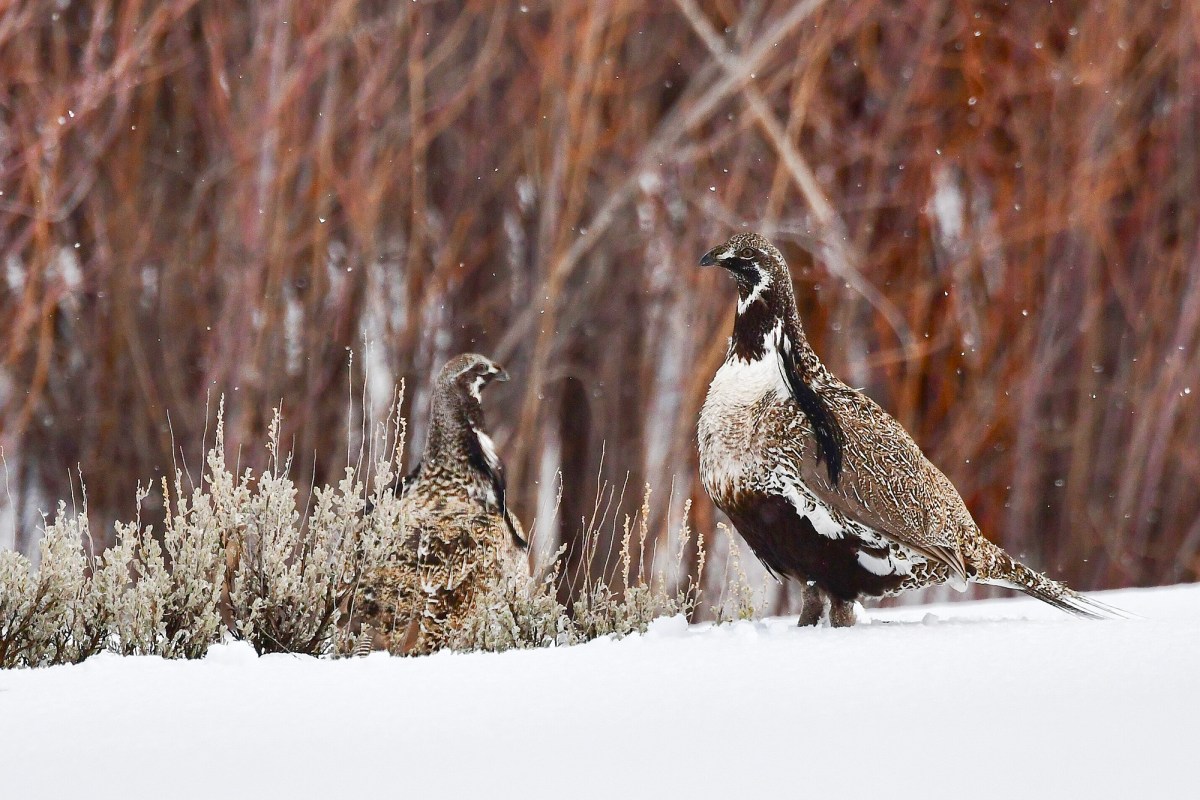
Had Donald Trump been president in 1973, when Richard Nixon signed the Endangered Species Act into federal law, the Gunnison sage-grouse would be extinct. Close to 90% of all Gunnison sage-grouse remaining on the planet are in the Gunnison River Basin of west-central Colorado. The rest are in Utah. They’ve been extirpated from Arizona and New Mexico.
Opinion
The species is critically endangered in fact, if not by official decree. It is protected by the act as just “threatened” because the Interior Department lost a lawsuit brought by Gunnison County, Colorado, the states of Utah and Colorado, and ranching, livestock and energy-development interests.
Now, the plaintiffs don’t even have to fret about threatened status. The Trump administration has essentially done away with the Endangered Species Act itself. On July 14, the administration finalized a rule that legalizes the destruction of habitat that sustains all threatened and endangered life.
It’s still a crime to kill or damage any listed individual plant, invertebrate, fish, reptile, amphibian, bird or mammal. But it’s perfectly OK to destroy all habitat formerly deemed necessary for a species’ survival, which will likely render said species extinct. “Common sense” is how Trump’s Interior Secretary Douglas Burgum defines this nonsensical approach.
Wildlife advocates are outraged. “Taking habitat protections out of the ESA is like taking anti-discrimination provisions out of the Civil Rights Act,” declares Animal Wellness Action President Wayne Pacelle. “The law may still bear the same name, but its core provision and promise have been hollowed out.”
Bart Melton of the National Parks Conservation Association writes that the rule “defies common sense” and that it “paves the way for mining, oil and gas drilling, logging, and development in areas that are crucial to the survival of some of our most vulnerable species.”
Earthjustice attorney Kristen Boyles condemns the rule as violating “the core purpose of the statute and decades of legal precedent, including from the U.S. Supreme Court.”
Meanwhile, multiple lawsuits to block the Trump administration’s “harm” rule are underway.
For half a century, “harm” had been defined by law as not just human-caused death and damage to listed species, but also as “significant modification or degradation” of their critical habitat. With that definition, the Act has saved 99% of listed organisms from extinction.
Gunnison sage-grouse remain on Earth because an intact Endangered Species Act required the federal government to write recovery plans for listed organisms. The U.S. Fish and Wildlife Service and partners didn’t have a choice. If they had done nothing, they’d have violated federal law.
The main threats to Gunnison sage-grouse are invasive cheatgrass, wildfire, fragmentation of habitat by urban and suburban sprawl and prolonged drought caused by climate change.
Close to half the remaining grouse habitat is in private hands. So voluntary protection and restoration of habitat by landowners has been paramount. Under the intact Act, most of this protection and restoration was implemented by “Safe Harbor” agreements covering almost 100,000 acres.
Safe Harbor is a voluntary partnership between private landowners and the U.S. Fish and Wildlife Service to protect and restore low-elevation wet meadows and sagebrush that are crucial for long-term Gunnison sage-grouse survival. In exchange, Safe Harbor signatories receive a guarantee that they won’t get hit with additional land-use restrictions or penalties under the Act if their habitat improvements attract more Gunnison sage-grouse.
When the Trump administration proposed its habitat harm rule on April 15, 2025, almost 360,000 public comments were filed. While the administration declines to list the number or percentage of negative responses, an Earthjustice analysis reveals that about 99% of the comments were opposed. The Administrative Procedure Act requires federal agencies to consider public commentary and provide a rational, evidence-based explanation for their final rule. The Trump administration routinely ignores this directive.
Without the act’s mandate for recovery plans, there will be little motivation for landowners to honor Safe Harbor agreements or sign new ones.
The Trump administration’s new, destructive Endangered Species Act is scheduled to take effect Sept. 14. Unless the environmental community succeeds with litigation to block it, Gunnison sage-grouse don’t stand a chance. And we won’t just lose the Gunnison sage-grouse. Hundreds of other listed organisms will slide into oblivion, and the most successful habitat protection and restoration law ever enacted will cease to exist.

The one thing lacking in the Trump administration is common sense. Trump and the Republican party are running roughshod over our constitution, laws and agencies. Taking our country back is going to take a long time. New laws that curb the presidents power need to be enacted and enforced. Trump should go straight to prison.
trump is NOT good for wilderness and wildlife. We need to stop this administration from taking what is important to us, public land and protecting wilderness and wildlife.
Absolutely agree. Impeach and REMOVE and Punish. ASAP.