In Converse County, the city of Douglas is looking into installing controversial license plate readers as a crime-fighting tool while just 30 miles west along I-25, Glenrock is pushing pause on renewing a contract for similar surveillance technology after the cameras sparked an uproar.
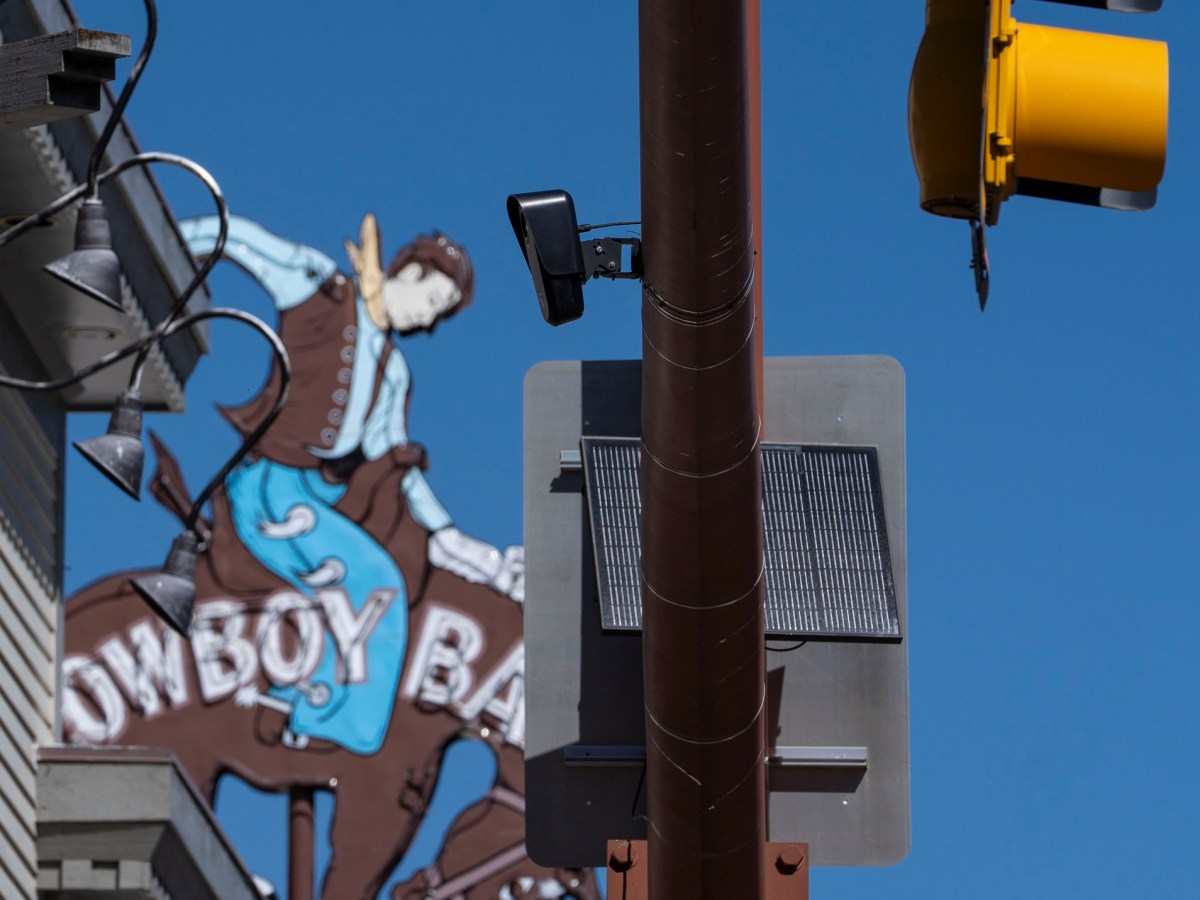
The systems that read and track license plates on moving vehicles have raised civil liberty complaints, led to lawsuits over misuse by authorities and are now under fire in numerous states nationwide, including in Wyoming. The Jackson Hole News&Guide reported that on Monday five out of 28 of the controversial Flock Safety-brand license plate reader cameras placed around the northwestern Wyoming tourist destination had their lenses covered with silver spray paint or duct tape. Jackson police told the News&Guide that the extent of the damage remained unclear.
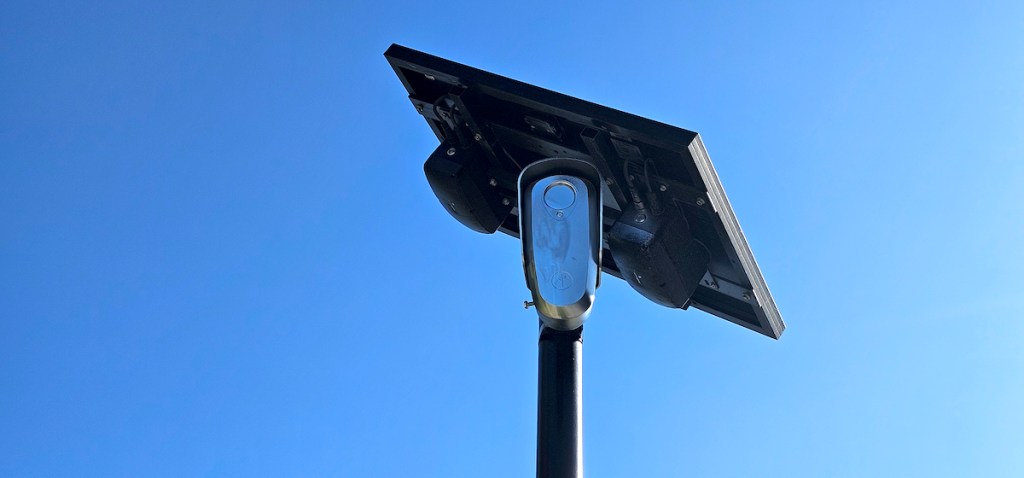
In Douglas, the Motorola cameras being installed in police department patrol vehicles have the technology to be used as automatic license plate readers — cameras that can search a license plate without an officer pressing the button. The cameras have the hardware to read license plates but need to be manually activated to function. Motorola has offered a free, one-year trial of the system, with the option to renew after the year for $13,470. The contract allows the agreement to be terminated quickly, Douglas City Attorney Mike Armstrong explained Monday to the Douglas City Council.
During Monday’s meeting, the council also discussed a proposed memorandum of understanding to share surveillance data with the Wyoming Division of Criminal Investigation. No decisions were made, but the issue will likely come up in a future council meeting.
The draft MOU between DCI and the Douglas Police Department would allow immediate data sharing between credentialed personnel with access to their respective accounts. It includes a “without cause” termination clause.
“The purpose of this MOU is to outline conditions under which DCI and DPD will share and use License Plate Recognition (LPR) data (scanned plates) and/or ‘hotlist’ information,” the draft MOU states. “The Motorola Solutions system provides for simple point-and-click data sharing between credentialed DCI and DPD managers with data sharing privileges enabled by their respective agencies.”
While the document states that DCI would share its Motorola data with Douglas, DCI Commander Ryan Cox told the Douglas Budget on Tuesday that the state agency does not have a license plate reader system in place.
“DCI and DPD each authorize access to its LPR detection data and/or hotlist information residing in its Motorola Solutions account to each other as permitted by applicable state law,” the MOU reads.
The Douglas Police Department is still in the process of developing usage policies for the proposed system, a first for the city. The proposed system would be operational once the Motorola cameras are fully installed in Douglas police cars. Without the license plate reading system activated, the devices function as a more traditional in-car camera, and without city council approval, the department would not activate the automated function. Additionally, the department does not plan to participate in the national data-sharing network, similar to Flock’s.
“Our agency’s priority remains on serving our community with safety as our top priority. If for any reason the Douglas City Council decides not to move forward with this technology, our efforts on this matter will cease entirely,” the Douglas Police Department said in a statement. The Douglas City Council appeared to favor the approach, although Councilmember Perry Hershberger had reservations.
“And the poor guy in Colorado that has been pulled over every other day for the last six months because a Flock camera, or a license plate reader, has said that license plate (has) got a warrant on it, and they keep pulling him over, and he doesn’t have a warrant,” Hershberger said during the discussion. Hershberger was referring to Kyle Dausman, a resident of Cherry Hills Village, Colorado, who despite not having a warrant has been pulled over repeatedly by his local police after his plate was incorrectly entered into Flock’s hotlist. The story, first reported by 9NEWS in Denver, has made national headlines.
Mayor Kim Pexton and Councilmember Ron McNare were also aware of the concerns.
Councilmember Joel Weeks, a former Converse County undersheriff, touted the potential public safety advantages of such a system. He cited the case of Stephanie Crane, a 9-year-old who disappeared in 1993 in Idaho while he was stationed there. A late-model yellow pickup was reported in the area, and Weeks believes the system could have helped find the missing girl.
“But (when) we have something like this, this little girl, a situation like that, you can go back and you can say, ‘Okay, look, nobody can get out of town without us knowing… So let’s look.’ and, you know, well, we saw there was a yellow pickup in the area. Well, there’s a yellow pickup and it went out East Antelope Road,” Weeks hypothesized. “At least we have an idea. I think it’s a great idea. 100% support.”
Interim Douglas Police Chief Avery Cowardin said the data collected by the cameras would be subject to the same data retention schedule the city already has in place: a seven-day period before deletion. Cowardin also said their policy has an “officer verification” element to prevent any mistakes potentially made by the system.
“I just didn’t want to feel rushed.”
Glenrock Attorney Amy Iberlin
Glenrock hits pause
Across the county, Glenrock has put a contract renewal with Flock, a different type of automated license plate reader system, on hold until Oct. 16. That gives town officials time to work out contract terms to their liking. If the terms still aren’t in place by Oct. 16, the town will request another extension, according to Glenrock Police Chief Colter Felton. He said he would make the new contract available to the public after the proposed changes are in place. The cameras are still operating while contract changes are being made.
“I just didn’t want to feel rushed” to renew the contract, Town Attorney Amy Iberlin said in an earlier interview. “(But) if I have questions about the clear language, supposedly clear language of the contract, I want those questions answered from the legal side. “And given the council’s feeling on these issues and given the questions that have been related to this — and after the special meeting where folks are identifying real issues that I think are really important and potentially issues that we need to address in this contract — I just don’t want to feel like we need to make this immediate decision, or else we’re under this automatic renewal for another few years.”
Felton is considering additional oversight, including potentially having a member of the Glenrock and Rolling Hills town councils perform regular audits with him.
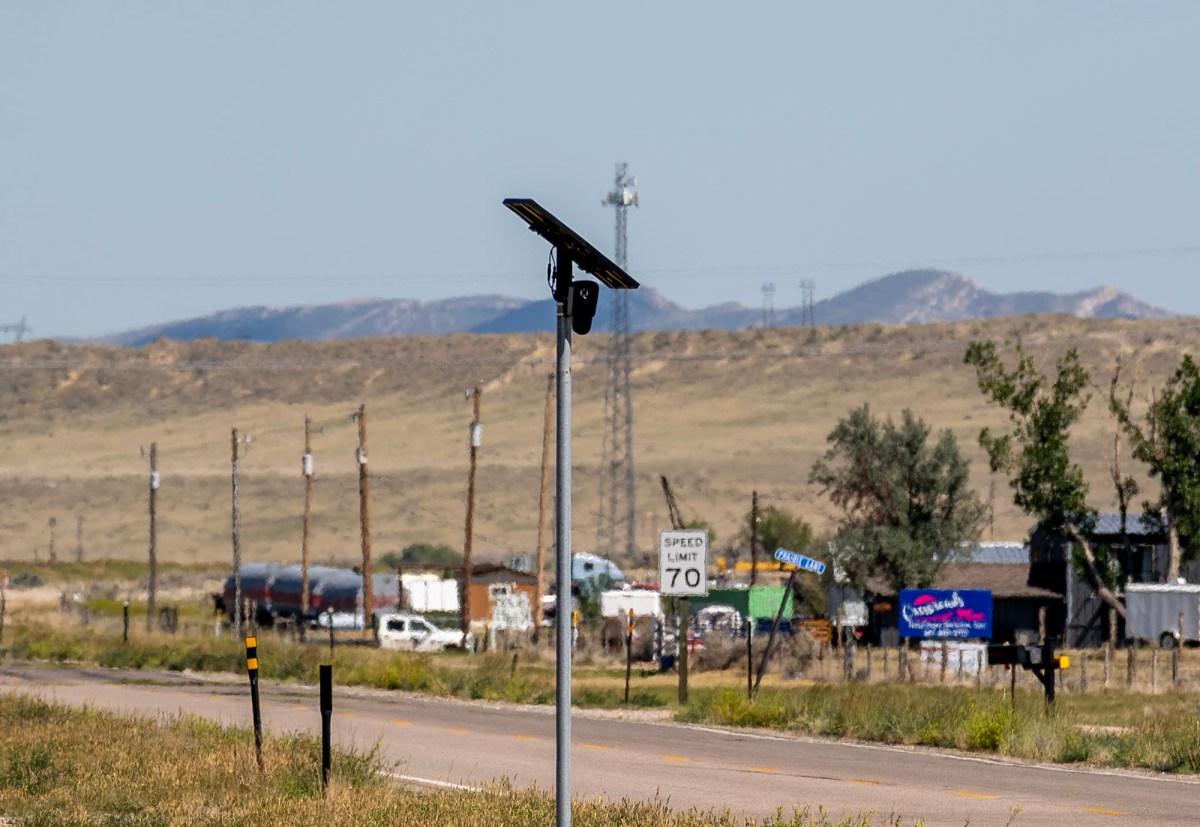
The cameras, which first garnered public attention in early July, have caused an uproar among concerned citizens across Converse County. Residents were outspoken at an Aug. 25 public meeting where they brought up Fourth Amendment due process concerns, privacy and the way the cameras were originally approved. The cameras received a green light during a budget session, which some residents saw as a sleight-of-hand maneuver to get them installed quietly. There are four stationary cameras on the outskirts of Glenrock and one in nearby Rolling Hills.
Jack Street, an outspoken critic of Glenrock’s Flock system and a member of Wy4Privacy.org (which had its first meeting Sept. 10) sees this as a good starting point.
“I appreciate the respectful dialogue and the willingness to hit pause,” Street said. “There’s still work to do, but progress like this gives me hope that we can rebuild trust through openness and accountability.”