


In 2024, the National Elk Refuge had 11 full-time employees helping to feed elk and bison, greet 300,000-plus tourists at its visitor center and steward 24,700 scenic acres just north of Jackson.
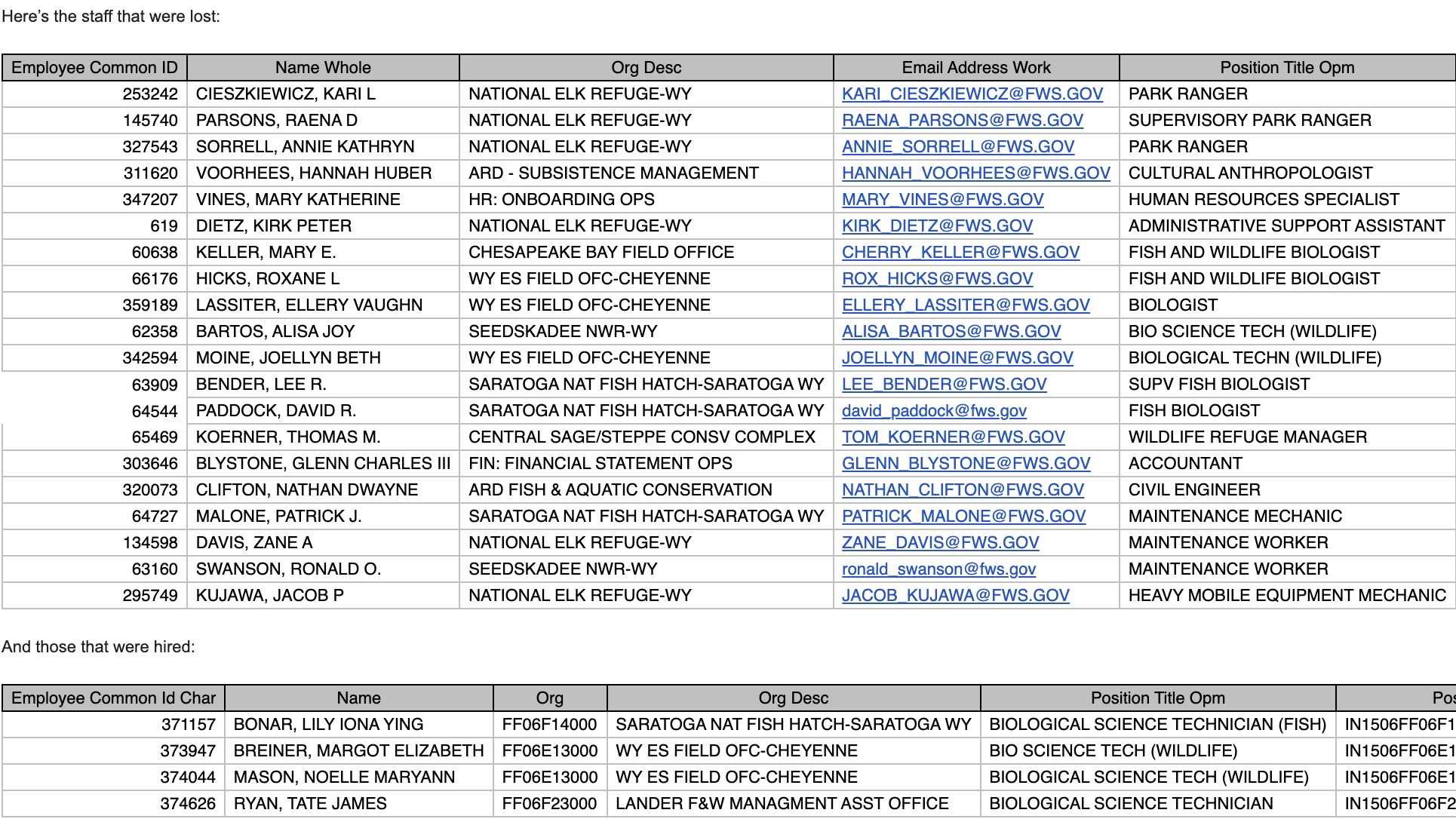
During the tumultuous two Trump administration-led years that followed for federal workers, six of those 11 staffers have departed. Three refuge employees described as rangers left their jobs, and so did a maintenance worker, heavy equipment operator and administrative assistant.
Meanwhile, no employees were added, at least through late June 2026. That leaves five full-time staff — just 45% of the prior workforce — remaining to care for a wildlife refuge that was created by Congress 114 years ago in response to bad winters when elk starved to death.
Although the National Elk Refuge’s staff has been hit particularly hard, the hollowing out of its workforce is a microcosm of how the U.S. Fish and Wildlife Service has fared overall. The federal agency charged with overseeing wildlife habitat and imperiled species for the United States has lost 36% of its staff, dropping from 9,957 to 6,333 total workers between 2024 and 2026. That is according to employment data acquired by the Center for Biological Diversity using the Freedom of Information Act.
“These staff cuts are a cruel disaster for America’s endangered species and wildlife refuges,” Noah Greenwald, the organization’s endangered species co-director, said in a statement.
Overall, the Fish and Wildlife Service lost 1,900 scientists, including fish and wildlife biologists, foresters and fire managers, Greenwald calculated.
“This brain drain will be hard to undo now that the Fish and Wildlife Service has lost so many expert scientists who helped save endangered animals and plants,” he said.
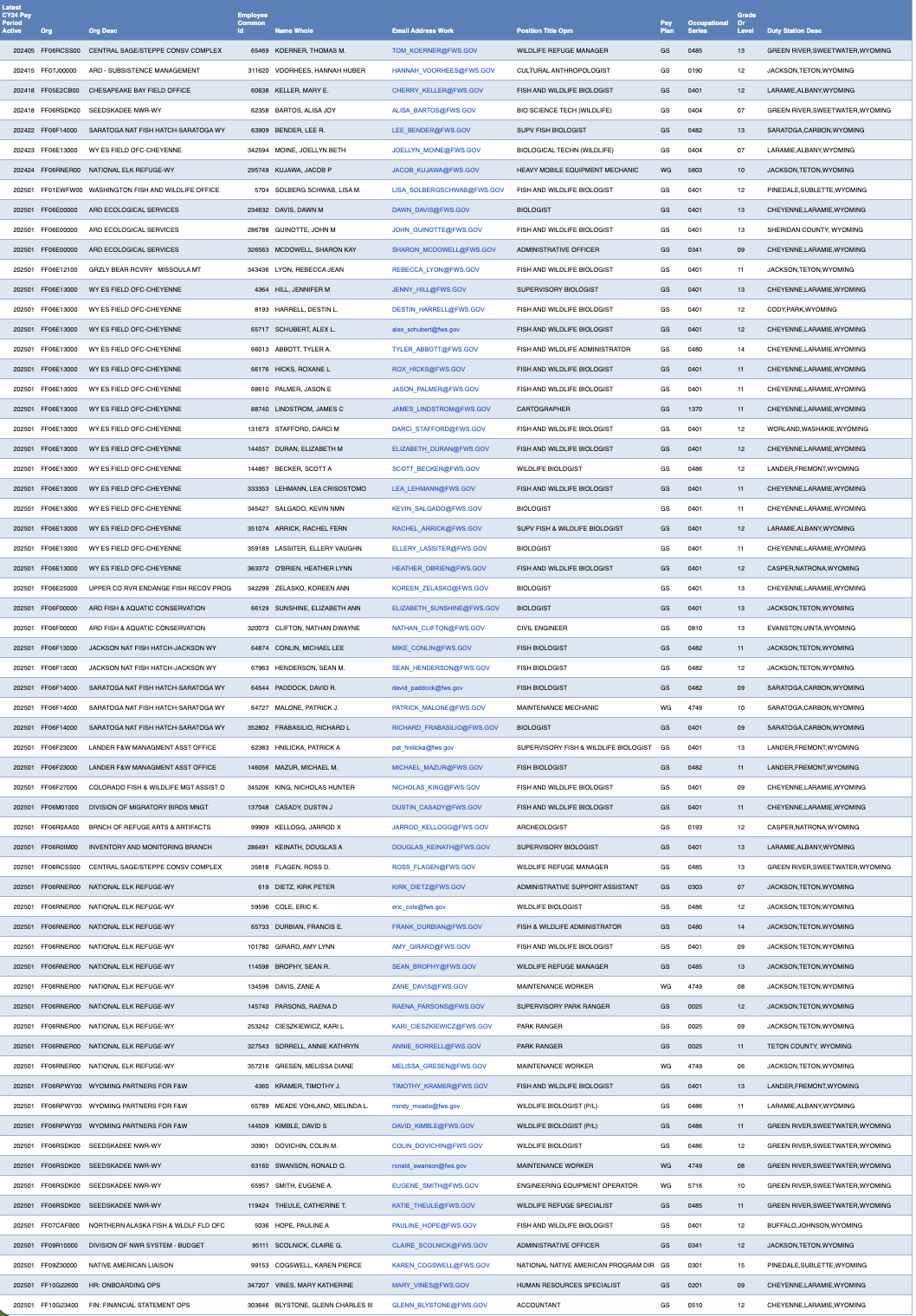
The data used in this story come from the Center for Biological Diversity’s information request. The agency‘s workforce in Wyoming, the home state of Director Brian Nesvik, fell by 25%, holding up better than most states. There were 64 Fish and Wildlife employees stationed in the Equality State in 2024. Since then, 20 of those employees have left, while four have been added. That leaves 48 employees in Wyoming, which is home to eight wildlife refuges and two federal hatcheries that are spread across more than 100,000 acres.
WyoFile’s inquiry to the Fish and Wildlife Service’s regional press contact received no response before this story was published. Nesvik, who leads the agency, could not be reached for comment.
Fish and Wildlife Service workforces in neighboring states have been hit even harder.
Montana-based staff fell by 40% to 116 full-time employees, and Utah’s workforce slumped by 32% to 50 staffers. The Fish and Wildlife workforce in Colorado fell 41% to 272, and Idaho’s dropped by 35% to 112 employees.
The modern era has been tough for the U.S. Fish and Wildlife Service well before cuts were imposed by the Trump administration. An audit of the service’s 573 national wildlife refuges conducted in the spring of 2025 found that not a single refuge had ideal staffing and resources.
“Capacity right now is at a tipping point that puts both the economic and the conservation vitality of the National Wildlife Refuge System at risk,” National Wildlife Refuge System Chief Cynthia Martinez told refuge advocates in April 2025.
Nearly a year and a half later, conditions have worsened, said Desiree Sorenson Groves, president of the National Wildlife Refuge Association.
“That hasn’t improved. How could it, if you lose 35% of your staff nationwide?” Sorenson Groves told WyoFile. “There’s no refuge that all of a sudden was made whole, that I know of. If there is, that’s a unicorn that I haven’t heard about.”
Sorenson Groves emphasized that the depletion of the workforce at the National Wildlife Refuge System has been ongoing for two decades.
“It goes back to the Obama administration, and it is just a straight downward dive,” she said. “It’s a free fall.”
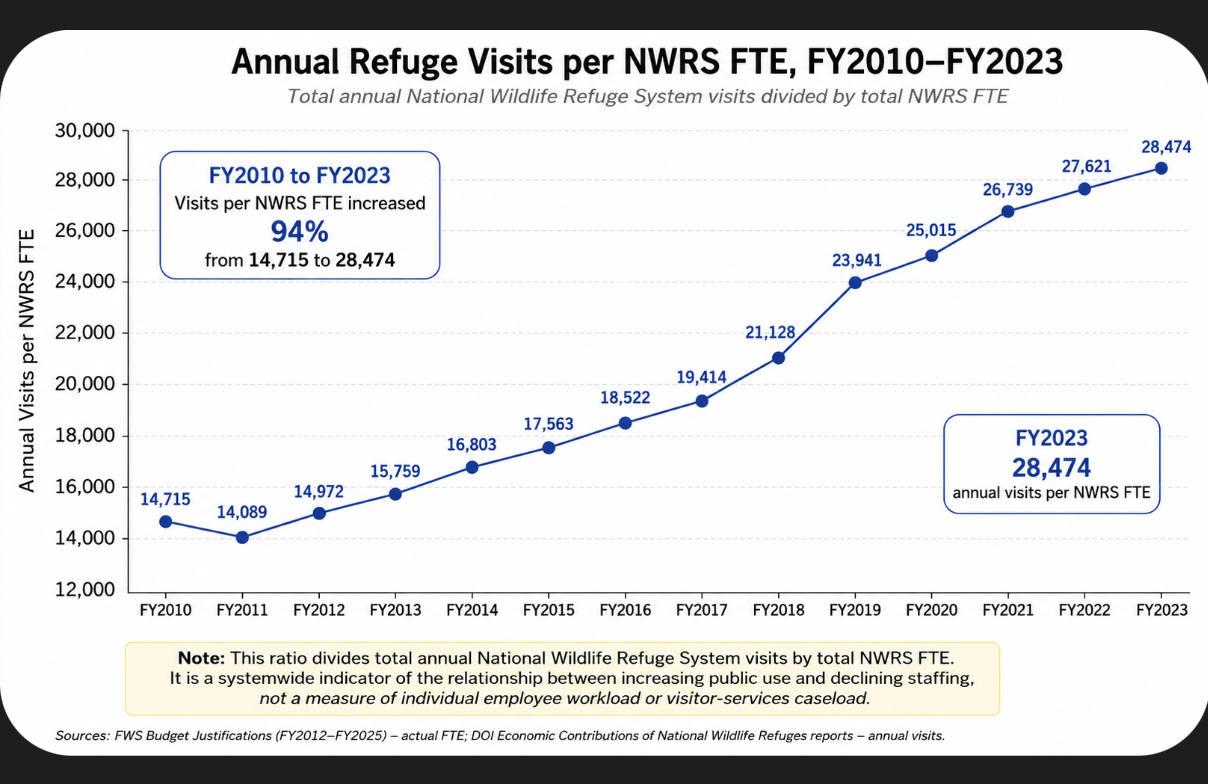
The total National Wildlife Refuge System staff topped 3,200 as recently as 2012, but fell to fewer than 2,200 by fiscal year 2025, according to data Sorenson Groves provided. Meanwhile, public interest in visiting the refuges has surged.
“People want to go to public lands — that’s growing, while you have staffing going down,” Sorenson Groves said. “They’re going in completely different directions. The amount of visitors per [full-time employee] has increased by 94%.”
Sorenson Groves did have some cause for optimism. An audit of the National Wildlife Refuge System led by Wyoming resident Josh Coursey, she said, is a “good thing.”
“I think it’s long, long overdue, to be perfectly honest,” she said. “Brian [Nesvik] was asked at the North American Wildlife Conference if he was doing this so that he could divest refuges. He was unequivocal and said, ‘No, absolutely not.’”
The refuge system’s been through rough stretches before, Sorenson Groves pointed out. There was a point during the mid-1990s, she said, where there was low staffing, “not a clear mission” and some “inappropriate things” happening on refuges around the country.

A broad coalition that united parties like Defenders of Wildlife with the National Rifle Association pushed for reform, and they got it. Congress passed the Refuge Improvement Act in 1997, and conditions improved, she said.
“Things were pretty bad then,” Sorenson Groves said. “Right now, the reason it’s not as bad is because we still have the law to guide us.”

C.J. Box next book should be about Joe Pickett gets laid off and has to flip burgers at the Burg-O-Pardner restaurant.
I wonder how many of the people that left are now working for the hundreds of non profit conservation groups in the country?
Of course there are staff and resource shortages. Trump and his cronies cut the funding in order to pay his billionaire donor friends. It’s a vicious circle.
Trump and his minions destroying America. I guess that’s the ‘conservative’ way, Eh?
What a bunch of losers.
The anti-everything-Trump wyofile headline implies declining U.S. Fish and Wildlife Service personnel numbers are all because of Trump. Then, further down in the article anti-everything-Trump wyofile writes the following.
“The modern era has been tough for the U.S. Fish and Wildlife Service well before cuts were imposed by the Trump administration.
Sorenson Groves emphasized that the depletion of the workforce at the National Wildlife Refuge System has been ongoing for two decades.”
“It goes back to the Obama administration, and it is just a straight downward dive,” she said. “It’s a free fall.”
Yes, wildlife issues have always taken a hit. However, it’s a different thing when the idea is to destroy an agency. That’s what it’s about under trump, just like many other agencies.
You really can’t have a positive headline for the felon in the White House.
Take off your MAGA rose-colored glasses and read the entire story factually. Don’t throw your political proclivity at Wyofile. The point of the story is that while visits to these places are up, the staffing has/is going down.
Yes, declining for two decades secondary to non-competitive wage and benefits. Instead of recognizing and correcting this your hero, with his then buddy ellen musk, hit it with a chainsaw! That’ll make America great won’t it!
I very seldom agree with the viewpoints of environmental groups like the Center for Biological Diversity but this is one of those times. These staffing cuts to USFWS, as well as those to other public land agencies, absolutely are a disaster and a brain drain.