
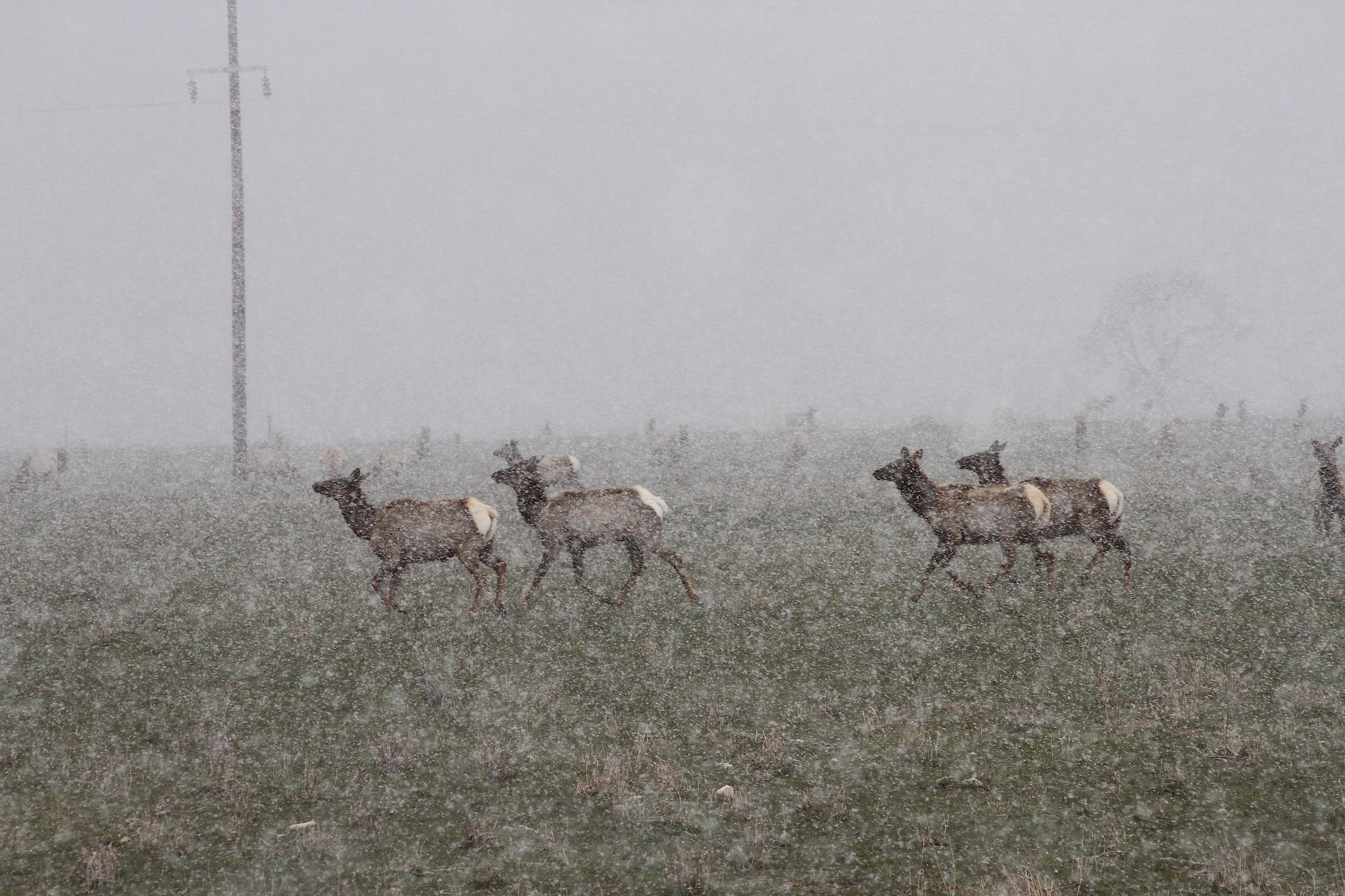

A long-range plan for the National Elk Refuge released Friday afternoon proposes continuing to feed elk for the long haul in the Jackson Herd, even as deadly chronic wasting disease propagates across the landscape.
Long-awaited, the refuge’s draft environmental impact statement includes a “proposed action” calling for a “range of strategies” to reduce the number of overwintering elk on the 24,700-acre U.S. Fish and Wildlife Service property to 5,000 animals over the next 10 years. That’s the same numeric goal listed in the 2007 plan the refuge is operating under currently — a goal the service has, thus far, been unable to achieve.
Strategies that the draft plan highlights include increasing and modifying hunting seasons, adjusting the feeding season start and end dates, and redistributing elk across the landscape — the last of which has proven to be a persistently difficult task.
Additionally, the plan calls for using hunters to more effectively target “suburban” elk that only migrate short distances and spend summers on nearby ranchland and in subdivisions between Wilson and Grand Teton National Park.
A multi-agency “Cooperative Elk Studies Group” will meet annually in June to determine if the strategies are working and if changes are needed, based on the “best available science.”
There was anticipation that the National Elk Refuge’s plan would include rigid management designed to address the spread of chronic wasting disease, an always-lethal malady that showed up in Jackson Hole in 2020, was detected on the refuge for the first time this spring and again in July.

Federal wildlife disease experts who’ve modeled CWD transmission on the refuge predict that feeding in the face of the disease will result in the worst-case scenario for elk populations and elk hunting for the Jackson Herd.
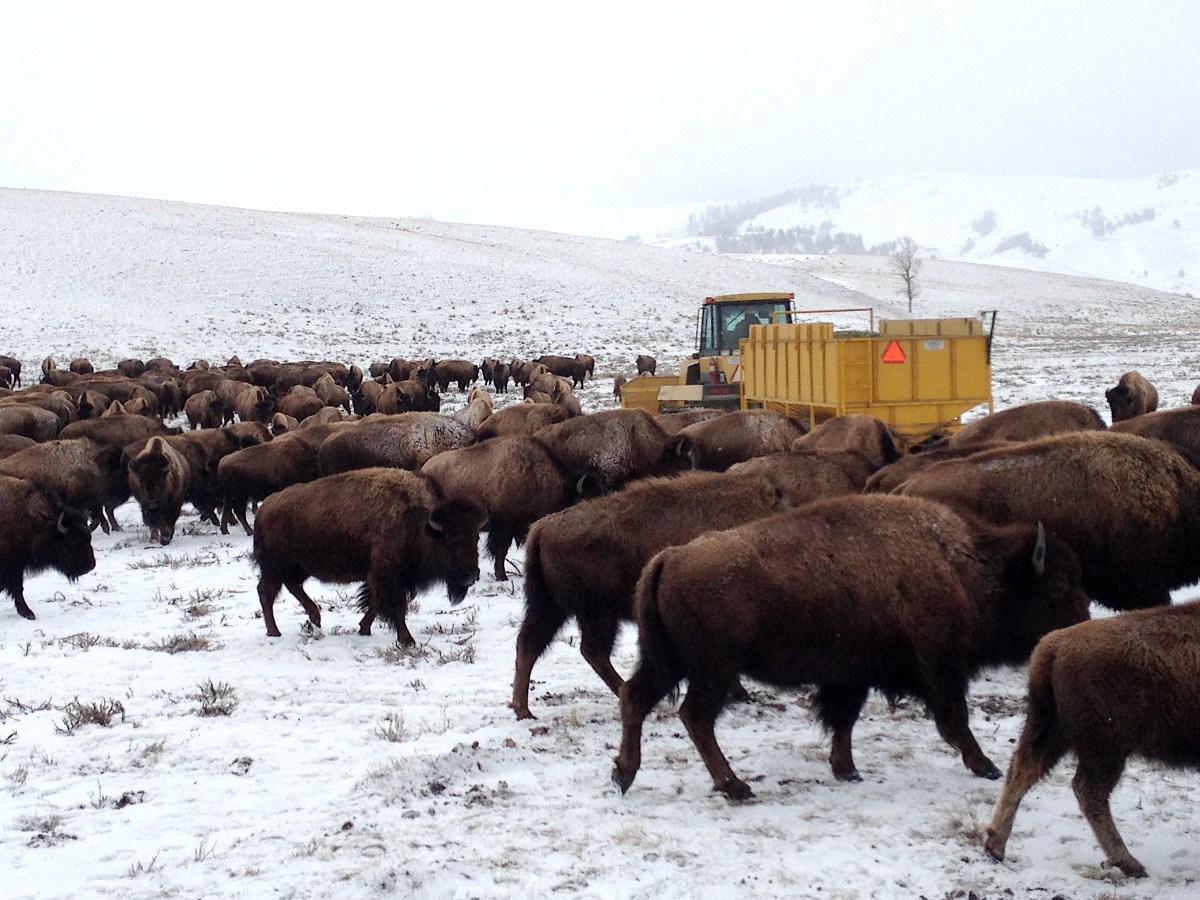
While the National Elk Refuge plan was in the works, federal scientists studied what, at the time, was described as the forthcoming proposed action. It called for feeding elk until rates of the ugly prion disease reach 7%, and feeding bison for the long haul.
But those triggers were stripped out of the “proposed action,” Alternative D, included in the draft EIS.
U.S. Fish and Wildlife Service Director Brian Nesvik, who ultimately calls the shots at the refuge, is a former Wyoming Game and Fish Department director who in 2020 described elk feeding as a “wicked problem” that isn’t going away in the “short or mid-term.”
Feeding has occurred at the National Elk Refuge since 1912, and it’s intended to keep wapiti off of private land, prevent the spread of brucellosis to cattle and prop up populations to support hunting. But it’s also a disease-spreading practice that unnaturally concentrates animals, truncates migration routes and is seen by many experts as an antiquated way of managing wildlife.
“Feeding only occurs in a handful of counties in northwest Wyoming,” former National Elk Refuge manager Brian Glaspell said in 2019. “Everybody else thinks it’s a bad idea, let’s just be honest about that.”

National Elk Refuge staff were not granted clearance to discuss the plans on Friday. A press release sent out by the Fish and Wildlife Service that afternoon came from an unnamed email account. WyoFile’s inquiry about an interview did not receive a response before this story was published.
The public can comment on the updated plan and draft EIS until Oct. 13.
A virtual meeting — join by clicking here — has been scheduled from 11 a.m. to 1 p.m. on Sept. 15. An in-person meeting is also scheduled for 5 to 7 p.m. on Sept. 22. The location has not been announced.

How can any objective reporting or discussion of this topic fail to include the WGFD testing data from hunter harvested elk? Publicly available data on the WGFD website indicates that 1,880 hunter harvested elk were tested for CWD between 2021 and 2025 from the Jackson, Fall Creek, and Afton herd units with a 0% detection rate and a 95% confidence interval! How would reducing elk numbers or eliminating feedgrounds possibly improve that number? The migratory herds in western Wyoming spend their summers and winters in vastly different habitats….as lower elevation habitat is increasingly developed, adequate winter range is the limiting factor in over-winter survival. How many of those opposed to feedgrounds are living in homes built on what was previously winter range? Scheduling a public meeting on this topic for September 15 is destined to exclude all outfitters/guides and the majority of hunters given it’s the opening day of general deer season and the middle of the general season for archery elk in western Wyoming….one has to wonder if this was intentional?
In a perfect world, elk would still be able to migrate from Yellowstone through Jackson Hole and from the Gros Ventre and down the Green River to natural winter ranges to the south and east. Unfortunately, humans messed up those routes well over 100 years ago. If we want large numbers of elk, feeding is about the best option we have. Without it, most people won’t like the results.
Thousands of elk in the Pinedale, Big Piney, and other herds are already in the Green River Basin, Wind River Mountains, and Wyoming Range. They’re just not currently allowed to range off feedgrounds during winter. Thousands of elk from southern Yellowstone, Teton Wilderness, the Gros Ventres and Jackson Hole can winter naturally in the Gros Ventre Valley just as Warden DC Nowlin recommended in 1907. A few thousand can winter in Jackson Hole without feeding. Elk from the Upper Green, eastern Gros Ventres, and southern Absarokas can winter naturally in the Dubois area. Uninterrupted migration routes, protected winter ranges, no feedgrounds needed. Healthier, sustainable, available.
This is a bad decision and I am sure was heavily influenced by the cattle industry. Ranchers don’t want elk on their land in the winter, someday we might not have elk but we will have cattle, sad.
Here is my question about this concern, to all biologists that know anything about CWD. Why is the rate of CWD in mule deer going up so fast? They do not congregate on feedgrounds or really anywhere to they feed congregated. 22 feedgrounds in the state for elk and last I saw the numbers of elk with CWD had dropped. Does this make any sense? Not to me but it absolutley disproves any theory that feeding them is spreading CWD. And remember this terrible disease that started on a CO game farm has been in WYO since the 60s!
Mule deer do congregate into larger herd units in winter. And they will concentrate around valuable resources, including feed, water, minerals, and shelter – be they natural or human provided. Elk on game farms develop CWD at much higher prevalence/incidence than free-ranging animals, this is well documented. So, models and common sense suggest prevalence will be higher in feedground elk than non-fed or non-concentrated elk at some point. Time will tell. CWD did not start on a game farm. CWD was first recognized in deer at a research facility in Fort Collins. It likely was not present in WY until the 70’s (again, in research deer, from CO). Still much to learn about the disease on elk feedgrounds, but everyone that’s worked with the disease for decades has significant concerns. Once it’s “there” (in soils, plants, etc.) it’s there for good.
The old stale CWD fear mongering story.
Whether the elk are fed or not they will ALWAYS congregate on the refuge. The adaptation to not migrating comes from the desire to no longer run a gauntlet of canis lupus occidentalis for hundreds of miles.
This line is a hoot.
“‘Additionally, the plan calls for using hunters to more effectively target “suburban” elk”’
Good luck to any hunter trying to get access on only private land in areas 84-85.
Mike, you should have boasted of increased hunting opportunities with Area 75 DOUBLING the number of tags this year. Make it sound like the elk are once again overpopulated.
But reporting the cow tags went from 20 to 40 where 1500+ used to be allocated would going a little too far, wouldn’t it?
Dumb
So. We can comment on the “updated plan.” But there is no updated plan. It is the same failing plan we’ve had since 1912: to feed the elk, like they are pets. As chronic wasting disease is 100% fatal, we can expect that our beloved elk herd will be decimated in the near future, while we watch wringing our hands. All because our state values livestock over wildlife. When it comes down to it, livestock wins everytime.
Barbara, the Laramie peak elk herd has had exposure and positive CWD cases since 1986.
That herd is FAR healthier than every elk herd in the GYE without CWD cases.
The endless handwringing over this in completely unnecessary.
It is not intelligent to continue doing things that previously have conclusively proven to fail.