

Opinion
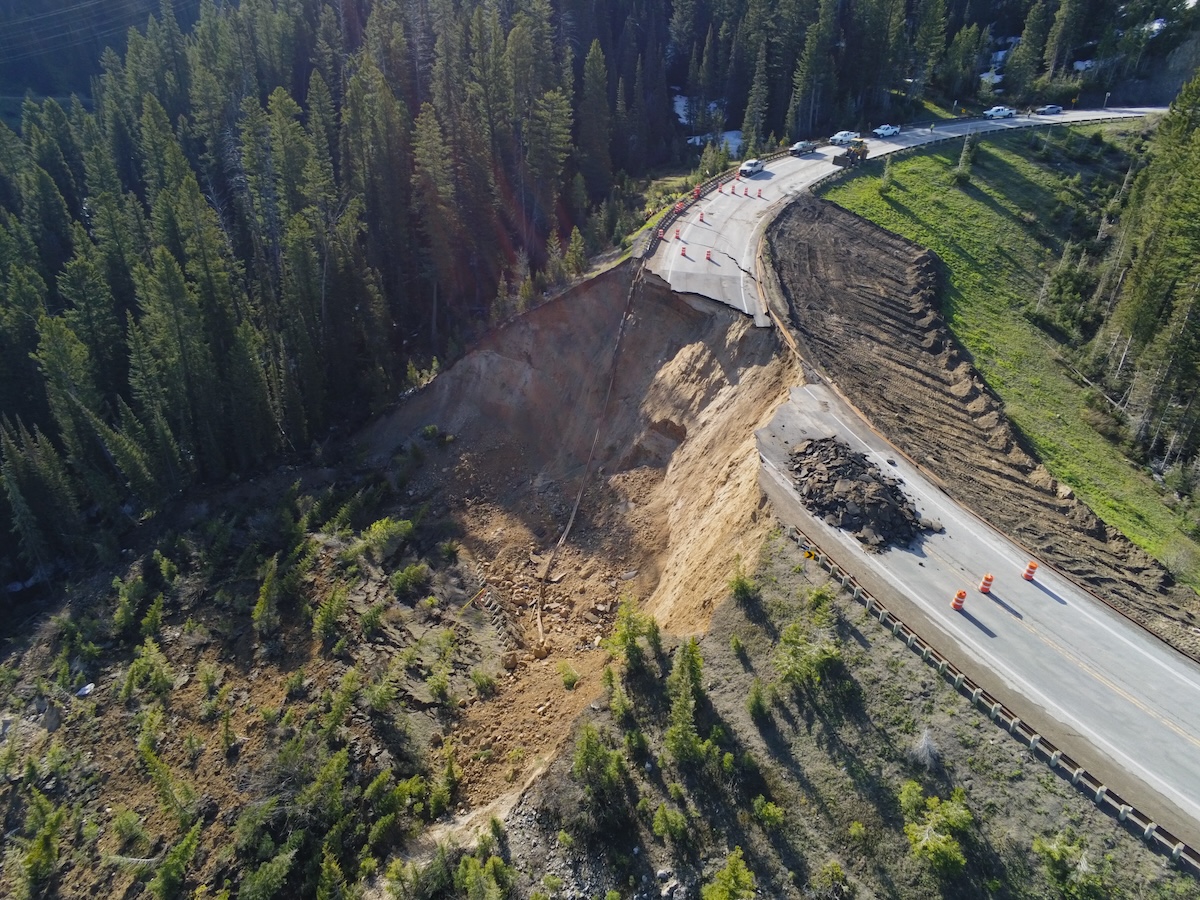
“Welcome to Wyoming, the Frontier of America’s New Gilded Age.” That’s the title of an article about Teton County that appeared in The New York Times on March 2 of this year and again in an updated version on March 9. Under the general heading of “Billionaire Boom,” this article featured several photographs including a dramatic image of the Teton Range and another equally dramatic aerial view of Wyoming Highway 22 over Teton Pass. Highway 22 is the road many Jackson workers use to get from their homes in Idaho to their jobs in Wyoming. Often, these workers live in Idaho only because their jobs don’t pay enough for them to live on the Wyoming side of the pass. As Teton County’s Housing Director April Norton notes, “We’ve added 4,300 jobs in the last ten years but only added 300 year-round residents.” It’s a good bet the other 4,000 workers live in Idaho or south of Jackson in Lincoln County. Some even live in their cars as a friend of mine did when he worked in Jackson.
At 8,431 feet in elevation, Teton Pass presents beautiful views, but because of the steepness and length of the grade, the number and sharpness of curves in the road and the severe winter conditions including heavy snowfall, ice and avalanches, this highway section is one of the most dangerous in Wyoming. If I had my druthers and worked in Jackson, I’d want to live in town and avoid that drive except on a sunny summer day. But, you know, we live where we can afford to pay our bills.
Before I list some of the economic figures for Teton County mentioned in the Times story, I’d like to note the sources the paper consulted. These included the financial data companies Forbes and Bloomberg whose research focuses on business reporting, market analysis and wealth measurement, as well as the Internal Revenue Service, the Federal Reserve, the Bureau of Economic Analysis and the U.S. Census Bureau.
According to these sources, Teton County, Wyoming, is the richest county in the country per capita and also the county with the highest wealth inequality in the country. The top 1% of households in the county have an estimated average annual income of around $35 million — 221 times more than the bottom 99%. I guess those of us in the bottom 99% are all in it together, though I have my doubts. Based on data from 2020 to 2024, the U.S. Census Bureau estimates Teton County’s median household income in 2024 dollars to be $124,172. That should be plenty, shouldn’t it? Maybe not. According to Rosie Read, founder of the Wyoming Immigrant Advocacy Project, “Immigrants often work as housekeepers, dishwashers and landscapers, and no one will pay them the $150,000 a year or more they need to live comfortably here.”
When I looked up recent public sector salary ranges that Teton County reported to the state, I found that firefighters, school teachers and police officers were generally paid $55,000 to $90,000 a year. For any other county in Wyoming those would be pretty good salaries and $150,000 would be very good indeed. But in 2025, the average single family home price in Jackson rose to above $7 million.
When I was a kid, my family moved from Oregon to Arizona because of my dad’s health. In Oregon, he had a good job with full union benefits in a Crown Zellerbach paper mill. In Arizona, a right-to-work state, he was told by his new employers, “You should just be thankful you have a job.” I can still see him storming around the kitchen shouting, “Right-to-work, my ass, it’s right-to-starve.”
While the billionaire boom is a national phenomenon, it’s particularly marked in Teton County where the total estimated wealth is $14.3 billion and the 2024 per capita income was estimated to be $532,903. Of course when the top 1% of the county’s households have a yearly income of $35 million, it’s hard to tell what the per capita figure really means for most people.
What about other counties? Niobrara is often listed as Wyoming’s poorest county with a total wealth of $602 million. According to the World Population Review, the current average per capita yearly income there is $46,467, while the median household income is $64,113.
These figures reveal the ever-deepening gulf between the ultra-wealthy and everyone else. We’ve seen the results of such disparities in the past — social disorder and conflict driven by despair and resentment, coupled with political power driven by wealth at the expense of democratic values. By limiting wealth disparity, we can increase justice and social cohesion while offering the possibility of an economically stable and secure life for all.

I didn’t see any specific suggestions in this piece on how to limit/reduce wealth disparity. I consider it more than a little chicken**** to rail about a societal issue without including some plausible, sensible ways to fairly address said issue.
While I wholeheartedly agree that the cost-of-living to average income ratio in Jackson is way beyond insane, the people who live there choose to do so for their own reasons, and in doing so must accept all that goes with living there. I don’t like to even visit that stupid place, much less do I want to live there, but those are just my personal preferences. We are all still allowed to make our own choices about where to live, and what we are willing to put up with in order to live wherever that is.
While I agree that the disparity between the highest earners in America and the rest of us seems unjustifiable, all of the attempts that have been made to reduce the disparity throughout history that I’m aware of, created as many or more problems than they allegedly solved. That being said, I’d love to see a calm, rational dialog take place to try to explore possible way to fairly address the inequality. Unfortunately, calm, rational dialogs simply are not possible anymore.
Go into Jackson’s Target, Albertsons, Ace Hardware, McDs, countless restaurants, meat processor, etc. etc. etc.
Teton County is exploiting people used to living in third world conditions to supply their workforce. These workers will accept living conditions no American or Wyomingite would accept (6,8,10 to a 1-2 Bdrm apt, or motel room).
The epitome of Wealth inequality in this nation is the lone Blue speck on a Wyoming election map.
The Teton County Billionaires essentially have a slave labor work force.
So you’re saying that the billionaires are shopping at Target & Ace Hardware and eating at McDonalds lol.
Teaton county has the most democratic politicians in the state.
Guess if you’re a democrat this is the county to live !
Guess if you’re rich you live in Teton county.
We should not be so naive to fall for the phony red vs blue fight that pits peons against peons while greedy wealth hoarders giggle all the way to the bank. Why did Theil and Musk decide to back the GOP in 2024? Whoever is willing to sell out and do the bidding of those who can afford to buy power gets the dark money PAC support. Party doesn’t matter to them. The article cited is worth reading. Gift link. https://www.nytimes.com/2026/03/02/us/billionaire-boom-jackson-teton-wyoming.html?unlocked_article_code=1.WlA.2Wo8.M5Q1zyqZxUvG&smid=url-share