


An adage in western ranching circles holds: “What’s good for the herd is good for the bird.”
The veracity of the saying, deployed often in discussion about sage grouse conservation, is up for debate. Just recently, WyoFile reported on a new analysis suggesting that livestock grazing can have harmful effects on the chicken-sized grouse, not beneficial ones.
That debate won’t be resolved today. On occasions, however, sage grouse and cattle tolerate each other just fine.
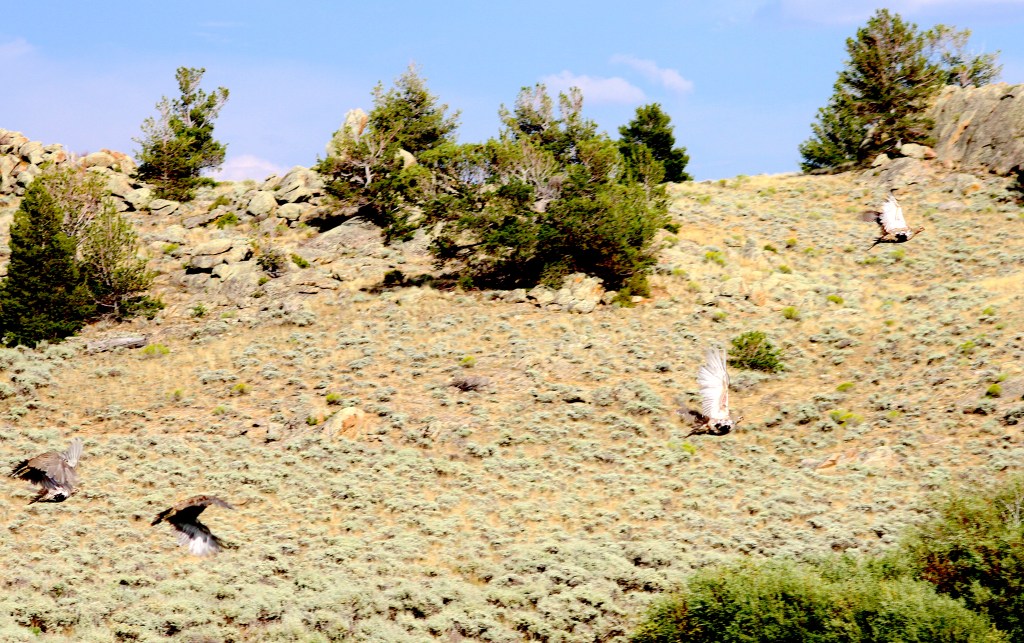
A WyoFile reporter stumbled into the two species cohabitating recently while coming out of the Wind River Range. Confronted by a photographer, the flock fled on foot, headed right for the herd, then continued along into the sagebrush sea.

++What’s good for the herd is good for the bird++ sounds like a falsehood that Managna and his Welfare cowpoke contingency would say. Actually, the wyofile photographer caught a very rare glimpse of Sage Grouse in close proximity to cattle, they usually avoid the bovines. Read closely the comment left here by Jonathan Ratner…now, that’s a “factual” statement
I wonder if Trey Ricks has wondered how the Sage Grouse thrived in close proximity to bison, & if they usually avoided the bison? Here is a fact about the decline in the numbers of sage grouse and nowhere is there any mention of bovines.
“In March 1998, we began to study a population of greater sage-grouse
in Strawberry Valley of northcentral Utah. This population decreased from
between 3,000 and 4,000 birds in 1939 (Griner 1939) to an estimated 150 birds in
2000. The goal of our research was to identify factors limiting the population and
to recommend measures to mitigate or eliminate those factors. Initial work with
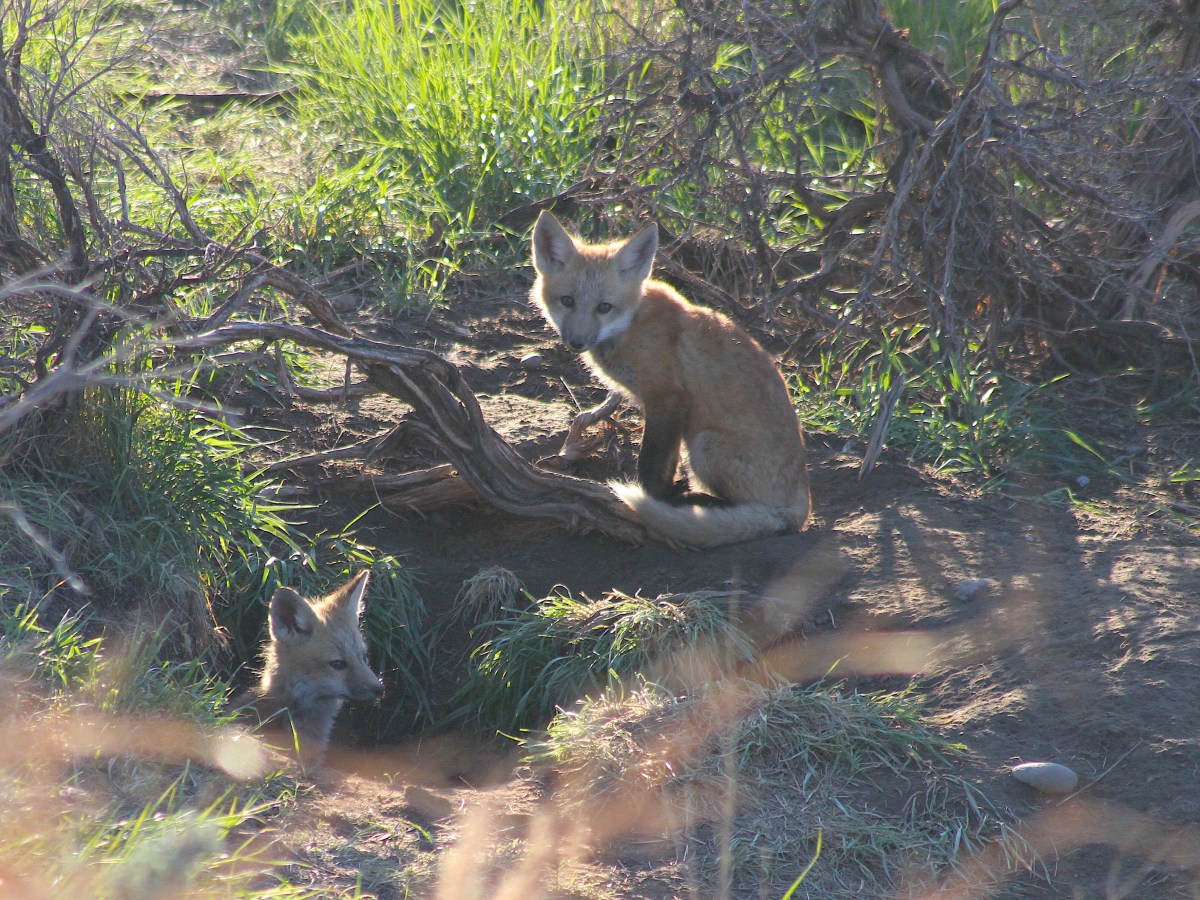
radio-collared sage-grouse showed predation by red fox ( Vulpes vulpes), a
nonnative predator, as one of the major limiting factors contributing to decreased
survival and nest success.”
https://www.wildlifemanagementinstitute.org/PDF/8-Impacts%20of%20Predation….pdf
Unfortunately, everything that Jonathan Ratner says is true.
We should talk more about biodiversity and what is lacking and why.
Sage brush actually kills off grass growth. That been well known fact for 100 years or more. That why past practice was to remove sage brush. Over grazing lead to sage brush take over
But the herd is not good for the bird.
Missing the proverbial forest for the trees….
The issue is not whether sage grouse are afraid of cows, the issue is the degradation of sage grouse habitat by livestock.
I have worked in the area the photo was taken for more than two decades. The dominant grass species should be bluebunch wheatgrass, a large, tall stature bunchgrass, that provides high levels of cover for sage grouse.
Due to abusive livestock grazing over the last 140 years, the plant community has been converted to low stature species that increase under grazing pressure, such as sandbergs bluegrass, threadleaf sedge and western wheatgrass that provide no cover.
The picture clearly shows this is the case. The current degraded herbaceous community doesn’t even come up half way to the low growing sagebrush, typical of the south pass area.
The latest craze in sage grouse conservation is killing predators. The reason predators are having such an effect on sage grouse is because the cover that the species evolved under has been destroyed by livestock.
Then there is the issue of the severely degraded riparian meadows that are so critical for brood-rearing and summer habitat. These are grazed down to 1-2″ providing no cover or insect production.
When the BLM puts up exclosures to keep the cows off these meadows, then the fencing, only needed because of the private livestock grazing on our public lands for less than it costs to feed a goldfish, because a major source of mortality due to fence collisions, even when the fences are marked. The Rock Springs BLM has done research on the level of of fence mortality around riparian areas and its a major factor in the population dynamics. (let me know if you want copies)
And this is only the riparian area fencing and does not include the thousands of miles of fencing in sage grouse habitat needed to ‘manage’ the livestock.
“What’s good for the herd is good for the bird.” is ag industry BS.
Where does Jonathan Ratner arrive at his wild and untrue time lines from; such as; “Due to abusive livestock grazing over the last 140 years”? 2024- 140 years =1884; so how does Jonathan Ratner know how many livestock were grazing where he now claims to know all of the facts about?
I hope that Jonathan Ratner can see from this excerpt from the Lewis & Clark Journals that before activities like land development & oil and gas production and Wyoming ranchers grazing cattle on BLM land, that the great American west was not a land flowing with milk & honey like the promised land that Jonathan Ratner must believe existed before the ranchers came to produce the life stock that helps to feed Americans.
“They stayed there eleven days. Considering their circumstances, they wrought mightily. When the hunters proved unable to bring in enough deer, they ate a horse. That finished, they turned reluctantly to fish and roots, the latter of which “filled us [the two captains] so full of wind, that we were Scercely able to Breathe all night.” Despairing, some of the crew followed the example of the French rivermen and began buying and eating fat Indian dogs.”
http://lewisandclarkjournals.unl.edu/read/?_xmlsrc=lc.lavender.01.14.xml&_xslsrc=LCstyles.xsl