


While acknowledging the use of various restraint methods, confinement and force to keep residents under control, defendants in a lawsuit alleging abuse at a state-run facility for delinquent boys contend their actions didn’t run afoul of the law, a court document filed Thursday shows.
The defendants, which include the Wyoming Department of Family Services, the Wyoming Boys’ School and 10 school employees, also dispute some of the former residents’ account of what occurred at the school, including one’s claim that a security guard shot him with “a be[a]n bag gun” and ran him over with a side-by-side. “There is no evidence any of the Defendants ever operated a side-by-side or employed a bean bag weapon,” the new filing states.
In 2024, six former residents — Blaise Chivers-King, Dylan Tolar, Charles “Rees” Karn, D.H., Haiden Willis and Koby Cranford — joined a lawsuit alleging abuse at the Wyoming Boys’ School, including extended periods of solitary confinement and physical harm. The school, a 38-acre facility near Worland that’s overseen by the Wyoming Department of Family Services, provides delinquent boys ages 12 to 21 with programming that focuses on psychological and emotional development, mental health therapies and “opportunities to make changes in their lives” — though the plaintiffs’ complaint states that “nothing could be further from the truth.”

The defendants’ 76-page response to these allegations recounts disciplinary measures the school took against each of the former residents as well as information from depositions — testimony given under oath — from parties involved on both sides of the lawsuit. The filing also details the state defendants’ arguments for rebuffing the plaintiffs’ claims and urges the court to decide the matter in the state’s favor before the case goes to trial.
Wyoming has, for decades, incarcerated juvenile offenders at the highest rates in the nation, according to data collected by the U.S. Department of Justice. While Wyoming’s juvenile incarceration rate declined according to the most recent data collected in 2023, adjudicated delinquents — juvenile justice-specific terminology for young people convicted of crimes — were removed from their homes and placed in public and private facilities at over twice the national average.
The former residents of the Wyoming Boys’ School claim that while at the facility, they were subjected to physical injury, excessive force and isolation that deprived them of basic human needs. They also allege that they were unlawfully restrained, and that school personnel showed deliberate indifference to their medical needs.
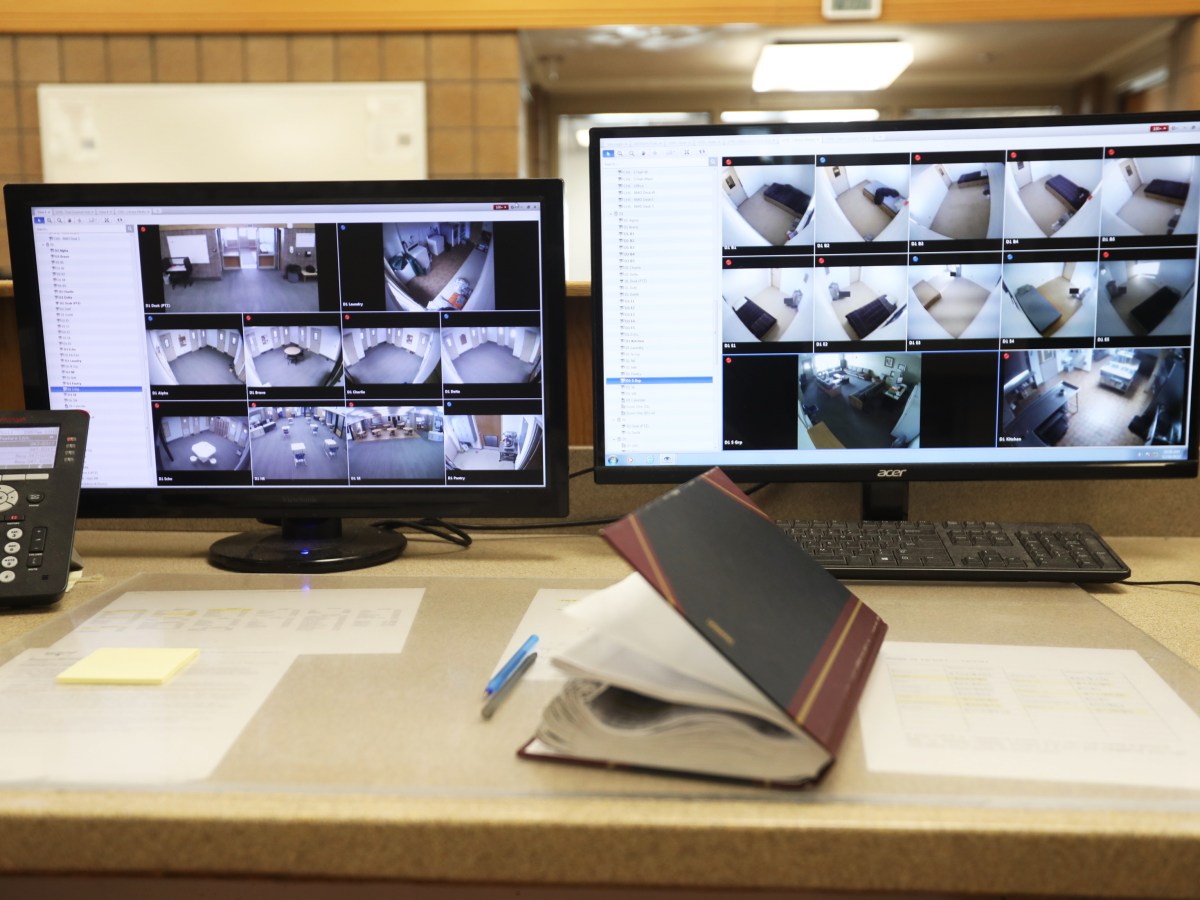
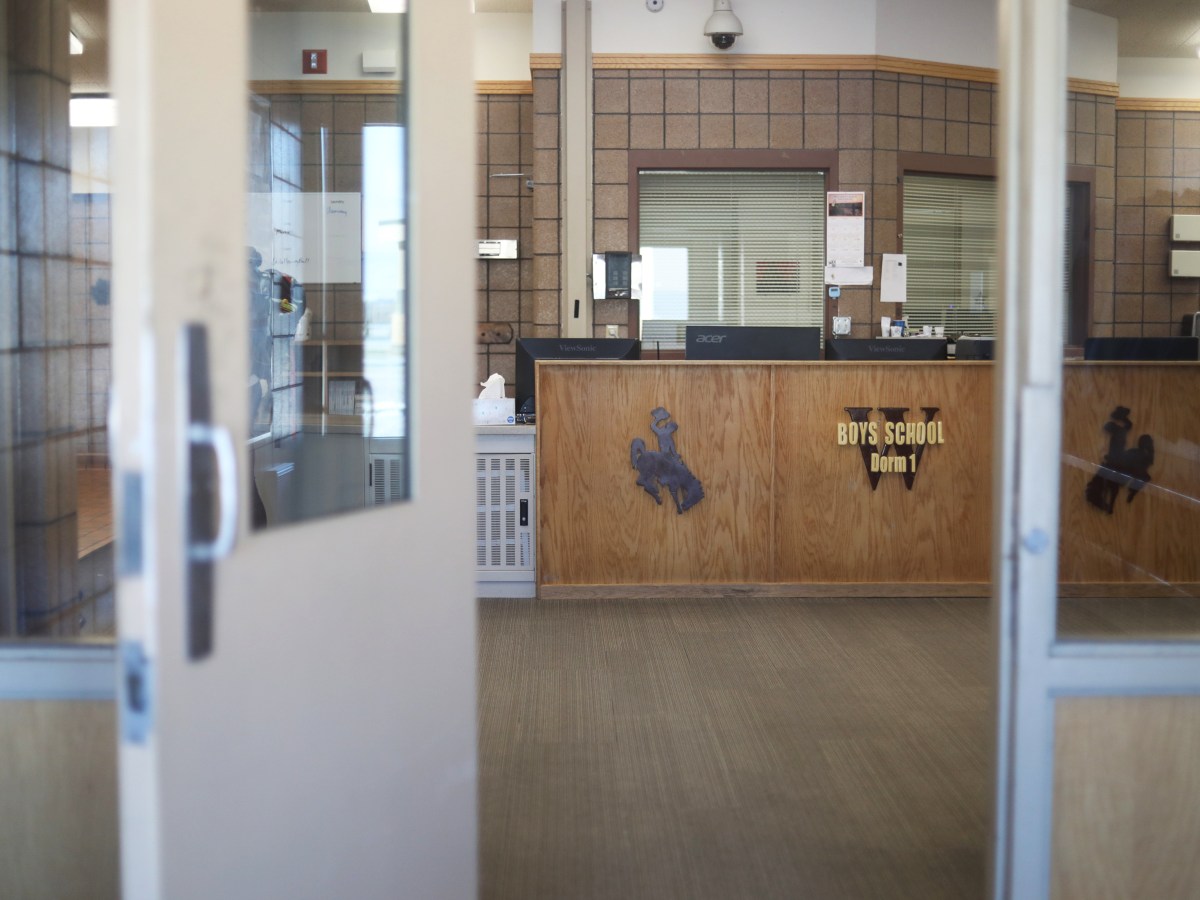
State defendants rebuffed each of these claims, including challenging the former residents’ right to sue.
They argue that two of the plaintiffs — Karn and D.H. — failed to exhaust remedies available through the Boys’ School’s grievance procedures. Defendants cite the Prison Litigation Reform Act, which states that “[n]o action shall be brought with respect to prison conditions” under this title or any other federal law by “a prisoner confined in any jail, prison, or other correctional facility until such administrative remedies as are available are exhausted.”
The school has a grievance procedure, and staff educate residents about this procedure during their orientation, the court filing states. Under the procedure, if a resident has a grievance that wasn’t resolved by talking with staff, they can fill out a grievance form and submit it to the dormitory director, have a staff member give it to the dormitory director or put it in a comment box. “After that, efforts to informally resolve the grievance proceed,” the document states.
D.H. submitted a grievance complaining about a staff member “sending him to bed early,” according to the court document. But the complaint “does not resemble or cover” most of D.H.’s claims in the lawsuit, the defendants argue.
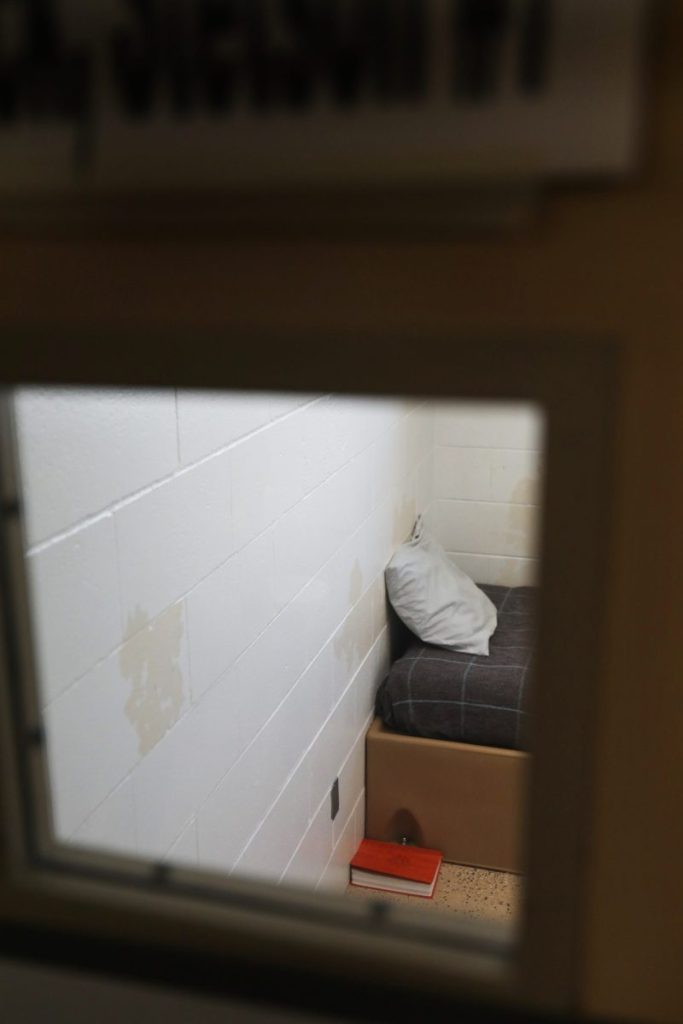
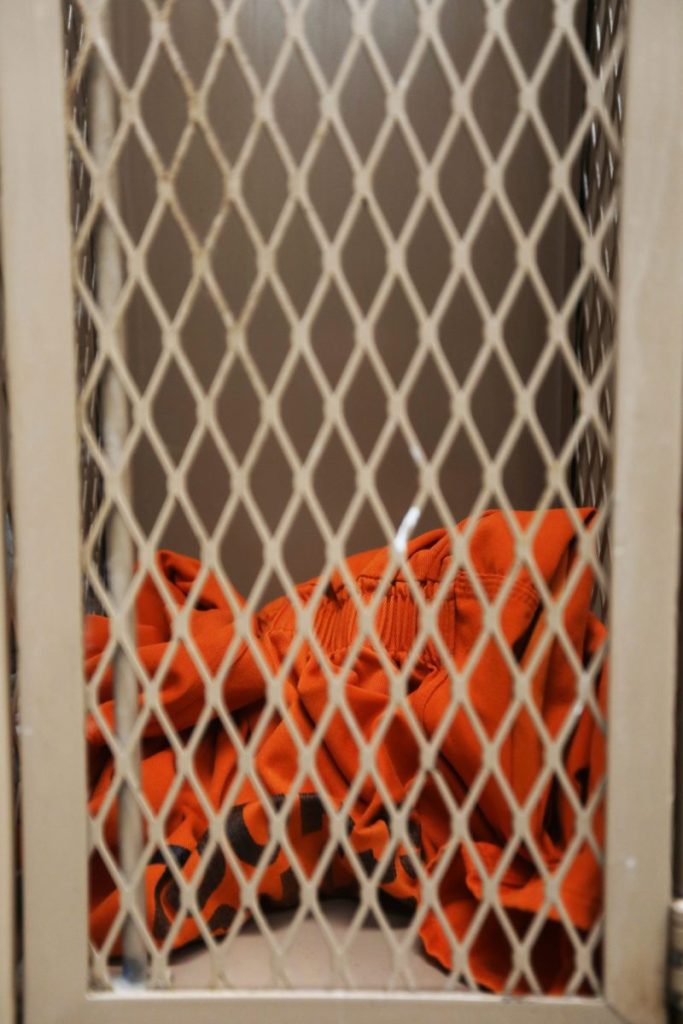
As for D.H.’s claim that the school subjected him to excessive solitary confinement, the defendants assert that his “single grievance is insufficient to establish exhaustion because it is a categorially [sic] different complaint than his solitary confinement claim.” D.H.’s mother didn’t submit a grievance on her son’s behalf, the document states.
According to the court document, Karn never submitted a grievance at the school, nor did the school receive any from Karn’s mother or stepfather. Karn, the defendants argue, therefore “failed to exhaust administrative remedies.”
D.H. testified that one staff member “shoved him so hard he struggled to breathe and was gasping for air,” the document states. But the defendants assert that D.H. “cannot show physical injury,” citing video footage showing that after the staffer “used his arm to move D.H. out of the doorway, D.H. laid down and laughed.”
“Given the footage blatantly contradicts his testimony, he cannot create a material factual dispute,” the court document states.
The defendants assert that former residents must show defendants’ “direct personal responsibility for the claimed deprivation of a constitutional right.” They argue that the plaintiffs failed to do so.

The former residents allege that the school subjected them to isolation during which they were deprived of basic human needs, which violated their Eighth and Fourteenth amendment rights. But Eighth Amendment claims, the defendants state, “generally arise only for individuals who have been convicted.”
The plaintiffs were placed at the Wyoming Boys’ School because they were adjudicated delinquent, and proceedings under Wyoming’s Juvenile Justice Act aren’t criminal, so the Eighth Amendment doesn’t apply, according to the court document. The defendants therefore analyzed the former residents’ claims under the Fourteenth Amendment, which “applies to unconvicted detainees.”
Nevertheless, they used the Eighth Amendment as a “benchmark” for measuring the former residents’ confinement conditions. The Eighth Amendment requires “humane conditions, including basic necessities of food, clothing, shelter, medical care, and reasonable measures to guarantee safety.” The defendants argue that “[o]nly deprivations denying those minimal civilized necessities may amount to a constitutional violation.”
The court must assess “whether an ‘expressed intent to punish on the part of detention facility officials exists,” defendants state, to determine if the detainment conditions amount to unconstitutional punishment. But the “records show” that none of the defendants “expressed an intent to punish,” they argue. Further, the defendants assert that detainment conditions “reasonably related to the institution’s interest in maintaining jail security do not constitute unconstitutional punishment, even if uncomfortable.”
The former residents alleged that defendants violated their Fourteenth Amendment rights by subjecting them to excessive force. But the defendants assert that in “every instance” when they used force, “they acted reasonably and in good faith, made efforts to limit the amount of force used, there was legitimate need for the force used,” and they didn’t inflict “anything more than a de minimis injury” on any plaintiff.
The plaintiffs, moreover, “cannot establish the direct personal involvement” of defendants “in many of the alleged incidents underlying their claims,” the defendants state. “Their inability to do so is independently fatal to many of their claims,” the court document states.
The defendants also state that the former residents can’t establish they didn’t get medical care “for any objectively serious medical condition,” that any of the defendants were directly involved in denying medical care or that the defendants “acted with deliberate indifference” to their health and safety.
They rebuffed plaintiffs’ discrimination claims under the Americans with Disabilities Act and the Rehabilitation Act, stating that “there is no evidence” the school “intentionally discriminated against them.” Moreover, the Prison Litigation Reform Act’s “exhaustion requirements” also apply to these claims, the court document states.
The plaintiffs have until May 28 to respond to the defendants’ claims.

Everything Deborah said…absolutely true. I worked there for 35 years and there was never a substantiated report of abuse. Thanks for your truthful comments Deb.
The Wyoming Boys’ School is dedicated to giving troubled, violent young men a last, best chance to engage in a normal, productive life. Most of the boys have been disrupting classrooms, hitting peers, assaulting and abusing teachers their whole lives. They arrive at the school unaccustomed to discipline and structure. Many have been viciously abused and neglected at home.Their stories are horrifying. Some kids have committed violent crimes. The time for soft words and stuffed animals is over because once they turn eighteen they’ll be on their own, outside the system.
Now, for the first time, they are required to move through a normal day. Get out of bed, clean up, have breakfast. Go to class. No cursing teachers or staff. Go to gym, exercise. Do as staff instruct without arguing. Truthfully, it’s alot like boot camp, just a younger group.
The staff supervise everyone for safety. When restraints are used, it’s to avoid physical harm to kids and staff. Also, students taken off campus may be restrained so they won’t run away. Seclusion rooms are used to limit physical altercations and give kids time to calm down and get ready to join normal activities.
The plaintiffs would have the public believe that WBS exists to torture kids. That’s the opposite of what it is. WBS graduates kids from high school; kids who never would have made it on the outside. WBS tutors kids through GEDs.
WBS gets the kids to dentists and doctors, sometimes for the first time in their lives. WBS works with the state to help boys get apartments, tuition aid, transportation and job placement help.
Working with this population of kids is heartbreaking, dangerous and wonderful. The staff at WBS are dedicated to helping these young men. Please don’t prevent WBS from giving these boys their last, best chance.
Respectfully,
a former WBS employee