

If the Cowboy State is going to fully get behind President Donald Trump’s vision for U.S. “energy dominance,” fossil fuels — as well as uranium and rare earth minerals — are going to need a boost from Wyoming taxpayer dollars, according to industry and top state officials.
And that help won’t be extended to wind and solar energy.
Two bills offering tax cuts, loans and grants to energy companies have advanced to the second half of the Legislature’s budget session, while lawmakers may contemplate separate energy-company-bound appropriations in the budget bill.
House Bill 128, “Enhanced oil recovery-severance tax exemption,” would create a five-year window for a 2% state severance reduction to encourage investments in secondary oil and gas recovery methods. Backers hope the policy would eventually boost the state’s oil production by millions of barrels.
The tax break, if passed into law, would mean about $1 million less in state revenue in 2028 and $2.7 million in 2029, according to the bill’s fiscal note. The bill was assigned Monday to the Senate Minerals, Business and Economic Development Committee.
Senate File 123, “Wyoming energy dominance fund,” would temporarily divert 0.5% of paid severance taxes to create a new pot of money tapped for matching grants and loans to companies with new oil, natural gas and coal projects, as well as initiatives aimed at developing uranium and critical minerals.
The two-year severance tax diversion would fill the Energy Dominance Fund to $105 million.
The bill was referred Tuesday to the House Minerals, Business and Economic Development Committee.
Last year, lawmakers gave coal producers a $10 million annual tax break and created a $10 million fund for companies that sell carbon dioxide for enhanced oil recovery.
Energy dominance
The goal is to fill the fund to $105 million and sustain it via investment returns, according to the bill draft. The energy dominance fund, however — which has the backing of the White House — doesn’t include wind and solar energy. Those are explicitly excluded.
“Due to many different things outside of Wyoming’s control, a lot of these energy companies — that aren’t wind or solar — have had a hard time getting access to capital and have had a lot of regulatory uncertainty,” Ranchester Republican Senate President Bo Biteman told a legislative committee earlier this month.
The Petroleum Association of Wyoming, among the bill’s backers, noted that the source of funding — severance taxes — comes from the fossil fuel industry that would enjoy the benefits of the new program.
“By investing in Wyoming Energy Dominance Fund, the Legislature has the opportunity to reinvest industry-paid taxes to the benefit of Wyoming families and the state’s long-term prosperity,” Petroleum Association President Pete Obermueller said in a prepared statement.
Critics of SF 123 say, regardless of where the taxpayer funds originate, it doesn’t make sense to exclude wind and solar if the state is going to invest in energy projects.
“If the purpose of the fund is to ensure Wyoming is the ‘energy backbone’ of the country, and to fund Wyoming energy dominance, it doesn’t make much sense to intentionally exclude forms of energy production that could round out Wyoming’s energy portfolio,” Wyoming Outdoor Council Government Affairs Manager Auna Kaufmann told WyoFile.
Energy funding redux
Senate File 123 would create a fund closely resembling the state’s Energy Matching Funds program launched in 2022, including a dollar-for-dollar private or federal match requirement.
The Energy Matching Funds program, intended “to spur innovation and bring transformative energy projects to Wyoming,” was filled with $155 million in taxpayer money and had a broader focus. Among the program’s nearly 30 awards, $5 million went to Airloom Energy for “modular, scalable utility-scale wind energy” and $2 million to Flowstate for artificial intelligence leak detection for hydrogen pipelines.
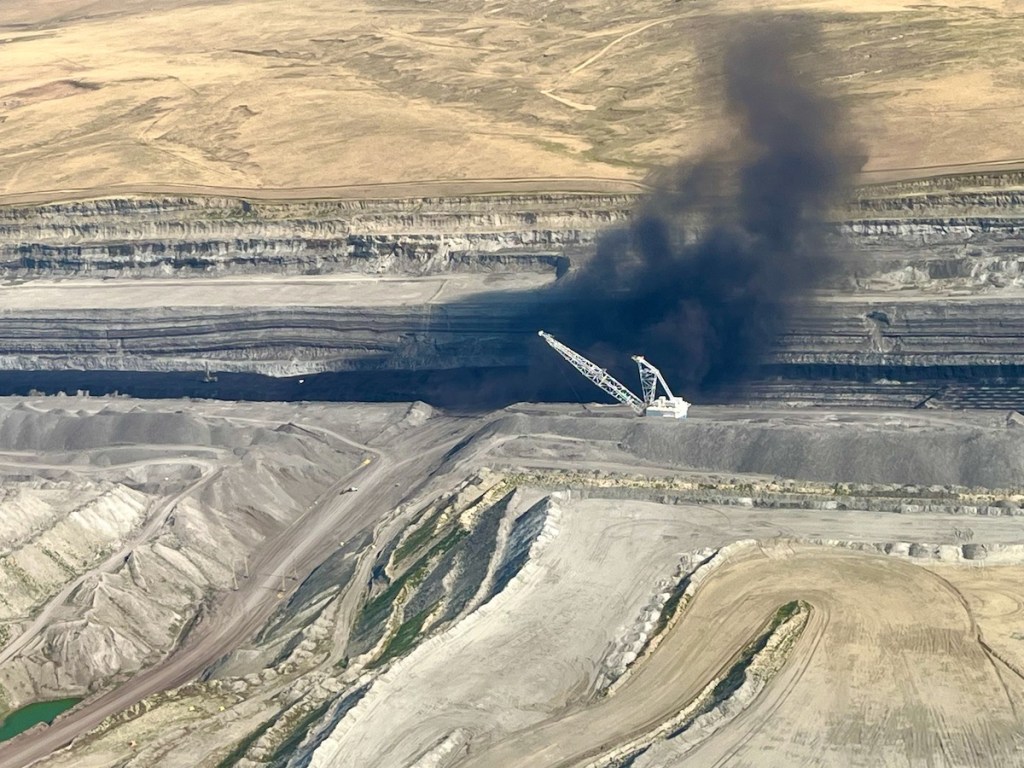
This month, Gov. Mark Gordon awarded $4.9 million to Carbon GeoCapture and Black Hills Energy for a coal-carbon capture and sequestration pilot project in northeast Wyoming, and $6.25 million to international coal giant Peabody Energy to refine critical minerals from Wyoming coal. All told, the Energy Matching Funds were spent on nuclear projects ($10 million, or 7.1%), renewable energy ($5 million, or 3.5%) and fossil fuels ($126.1 million, or 89.4%), according to a November report.
In 2024, the Legislature created the Large Energy Project fund with a one-time spend of $100 million. In December, Gordon awarded the $100 million to BWXT to support the company’s proposed TRISO fuel manufacturing facility in Gillette.
With little fanfare, the Energy Matching Funds and Large Energy Project programs appear to be winding down, given there’s no new appropriation proposed for them in this year’s budget session.
In their place might be SF 123, the Energy Dominance Fund, with a narrower focus to benefit the industries prioritized by Trump’s Unleashing American Energy and Energy Dominance initiatives.
“Wyoming is at the tip of the spear for President Trump’s energy dominance plan,” SF 123 sponsor Biteman told the Senate Appropriations Committee. “In order to make some of these big projects happen, it takes a lot of capital up front, and it takes regulatory certainty.”

Despite a wave of federal regulatory rollbacks for fossil fuels under the second Trump administration — including stepping back rules on mercury from coal smokestacks and greenhouse gas emissions, and the restoration of coal lease sales — Wyoming’s fossil fuels, uranium and rare earth minerals industries need a boost after being buffeted by the Biden administration, Biteman suggested.
“I want to remove all roadblocks and bottlenecks and get these things going as fast as possible,” he said.
Wyoming Mining Association Executive Director Travis Deti said he recently attended a coal industry convention in Florida, where members of Trump’s Energy Dominance Council were in attendance. “This bill was a center of conversation,” Deti told a legislative panel, “because what we’re seeing at the national level is an administration that is actually serious about energy production, about using our resources — you know, [natural] gas, coal, nuclear. And this bill is something that we can do at the state level.
“Most importantly,” Deti added, “[these industries are] about jobs for our young people.”
Enhanced oil recovery
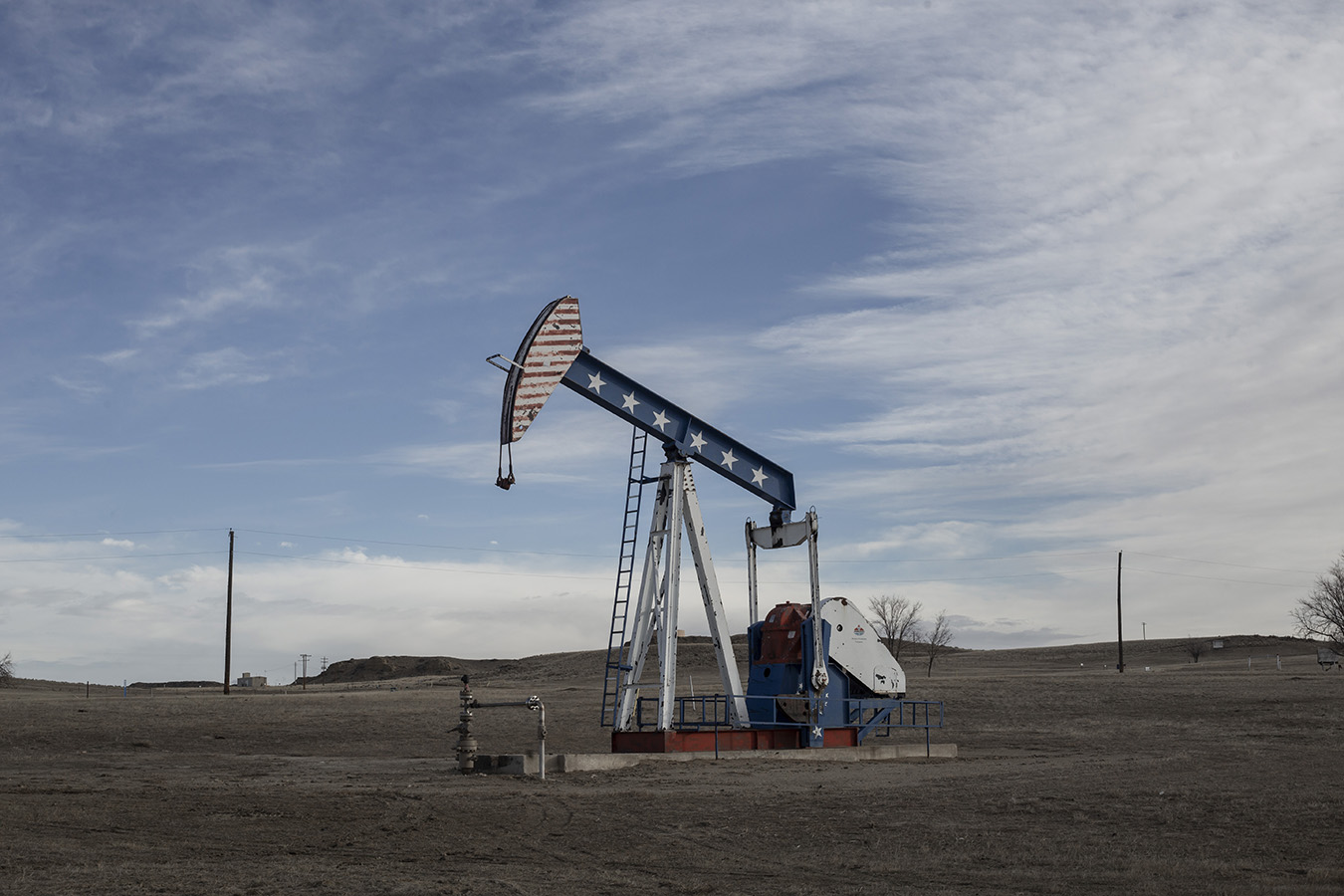
When a plumb oilfield is discovered, it’s usually perforated with a bunch of vertical wells fitted with pumpjacks that remove the easy stuff. That’s primary oil production. But there usually remains a lot more oil. To recover the leftover reserves, oil companies employ tertiary methods such as water flooding or pumping carbon dioxide into formations to squeeze out more oil.
It’s commonly referred to as enhanced oil recovery, and it still requires significant investment with potentially slower returns than primary production.
Not only does Wyoming have a lot of old oilfields that are good candidates — at least 12, according to one state office — the state is also home to one of the few institutions dedicated to promoting the practice: the Enhanced Oil Recovery Institute.
More than 2 billion barrels of oil are “stranded” in Wyoming, according to the institute’s director Lon Whitman. Yet securing loans to invest in enhanced oil recovery is challenging, he said, adding that the capital investment for one project could exceed $250 million.
Whitman estimated there are up to four enhanced oil recovery projects ready to expand if HB 128 is passed into law.
“Over the full life of the [enhanced oil recovery] project, just these three or four fields have the potential to produce 100+ million barrels of oil,” Whitman told WyoFile via email. “Again, that is oil that otherwise will be left stranded.”
The bill’s fiscal note — an estimated revenue loss of $4 million — is difficult to quantify, Whitman added.
“From my perspective, there is really no risk associated with this severance tax exception,” he said.
Industry representatives argue that, worst-case scenario, the companies pay 4% on any new enhanced oil production instead of 6% — that’s something instead of nothing.
“The severance tax reduction is only on the incremental production associated with the [enhanced oil recovery] process, and only for 5 years. Most importantly, any loss of revenue due to the reduction in severance tax during that period is more than made up by tax revenues over the full life of the project.”

But others question whether the tax break will actually influence a company’s decision to move a project forward.
The oil market is notoriously volatile, with the price-per-barrel oscillating far beyond what a 2% tax break represents, said Bob LeResch, former executive director of the Alaska Energy Authority and a member of the Powder River Basin Resource Council’s board of directors.
That means the state would be giving a tax break to a company that’s already decided the economics of a project make sense, according to LeResch.
“Things fluctuate, and they look at the market much more than they look at a little 6% [standard state severance tax] cost,” LeResche said. “Nobody’s going to make a long-term investment decision based on that little, marginal savings. They’re going to do it, with or without the severance tax break.”
Clarification: This story was updated to clarify the functions of both proposed bills. —Eds.
For more legislative coverage, click here.

I live in a state that has relied on the largess of the fossil fuel industry for decades. Politicians, drunk on the money of boom state natural resources, have wallowed in the mud pit of claimed competence while spending money, lavished by industry on public officials, to appease the electorate.
Now that money is gone. In efforts to reclaim the next big oil, or coal, or natural gas boom, public support for things such as schools, programs for the poor (yes, many people did not benefit from the boom times), health, the arts, and state institutions of higher education are being sacrificed to appease the appetite of fossil fuel companies for tax breaks and, ironically, state financial support to continue to rape the state of its natural resources, in order to keep their failing industry alive.
A word of warning to the folks of Wyoming. Do not allow yourselves to be deceived by the slight of hand of fossil fuel executives, hired politicians (including local, state, and federal), and other apologists whose sole goal is to denude you state of anything that is valuable in order to enrich themselves.
You are the voters. You can determine what happens in the future. If no one wants to live in your state because there is no viable educational system, no decent health care, no cultural institutions, and no reason to want to live there, why would you want to?
Yes you have been on these guys for years.i have heard you brother.i am a retired ibew wireman(electrician).the technology doesnt match the budget.rare earth elements national emergency is leaching chemicals to remove from flyash stream.they dont need to continue burning coal.fc is pissed uw didnt attack dei enough.retalitory at best.coal and gasare in decline piwder river basin.bear wants to honey hole our state funds and minerals into research matching his idea of our cole values.burn gas till we build nukes.thank you baring this beast bare.fair and educational and factual.sounds like the basis for a future lawsuit when we sue get our money back.i want my npr
Why not use ALL forms of energy? Makes no sense, why not use the abundant wind in Wyoming, seems stupid to me.
As if anyone really wondered whether our legislature was bought and paid for.
So school breakfast for below the poverty line kids creates a culture of dependence… but more handouts for oil companies = totally freaking awesome pulling yourself up by the bootstraps freemarket capitalism?
I have a lot of questions about all of this. The Constitution’s prohibition on giving away state dollars to private industry with a direct benefit for the “poor” used to stop these kind of ideas. No longer. But the big takeaway from this article is why is the coal industry holding a convention in Florida? Are there secret coal deposits in Florida no one knows about? Sheesh, the industry should spend their conferencing dollars in states that support their operations.
Socialism for the rich, capitalism for the rest of us.
I assume WyoFile will next dig into the significant tax subsidies that both wind and solar receive – and spend some time digging into the detrimental environmental impacts of these so called green energy sources.
If you have a problem with the fossil fuels industry receiving subsidies, you should also have a problem with the subsidies so called green energy receives. Without that subsidies “green” energy would not exist.
Um, if you were paying attention, trump ended all renewable welfare, so I don’t understand why you are complaining? You got what you wanted, more expensive and dirty fossil fuels for energy. Enjoy paying higher energy and healthcare bills in the future. Who doesn’t love the smell of mercury in the air?
Here in Northeast Wyoming Kota Tv just ran a story from the government today warning everyone not to eat fish from some lakes due to mercury contamination. Great time to get rid of those regulations on mercury in coal!
both get subsidies, why should the fossil fuel subsidies by larger? It is not true that wind and solar would not exist without subsidies, they are now fully viable on their own. Wind and solar environmental impact is not larger than fossil fuel impact, it is the inverse.
Let’s throw more tax bucks at the $6 trillion global oil industry. They need it so badly!!!
NO to tax payer money for the fossil fuel industry. This is just wrong. Free market economy?