


The Joint Education Committee by a narrow vote abandoned controversial “don’t say gay” language in draft legislation Tuesday, which members noted didn’t align with the marching orders they were tasked to tackle during the interim.
Parental rights in education-1 would bar school districts from permitting classroom instruction by teachers or any other person on sexual orientation and gender identity in kindergarten through third grade or in a manner that is not age appropriate. It would also require school districts to notify parents regarding “critical decisions” involving students, and bar districts from withholding that information. It requires training requirements for school districts, specifies procedures for resolving parent complaints and lays out duties for school district boards, among other things.
It drew a large crowd for hours of testimony on its provisions, including questions of constitutionality, but what appeared to influence the ultimate demise of the language was the fact that it did not fit under the five priorities the Legislature’s Management Council assigned the committee. Those priorities include K-12 mental health; early childhood programs and literacy; school choice; community colleges; and recruiting and retaining school district personnel. The bill can still appear, but not with the weight of committee sponsorship.
That’s no small matter. Committee-sponsored bills are much more likely to become law than bills sponsored by individual lawmakers.
“When we raised this at the last meeting, my concern at that time, when I objected to bringing it to the next meeting, was that we would spend the entire day talking about this and only this — the first 10 lines of this bill — which were outside of our purview with regard to our interim topics, and that we wouldn’t have time to talk about substantive issues, which are within our purview,” said Sen. Chris Rothfuss (D-Laramie). “So here we are.”
Parental rights and what can be taught
Sen. Bo Biteman (R-Ranchester) brought the bill, which is almost identical to one that failed in the 2023 session. It’s similar to the controversial Florida law often referred to as a “don’t say gay” bill.
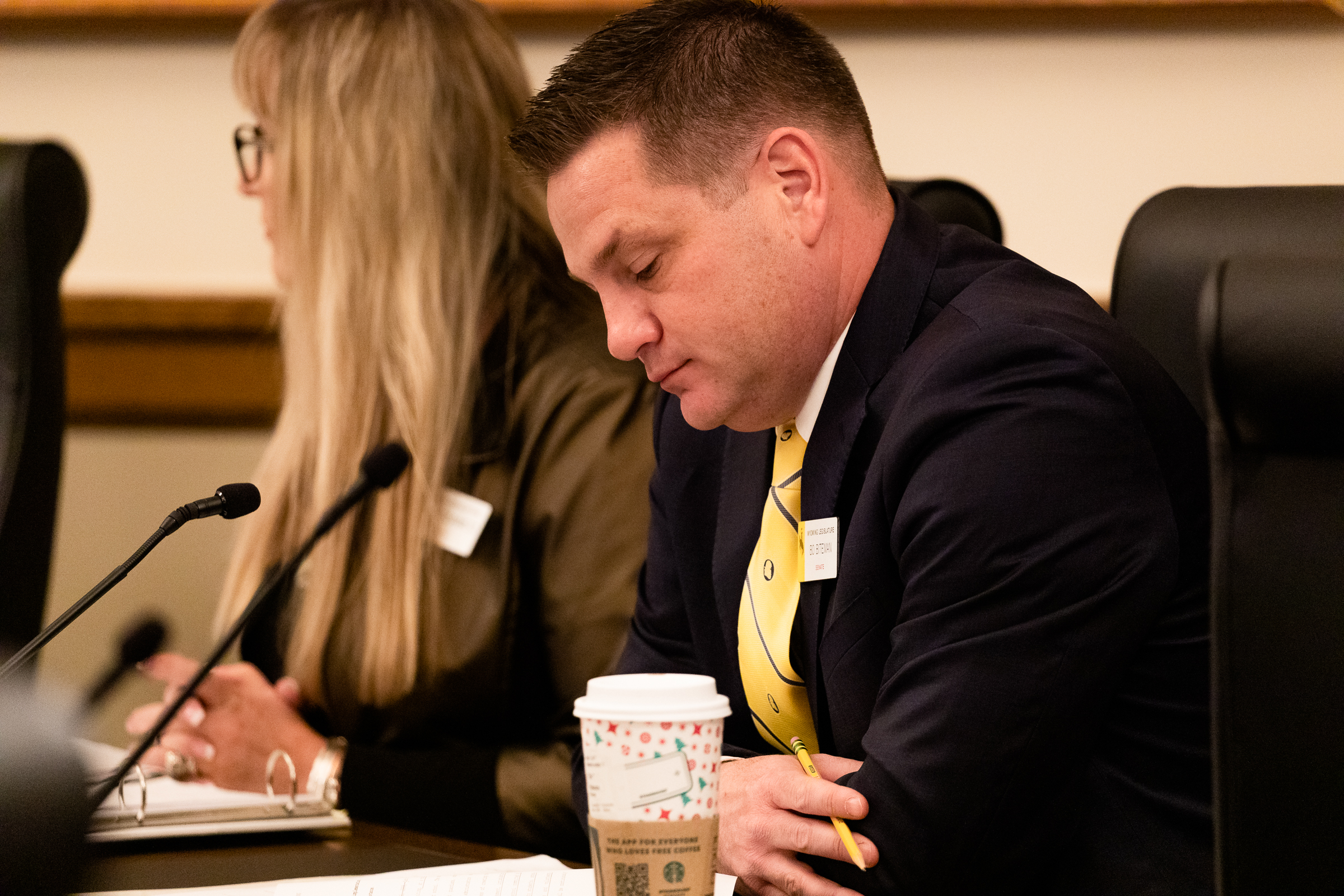
It drew a large crowd to Tuesday’s meeting in Cheyenne, and public testimony went on for so many hours that the committee didn’t get to its afternoon agenda topic of teacher retention and recruitment.
In a Legislative Service Office memo, staff identified potential constitutional concerns related to prohibiting protected speech and discrimination. Several people, including teachers, spoke in opposition to the bill, saying it will have a chilling effect and subvert local control, while others in favor said it just codifies age-appropriate material regarding gender and sexuality, buffers young students from politically charged ideas and ensures rights that every parent would want.
“This bill becomes very concerning when it comes to practicality in the classroom,” said Wyoming Education Association President Grady Hutcherson. That’s because it raises too many questions about what is permissible and not, he said, about how teachers can find themselves in trouble over topics that come up naturally in the classroom.
Ryan McKenzie is a Cheyenne teacher and “proud military spouse” whose husband is stationed in Cheyenne. “This legislation would fix something that is not broken,” he said. “It takes options away. Wyoming is a fantastic place to be an educator, and I want it to stay this way. I urge you to vote no.”
Opponents also said it would expose the state to costly legal challenges that it is likely to lose.
Biteman said the bill is about more than isolated classroom conversations like those the teachers brought up. “What we’re talking about is … instruction into gender identity politics,” he said. “This whole culture war we’re in right now. Like it or not, we’re in it.”
Others supported Biteman’s bill, which they said will protect young minds from political ideology and strengthen parental rights.
“I do support this bill,” said Jenifer Hopkins, a Natrona County school board member and mother of six. “I do not want teachers engaging in these conversations with my children without my knowledge or permission.”
Nathan Winters with Wyoming Family Alliance, meanwhile, said the “thousands of families” his organization represents “are for this bill.”
Near the end of testimony, Rep. Ken Clouston (R-Gillette) noted a unifying theme. “What I’m really hearing from you and from everyone else, no matter what side you’re on, is: We don’t want our kids receiving instruction that’s religious or personal or socially based,” he said in response to one woman’s testimony.
Regardless, the bill ran into procedural hurdles. Committee members first split it into two measures: one that prohibits instruction regarding sexual orientation and gender identity, and another that addresses parental access to their child’s information. The Wyoming Constitution prohibits legislation that contains more than one subject.
The committee voted to carry the parental rights bill into its next meeting to continue working. But the measure legislating classroom discussion topics failed to gain majority support in a separate vote, meaning the committee won’t sponsor it. The panel voted 6-6, with two excused, on that matter.
During the push-and-pull, some members expressed consternation over spending so much time on a non-purview topic.
“My concern is we spent most of this day on a topic that wasn’t one of our interim topics, at the expense of mental health, which we dropped from the agenda,” Rothfuss said. “I am not eager to move the entire bill to the next meeting, because I would prefer to get back to work on the [approved] topics.”
Rep. Landon Brown (R-Cheyenne) echoed that.
“What an extraordinary waste of legislators’ and public’s time to not work a bill and to punt it down the road when we already have the fresh information right here,” Brown said in response to a suggestion to continue the discussion. Waiting another month and a half, he said “is not going to change the outcome of whether or not this goes forward.”
Biteman or another lawmaker can still bring it into the session individually, without the backing of the committee.
How to fund education
Concerns of constitutionality also swirled around a proposal to set aside public money for private and alternative schools and help pay for early childhood education.
The committee, however, decided to revisit the draft legislation that would authorize what are known as “education savings accounts,” financed by general fund dollars. Under the bill, Wyoming parents who meet certain income qualifications would be eligible for up to $3,000 a year to pay for costs associated with their childrens’ preschool education or non-public-school expenses.
Rep. Albert Sommers (R-Pinedale), who is not a member of the committee, brought the legislation, and said he sees it as a “compromise between those that want early childhood funding and those that want funding to go to private schools.”
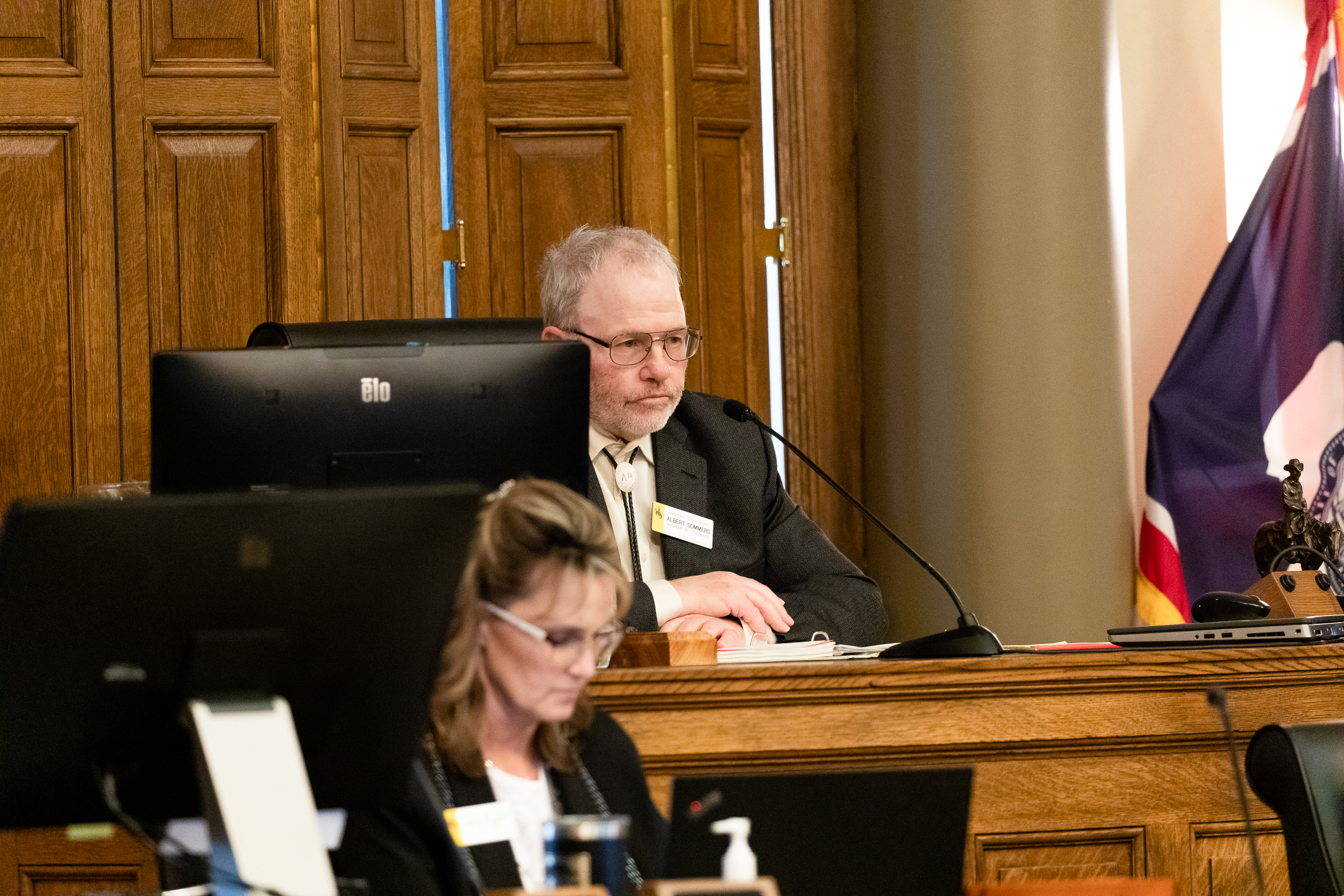
As the “parental choice” movement gains steam in conservative political circles, his attempt also represents what may be a more palatable version of twin education bills that failed in the 2023 session. Senate File 143 – Wyoming freedom scholarship act-2, sponsored by Sen. Cheri Steinmetz (R-Lingle), and a similar House version proposed to give families $6,000 per student to go toward tuition at any school or educational expenses.
That would have marked a major shift in Wyoming’s school funding model by redirecting federal mineral royalties from the School Foundation Program Account, which funds Wyoming’s public schools, to a new education savings account fund for families choosing to opt out of public school.
Sommers designed his legislation specifically to avoid diverting public education funds; the bill proposes a $40 million general fund appropriation to create the account, as opposed to financing the program with School Foundation Program Account dollars.
Still, the 29-page document was met with questions and concerns on Tuesday. Lawmakers, education officials and members of the public wondered about everything from how to ensure rigorous accreditation of qualified educators to the legality of the state to appropriate funds to entities not under its control, including individuals and religious and private schools.
“I don’t care how many buckets you put it in, how many bank accounts you put it in, or how many private companies you hire to administer it,” said Marci Shaver, state director for American Atheists. “You’re still laundering tax dollars … to pay for somebody else’s religious education. And you can’t change the fact that it’s unconstitutional to do that.”
Tyler Lindholm, representing Americans for Prosperity, said his group supports this legislation. “It could inspire people to think differently about schooling and I don’t think that’s a bad thing to think differently about schooling, about what’s possible when we move away from standardized schooling,” he said.
Committee members decided to revisit the draft ESA measure when the panel meets in November.

About the best that can be expected of a backward, ignorant, state…
Just at a time when our world is evolving, a time when science is expanding our knowledge about this human life, a time when we are becoming more inclusive and more loving of ALL our children regardless of color, gender, cultural and religious beliefs, you (some Wyoming legislators) want to start a “culture war”. I don’t believe these are things you can legislate successfully.
Isn’t amazing that the heroes for local control are once again trying to rip it out of the hands of local government and let the “wise men” in Cheyenne dictate a one size fits all approach to local government. It is abundantly clear that legislators only favor local control when it doesn’t interfere with their personal agenda. Perhaps they should focus on the items approved for interim study and let local school boards deal with local issues.
The real issue here which no one has bothered to consider is our existing system is not broken. Our educated teachers are not teaching a social or cultural agenda. They do however answer questions brought to them by students of all ages. They teach the students how to research, how to analyze social media vs data supported information. They teach how important it is to not identify their opinions with other people’s opinions. Key word is opinion. To form an opinion based on facts, research and verified data with many participants in the study. It is time stop ruling the roost on teachers who do the job that many parents don’t. They don’t give their opinion but ask students present how they determined their opinions. Analysis is essential.
As for the gay thing, if you don’t think this topic reverberates within the community. I assure they here more about it at home then anywhere else. Teachers are only passively and honestly addressing questions brought to the. I also assure you they would instruct any student to speak with their parents also about their questions. There are children that have 2 Dad’s, two Mom’s and the only difference between this and divorced couples with new spouses is the the fact that they are legally married and do represent a family unit . Kids accept the obvious. To try to hide reality is a religious oxymoron that they have assigned an opinion to. Nothing more.
We have top notch public schools that rates some if the highest in the nation. Their is reason for that. And the separation of church and state has a great deal to do with it.