



After trying and failing to carve out more exceptions to Wyoming’s longstanding ban against storing radioactive nuclear power plant waste earlier this year, lawmakers will take another swing at gaining support for the idea.
They’re particularly focused on clearing the way for Radiant Industries, which proposes manufacturing microreactors and “temporarily” storing their spent, radioactive fuel at a site near the towns of Casper and Bar Nunn.
After Senate File 186, “Advanced nuclear reactor manufacturers-fuel storage,” went down in flames during this year’s legislative session, lawmakers on the joint Minerals, Business and Economic Development Committee called in experts from the U.S. Nuclear Regulatory Commission and U.S. Department of Energy’s Idaho National Laboratory to answer questions about evolving safeguards and the industry’s track record.
In nearly 40 years of “dry cask” storage in the United States, “we have had zero release of radiation or radioactive material to the environment,” Idaho National Laboratory Used Fuel Management Department Manager Daniel Thomas told lawmakers last week in Casper.
“Similarly, in transportation, we have moved [spent nuclear] fuel for several million miles on rail, on road, by boat, with zero accidents,” Thomas testified.
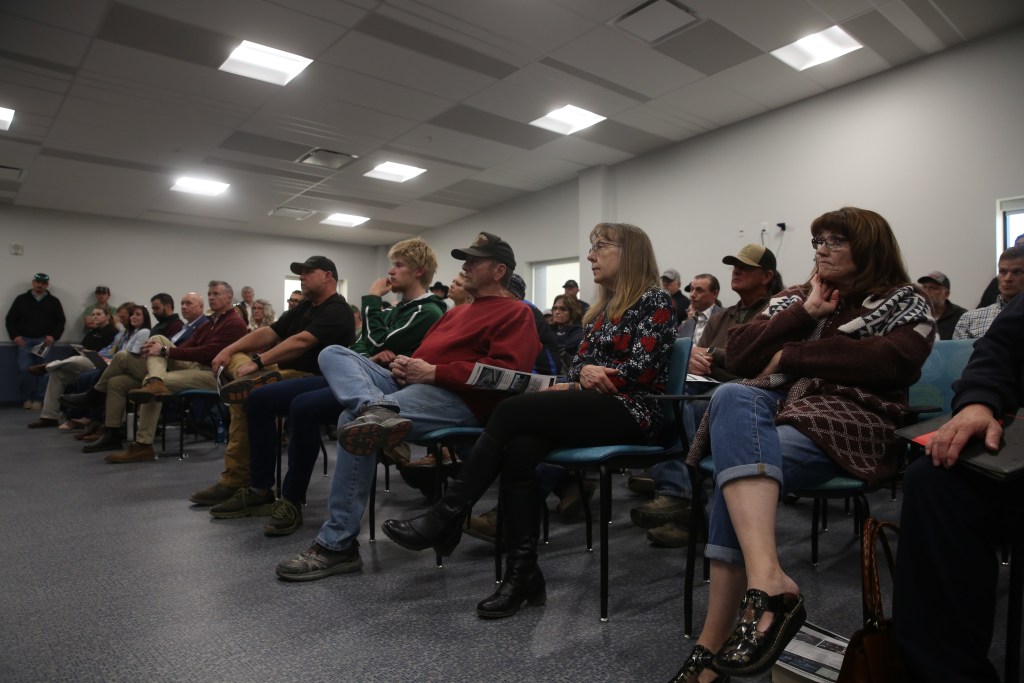
Those assurances, along with evolving federal safeguards, rang true for Lander resident William Almas, who offered his perspectives to the committee via Zoom.
Formerly part of a team that oversaw the decommissioning of the Diablo Canyon nuclear plant in California, Almas shares the same full faith in the safety and security of spent nuclear fuel in the nation. But that’s not the point, he noted. Such expert testimony won’t be, and it shouldn’t be, enough to convince others in Wyoming.
Health and safety concerns are valid, Almas said, particularly in a state that doesn’t yet host nuclear waste. All the pamphlets, slide decks and expert testimony in the world don’t matter a lick, Almas suggested, unless state leaders initiate a long conversation with residents that, ideally, is moderated by a “third party.”
“A key factor contributing to the lack of success of these projects is the failure of the community to reach consensus on the safety and the value of the projects,” Almas told the panel. “The facts must be clearly presented and discussed by an impartial third party, moving both the proponents and opposition in a forum for discussion.”
“We believe we are going to be a piece of the American energy independence work that’s going forward and it’s very relevant to the current administration’s focus on having the U.S. in a position of energy dominance.”
Matt Wilson, Radiant Industries
Lawmakers on the panel nodded and noted the suggestion. The panel directed the Legislative Service Office to draft another version of SF 186 for further consideration when it meets again in July.
Radioactive hurdles
After decades of public opposition, Wyoming lawmakers tweaked statutes in 2022 to allow for storage of spent nuclear fuel — so long as it is associated with a nuclear power plant operating in the state.
The move was made to accommodate TerraPower’s Natrium nuclear plant underway near Kemmerer. The “advanced” nuclear reactor will use liquid sodium for cooling. The plant, scheduled to begin operating in 2030, will generate a consistent 345 megawatts of power — enough energy to power about 250,000 homes — with a capability of ramping up to 500 megawatts for short periods of time, according to TerraPower. The reactor will use high-assay, low-enriched uranium (HALEU) fuel.
Wyoming’s legal pathway for TerraPower to store its spent fuel on site is contingent upon the company receiving approvals from the Nuclear Regulatory Commission, which will oversee the plant’s operation and radioactive waste storage.
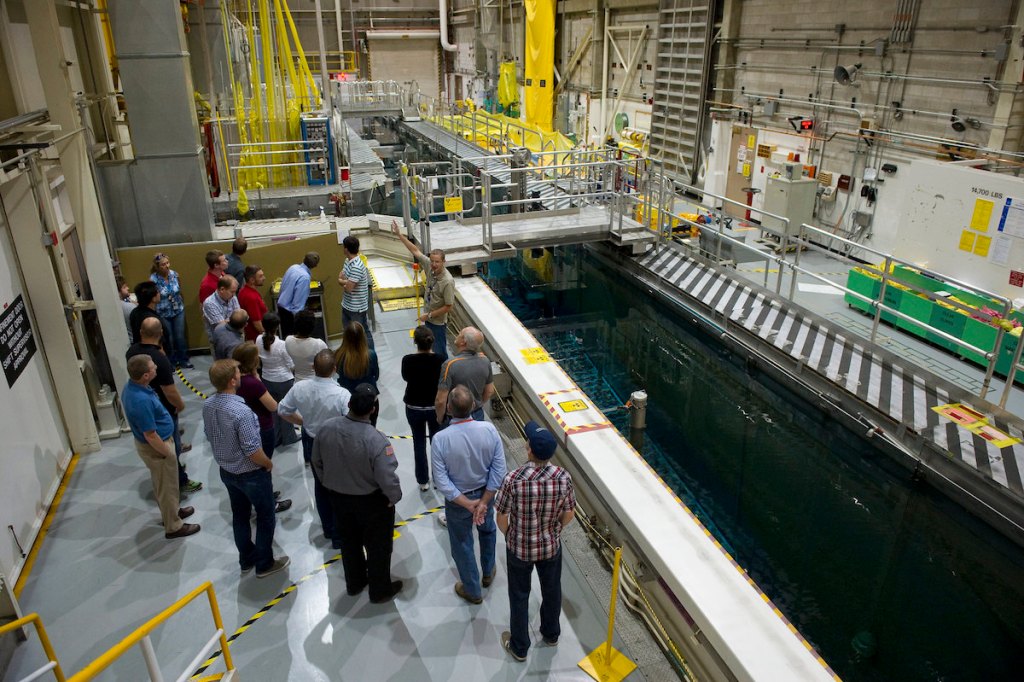
While SF 186 would have made another exemption to the state’s ban by allowing microreactor manufacturers such as Radiant to store spent fuel, House Bill 16, “Used nuclear fuel storage-amendments,” would have opened the door to commercial operations to potentially take the waste from nuclear power plants from all over the country. Both bills failed this year. Unless it’s a nuclear power plant operating in the state, like the Natrium power station, there’s no legal pathway for storing spent nuclear fuel here. State statute prohibits a commercial high-level radioactive waste facility, whether it’s spent fuel from a power plant from another state or a microreactor built in the state, as Radiant proposes, unless the federal government establishes a permanent repository.
That’s not likely to happen anytime soon, according to federal officials. It will take an act of Congress to resume efforts to establish one at Yucca Mountain, or anywhere else, according to Idaho National Laboratory’s Thomas, who worked for more than a decade on the Yucca Mountain project.
“Yucca Mountain has been defunded and is not being pursued,” Thomas said. If Congress were to direct the U.S. Department of Energy to resume the work, he added, “I would say that we are probably four or more decades off.”
That leaves Wyoming to consider whether to make another exception to its nuclear waste storage ban.
What’s at stake
The Wyoming Energy Authority and Wyoming Business Council are eagerly pursuing companies interested in reinvigorating the state’s uranium mines, hoping to launch a mining-to-reactor industry that becomes an integral piece of domestic energy security.

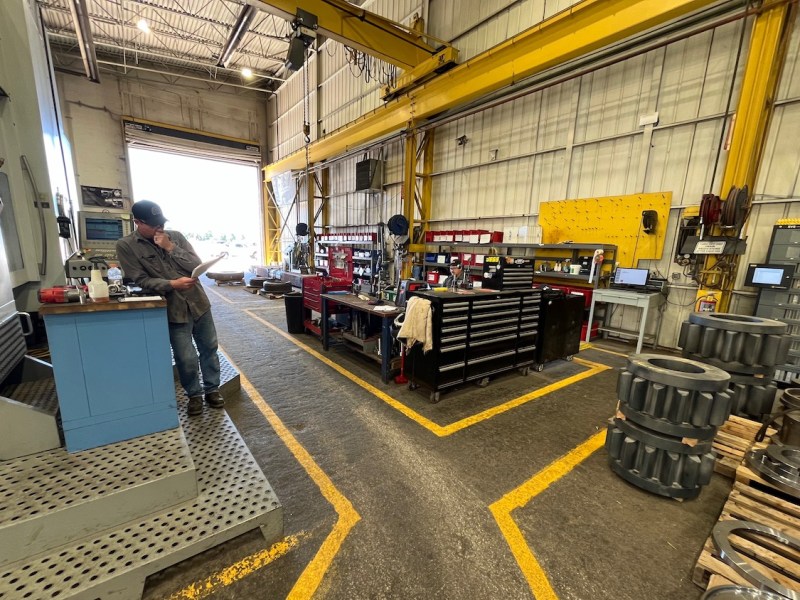
Having a nearby supply of refined uranium ore would give a leg up to companies like Radiant and BWXT Advanced Technologies that want to build portable microreactors here and deploy them to industrial customers throughout the nation and world, according to the companies. BWXT, with a matching grant from the state, is already building a nuclear reactor component supply chain among existing fabrication shops here. Though BWXT is still exploring whether to set up an actual microreactor manufacturing shop in Wyoming, Radiant proposes a manufacturing facility just outside of Bar Nunn. Further, it plans to fuel the reactors onsite, then store the spent fuel at the same location.
“We believe we are going to be a piece of the American energy independence work that’s going forward and it’s very relevant to the current administration’s focus on having the U.S. in a position of energy dominance,” Radiant Director of Operations Matt Wilson told lawmakers. “But when you look at other countries — Russia, China — they are well ahead of us when it comes to projects not just in the pipeline, but coming on every year. And that’s not just on the advanced reactor side. That’s on the nuclear fuel supply chain as well.”
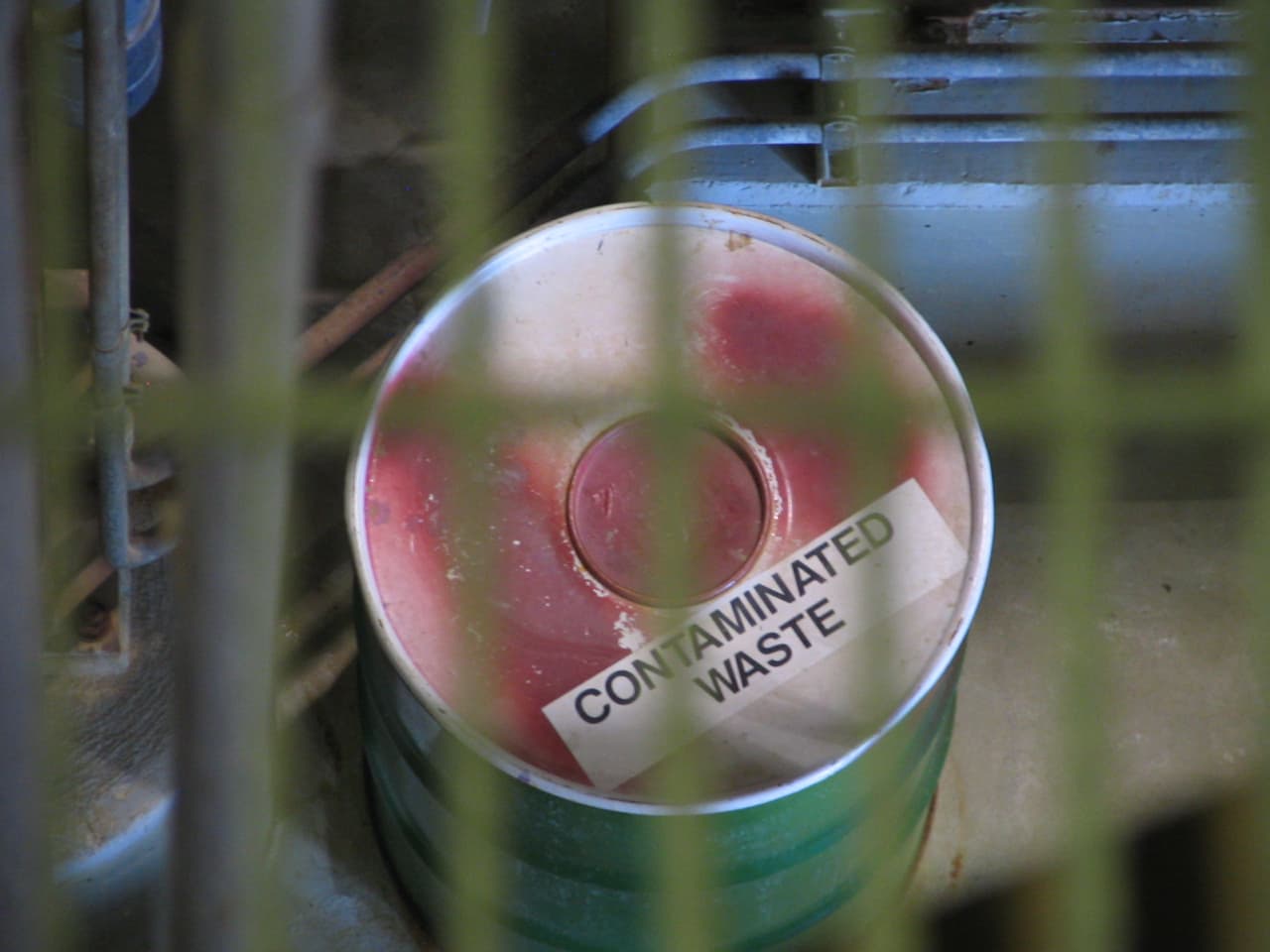
Gillette Republican Rep. Christopher Knapp, who opposed SF 186 earlier this year, said the constituents he hears from are still overwhelmingly wary of nuclear reactors and storing nuclear fuel waste in the state. More public education and engagement are needed, he said, as well as details from the Nuclear Regulatory Commission about containment measures should there be an “episode” at a nuclear facility.
“I would recommend that we reach out and ask for testimony so that we can have all sides of a picture before we make decisions on things,” Knapp said.
The joint Minerals, Business and Economic Development Committee will take up the issue again when it meets July 29-30 in Casper.
Correction: This article has been updated to remove reference to a company that processes rare earth minerals, not uranium. —Ed
Just a quick observation that Wyoming already has radioactive wastes primarily from the uranium mining, recovery, and milling operations. While not commercial spent fuel, it is still the waste from fuel cycle and managed under NRC or State license. Before the TerraPower reactor at Kemmerer can to start, it must have on-site storage for its spent fuel. This is standard practice at all US and foreign reactors.
As an FYI, the University of Wyoming used to have a small research reactor in the 1970’s. The spent fuel from that reactor was shipped to the Idaho National Lab but the very low-level waste was disposed of at a site near the Laramie airport.
The question to consider will allowing spend fuel storage put people at risk no matter how small? If yes there is nothing left to discuss.
I was born a Wyoming neighbor, grandson of South Dakota farmers, and continue to share a deep love for the open land stretching from Washington to Minnesota. Is nuclear waste storage an ominous threat to this shared heritage? Having studied the details for some time, I believe it is not. In fact, this may be a golden opportunity for Wyoming. Nuclear energy production is not metaphysical; it’s physical. Spent nuclear fuel is not a magical devil that can reach out and grab you by the ankle. Like all technologies, it involves certain dangers, in this case radiation. However, as with other technologies, we have learned how to deal with these dangers with careful science and engineering.
What is the golden opportunity? Imagine for a moment the value to the country of having real facilities for the long-term storage of spent nuclear fuel. What could this mean for Wyoming? What should the state be given in return? Significant support for education in the state at federal expense? More thoughtful national recognition of the needs of Wyoming agriculture, mining, and business? Think about it. Then, “Let’s make a deal!”
You folks elect some real nut cases to “represent” you. Anyone supporting nuclear waste storage in Wyoming oughta have its head examined and be removed from office.
Sounds like you’ve been playing in the radiation again Harvey. Better go get that treated, it’s obviously having some adverse effects.
Affordable, reliable and dispatchable energy with enormous potential to create energy independence for consumers that are beholden to government sponsored monopolistic utilities is certainly going to face major roadblocks and hurdles to be allowed. As long as the utility monopolies can control the source and the distribution, the legislature will miraculously find a way to approve nuclear power production and waste storage as they somehow did with the kemmerer nuclear plant. If the nuclear technology has the potential to free the common power consumer from the death grip of legislative and electric utility complete control, well that deserves a much more careful review….
Keep your head in the sand Harvey. It’s a scary world above ground.
Jason, the surge in Nuclear energy investment isnt going to be for “consumers”. AI data centers will get the benefits, not your power bill.
How much in the way nonrenewable resources are expended in mining, construction, maintenance, and operation over these wonders over their expected “lifetimes”,not to mention storage of the waste? Nuclear is a scam, just like electroeggmobiles. Talk about having ones head in the sand…or elsewhere.
Does the storage represent a threat to people or the eco system? Why did they kill Yucca Mountain Nuclear Waste Repository?
Perhaps a vote to allow the storage of spent nuclear fuel will also count as volunteering your district to participate. Begin by storing the first truck load in that legislator’s own back yard.
As far as unfulfilled, empty promises by industry you only need look so far as the thousands of “orphaned” wells dotting the landscape and leaking of carcinogens into our atmosphere. Rich oil companies leaving their mess to be cleaned up by taxpayers while they move on to the next big boom.
Really isn’t a laughing matter. Really has two potentials. Laying our state to waste for decades upon decades. You know leaving our children our mess as we seem to be hell bent on doing it with fossil fuels also. Or we could for once be intelligent, forward thinking, and recognize 200 or 300 jobs are important but not more important than the long term effects and possible destruction of the greatest place on the planet, Wyoming. I say no, no way, not today or tomorrow. We have so much that can provide energy long term to offer. WInd, solar, hydrogen from electrolysis (Splitting water into hydrogen and oxygen using electricity is another significant method, particularly when using electricity from renewable sources.)
None of these above will change the environment as the mining of and storage of uranium. Spent or not. It does not belong in the future of this state. Say no, period.
Wyoming does have suitable places for storage. It would economical for us.
Be a perfect site right on edge of Jackson Hole Wyoming
LOL, if it didnt harm the wildlife I would agree.
Agreed lol.
Why?
You know Mike, anything to dig at people with an actual interest in the State of Wyoming and it’s future. It’s a maga 🤢 thing.
Sheryl, 47% of housing units in Teton county/Jackson Hole are classified as second homes.
No, those people most likely do not have an actual interest in the State of Wyoming and its future, unless it affects their pocketbook/property value.
As long as it’s next to a billionaire Repo.