
Facing another record-breaking year for money wagered at Wyoming gaming establishments, lawmakers are mulling new measures to regulate the industry.
In a unanimous vote this week, lawmakers on Wyoming’s Select Committee on Gaming sponsored draft legislation that would ban online sweepstakes games — drawings where prizes are awarded purely by chance. Under the proposed bill, operating online sweepstakes games would become a felony offense.
Currently, state law bars online casinos, although online sports wagering and participation in fantasy sports contests is legal in the state. The law isn’t as clear when it comes to online sweepstakes. And regulators face confusion as to what entity — Wyoming’s Consumer Protection and Antitrust Unit or the Wyoming Gaming Commission — should handle complaints arising from such games. Consumer protection is tasked with protecting consumers by enforcing the state’s Consumer Protection Act, while the Wyoming Gaming Commission deals with gaming laws.
When consumer protection gets complaints about online sweepstakes, “they look at it as gambling,” Nicholas Larramendy, who heads the Wyoming Gaming Commission, explained to lawmakers.
“They give it to us. We look at it. Then we get the argument that this is under consumer protection,” Larramendy said. The gaming commission then sends it back to consumer protection, creating a “constant cycle.”
“So this bill definitely makes it very clear that this is illegal gambling,” Larramendy concluded.
Online sweepstakes games are often designed to look like online casinos, which has led to some of the confusion. “Online casinos and online sweepstakes can look almost identical when you play them online,” explained former Republican state Senator Affie Ellis, a Cheyenne-based attorney representing Bally’s Corporation, which recently took majority ownership of a Cheyenne horsetrack and has plans to open gaming facilities in the city. “They look like maybe the same slot machine, same blackjack table, same jackpot animations, but they are two fundamentally different products.”
Whereas online casinos take real money and pay out cash, online sweepstakes are free to play and currently are legally treated as promotional advertising under Wyoming’s Consumer Protection Act.
Some argued that online sweepstakes should remain legal. “This is over broad and it does conflict with the idea that a sweepstakes in connection with a purchase of a good or service is currently valid in Wyoming and should remain valid in Wyoming,” Bill Gantz, an attorney for VGW, a gaming company, said. Although entering a sweepstakes can be connected to a purchase, under federal law, people must be given what’s called an “alternative method of entry” — a way to enter the sweepstakes without making a purchase.
Gantz noted that VGW has been operating online sweepstakes games in Wyoming since 2012.
“If this language were adopted, Wyoming would be virtually the only state that I can think of that would not allow a free entry to be used in a game that is resulting in the award of a prize,” he said.

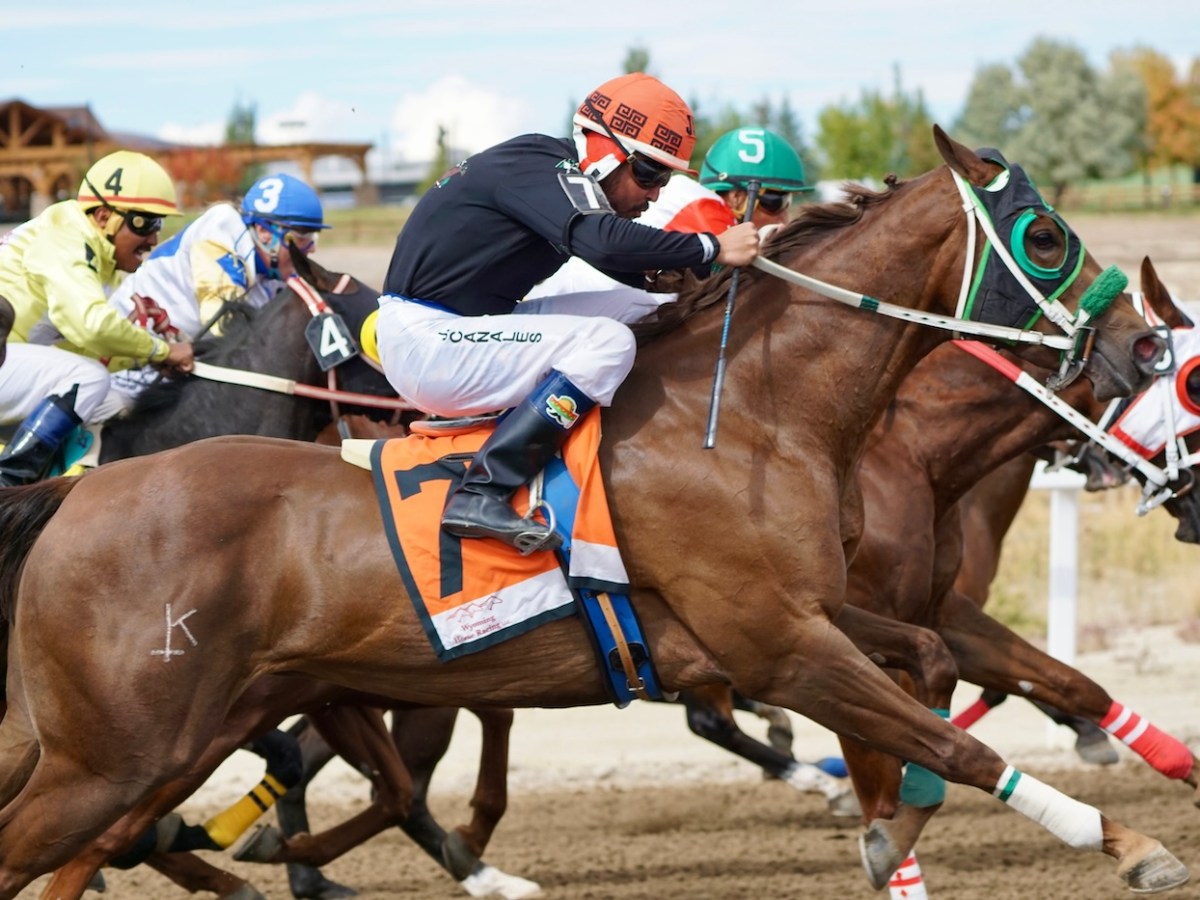
Gambling activity has risen precipitously in Wyoming over the last decade. Last year, about $2.7 billion were wagered in Wyoming across all forms of legalized gambling, according to Larramendy. He said 2026 is shaping up to be another record-breaking year, exceeding $3 billion in wagers.
That proliferation has drawn the attention of lawmakers, who have taken steps to strengthen regulations around the industry. In 2025, the state formed a legislative task force — the Select Committee on Gaming — to address gaming issues in the state.
In addition to the proposed measure to ban online sweepstakes games, lawmakers sponsored legislation to update fingerprinting requirements for certain people regulated by the Wyoming Gaming Commission.