

CHEYENNE – In 2025, a legislative task force was formed to address the rapidly expanding, multi-billion-dollar gambling industry in the state.
This year, the task force was renewed to continue discussions for another year, as lawmakers felt there was more work to be done.
On Thursday, the Wyoming Legislature’s Select Committee on Gaming met to begin interim discussions on a wide range of issues, from the distribution of wagering revenues to the controversial “Queen of Hearts” charitable games.
Where the money goes
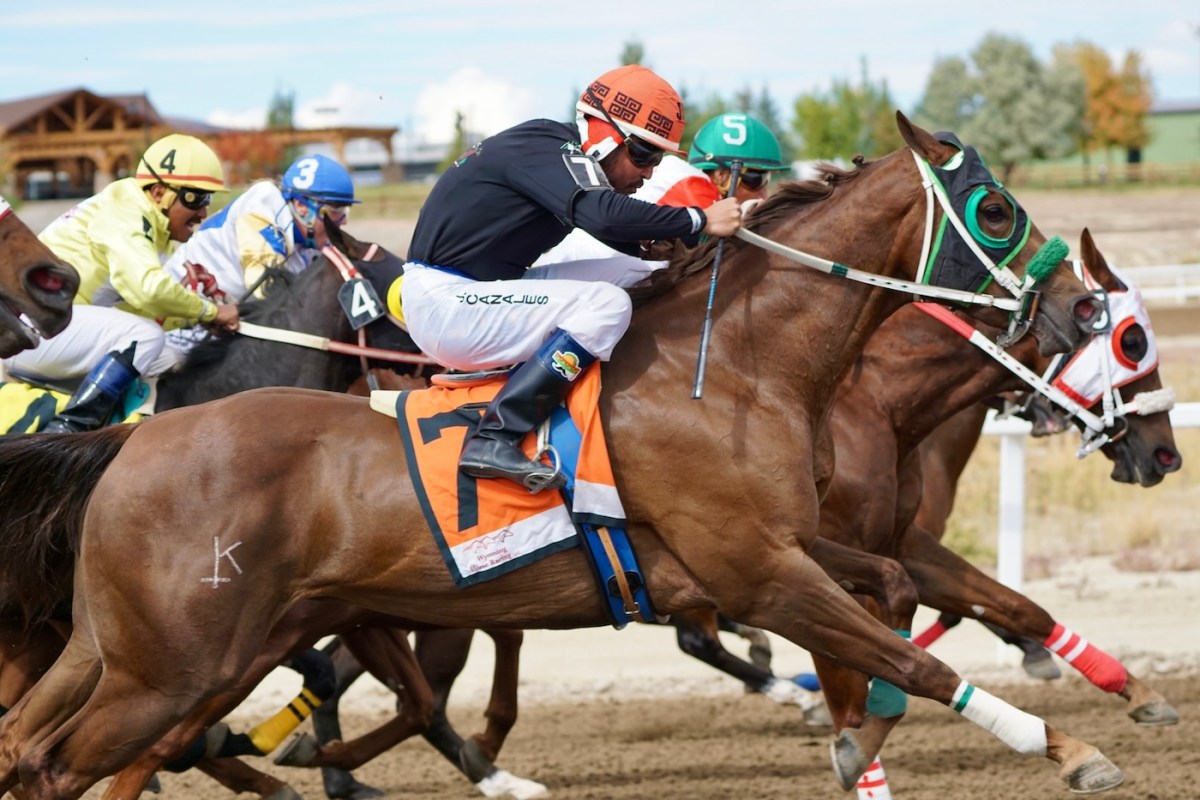
The meeting opened with a detailed look at Wyoming’s current gambling revenues and how they are distributed. Nick Larramendy, executive director of the Wyoming Gaming Commission, said the industry’s growth has been led by historic horse racing, which saw a total “handle” — the total amount of dollars played — of $2.49 billion in 2025.
Larramendy was careful to clarify the difference between “handle” and actual revenue, noting that if a player spins $1 and wins $5 and plays it all back, the handle is $6, even though only $1 was deposited. From this handle, the state collects a 1.9% tax, which is distributed among the Breeders Award Fund (0.40%), the Wyoming Gaming Commission (0.25%), the Legislative Stabilization Reserve Account (0.25%), and local cities and counties (1%).
In 2025, historic horse racing generated $24.9 million for Wyoming municipalities. However, the payout to the public remains the largest slice of the pie, totaling $2.2 billion last year. Rep. Steve Johnson, R-Cheyenne, questioned the “gross profit” remaining for operators, which Larramendy identified as approximately $180 million after payouts and taxes.
The Evanston-Gillette move
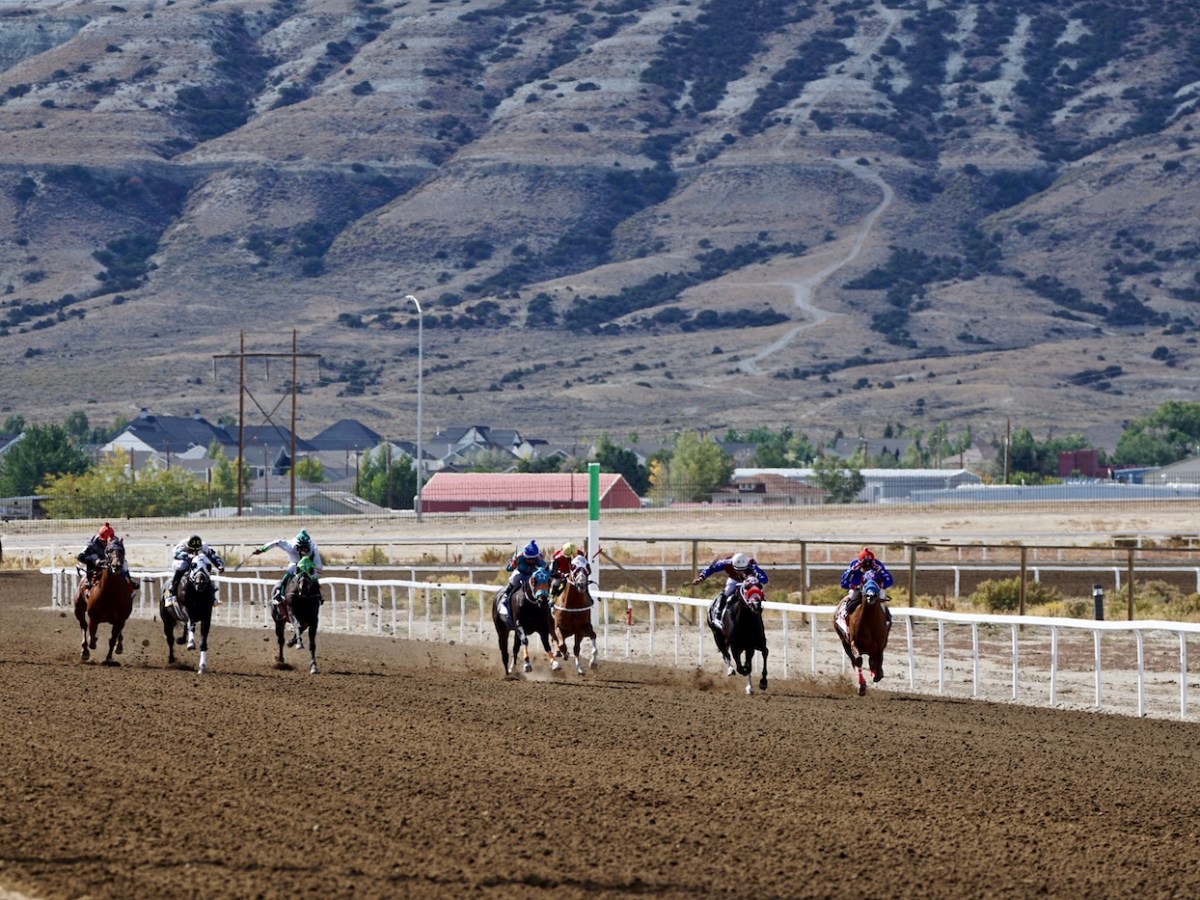
The most heated discussion of the morning centered on the business decisions of Wyoming Downs and 307 Horse Racing. Kyle Ridgeway, president of the entities, defended the decision to move several race days from the Cam-Plex in Gillette to Evanston. Ridgeway argued that Evanston attracts thousands of out-of-state bettors from Utah, whereas Gillette struggled with attendance.
“In Wyoming, to focus our center of gravity in Evanston was a business decision and an economic benefit decision for the longer term,” Ridgeway testified. He noted that keeping horsemen in one location for the summer reduces trucking costs and creates a more robust “racing atmosphere.”
Johnson expressed disagreement, suggesting the move was “gaming the system” to maintain historic horse racing machine licenses while abandoning the commitment to local horse racing in northern Wyoming.
“I’m still disturbed about giving one entity more than 16 race days,” Johnson said. “I think you’re taking advantage of the situation.”
Ridgeway countered, saying that his companies employ 400 people and have invested millions in infrastructure.
“We follow the laws. And we don’t follow feelings,” Ridgeway stated, asserting that his entities remain in full compliance with gaming commission rules because running 16 race days in a year is a minimum for a company, and it doesn’t matter at which track those races occur.
Queen of Hearts
The committee also discussed charitable gambling, specifically the “Queen of Hearts” card games that have been shut down by the commission across the state. Bryan Grzegorczyk, owner of Alf’s Pub in Cheyenne and founder of the Thankful Thursdays fundraiser, pleaded with lawmakers to find a legal path for the game, which he used to raise $4.5 million for local nonprofits.
“Please don’t restrict us in helping give back to our community,”
Grzegorczyk said, adding he doesn’t do these events to drive business, but to help his community.
However, Larramendy said the game currently violates Wyoming’s criminal statutes. Unlike a traditional raffle, Queen of Hearts is a game where a winner is not guaranteed at every drawing.
“There is no prize of value that you are guaranteed to win [each week],” Larramendy said. “You’re simply winning the chance to gamble on a secondary game.”
Chairman Sen. John Kolb, R-Rock Springs, also expressed concern over a loophole in current raffle statutes that allows organizations to claim nearly 100% of proceeds as “costs,” leaving nothing for charity. The committee voted 4-1 to draft a bill requiring that at least 50% of raffle proceeds go to a charitable purpose.
In an effort to find a path forward for charitable organizations, the committee issued several directives to the gaming commission, including researching if the Queen of Hearts game could be modified to comply with current laws, and looking into how other states have legalized and regulated progressive raffles.

iGaming
Finally, the committee addressed the growth of illegal offshore iGaming and sweepstakes casinos. Larramendy warned that many companies use Wyoming LLCs to appear legitimate, but are actually based overseas.
“These companies are offshore … several of the ones that we’ve found … look like an RV park somewhere or just an empty lot,” Larramendy said.
The committee voted to request a bill draft for its next meeting that would prohibit iGaming and similar online activities more explicitly within the law. Larramendy said this could give the commission better tools for enforcement against these illegal businesses.
Legislative proposals
The committee also moved forward with several other bill drafts intended to refine state law:
- Purse percentage floor: Kolb moved to create a statutory floor for the percentage of historic horse racing revenue that must go to live racing purses. Currently, these rates are negotiated privately between operators and horsemen. “I want to level the playing field,” Kolb said, noting that large companies often have more bargaining power than individual horsemen.
- Gambling addiction support: Co-Chairman Rep. Jayme Lien, R-Casper, proposed that $300,000 be contributed to gambling addiction, or “problem gaming,” treatment from every type of gambling in the state, not just online sports wagering, to create a pooled statewide fund. Under the current proposed bill draft, $300,000 comes from online sports wagering.
- Breakage redirection: The committee discussed “breakage,” the pennies left over when payouts are rounded down to the nearest nickel or dime. Currently, this is retained as profit by operators. The committee requested a bill draft to capture this money for state use or charitable purposes.
- Professional gaming commission: Kolb proposed resurrecting legislation to replace the current volunteer commission board with a professional, paid gaming commission. He argued that a multi-billion-dollar industry requires more oversight than volunteers can provide.
Next steps
As the interim proceeds, the committee will meet again in July to continue discussions and potentially refine these bill drafts for the 2027 legislative session.

Legalized gambling is just another form of government taxation.