

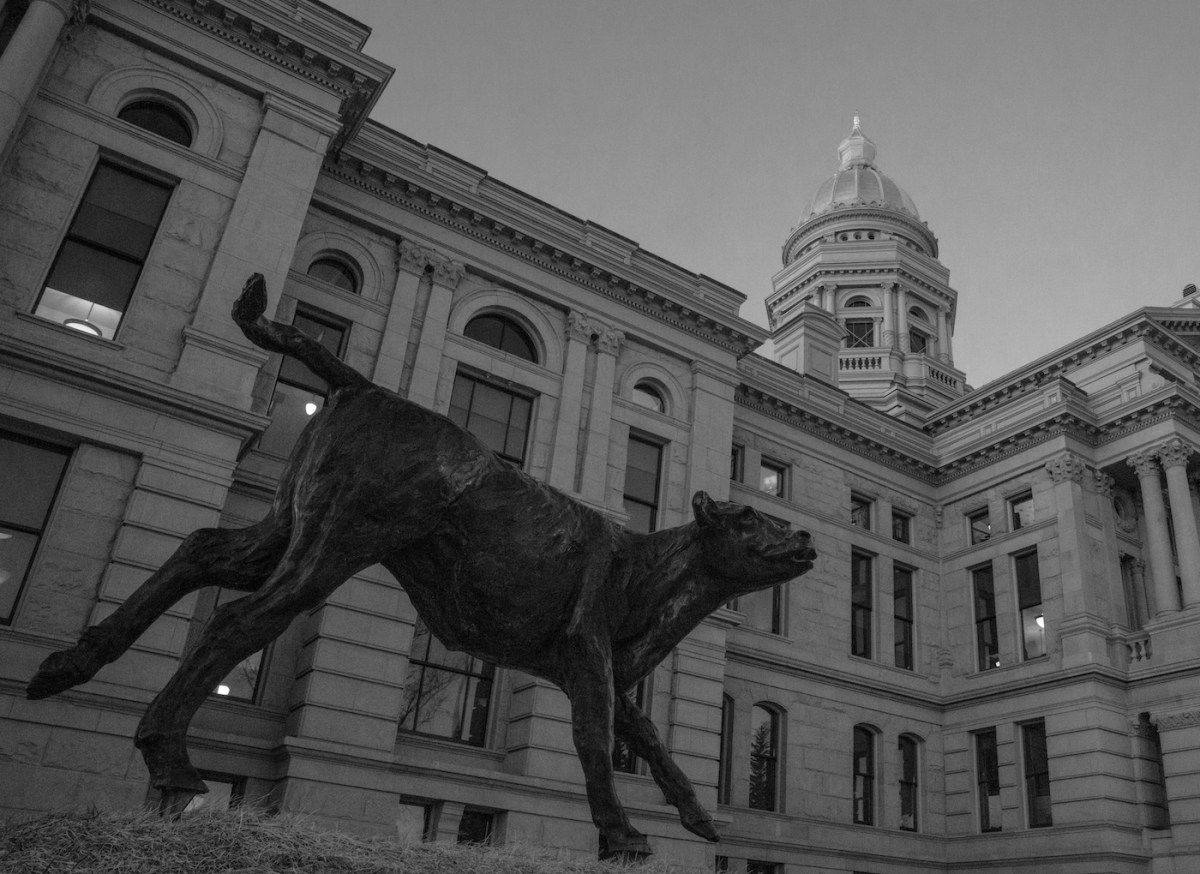
The 2025 legislative session is only a few weeks old, but we have already learned a lot about the new group of officeholders and legislative leadership.
Opinion
In the state House, the majority of representatives of the 68th Wyoming Legislature are clearly committed to their agenda and to moving it quickly. They are very socially conservative — which is to say they’re intensely focused on values-based issues rather than the day-to-day of questions of governing — and I do not doubt that they believe that what they are doing is a step in the right direction. However, if they want to make Wyoming better, they must recognize that their decisions can have far reaching consequences that likely extend beyond what they initially expect or intend.
Quality legislators know that our society, our government and our laws are complex. This means that even small changes may have unintended consequences that may not be apparent at first blush. Good lawmakers will hear input on the bills in front of them, evaluate whether the bill accomplishes what it was intended to do and whether the unintended consequences outweigh the progress being made, and may try to improve the bill based on the input of experts and constituents. Bad legislators ignore public input and pass bills for the sake of scoring political points, regardless of whether the bills are good for the state.
Unfortunately, with the number of new legislators we have this year, many are just learning the difference between good and bad approaches.
Legislators must be careful that their legislation does not cause more problems than it would fix. One example from this year is a bill that is intended to prohibit state dollars from being invested in funds focused on “environmental, social and governance” or “ESG” issues. Conceptually, this is fine. But in practice, it shifts the focus from using our state funds fort maximizing returns, to instead use them for social engineering.
However, this bill accomplishes very little. Our state already does not invest in ESG funds. The bill is pure political theater: invent a problem, then say you solved it. Rather, the main impact of this bill, had it been passed in its original form, would have been to decimate Wyoming’s state investments. Our state has nearly $30 billion invested between the State Treasurer’s office and the Wyoming Retirement System. The estimated financial impact of this bill on just the Retirement System was estimated at over $1 billion over the next three years. These legislators were literally willing to throw away billions of state dollars to be able to say they solved a non-existent problem. That is bad legislating.
Fortunately for Wyoming, the ESG bill was amended and the worst parts taken out. It will soon be considered in the Senate, where, hopefully, good legislators can improve it or ultimately determine that the costs outweigh the very limited benefits. But this is just one example of something that has happened multiple times.
Property tax is another area where the new legislators have shown a great desire to pass something but may not be considering the long-term consequences. Current bills would provide across the board exemptions and cuts to our property taxes. While we all want low taxes, and property taxes in particular, across the board cuts carry with them significant costs. Quality legislators will do the work to understand the impacts, both now and in the future. This is not the time to be short-sighted.
Property tax cuts will have consequences for how our government is run. We all know that “government services” will have to be cut, but the word “services” conjures up the wrong picture. A better explanation would be that basic government functions will be reduced. City and county governments will be the greatest impacted. We may have fewer police and firefighters, reduced hours or staffing at government offices and towns unable to pay for necessary improvements or maintenance to city facilities. Any number of towns in our state are already dealing with outdated water, sewer and utilities. The funds to fix those infrastructure issues come from property taxes. These bills will make it harder or impossible to do that.
Perhaps the greatest impact of these decisions will be on our tax policy in the future. There are certain things that our state constitution requires our government to do, including funding certain areas and providing certain services. Our state Supreme Court has made clear that there are government functions that cannot be underfunded. If the Legislature cannot come up with the funds to properly provide for education, for example, it must raise the funds. Broad-based tax cuts without a plan for making up the revenue likely puts us on a path towards rebounding property taxes, increased sales tax or even a state income tax. Property tax relief is an important and meaningful issue, but good legislators must carefully weigh the consequences of their chosen approach before casting their vote. It is better to cut with a scalpel than an axe, even though it is harder.
Wyoming needs good legislators. Governing is complex and decisions often have unintended consequences. Let’s hope that our new senators and representatives can learn how to be good lawmakers before too much harm is done.

The proposed tax cuts are not “across the board.” They benefit a very specific group: owners of single family homes. Not renters. Not local businesses. Not even someone who happens to rent our my his basement. Not fair.
The title of your piece is fitting when compared to Mrs. Webber’s nonsense
The days of good Republican legislators is over. Unless however the consequences of these bad bills starts adversely effecting the very people who voted them in. Hopefully Governor Gordon will have a fresh veto pen available!