

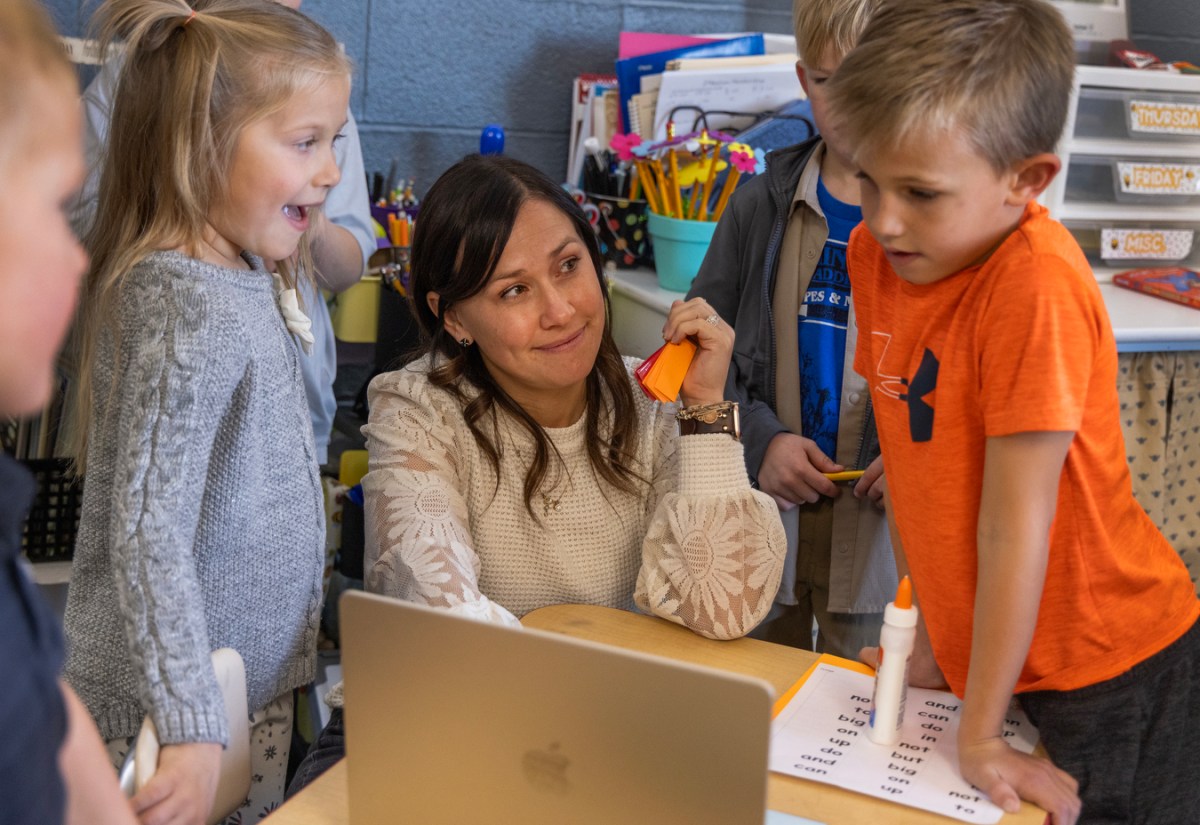
Beginning today, Wyoming residents can apply to receive up to $7,000 in state funds per student to pay for costs associated with private K-12 education. The money covers not only private-school tuition, but also things like admission fees to zoos or internet costs for homeschooling children not enrolled in public education.
However, the fate of the controversial 2025 Wyoming law that created the school-choice voucher program, the Steamboat Legacy Scholarship Act, remains uncertain. A lawsuit challenging its constitutionality is tied up in court.
Even with that outstanding, the fact that the Wyoming Supreme Court in May cleared the way for the state to begin disbursing funds following a yearlong injunction is a promising sign for people who support universal school vouchers.
“The injunction has been lifted, and that’s the main thing,” said EdChoice Director of Litigation Thomas M. Fisher, who represents families that intervened on behalf of the defendants. Fisher called the injunction decision a “powerful message” from the state’s high court.
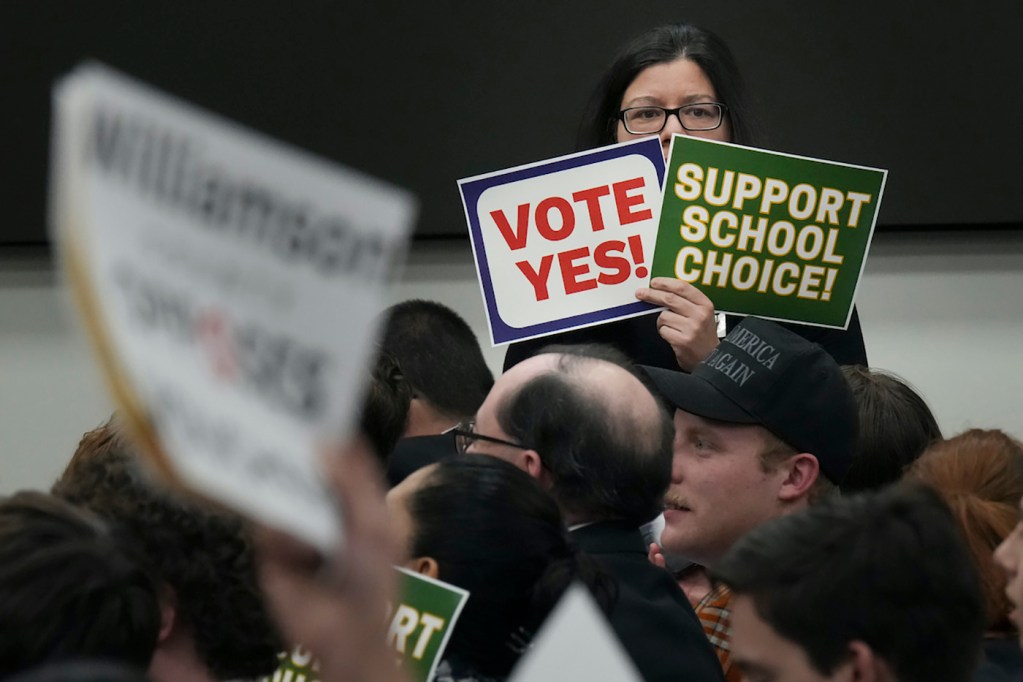
EdChoice in late June filed a motion in Wyoming district court for judgment on the pleadings, arguing that the higher court’s decision means the existing complaint cannot prevail.
Not so fast, plaintiffs say. The Steamboat Legacy program “violates our state Constitution by diverting public dollars to private education,” said Kim Amen, president of the Wyoming Education Association, which represents the state’s teachers and other educators but is not a formal union. The WEA, along with some Wyoming parents, are challenging the voucher program.
Rolling the program out now poses unwarranted risks, Amen told WyoFile in a statement.
“Distributing these funds before the courts have resolved the constitutional challenge creates unnecessary uncertainty for students, families, educators, and taxpayers,” she said. “If the courts ultimately determine the program is unconstitutional, taxpayer funds will have already been spent in a way that cannot easily be undone.”
School-choice stir
The 2025 Steamboat Legacy Scholarship Act represents a significant expansion of school choice in Wyoming. It arrived on a wave of school-choice advocacy nationwide, particularly among conservatives, and followed years of debate regarding proper use of state funds.
Even in Wyoming’s majority-Republican statehouse, the measure created ample tension in the 2025 legislative session as lawmakers grappled with whether it adhered to the state’s constitution, which makes public education a paramount state commitment.
Lawmakers had created an income-qualified voucher program in 2024. Supporters said the income qualifications provided constitutional safeguards in that iteration.
Rep. Ocean Andrew, R-Laramie, however, called it too narrow when he proposed expansion in 2025. His bill ultimately passed. Along with $7,000 per child annually for K-12 non-public-school costs, the scholarship offers money for pre-K costs, but only to income-qualified families at or below 250% of the federal poverty level. For a family of four, that’s an income of roughly $80,000 annually.
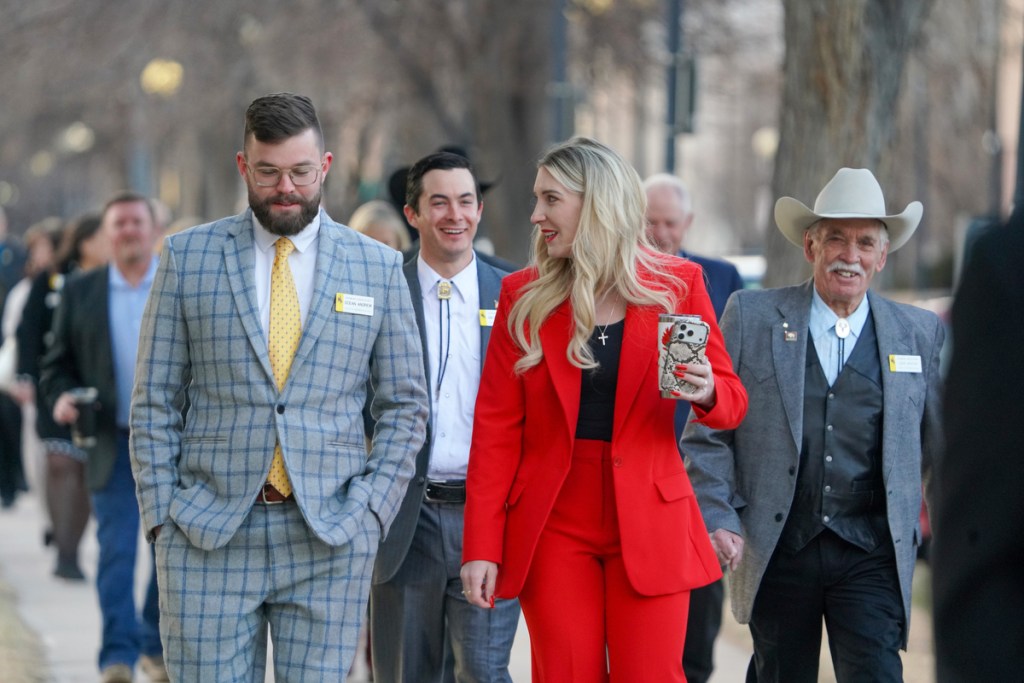
When the state opened applications, nearly 4,000 applicants signed up to receive the money for the 25/26 school year. But in June 2025, parents and the WEA filed their legal challenge.
“The Program violates multiple elements of the Education Article of the Wyoming Constitution,’” their lawsuit stated. “The state cannot circumvent [constitutional] requirements by funding private education that is not uniform and that meets none of the required state constitutional standards for education.”
The lawsuit asserted that the program would cause irreparable harm to plaintiffs. It asked the court to block the voucher program while the case proceeds. A district court judge granted that preliminary injunction in July 2025, barring the state from releasing any money until he determines whether or not the program is constitutional.
The state, however, fought his ruling, and further challenges led to the Supreme Court considering the matter. Following oral arguments in January, the higher court ended the injunction in May, and Wyoming’s Department of Education went to work to restart the program.
The unresolved questions
The plaintiffs’ arguments hinge on the Wyoming Constitution, which prioritizes the Legislature’s obligation to fund public education and explicitly prohibits the use of public funds for private and parochial schools.
The Steamboat program is “at cross purposes with the constitution and what the constitutional framers laid out,” plaintiffs’ attorney Jeff Lupardo said during oral arguments in front of the Supreme Court in January.
In addition, the program violates constitutional language that allows the state to give public funds only for the necessary support of the poor, the lawsuit reads. Instead, it’s an example of “gratuitously funneling public funds to private individuals and entities, regardless of whether they are poor and regardless of whether that support is necessary.”
Plaintiff parents oppose the voucher plan due to the harmful impact it will have on their children, according to the lawsuit, “because private schools receiving voucher funding can refuse admission to children with disabilities … and are not required to provide special education services or comply with [individualized education programs].” They also worry that private schools can refuse to admit and educate children who identify as queer, transgender or non-binary.

Finally, the lawsuit argued the program will harm Wyoming’s public school system because, “As students leave the public school system using public funds provided through the Voucher Program, the public schools will lose funding under the Average Daily Member formula, thereby resulting in fewer resources available to educate and support the students remaining in public schools.”
Superintendent of Public Instruction Megan Degenfelder and State Treasurer Curt Meier were named as defendants alongside the state. Defenfelder has been a vocal supporter of school choice.
Hints from the high court
In the May unanimous ruling, Wyoming Supreme Court justices found that parents challenging the case “failed to clearly show they might be irreparably and personally injured” if the state began funding education savings accounts.
Though that ruling specifically applied to the injunction, it signaled a promising overall outcome to defendants and their lawyers.
“This supports our case in district court, which we will continue to diligently pursue,” Degenfelder told WyoFile in May.
The higher court’s decision questioned two aspects of the district court’s conclusions. The first was the assumption that the Steamboat Act is part of the school finance system. “The Act is separately funded and access to public schools remains available to all school-aged children in Wyoming,” justices wrote.
The second was the interpretation of the language restricting Wyoming from giving money “to any person, corporation, or community not under the absolute control of the state” except for the necessary support of the poor. In this case, justices wrote, the act appropriates money into an account under the superintendent’s direction — not to an individual or community.
When EdChoice filed a motion for judgment on June 23, its lawyer Fisher said, it did so bolstered by the higher court’s decision.
“We’re basically saying, the Wyoming Supreme Court decided that you were wrong the first time around and there really isn’t any reason to let this case keep going,” Fisher said. “It’s unfortunate, of course, that so many families missed out on getting the education savings account support last school year.”
How to apply
For students who enrolled in the program for the 2025-26 school year, the application will populate the previous information for confirmation or changes, according to the education department. New applicants can submit here.
Families can use Steamboat funds for a variety of educational expenses that range from school tuition to tutoring fees, after-school education programs, AP exams and uniforms.
If court challenges successfully defeat the program, the education department said, “There is no indication that participating parents or schools would be held personally liable for repayment of properly disbursed funds.”
While the WEA respects the court’s decision, President Amen said, allowing taxpayer funds to be spent on private schools is concerning. “Public dollars belong in public schools, where more than 95% of Wyoming students are educated,” she said.

Education under attack. Part of the right-wing agenda. Let’s go down in the basement, crank up A I and social media, pray. No DEI in the flat earth world. And be paid to do it. Perfect!
Many of the private schools that will be formed will be particular religious denomination schools. Thus public money will be going to aid in “the establishment of religion.” And one wonders how many low-income people will take the money and try to do home-schooling.
This whole thing reminds me of what happened in Virginia in the wake of the 1954 Brown v. Board of Education decision prohibiting discrimination against Black students by recognizing the obvious: “separate but equal” had been inherently unequal.
AI Overview Virginia did not close its public schools entirely, but it did selectively close specific schools and even one entire county’s public school system to avoid desegregation. This strategy was part of a state-sponsored policy known as “Massive Resistance” in the wake of the 1954 Brown v. Board of Education decision.The extent of the school closures varied:
Statewide closures (1958): Governor J. Lindsay Almond ordered specific public schools in Norfolk, Charlottesville, and Warren County to close rather than comply with federal court-ordered integration. This directly locked out over 10,000 students, though these closures lasted only a few months before the laws were struck down by both the Virginia and U.S. Supreme Courts in January 1959.
Prince Edward County (1959–1964): While the rest of the state eventually reopened their schools, Prince Edward County—where the original student protests had occurred—chose to shut down its entire public school system completely. For five years, white students attended newly formed, state-subsidized private academies while Black students were denied access to any formal education in the county.The Prince Edward County closures finally ended in 1964 when the U.S. Supreme Court ruled in Griffin v. School Board of Prince Edward County that the county was constitutionally required to operate a public school system for all children.
Thanks for adding that perspective Phil.
Absolutely sickening. We need to remove the politicians that favored this unconstitutional mess.