


Wyoming refunded $14.2 million in property taxes to state homeowners in 2024, about $6 million more than the statewide relief program doled out in 2023.
The Wyoming Department of Revenue recently reported the 2024 payment totals, which amounted to a 72% increase, according to WyoFile calculations.
In addition to the dollars refunded, the number of households receiving refunds also increased this year, jumping from 8,818 to 13,485. The 4,667 additional households that applied for and received property tax refunds this year amount to an uptick of about 52% compared to 2023, due in part to changes enacted by lawmakers.
Lawmakers should add $10.5 million to the refund program through the state’s supplemental budget for next year’s operations, Department of Revenue Director Brenda Henson told the Legislature’s Joint Appropriations Committee last week.
“The property tax refund program is the only needs-based, income-tested relief program that’s on the books today.”
Brenda Henson
The two-year budget for the program amounted to $20 million. The supplemental budget request would bring the account back up to $16.2 million for 2024 tax year refunds.
“I think there’s always been a need for property tax relief,” Henson, who served as a county assessor for 16 years, told the panel. “The property tax refund program is the only needs-based, income-tested relief program that’s on the books today.
“We believe that that additional $10.5 million will be sufficient to fund refunds for [tax year] 2024.”
The refunds distributed this year were for property taxes paid in 2023. To qualify for a refund, members of a household had to apply and show they met certain income, tax and asset requirements and limits.
The state program is separate from additional county tax refund programs available in 2024 in Albany, Converse, Lincoln, Sublette and Teton counties.
Teton tops another list
Among Wyoming’s 23 counties, Teton County got the largest share of state refund money this year, receiving $2.9 million. The 630 refunds in Teton County averaged $4,666.
Laramie County households received the second largest share of the funds — $2.2 million altogether. The 2,245 refunds, the largest county total, averaged $997.
Park County’s average refund at $1,178 was the second highest after Teton County’s. Those funds went to 1,645 successful applicants.
That Teton County — where staggering incomes and immense property values skew statistics — would receive the largest share of tax breaks raised questions from one lawmaker. Federal data shows the average per capita income for a Teton County resident was $471,751 last year, the highest in the nation.
“Teton County is the highest average dollar refund,” Sen. Jim Anderson, (R-Casper) said at the appropriations meeting. “I would think that wouldn’t be so if [the program] was income-related.”

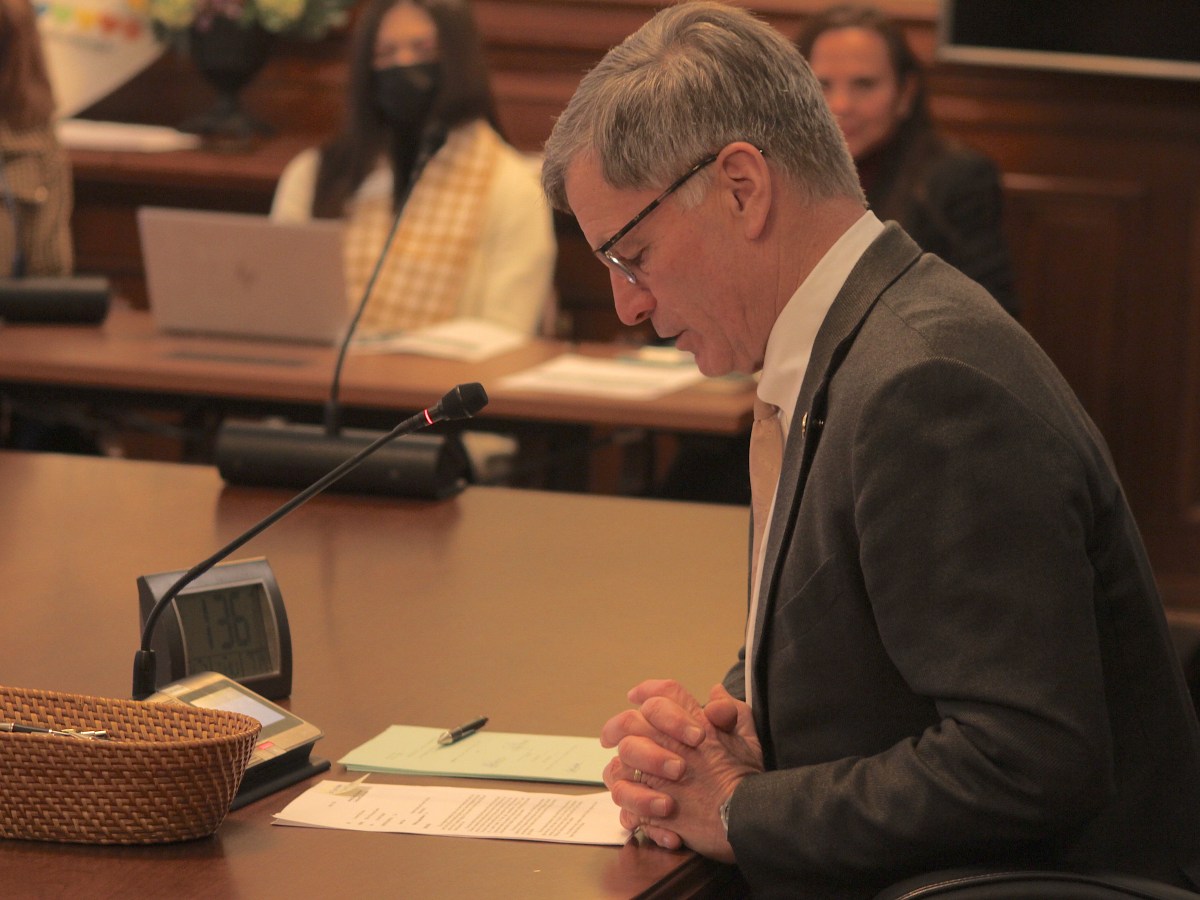
The tax relief program is designed for home-owning residents, Anderson observed, not for absentee landlords or owners of rental properties — types of housing that may be more common in Teton County’s resort and tourist-heavy communities than in other parts of Wyoming.
“This has to do with owner-occupied houses,” Anderson said of the refund program. “I was thinking that would decrease the Teton County [refunds], but it’s four times what everybody else is.”
Property values drove the Teton figure up, Henson said.
“Obviously, fair market value of residential properties in Teton County is significantly higher” than other counties, she said. “So that’s why that refund amount is higher.”
Teton County’s assessed value for residential land, improvements and personal property amounted to $3.7 billion in 2024, Henson told the Joint Revenue Committee last month. That figure for the entire state amounted to $10.4 billion.
Teton County’s assessed residential value is more than three times the value in Laramie County, the next highest, which is $1.2 billion for 2024, according to Henson’s presentation. Yet Teton County has a population of 23,167 compared to Laramie County’s 101,187.
Residential value makes up 86% of Teton County’s total assessed value, according to Department of Revenue information. Statewide, counties’ residential value averages 32% of their overall assessed value, state information shows.
The supplemental budget will be debated when the Legislature convenes early next year.

All is not well with this program!!! It was a nightmare for me to finally get my refund but only after my County Treasurer submitted information on my behalf. It appears that many applications are being rejected or mishandled. The root of the problem is that the legislature did not fund the extra employees needed to implement the refunds – and, the staff was extremely over worked – I believe they had to borrow other employees from other departments in order to process the claims. My revised claim was lost – and never found – however, I had sent it certified and kept my copies so I was able to prove they had lost my claim. My County Treasurer resubmitted a third time in writing of course with attached copies of my application and the returned certification which proved they had lost my paperwork. When my County Treasurer called Cheyenne she commented how lucky she was to get through to a real live person – implying they were so busy and under staffed that its hard to get through.
How many applications have been denied or mishandled is unknown but based on my experience it must be substantial. I talked to my local legislative representative about this matter and it was the first he had heard of the problems. The legislature simply must appropriate the funds to administer the refund program – not dump additional work on a staff already over worked. I would like to hear additional comments from other readers. If you have similar concerns please contact your local representative and demand that they fund the program. By the way, my application for 2023 was rejected over absolutely trivia so I have considerable experience with the program’s failures.
A couple of questions here; First, why is the Federal average annual per capita ($471,751) income for Teton County so dramatically different that the 2023 Teton County Median Household Income estimate ($123,420) published here May 7, 2024? Second, with only three documents needed to apply for a tax refund, (tax bill, a receipt that property taxes have been paid in full, and proof of income for all family members) how does the asset restriction get checked, or the residency requirement? and finally, at the time this bill was passed it was estimated that an additional 2000 households would benefit from it, and yet there was an additional 4,667 requests. If all these people truthfully qualified for relief, then congratulations the bill is working as intended. If not, when does the red flag get raised?
Our county asserers should be trying to fight for us in Cheyenne instead of sitting on there thum playing stupid