

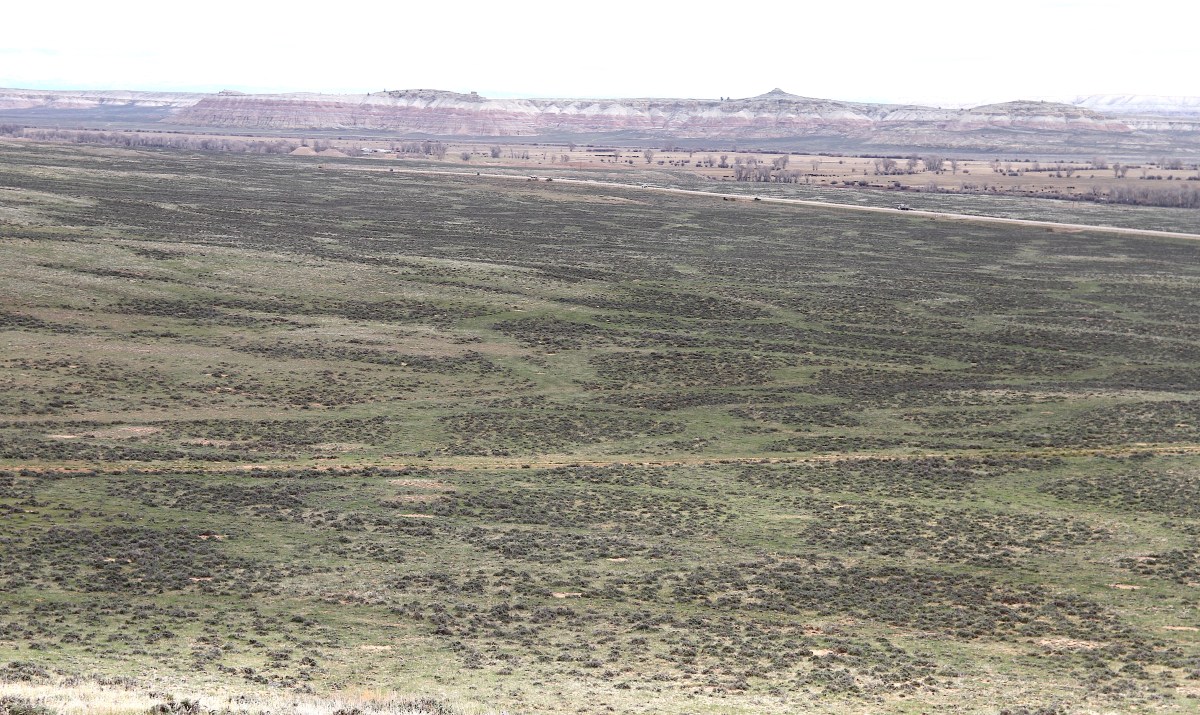
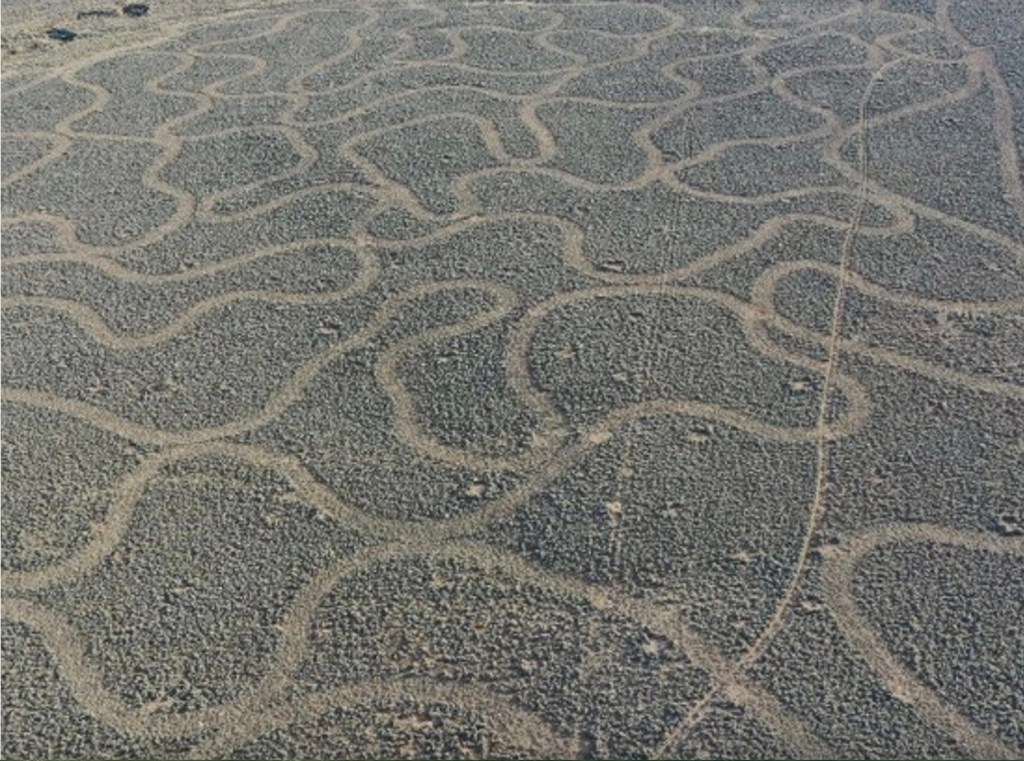
Generations of Wyoming wildlife managers have mowed over swaths of the sagebrush sea, a practice long believed to improve conditions for wildlife in places like the Green River Basin, near Baggs and the Platte Valley.
The technique, which often leaves behind a mosaic pattern, has historically targeted species like mule deer and sage grouse, though it’s thought to have holistic benefits that trickle down the food web. By opening up the mature sagebrush canopy, the thinking goes, mowing boosts the volume of wildflowers, grasses and young shrubs that sprout, essentially making the landscape more nutritious.
Several recently published studies, however, challenge the supposed benefits of sagebrush mowing, even suggesting that the mechanical manipulation of the embattled biome is potentially causing unintended harm for other species.
An award-winning University of Wyoming study, co-led by ecologist Jeff Beck, found that mowing or spraying the herbicide tebuthiuron on Wyoming big sagebrush had no benefits whatsoever for grass production and wildflower growth, nor did it stimulate the assemblage of insects. Sage grouse, in turn, were mostly unaffected — ecologists detected no gains in nest success or the survival of sage grouse broods and adult females. The imperiled bird species even slightly avoided manipulated swaths of the sagebrush-steppe landscape, the data showed.
“In our study design, we purposely tested the Wyoming Game and Fish Department protocols for treating sagebrush in core [sage grouse] areas,” Beck told WyoFile. “The treatments didn’t do what they’re supposed to do.”
Meanwhile, research out of the University of Wyoming and Game and Fish’s Non-Game Division has also found that sagebrush-dependent songbirds suffered from mowing’s unintended consequences in central and western Wyoming.
“We found no Brewer’s sparrows or sage thrashers nesting in the mowed footprint posttreatment, which suggests complete loss of nesting habitat for these species,” a University of Wyoming-led research team wrote in a 2018 Ornithological Applications study. “Mowing was associated with higher nestling condition and nest survival for Vesper sparrows but not for the sagebrush-obligate species.”

Game and Fish non-game biologists took a similar look at how mowing and aeration affected sagebrush-dependent songbirds in the Green River Basin in 2022, recently publishing the preliminary results in their annual “job completion report.”
“Strictly from a bird perspective, that area is the bread basket of sagebrush,” Game and Fish Statewide Non-Game Bird Biologist Zach Wallace told WyoFile. “In my opinion, if we’re going to manage it — or remove it for management — we should consider the broader impacts of that. That was part of that motivation for our study on the songbirds. What are the potential effects?”
Sage thrashers, Brewer’s sparrows and sagebrush sparrows — all designated as “species of greatest conservation need” — were found in lower abundance in mowed areas, the non-game biologists found. Meanwhile, Vesper sparrows and horned larks, which are habitat generalists, capitalized on the mown areas, increasing in abundance.

Beck’s study, which kicked off in 2011, made use of a massive dataset amassed from tracking 620 female sage grouse in central Wyoming with very-high frequency radio and GPS transmitters. The dataset, and others, were also used to assess the impacts free-roaming horses are having on sage grouse. Those results: Overpopulated horses are driving down sage grouse survival rates.
Decade-long effort
There were four goals of the 9-year study, which was led by ecologist Kurt Smith. The research team sought to ascertain how mowing or spraying tebuthiuron influenced sage grouse reproductive success and survival, and they also wanted to determine how it changed nesting and brood-rearing habitat selection. The scientific inquiry also examined how vegetation responded, in addition to pinning down forbs and insect responses.
Six years of post-mowing monitoring found that fluctuations in vegetation growth were tied to precipitation and other weather variables, not habitat manipulations.
“There were the same [annual changes] in the treated and untreated areas,” Beck said.
Sage grouse, meanwhile, were essentially unaffected by the treatments, though they tended to slightly avoid treated areas with barer ground.

Those results were perhaps unexpected.
“Some biologists — older biologists, maybe — have a deep-seated belief that these treatments work,” Beck said.
Anna Chalfoun, a professor and USGS Wyoming Cooperative Fish and Wildlife Research Unit member and co-author of the study, said that it’s been a longstanding assumption that sagebrush manipulations were effective for conserving sage grouse — a bird that’s been petitioned for Endangered Species Act protections and receives a lot of attention.
“It’s a very appealing concept, right? With limited conservation resources, if we just focus on this high-profile species of concern, then we’ll de facto be supporting all of these other species,” Chalfoun said. “But a management premise only works if it works.”
The long-running study suggests that it does not work, though there are limits to the conclusions wildlife managers can draw.
Limitations
Although Beck and his colleagues detected no silver linings or benefits in the six-year stretch after mowing or spraying, Wyoming big sagebrush is a notoriously slow-growing shrub.
“There’s a possibility that if you wait 15, 20 years, something will be different,” Beck said.
Although the period assessed in the researchers’ manuscript came to a close in 2019, monitoring of the area is continuing. Ecologists will track how the landscape grows back for years to come, doing so by keeping tabs on fenced exclosures that are half-treated and half-untreated.

The study area off to the east of the Wind River Range was also limited to the most widespread of all sagebrush subspecies: Wyoming big sagebrush.
“It’s not as resilient as mountain big sagebrush, which grows at higher elevation,” Beck said. “Wyoming big sagebrush is lower in elevation typically, it’s drier, and it’s known to not be as resilient.”
Flowering plants tend to increase in areas where mountain big sagebrush has been mowed or chemically treated, according to a 2006 study cited in Beck’s recent paper. Sage grouse also increased use of those areas.
Modern mowing and learning
Nowadays, the “vast majority” of mowing and other sagebrush treatments spearheaded by the Wyoming Game and Fish Department are completed in areas dominated by mountain big sagebrush. The state agency began focusing on that subspecies instead of slower-growing Wyoming big sagebrush even before the University of Wyoming study results began arriving, said Ian Tator, Game and Fish’s statewide terrestrial habitat manager.
“We’ve taken that information [from the study] and used it to fine-tune what we were already doing,” Tator told WyoFile.
In recent years, sagebrush mowing has been a targeted endeavor in Wyoming. During 2023, a total of 1,866 acres of sagebrush — about three square miles — was mowed, “chopped,” or aerated, according to Game and Fish’s statewide habitat plan annual report. The five-year-average number of treated acres comes in at just over 2,400 acres.

Mowed and treated acreages of sagebrush aren’t necessarily selected with a specific species in mind, Tator said.
“In our mind, we are doing this work in order to improve conditions for all species,” he said. “[We’re] looking at the system holistically and trying to do what’s right by the system — and also, doing no harm.”
Research, including from within Game and Fish itself, suggesting that mowing is harming sagebrush-dependent songbirds came about “a lot more recently,” he said.
“We certainly are adaptively managing,” Tator said. “If it turns out that we are doing harm for a species and we need to reconsider our approach, then we definitely will.”


It seems to me that this mowing practice is primarily aimed at promoting hunted species and overlooks the majority of non-game species. Also, I do not concur with the statement about “overpopulated” wild horses. These returned North American natives actually enhance the prairie ecosystems in many ways, including soil enrichment and dispersal of a great variety of intact seeds. And they also greatly help in catastrophic wildfire prevention as well as increased Carbon sequestration.
How about restoring the large hooved animals? And i dont mean cows, sheep, goats, land lease creatures of ranchers.
I find it fascinating when people want to believe that predators are always the problem. Those who understand vegetation ecology even a little understand how much we’ve done to change the systems. The vast majority of studies never look far enough to the future to actually get the results of any treatment. It takes decades in some of these communities to see how changes occur, not just a few years. As far as predators, Aldo Leupold finally understood their role but few bother to read or understand history and it’s teachings.
I think maybe they aren’t looking at a landscape and ecosystem wide big picture. Everything is connected. The open range is fenced and/or plowed under. Aquifers are dropping. Bison no longer roam the plains. Big carnivores are limited to tolerance zones. Prairie dogs, a keystone species is relentlessly persecuted. The prairie is gone and with it the pollinators and critters that depended on it. Perhaps the sage brush landscape cannot thrive without all its pieces or its neighbor, the prairie.
If I remember correctly, the oil and gas producers in the Green River Basin – Jonah Field – were allowed to offset the impact of oil and gas development on sage grouse in core habitat by ” off site mitigation” . That is, they contributed several million dollars to sage brush habitat treatment such as mowing to projects – not in the oil and gas field – under the assumption that off site mitigation would equal the negative effects within core habitat. However, the latest research seems to indicate that off site mitigation has not been effective. Now, reading between the lines, the State of Wyoming created a clever mechanism – off site mitigation – which circumvented core habitat designation and allowed oil and gas development to proceed within core habitat. And the wildlife biologists bought off on this circumvention because they were schooled ( indoctrinated ) by the habitat, habitat, habitat philosophy which rejected any other factor which might affect sage grouse populations such as nest depredation by ravens, crows, skunks, badgers, raccoons, etc. Tens of millions of dollars were spent on sage grouse habitat manipulation based on unfounded habitat assumptions. At times like this, the habitat proponents will either become strangely silent or criticize the science published in this study. You can expect that every effort will be made to discredit this study by those attempting to save face. Watch for it – the criticism will be forthcoming and some of it has already started. Academists with a Phd in front of their name do not like to be proven wrong.
As consumers, we alter the landscape. When we try to fix it, it often comes with mixed results. We need to be more humble. Over the years I have watched folks with good intentions manage is certain ways. That is often done with a personal bias. What species is most important to you? More and more we are seeing the importance of managing for the whole. To put it more succintly, if I grow a garden and spray certain chemicals to irradicate a pest, I may also wipe out beneficial insects. In our zeal to prevent listing we may end up causing more listings if we don’t tread carefully.
Mother nature takes care of herself, we cannot improve it.
Golly Gee. Imagine that man’s “management “ of the natural world upsets the apple cart. Amazing discovery.