

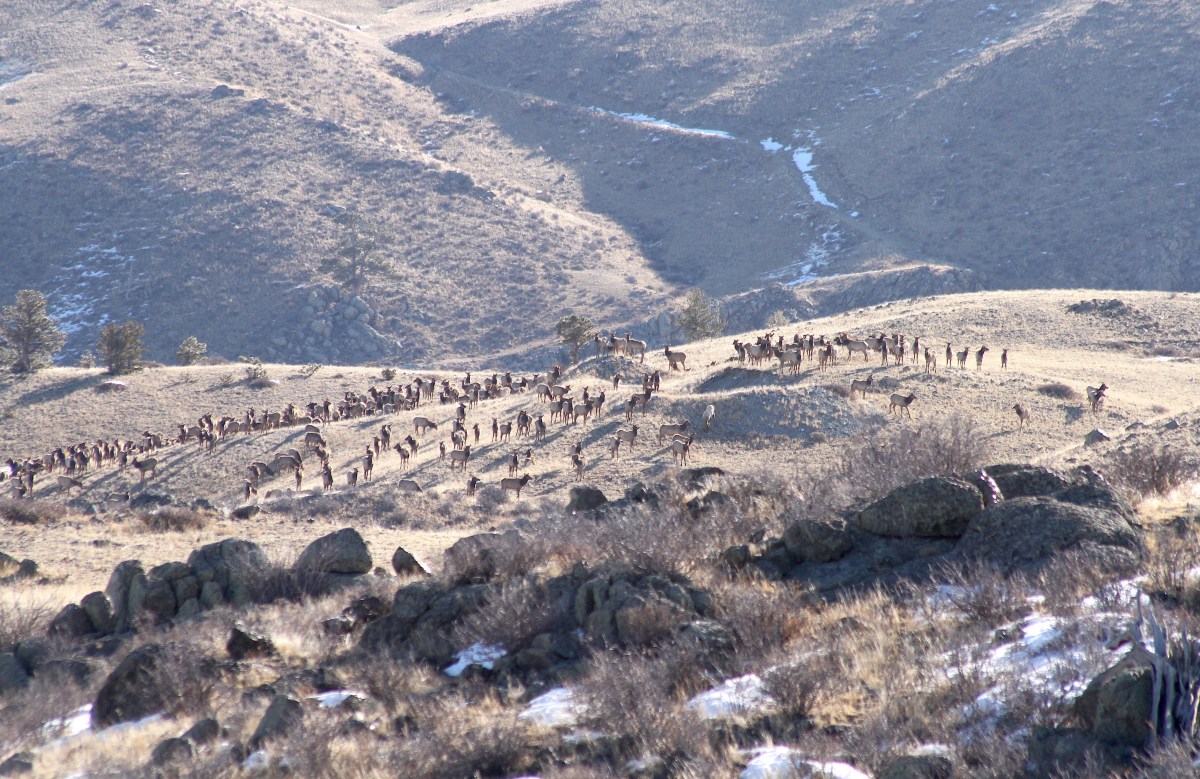
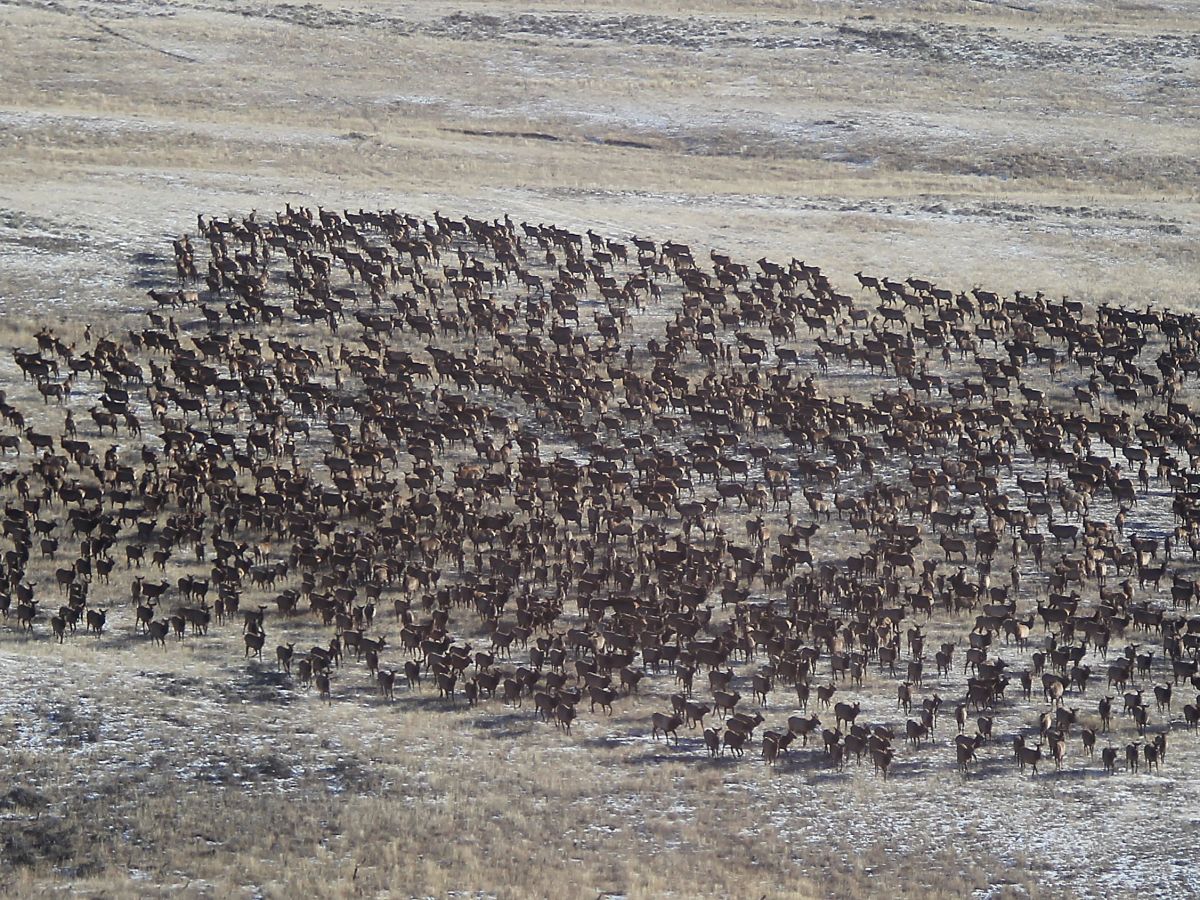
DOUGLAS—Wyoming Game and Fish Commissioners have OK’d a new compensation program that may resolve a sometimes-fiery debate over whether the state should pay livestock producers more for forage eaten off their rangeland by over-populated elk herds.
The solution establishes criteria for payment eligibility based on the degree to which a local elk herd is overpopulated and the percentage of grass eaten by that game. Additionally, a ranch must allow some hunters on the property to be eligible.
It was resoundingly unpopular with hunters in draft form, but didn’t change much following public comment. Some 46 of the 48 public comments on the draft regulation that stated a position opposed the new payment program, which could worsen a forecasted agency cash crunch. Nevertheless, the governor-appointed board overseeing the Equality State’s wildlife voted that it was in managers’ best interest to placate stockgrowers who have struggled to ranch amid too many elk.
A looming alternative — that the livestock lobby would make another run at a legislative mandate, which was every bit as unpopular — was less attractive to commissioners, spurring their pragmatism.
“We’re also in this situation because the Legislature has been asked to fix this,” Game and Fish Commissioner Rusty Bell told his counterparts at a meeting Wednesday.
It’s better, the Gillette taxidermist said, for Game and Fish to self-impose the program in its own regulations through a process that includes biology, public comment and “isn’t legislative, to be honest.”

Approved in a 6-to-1 vote, the revisions to Wyoming Game and Fish’s “damage claims” regulations for non-cultivated livestock rangeland looks like this:
- Landowners are eligible for “extraordinary damage to grass” payments when a big game herd is overpopulated by 20% or more for three or more consecutive years and the species is consuming 15% or more of all the estimated forage on any piece of private property.
- Payments are still possible when herds are not overpopulated if more than 30% of the forage is consumed annually by a big game species.
- Eligibility also hinges on the landowner allowing a “sufficient number of hunters” on the property — a provision already in regulation. That’s defined as the necessary number of hunters to offset the “recruitment,” i.e. the number of animals born into the population that survived one year.
Cattlemen and livestock industry representatives approved of the new system, which loosely resembled a bill that was unexpectedly killed at the 11th hour during the Wyoming Legislature’s 2024 budget session.
“I don’t know how you guys came to this damage [program],” MR Angus Ranch owner Juan Reyes told commissioners. “I don’t know if it was brilliance, or [you] just stumbled into it. I think this is the greatest thing you guys have done for sportsmen.”
Judging by public comments, a strong contingent of hunters opposed Game and Fish’s draft regulation, which rose from the ashes of the dead bill. Just one non-ranching member of the public, however, took the time to testify at the Douglas meeting.
“I have to say, I’m feeling a little lonely in this room,” Wyoming Wildlife Federation staffer Jess Johnson told commissioners.
Sportsmen are “concerned” and “don’t love this.” But Johnson also recollected the run at legislation, which she described as “scary,” “unnerving” and handled “as badly as possible.” One iteration of the legislation called for compensating ranchers for 150% of the lost grasses’ value. Sportsmen and wildlife managers worried it would actually create an incentive for ranchers to house elk on the property, and that it’d siphon millions of dollars from the Game and Fish budget in the process.
Johnson also preferred housing the compensation program in revisable regulations — not statute.
“We do have to fix this problem,” Johnson said. “We stand as a sporting org in support of this, a little bit begrudgingly.”
We do have to fix this problem.We stand as a sporting org in support of this, a little bit begrudgingly.”
Jess Johnson, wyoming wildlife federation
Not everybody in Wyoming is on the same page.
Outgoing Rep. Cyrus Western (R-Big Horn) wasn’t pleased to see a likeness to the controversial legislation reemerge in regulation voluntarily.
“If Game and Fish has the responsibility of advocating for the best interest of sportsmen, they have completely failed on this matter,” he told WyoFile in a text message.
Game and Fish Commissioner Kenneth Roberts also pushed back during deliberations, then later created a rare split-vote on the regulation during roll call.
“To me, hunters can solve this problem,” he said. “It’s a matter of getting hunters on [on the property] to solve the problem.”
Others argued it’s not so simple. Supersized herds of elk that form in places like the Laramie Mountains and Iron Mountain are skilled at finding refuge on a landscape that’s being bought up for hobby and hunting ranches — places where elk don’t compete with cattle and are desired.

Game and Fish Director Brian Nesvik, who was partaking in his last commission meeting, pointed out one “extreme example” in southeast Wyoming of a rancher who’s “surrounded” by properties that don’t allow hunters access in numbers necessary to reduce elk herd sizes.
“He’s literally at the point where he’s reduced his [cattle] stocking rate,” Nesvik said, “because he is unable, on his ranch, to be able to control this problem.”
It appears likely the Game and Fish regulation change will keep lawmakers at bay. Wyoming Stock Growers Association lobbyist Jim Magagna, who architected the legislation, told Game and Fish commissioners he was satisfied.
“If we need to go to the Legislature we certainly will do that in the future,” Magagna told commissioners, “but we believe that these types of issues can be addressed here.”

Grazing damages for ranchers are now due to over population. I find this account amusing for the primary reason for such elk herds leads right back to those ranching front doors. 1964 hunting season were limited to periods that helped both survive and produced outstanding revenues for Wyoming throughout all the county’s by ensuring the hunting was affordable, not the true rich man owner ship or generations of property sold to highest bidder.
How is it that we tax payers have to compensate these ranchers? Is these lands not once elk range? Where did they think the elk were going to go to feed? Just because the threw money into growing invasive grasses for cattle or whatever they thought they could profit from and didn’t figure in the loses from the elk is not taxpayers problem! This is so ignorant! I say hell no to compensation for bad business bets!
Stop killing the wolves. They naturally control the elk. The more you interfere with nature the more problems you create.
While this is couched as a rancher vs hunter argument I’m wondering if a third option has been explored. Would the livestock reimbursement costs of introducing, and protection of for a period of time, a couple of packs of wolves in the Laramie range be less than the cost of the grass consumption fees being paid by the State? After all wolves are natural predators of elk and are perfectly equipped to manage the populations.
Another win-win-win for the West’s finest welfare recipients. Get paid to let the elk graze their land, paid again for granting outfitters exclusive access to rich wildlife opportunity areas (who are servicing top dollar out of state clients), and then play the martyr card at the local bar.
WY doesn’t have an elk overpopulation issue. Listening to the locals, there are no elk left, because of the wolves.
WY has a corruption issue – tax payer funded monetary gifts to well-connected grifters in the livestock industry.
Use eminent domain to create corner crossing easements into all locked out WY public land, and lower the price of out of state elk tags. WY Fish & Wildlife and local communities would see a huge financial uplift, while our beleaguered ranchers suffering from record high beef prices would get relief from those thieving wapitis. Problem fixed by December.
No worries folks. Just increase the non-resident tag fees to pay the grass bills. Business as usual.
I don’t believe we should compensate any land owner until we fix corner crossing to be legal and work with land owners for hunting access. They are making money from privet hunting and now what us to pay to feed them… once the public can hunt the land I say the public can pay to compensate for feed..
More hunters,a hunter will pay at least $1,000 plus price of the licences,each ranch should allow hunters,they have the room on their land ,they are selfish,
How many folks do you allow to use your yard for picnics or whatever?
Marion, ranchers are in my backyard. Public land is my land, and ranchers have there bovines destroying it. Stream banks caved in, cow poop every where. It’s a disgrace. Ranchers also close off public land. MY LAND.
Questions: “Allowing” hunters on Ranch property to hunt. Does that also include charging an access fee? Is the access for the full season, or just the last day with 25 other beggars? Also, does the landowner also get the tag coupon for additional cash? Who makes the determination that there is say a 25% forage impact beyond livestock grazing,
So let me understand this, the big ranchers control access to the BLM checkerboard, the National forests, and the access to hunting the wildlife, yet they will receive compensation when they don’t offer the access to hunters, with compensation of course. If the ranchers do not offer access to harvest cow elk they should not be compensated for grass.
It seems that ranchers are not even trying to do anything about grazing lose or damage yet want reimbursed. Responsible hunters could assist with this issue. This does not mean charging responsible, respectfull hunters to hunt your land ( and help you with a grazing problem).I understand that ranchers are concerned about misuse of their land but there are ways to ensure that the land is used respectfully. Give us a break ranchers. Most of us just want natural healthy meat for our families. Not allowing responsible hunters to harvest from the over populated herds then wanting reimbursed for damages seems absurd.
Ok. So. They don’t want wolves that could keep the elk population in check if given a chance. And I’ve heard that cattle graze right down to the dirt making it hard for it to grow back. So now they want compensation for the wolf damage and for the range that the elk eat. What other wildlife is ruining their life that they need compensation for?!🙄
My understanding is that cattle, like bison, don’t have upper teeth, so they only eat the upper part of tall grass, the part elk and deer find repulsive, leaving the better tasting (from the deer’s point of view) for wildlife. Cattle serve the same function that bison do in the ecosystem.
This is one of those situations where someone just had to make a decision concerning a difficult matter. I’m not about to render an opinion either way – we’ll just have to try this approach and make adjustments if necessary. I noticed the vote of the commissioners had one dissenting vote that gives you an idea how difficult it was to chart a path forward.
Our elected officials made that decision, they decided not to do it. Now a group of appointed bureaucrats are overriding the will of the people, talk about overreach. How many of the WGF Commission members are from the ranching industry?
If the land owners would let people hunt on the property the elk population would go down
People should do their homework before pontificating. Please take note of the wildfire situation and how it has affected public and private lands, and often a result of reduced grazing, not overgrazing. Unharvested grass is fuel for fires. Firefighters also are commenting publicly that they have relied heavily on help from ranchers, to get these forest under control. Im not so sure that the sportsmen’s and environmental lobby groups are doing their part. I believe that hunting should be allowed, if a property owner seeks compensation, but of course that does not compensate for destroyed fences and other private lands damage. Compensation should be allowed for excessive numbers. I support Brian Nesvik’s remarks. A little common sense is what is needed, here.
Would compensating the private landowner @ $1.35 per month Animal Unit (the same paltry sum that the rancher pays the US Govt to graze on public land) do it for you, Mary? No pontificating here, just an honest question. Fair is fair, right Mary?
How do you ranchers compensate the public for the land and waters that you destroy. You’re far worse than the public.
Let’s see here, ranchers overstock and overgraze the public lands, leaving nothing for the native wildlife (bovines are not native). Once the public range is denuded and elk have no source of food or cover, they naturally head to the lush private grounds. All of a sudden, ranchers get a huge subsidy check from the gov. Pretty vicious cycle and it’s lose – lose for the wildlife but once again a win – win for the supposedly independent ranchers. And to top it off, head G & F clown Nesvik helped orchestrate this. Let’s change the name of the Dept. to Wyoming Cow & Sheep
Seems fair, the question is how much are they going to be paid? I guess the fair payment would be $1.35 per AUM, the same price that they pay for a cow & calf per month on our public lands.
This is going to be interesting. New jobs for the Game and Fish Dept, counting Elk on private lands and for how long.
Here’s a direct question for Mr. Maganga – “Sir, have you ever earned a solitary dime that wasn’t heavily subsidized by the citizens of Wyoming and citizens and/or United States?” We all know that answer to that and once again, it’s highly hypocritical that the supposed rugged individualist – hate big gub’ment Wyoming Stockgrowers once again have whined and moaned and stuck out your hands for yet another payoff compliments of the taxpayers. John Wayne cowboys you’re not
Evidently the Wyoming Game and Fish commission is somehow being leveraged politically by wealthy , greedy , large corporation landowners. Who will not allow hunters on their property unless they pay a huge access fee. The Game and Fish ties the hunters up with the weird science hunting seasons and fees. While these companies that buy large ranch lands , they do it for the huge tax write off that is provided, they know full well that the wildlife comes with the land and they have a responsibility to the wildlife management provided by the State. At the same time wanting the state to pay for their percieved losses, while they overgraze public land that is leased to them. Obviously the Wyoming Game and Fish Commission has failed in managing wildlife in General. You only have to see what they have done to our mule deer and sage grouse populations. While these species are decimated they keep issuing licenses.
I think those in Control of the Wyoming Game and Fish agency need to be removed and the whole system needs a total overhaul.
This couldn’t possibly be a more obvious case of extortion. First you kill off all the predators…running them over with your snow mobiles for instance. Then you claim the elk are over populated. Finally, you get the government you supposedly hate to fork over the money while you profit. This extortion needs to end.
Wow! I won’t be donating 5-cents to the G&F moving forward.