


CHEYENNE—Sen. Larry Hicks thought the statewide solution to a regional problem was problematic and half-baked.
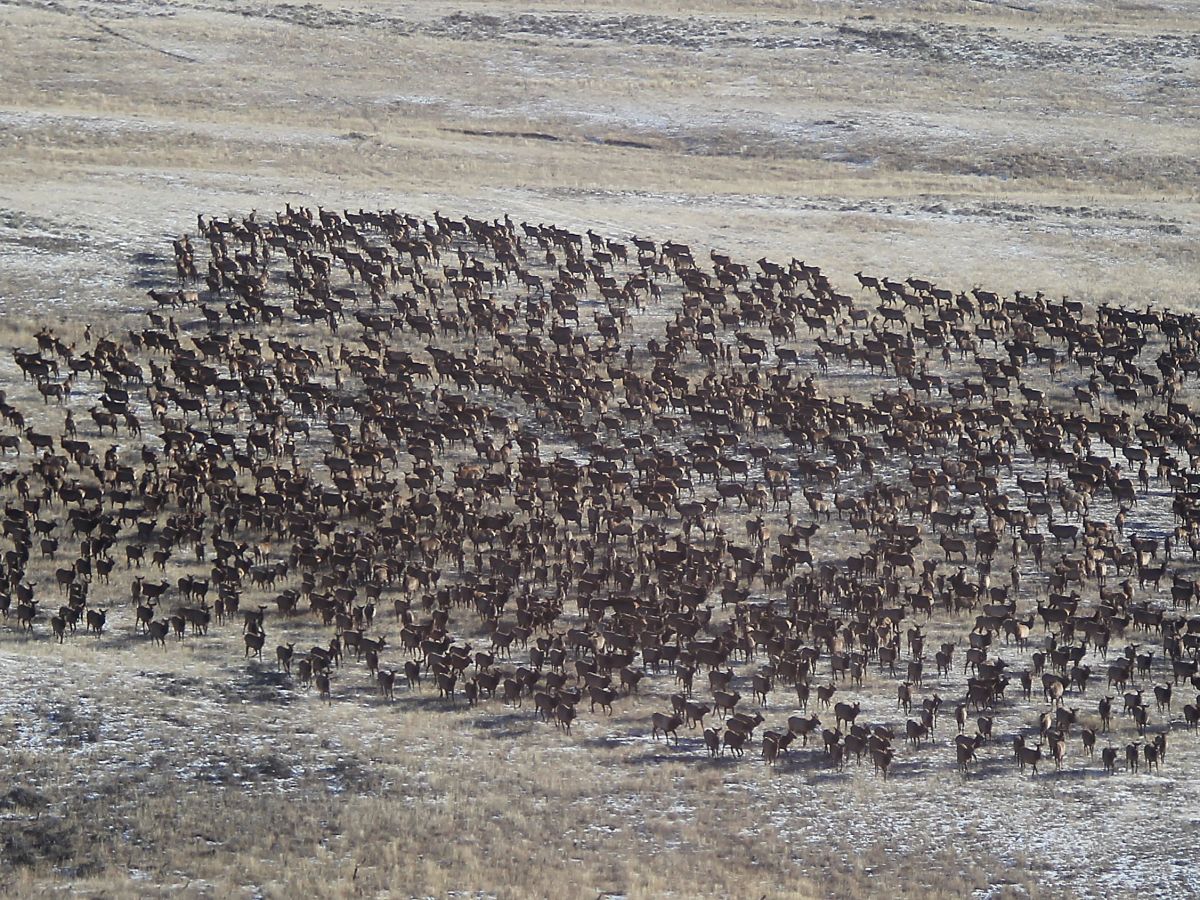
The problem is there are too many elk in some areas, especially south-central Wyoming’s Laramie Mountains and Iron Mountain area. The solution, proposed in House Bill 60 – Excess wildlife population damage amendments, essentially was to compensate Wyoming ranchers for the grass and other forage that elk, deer and antelope eat while on their land.
“I held it back on purpose because it wasn’t ready for prime time,” Hicks (R-Baggs) told WyoFile. “There were many potential significant negative consequences — and I don’t even think they were unanticipated.”

Hicks exercised his power as the Wyoming Senate’s majority floor leader, which allows him to determine the order bills are heard on the floor. On Tuesday afternoon, he bumped HB 60 to the bottom. Legislative budget session scheduling rules said that the bill had to be considered by the entire Senate that day or it’d automatically die. And by the time the body wrapped up its discussion about allowing civilians to carry concealed firearms into places like elementary schools, the upper chamber was ready to adjourn.
The now-dead bill raised the ire of hunting and conservation groups, and some Cheyenne lobbyists had it in their crosshairs for dilution or defeat. The ranching industry, however, strongly supported the legislation. After 11 attempts at amendments — several of them successful — HB 60 passed the House by a 43-18 margin, sending it down the hall for Senate consideration.
The Senate’s Travel, Recreation and Wildlife Committee tacked on two more now-moot amendments: Sen. Mike Gierau- (D-Jackson) gave the Wyoming Game and Fish Department $5 million from the general fund to rectify an “unfunded mandate,” while Sen. Affie Ellis (R-Cheyenne) did away with language in the bill that made it a “presumption” for landowners to be eligible for payments.
Although worked up over the summer by the Legislature’s Agriculture Committee, longtime livestock industry lobbyist Jim Magagna was an architect of the legislation.

He was caught off guard by its sudden death on Tuesday.
“I was fully expecting that it was going to reach the floor of the Senate yesterday afternoon,” said Magagna, who represents the Wyoming Stock Growers Association. “I think we had support to get it on the floor and I was optimistic we could pass it in the Senate.”
Magagna wasn’t aware Hicks had beef with HB 60.
Hicks described that beef to WyoFile: He didn’t like how the bill relied on imprecise population estimates for herds of elk and deer in areas where they can be difficult to tally. The senator from Baggs took issue with how grass-loss compensation rates were based on U.S. Department of Agriculture figures that accounted for other factors baked into rangeland grazing leases, like fence management and stock water. And he wasn’t a fan of how an isolated issue was spawning wholesale changes to how ranchers are compensated for wildlife around the state.
“This was originally brought up to address overpopulation with elk in one region of Wyoming,” Hicks said, “and it was expanded into a statewide program without any input on how it would actually work.”

It’s unclear whether the proposed reforms will be revisited in the months ahead in anticipation of a bill in the Legislature’s 2025 general session. The Agriculture Committee met Tuesday morning to discuss its “interim topics,” before HB 60 had met its fate.
“We had no notion that [this issue] was going to remain,” Magagna said. “I think we’ll continue to look at [legislation], and we’ll continue to work with Game and Fish on more active management of those herds.”
Wyoming’s wildlife managers are in the early stages of a five-year plan to aggressively hunt down elk herds in south-central Wyoming. Landowners are being equipped with special “auxiliary” hunting licenses, more kill permits are being doled out, and the state agency’s even paying a technician whose job it is to kill elk. Stay tuned to WyoFile for an update on that effort.

Wyoming’s open spaces are something that most everyone in our state values. And the state’s world class wildlife depends on those same open spaces for their lives – as do WY ranchers who are in no small way a vital part of protecting these values. While I agree that the bill could use some refinements, that is something we can best do together to keep our beautiful state wild and working.
In looking at the whole big picture please consider the impact that privately owned game refuges have on contributing to over population of some wildlife species. Could some of these large bunches of over populated wildlife be hazed into Wyoming counties that do not have wildlife overpopulation? May please tourists to see the wildlife in unexpected places
In looking at the whole big picture please consider the impact that privately owned game refuges have on contributing to over population of elk. Could some of these large bunches of elk be hazed into Wyoming counties that do not have elk?
it ain’t the 1880’s and Magnagna and the like need to face the music. Public land…and we’re also talking about the grass is not owned by the welfare bovine boys. They shouldn’t expect to have the exclusive right to graze it all down and then whine like b-babies when the starving wildlife crosses the boundary onto the private ground. It’s always interesting to drive down any Wyoming road and to see the condition of the public land vs the private. Strange, the private ground looks so lush and rich while much of the federal and state land looks like the surface of the moon. I would have more respect for Magnagna if he held up a cardboard sign at a busy intersection that would honestly say ” Who am I trying to Kid? Just need almost free public land and exclusive outfitting on the backs of the state wildlife”
They get paid enough for the taxpayers. If they accept farm welfare or draft payments, there needs to be something in the contract that says if you accept the money, you also accept Hunter’s, and birdwatchers to use the property you are being paid for then. If they don’t like the terms, don’t accept the money. Taxpayers and paid for these places and they get nothing in return. Millions to billions of dollars that they expect from taxpayers whenever something goes wrong and a $.25 poster or a phone app to keep you out. If they quit overgrazing the BLM, or better yet, just not allowed to have cattle on the BLM, there would never be a problem with elk eating the grass. Besides that, you could never rent to BLM for $1.50 an acre, which is the minimum bid, If you wanted to rent the van and save it for the wildlife. Give them their $1.50/acre rent payment back when the elk are eating on the Taxpayer public property.
It’s the same ole story that has been recycled in a variety of ways over the past few decades. Magagna and ‘some’ in the ranching community are looking fir another way to belly up to the Wyo Taxpayers Feeding Trough. If you have too many elk on your property – open your land up for responsible hunters to tag one. Wyoming should not become more of a landowner/outfitter welfare state !!
I’m all for helping out wyoming ranchers where this is concerned. If they want or Tax dollars. Then allow access for hunting to thin them out. Not just the outfitters. Especially where theyre are grazing cattle on public land that is locked by private on all sides.
Im fine paying the ranchers for what wildlife eat, but in return ranchers need to be paying that same rate (along with footing the bill for their own range improvements) to public land owners (the rest of us!) for grazing privileges on public land.
Being a long time rancher it’s really easy to fix but with the game and fish people the government people that don’t have a clue to ranching and farming it’s no wonder it’s such a mess hire someone that knows something and it will be fixed in time as a rancher I liked the wildlife and i think they have a right to be here like many other things I’m not so sure about humans look what been done to the country in about 500 years one thing is the greedy game and fish want all the money be fair if ranchers and farmers are feeding the wildlife instead of paying them give them a allotment of tags I think that takes care of alot of people it can open more places for hunter’s the state gets more money and so what if some ranchers want to bitch they will have a chance to get money for what wildlife eats this way the state isn’t paying anyone I think it’s a win win
The problem is the ranchers and the area with this issue has ample tags. The tags are not hard to get. The real issue is getting access without paying a ton for it. IN this particular case there are some large private land ranches that do not allow hunting. As a result, despite a ton of tags available for cheap (a lot of reduced cow calf licenses), the elk have large ranches where no hunting is allowed, providing the ability for the elk to harbor. Then once the shooting ends they scatter back out.
Maybe the next bill should focus on the BLM ranchers compensating the public when they over-graze and destroy the federal lands? You see, Mr. Magnagna, this hand out should work both ways. As a lobbyist for the rancher/welfare group of Wyoming, Magnagna sure has been on a losing streak.
Good ideas by Eric Stevens although there are already plenty of extra licenses available in the area for both residents and non-residents. They come with the warning of extremely limited public access due to the abundance of private land in the area with the large elk herds.
The grass-loss compensation program can be written as a statewide program to make it flexible and adaptable to local animal population dynamics. Make a requirement that the hunt area (or some other area management description) has to be X-amount over the population objective set by the Game And Fish Department. The compensation would be tied to each landowner coupon submitted to G&F for the harvest of the over-objective species. This would encourage controlled access hunting on those private lands experiencing forage damage (ie: No hunting equals no damage compensation.). The landowners would be encouraged to be part of the solution to the overpopulation problem. G&F may be able to sell extra licenses to help support the program. Hunters spend a lot of money when they travel so essentially everyone in the state receives a degree of benefit. Hunters also benefit in the form of increased opportunity.
Of course ranchers wanted it, it’s free money.
oh no, when you say it like that, it almost sounds like welfare! and I assure you they are against that for you and me
Well I’ll be damned…I was sure the welfare ranching industry was going to be getting ANOTHER handout. Glad I was wrong, for now.
Magagna and his welfare robber barons sure have been on a losing streak. From the public land corner crossing case to the now shot down freebie handout to those that will graze down every blade of public lands grass yet pocket massive sums of cash when elk “trespass” on their private holdings. Magagna has taken a once powerful welfare org, the Wyoming Stockgrowers Association and has whittled it down to a few whining welfare cowboys that pretty much have lost their voice. Good riddance!
Yes I would much appreciate it all the ranch land was turned into housing developments which provide much better habitat for wildlife
Any time that the Head of the Rancher-Welfare, Mr. Magagna has a loss, it’s always a win for the states sportsmen and public land users. Maybe Magagna should be holding up a cardboard sign in a Walmart parking lot or busy street intersection vs. the perpetual money grab attempt from both the Wyoming and American public. So much for these self proclaimed “rugged individualists”…