
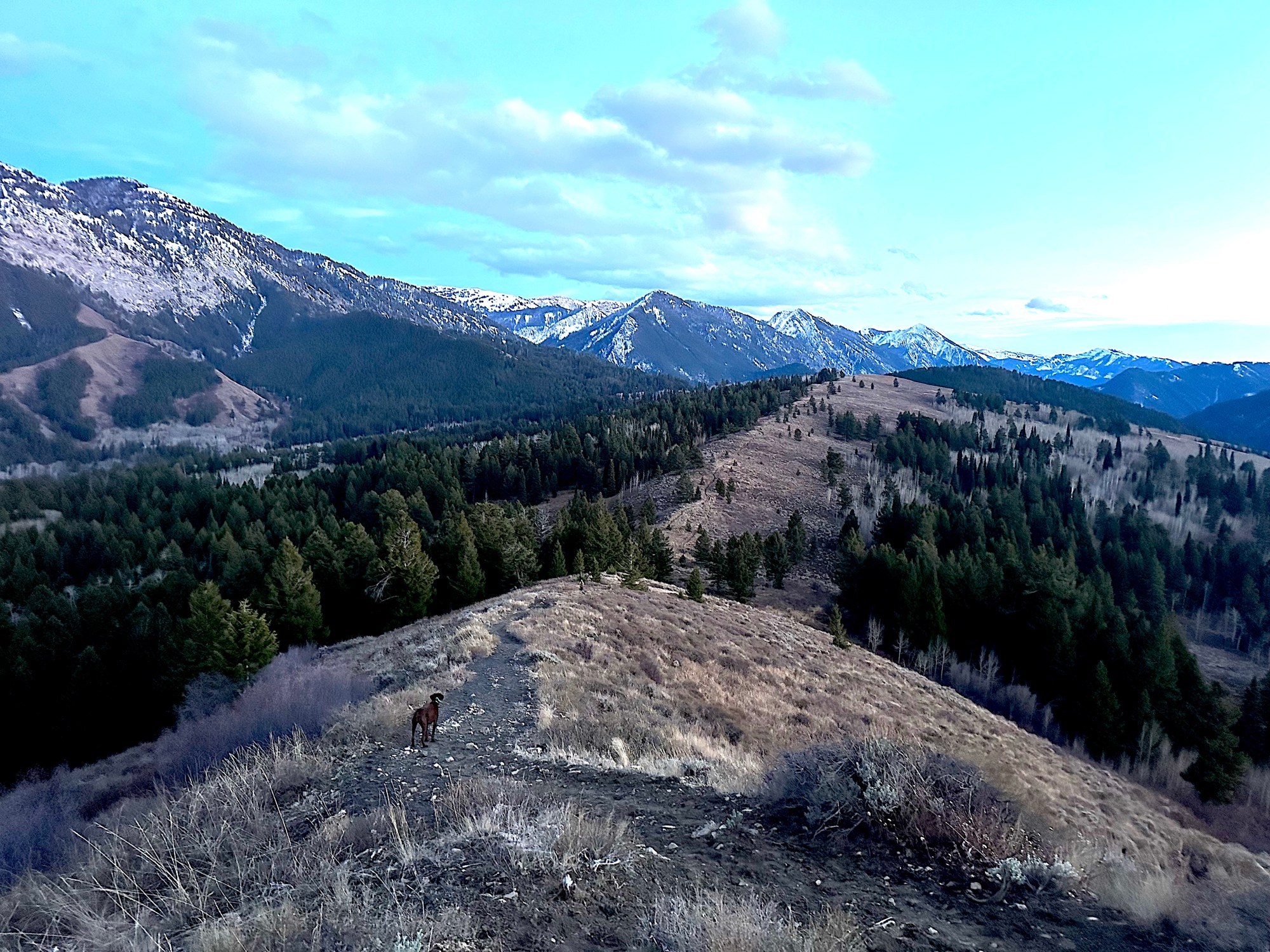

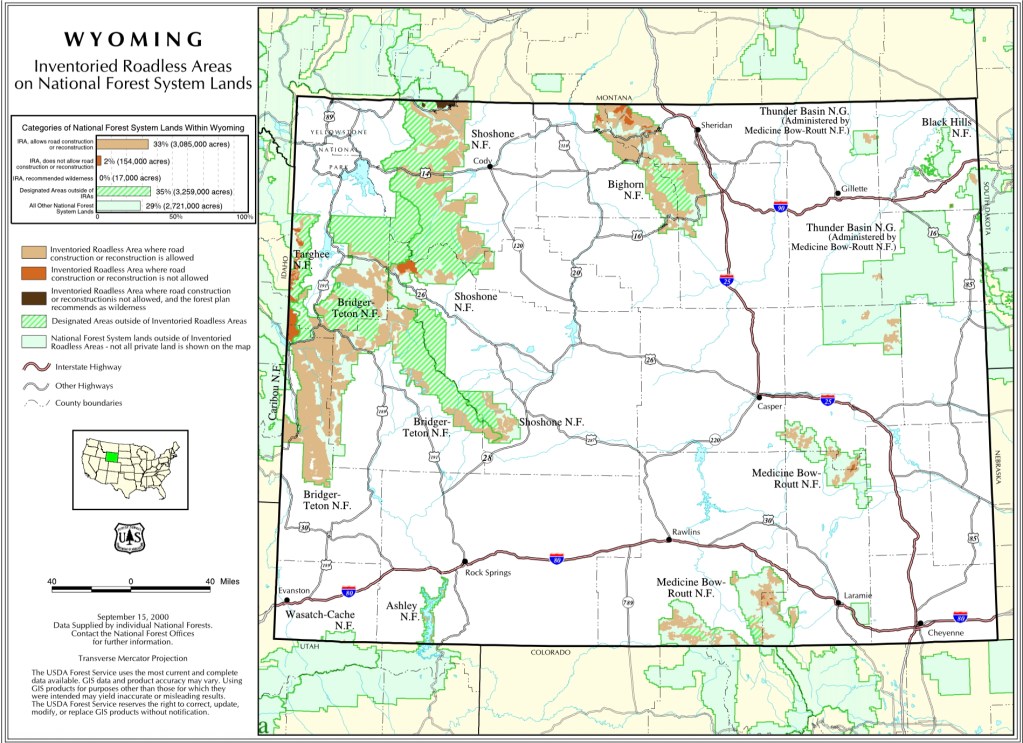
Rep. Harriet Hageman wants to stop future administrations from reinstating a 25-year-old policy that prevents roadbuilding on 59 million acres of the national forest, including 3.3 million acres of federal land in Wyoming.
A rescission of the Clinton-era 2001 Roadless Rule is already underway. In June 2025, U.S. Department of Agriculture Secretary Brooke Rollins announced her intention to repeal the “roadless” class of land that’s found on nine national forests in Wyoming.
Subsequently, Rollins solicited public comment on that plan, which, based on the responses, is extraordinarily unpopular. More than 99% of the 200,000-plus people and groups who responded opposed the proposed rescission, according to a Center for Western Priorities analysis.
A Hageman-led bill, House Resolution 7695, would codify the Trump administration’s undoing of the Roadless Rule in law and also prevent it from reappearing. The legislation states that any future secretary of agriculture “may not take any action to propose, finalize, implement, administer, or enforce any rule substantially similar to the rule.”
On Thursday, Wyoming’s lone representative touted the bill at a congressional hearing, saying that it undoes an “environmental catastrophe.”
“The Roadless Rule has been devastating to the Interior West,” Hageman testified to the U.S. House Committee on Natural Resources’ Federal Lands Subcommittee. “The Roadless Rule has been devastating to Wyoming.”
As an attorney a quarter century ago, Hageman was a staunch opponent of the Roadless Rule and litigated against it on behalf of Wyoming.
Hageman pointed out to her fellow members of Congress on Thursday that nine of the 10 “most catastrophic” national forest wildfires have occurred since the rule’s 2001 implementation.
U.S. Forest Service Associate Chief Chris French testified that his agency supports the administration’s proposed rescission, along with Hageman’s legislation and he offered to provide “technical assistance” to help pass the bill.
“The Forest Service is currently in the process of analyzing the more than 220,000 comments we received,” French told the subcommittee, “and anticipates issuing a final rule and draft environmental impact statement for public comment in the coming months.”
Several Democrats who sit on the Subcommittee on Federal Lands expressed concern about Hageman’s bill.
Rep. Andrea Salinas, D-Oregon, who in 2025 attempted to codify keeping the Roadless Rule, argued that roadbuilding can lead to more wildfires.
“The Forest Service’s own assessment found that building roads in these areas would actually increase the risk of fire,” Salinas said, “and another analysis shows that 85% of wildfires are human-caused.”
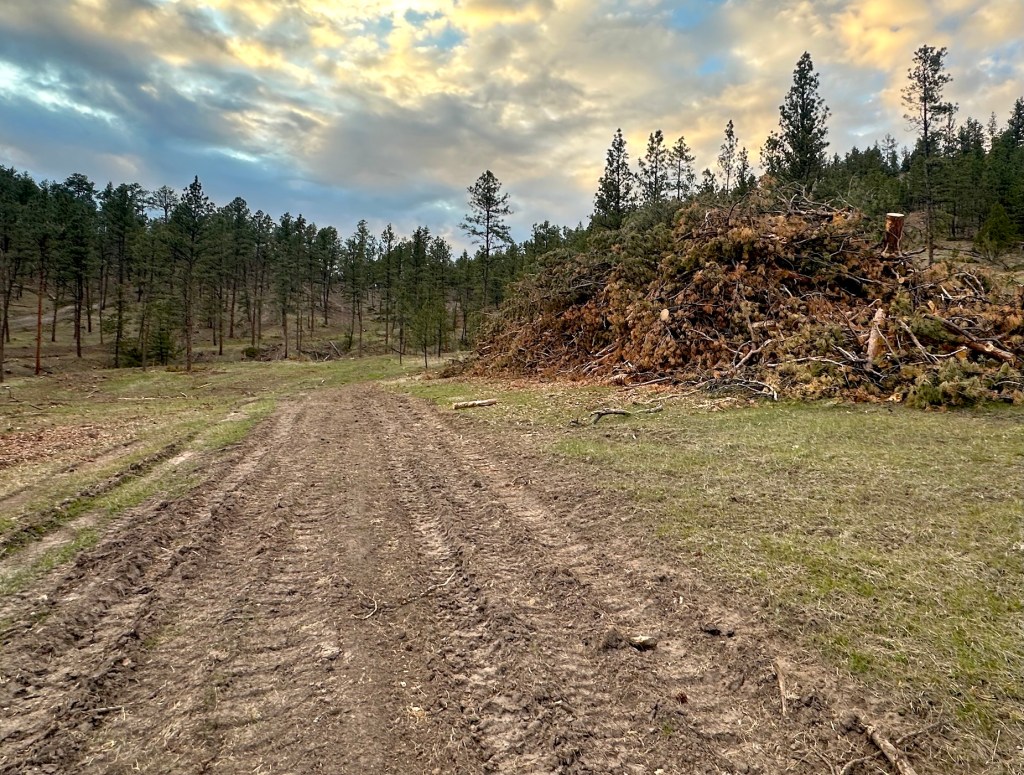
Earlier, Hageman called the claim that eliminating the Roadless Rule would create more wildfires “absolutely wrong.”
“The science and the facts and the history demonstrate, without question, that you are absolutely wrong,” Hageman said.
But French, the Forest Service associate chief, acknowledged that it’s a “longstanding fact” that “most” wildfire ignitions are human-caused and “most are going to be associated with where humans go, including roads.”
The equation, however, is not that straightforward, French said. Other research has found that wildfire severity is greater in “untreated” roadless areas, he said.
“You have to look at the whole scenario,” French said. “I think that’s why it’s often polarized. There are different facts you can pull out to support an opinion.”

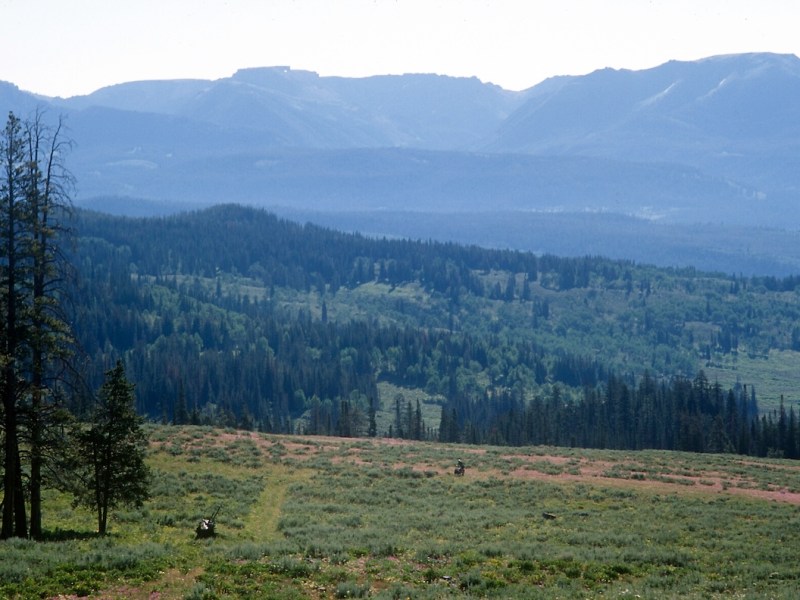
National hunting and angling groups have strongly opposed the elimination of the Roadless Rule, which has helped ensure that non-wilderness backcountry remains a part of national forests across the country.
The idea of eliminating the rule also hasn’t gone over well with Wyoming conservation groups.
Gabby Yates, public lands program manager at the Wyoming Outdoor Council, pointed out the unpopularity of Hageman’s plan.
“By sidestepping the already scant public process that the administration is using to rescind the rule, H.R. 7695 adds insult to injury and ignores hundreds of thousands of Americans who are currently opposing the rescission,” Yates wrote in a statement.
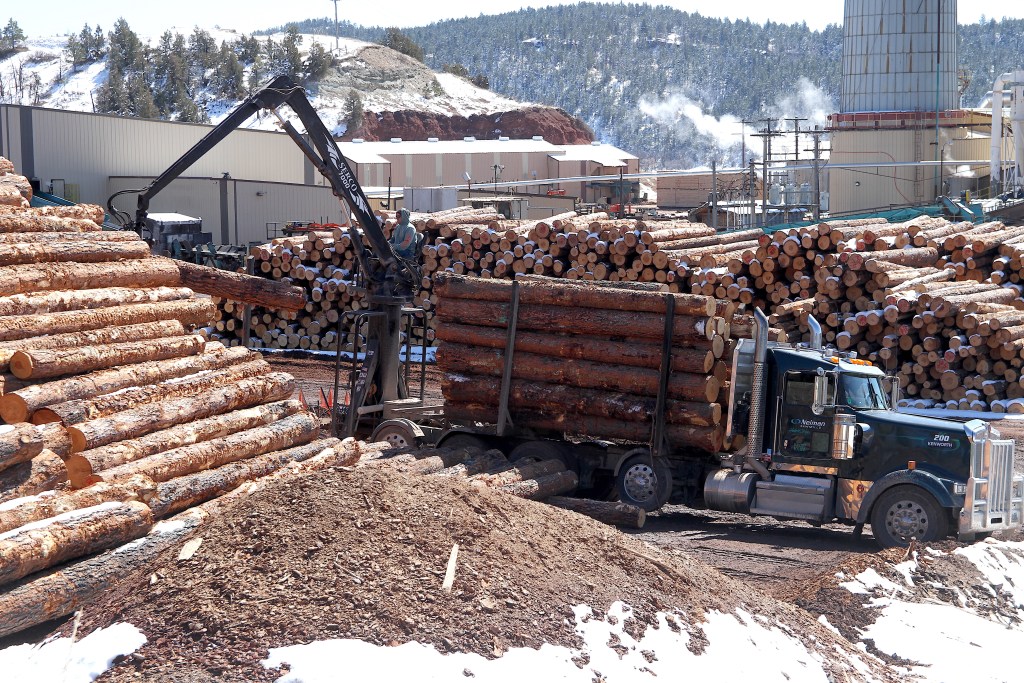
The rescission, however, has been favored by many Western state Republican political leaders hoping to stimulate withering timber mills and a logging industry that’s been in the doldrums for decades. Many governors and congressional members have gone on record supporting the elimination of the Roadless Rule, including Gov. Mark Gordon and Sens. John Barrasso and Cynthia Lummis.
Hageman, who in 2022 soundly defeated Liz Cheney with an endorsement from President Donald Trump, is running for a U.S. Senate seat that’s opening up due to Lummis’ retirement.
In the Republican primary, she’ll face Sam Mead, a rancher and whiskey distiller who’s the nephew of former Wyoming Gov. Matt Mead and great-grandson of late Wyoming U.S. Sen. and Gov. Cliff Hansen. Jill Edwards, Jimmy Skovgard and John Allan Holtz have also filed for the GOP ballot.
Mead, 36, is a political newcomer running on a pro-public lands platform. He did not respond to WyoFile’s inquiry on Thursday before this story was published.
Ed’s note: This story has been updated to include the full field of Republican Party candidates who are running for Wyoming’s opening U.S. Senate seat.

Hageman and her like are chopping forests into forest islands, cutting off animal migrations and access to new territories for males to start their own herds. Cutting off access to new territories to keep reproduction safe from inbreeding.
Maybe Hageman and Lee ought to think about inbreeding themselves. Maybe that’s where all their misery and hatred come from.
I’m printing many of these replies AND WILL REMOVE NAMES and mailing them to Hageman:
1227 Longworth
House Office Building
Washington, DC 20515
(202) 225-2311
WRITE, CALL, VOTE VOTE VOTE VOTE VOTE
Hageman will destroy all that is beautiful about Wyoming. She *doesn’t* know any science. She *ignores* the *majority* of all commentators who *do not want the Roadless Rule rescinded*.
Hageman, *don’t forget*, tried to sell off our public lands not too long ago. She was pushing this with Utah’s Mike Lee, and he is currently trying to sell off the mountain west to… ? Billionaires? Is that Hageman’s goal, too? Or has she been kowtowing to the Big Oil/Coal? Still billionaires. Hageman originally SUPPORTED the Roadless Rule. Who changed her mind, and what will her (and Lee’s) reward be if they get their way?
She lies. She lies about gas prices (she claims they’ve ‘never been better’). She blames *everything* on the last administration. That’s fine, she has a right to do that, but *everything*?? She does it so much I point it out to her, over and over, in my replies to her correspondences. Gee, could *some* of it be the fault of the current administration?
I do not trust this woman. I know she does not support her constituents, and she actually seems to have it in for Wyoming. What she is attempting is a travesty and will break wildlife habitats into pieces (a surefire way to drive extinction) with her noisy, stinky roads. She will allow unneeded exploration in and during wildlife migration routes. She will greatly harm the tourism. She will harm fishermen, hunters, skiers, horseback riders, hikers, rafting, bird watchers and wildlife viewers.
99% of Americans SUPPORT THE ROADLESS RULE.
99% OF AMERICANS SUPPORT THE ROADLESS RULE.
What Hageman is proposing affects the entire country along with Wyoming and other mountain states. Technically, she may be a Representative of Wyoming, yet anyone who consistently and vehemently attempts to ruin our beautiful land, I’m fairly certain, does NOT represent Wyoming.
Please, don’t allow her to do this, VOTE, VOTE, VOTE!
There are three things that especially bother me about rescinding the Roadless Rule per Harriet’s proposed bill: 1) The Forest Service doesn’t have enough funding to keep even paved roads passable. For example, if you drive up to the Upper Boat Dock on Fremont Lake near Pinedale, you will bottom out on potholes.I am not exaggerating, I have endured it for years. I am not sure how people arrive there without damage to their vehicles and trailers. But, I looked it up on the FS website and it noted that the project was completed. Really? Can’t wait to see how the Green River Lakes Road, in shambles for decades fares.
2) Since the FS hasn’t had funding for the main artery roads, and the gutting of budget support and employees, how is the FS going to pay for these additional roads?
3) Hageman’s bill seeks to codify her wishes into perpetuity. It is typical Hageman- knowing better and more than future generations, even if the results show that her bill caused grave injury to forests. Not smart legislating in my opinion.
As we spent last week watching a helicopter perform geologic surveys across a local mountain range, I question the “why” behind blocking this roadless rule. Something tells me it has very little to do with logging, fire fighting, or public access. Remember who owns our politicians, particularly the GOP. The same folks that want to turn Wyoming and Utah into a data center wasteland.
Well said!
I’m not a fan of roads which is a negative impact in all ways. We the Citizens need to stop this.
I would think she would be interested more in listening to and representing her constituents in Wyoming. But, no, she is in the pocket of corporations and billionaires whose only goal is more money. Yet, Wyoming voters continue to vote against their own interests because the candidate is a Republican. Our wild areas are invaluable and irreplaceable and once they are gone they are gone.
I agree.
Hope it’s repealed! It’s not about building new roads, it’s about not closing us out of the country we all enjoyed before slick Willy got in there!
There’s nothing nice to say about this. It’s just the continuation of Congress’ abdication of its responsibility and failure to represent the people. Or, maybe it’s ignorance or some more subtle motive such as who funds this representative. We see it in county government as well where large majorities will show up and oppose some billionaire development in wildlife habitat, only to have our input dismissed as the knee-jerk vote for the development happens.
You can’t simultaneously, cut Forest Service budgets and personnel, then turn around and advocate for the construction of new roads and development. The USFS can’t afford to maintain existing roads, trails, and infrastructure. The USFS being rendered ineffective in managing grazing, logging, and recreation, due to lack of funding and staff. Ms. Hageman can’t have it both ways. Also, there is no clear link that shows that more roads on Forest lands would have reduced risk or stopped the recent large wildfires. Rough, natural terrain and extreme conditions were the major factors in the scale and intensity of these forest fires. Additionally, how do you explain the large, rangeland wildfires that have and are burning in more accessible areas, like Nebraska, Texas, and here in Wyoming? More roads and easier access hasn’t stopped these catastrophic fires. Extremely dry, hot, and windy weather are the culprits. Good luck legislating against weather and climate conditions. The reality is that Ms. Hageman has a vendetta against any and all Federal Land Management or Regulatory Agencies. The wishes of her constituents are unimportant to her political stances. She doesn’t represent the majority of Wyoming residents, and doesn’t care. It’s “Her way or the Highway”, she’s right and you’re wrong if you disagree. Take that into consideration when voting for the open Senate seat in August.
Representative Hageman should think about these numbers. In September last year, 2025, the Forest Service received over 180,000 comments on the Trump administration’s plan to repeal the 2001 Roadless Rule; 99% were against repealing the rule. Think about that number. 180,000 against! Now think about this. That fits right in with your commitment to us, as stated on your House of Representatives Site, to fight to return control of natural resources to local entities. It appears to everyone that 180,000 comments oppose the rescission of the Roadless Rule. Keep your promise! It’s not hard to do, just say no to rescission and stand up to the democratic way of government.
She’ll ignore the 99% who oppose this attempted rape of our land. If you write to her, she’ll lie about it (hell, she lies about everything).
Hageman is one of tRump’s biggest sycophants. He’s like Caligula, does whatever he wants whenever he wants. And she behaves in the same illegal, disgusting manner, she’s another of his spoiled brats in DC and WY. She wants this, she’ll ignore the science and the huge majority of Americans who don’t, all of whom oppose rescinding this rule.
I’m ready for Sam Mead. Almost. There is ZERO information about his stance on abortion and the ‘Freedom’ Caucus. Until then, *ANYONE* is better than Hageman.
I enjoyed our public lands before the roadless rule as a young person. The forests were healthier and better managed for fire in addition to people being able to enjoy these lands because there was access. I support her.
Some people are saying how can she pass a law to prevent a law in the future, that is not what she is doing. She is saying that the regulatory body to arbitrarily close off large sections of public land like Bill Clinton did on the last day of his presidency. Wilderness areas can still be added, but you will need to go through the legislative process, as it should.
It is abundantly clear that the “Hag”, and the majority of political others with an R after their names, see value only in dollars. There is no value in clean air, clear water, pristine landscapes and abundant wildlife! She is a trump sycophant who is sucking up to his push to log more american forests. I have nothing against logging done in a responsible manner but there is plenty of opportunity to do so without opening up wilderness areas. As for wildfire mitigation I believe lightning strikes are likely the culprit in most Wyoming wildfires. Cutting USFS ranks with DOGE did nothing to help our ability to contain or prevent wildfires. And to propose a law that no process in the future can ammend or repeal is the epitome of hubris! She is a danger to all that Wyoming holds dear!
Good, this executive order should be repealed, and there should be a law put in place so no other administration can reinstate it. I remember before all of the gates went up and burms put in place closing off the forest. If wilderness and roadless areas are to be added or expanded, it needs to go through congress not by executive order. In case you have forgotten it was Bill Clinton doing exactly what you are criticizing Trump for, using executive orders to create law. Trump is merely reversing what Clinton did.
But the public is for roadless areas, so Clinton did a good thing. The comments were overwhelmingly negative for what Trump wants to do, so trump is doing a bad thing. That’s the difference.
Harriet should not be allowed to climb the political ladder; fire her at the ballot box
During the 2017 review of 27 national monuments by the Department of the Interior, over 2.8 million public comments were received. This review was initiated to consider reducing the size of monuments, including Bears Ears and Grand Staircase-Escalante.Across the millions of responses, over 99% of the comments opposed the executive order and supported keeping the national monuments at their original sizes. But the administration ignored the people. Seems as though its about to happen again. So much for this land is your land. Make your vote count. Its the only say you have.
Hageman needs to go!
Haggman is notorious for flip flopping depending on which way the money flows. Look at her record on water in Wyoming. Now she has taken up the most unpopular and incorrect stance on destroying the wild places protected, used, and loved by Wyoming citizens as well as the visitors who come here for our pristine natural ecosystems.
For those who have not seen the destruction of forests by loggers, and unfettered access, I encourage you to do the research and look at what becomes a huge fire hazard.
Logging increases the immediate and long-term danger of wildfires by fundamentally altering the forest environment.
Commercial logging removes large, fire-resistant trees, opens the canopy, dries out the forest floor, and leaves behind highly combustible debris known as “slash”.
Unfettered access to forests significantly increases wildfire risk, as humans cause approximately 90% of all wildland fires. Careless behavior, unauthorized campfires, off-road vehicle use over dry brush, and fireworks act as primary ignition sources.
Vote this easily purchased money grubber out. She does not in way represent Wyoming.
Hageman is a tool.
Harriet has been representing the rapers and scrapers for years. Their avarice trumps all other considerations. They don’t care what they rest of us want.
I agree with eliminating the roadless rule.
Support you statement with facts.
Improved access for all the public. BLM and Forest Service have cutting access via roads to the general public since Clinton.
Percentage wise there’s very little roadless area. You can drive almost anywhere. Maybe it’s time for folks to get off their butt-or ATV- and do a little walking.
As a volunteer who spent 10 years of my life mapping trails in Wilderness and Roadless areas, I agree with those who are against rescinding the roadless rule. Roads destroy the natural beauty of our last wild lands and building roads is just an excuse to open these areas to rampant abuse caused by off roading.
So, let me get this straight. The plan is to cut back on U.S. National Forest personnel. But they are going to start construction on new roads? Those same roads that are closed to prevent having to “maintain” them. I saw forest service roads last week closed to protect “soil and water resources” and “For authorized administrative use” That is what the signs say on the closed roads. There was no water on these roads the soil driven on was a two track, and I did not see the U.S. Secretary of the Interior using the road. Good common logic coming from our government.
Any Wyoming citizen who values the very heart of what makes Wyoming a special and unique place in the entire world will NOT ALLOW HARRIET HAGEMAN TO BE ELECTED!!!
Is it even possible for a law to stand that prohibits future laws from being passed (as Hageman’s bill would do)?
Utah’s Mike Lee just snuck this very thing in some bill. Stayed up late to do this in the dead of night. Coward and raper of our precious, irreplaceable western lands. Lee and Hageman were cohorts in their attempt to sell off public lands here not too long ago, and were thwarted by protestors. Republicans and Democrats, all true Wyomingites, came together and stopped her. Let’s do it again.
This administration is ruining our way of life. What we enjoy will be gone for our kids. Those who voted for him need to stop him. Speak out!
Hageman doesn’t represent Wyoming in congress, but outside national interests.
who does she represent?
She walks on bended knee and lowered head to Trump.
And her largest campaign supporter is a big land developer.
Are we going to allow this narcissist and floating turd do whatever she wants? Again, she does not represent the people of Wyoming. Vote her out of office.
I think the roadless rule should remain intact.
Hageman couldn’t care less what her constituents want. She works for the orange menace and she’s a very dishonest person. It’s time to replace the politicians that don’t work for us