

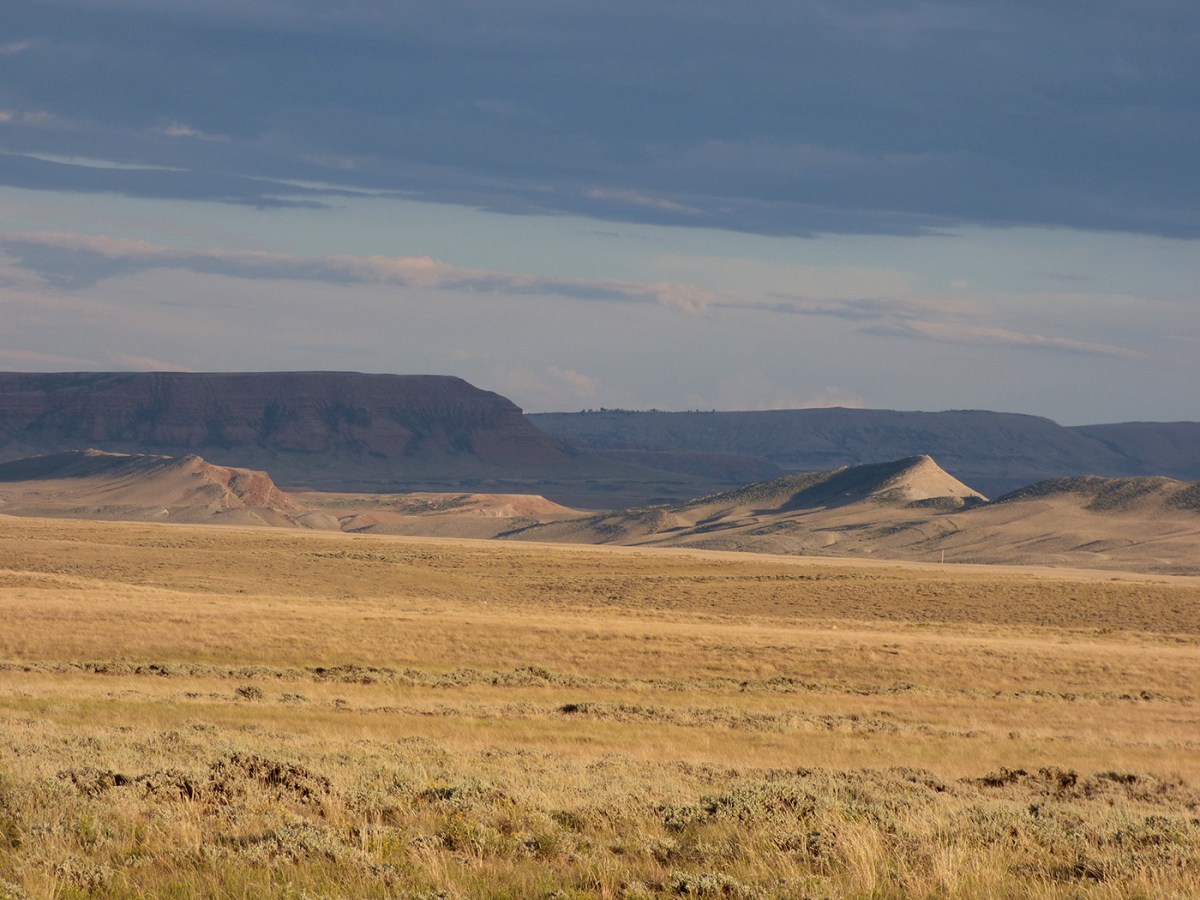
I grew up on Wyoming’s public lands before I had any notion they belonged to me, or to anyone else.
Opinion
My father worked for Conoco Inc., and like a lot of oil field families, we drifted where the work went. They called families like ours “doodlebuggers,” which sounds almost cheerful until you realize how often it meant uprooting your life and starting over in another patch of windblown Wyoming.
But children adapt easily to movement when the landscape remains familiar.
And Wyoming’s public lands became the constant in my life.
I remember sagebrush seas stretching to the horizon, badlands that looked abandoned by time and enough open country to make a person feel both insignificant and oddly comforted. There was room to hunt, fish, wander, get lost and occasionally become found again.
Not every place in the world works that way. In much of it, land belongs to people with enough money to fence it off and enough lawyers to make sure you stay out. History is full of kings, barons and modern corporations who seem to believe creation was intended as private inventory.
We’ve managed, somehow, to do better here.
At least so far.
I spent most of my life working outdoors, much of it on public lands. In high school, I explored Bureau of Land Management two-tracks and dirt roads on a Bridgestone 90 motorcycle, convinced I was immortal. In college, I worked timber inventory for the U.S. Forest Service and learned quickly that forests are often discussed less as living systems than as board feet and road maintenance costs.
That was my first education in bureaucratic language, words carefully arranged to make destruction sound responsible.
It would not be my last.
Years later, working on habitat projects for the Wyoming Game and Fish Department, I became intimately familiar with another favorite term: “mitigation.”
There’s a lovely sterile quality to that word. It sounds clean. Responsible. Reassuring.
What it often means is this: Wildlife loses habitat, industry cashes the check and everyone gathers in a meeting room to congratulate themselves for planting a few shrubs somewhere else.
That may sound cynical.
Spend enough time watching mule deer lose winter range to development and see if optimism remains your default setting.
And yet, I’m not cynical about public lands themselves.
Quite the opposite.
They remain one of the few truly democratic ideas America ever stumbled into. Land where an ordinary person can still walk for miles without asking permission from a corporation, a billionaire or some heir to old money hiding behind a locked gate.
That matters more than most people realize.
I realized how much it meant when I was able to ride with my boss — my mentor — on a pack trip from Big Sandy to Cooke City.
Lose these lands and Wyoming becomes smaller; not just geographically, but spiritually.
The silence gets bought.
The roads get locked.
And future generations inherit fences where horizons used to be.
That would be one hell of a bad trade.
Beautifully said. The freedom to roam is why many of us who were born and raised here stay. May we never lose it at the hands of greedy politicians.
Well said. I’ve had the same experience as you…only in Montana. We are facing similar pressures on public lands being swapped or developed to the highest or most powerfully connected people or corporations. These lands are all the American peoples heritage, and as such should only be developed and managed with careful and meaningful input from the property owners.
We saw residents from all segments of Wyoming coming out swinging when sell off of public lands was put on the table. Lets hope they show up and vote against anyone with that agenda.
Well said!! You’ve captured the essence of the argument. Thank you.
PUBLIC LANDS in public hands
Thumbs up, Dan.
Teddy Roosevelt is on Mount Rushmore in large part for his conservation work and the creation of public lands. I wish he was here to debate the clowns who want to destroy it.
Well said, Dan.
Well said Dan, thanks for reminding us about our precious heritage and our responsibilities as stewards for those that follow us.