

When news broke that an avalanche on Ranger Peak in Grand Teton National Park killed skiers Steve Romeo and Chris Onufer on March 7, 2012, condolences, comments and stories from around the world flooded ski blogs and websites.
As his family mourned Romeo, it felt as though the world mourned too, his mom Elaine Romeo said. Emails and posts came in from people he’d never met.
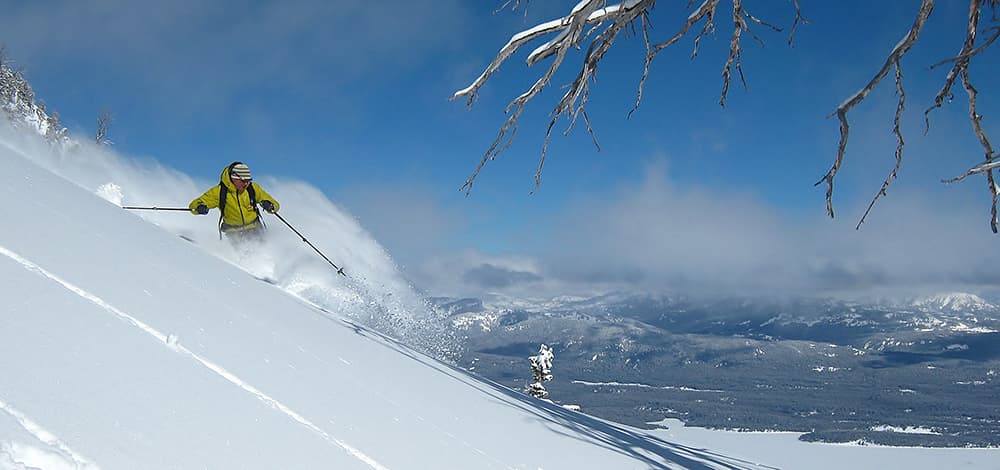
For six years Romeo authored TetonAT, a ski blog that often generated thousands of visits daily from devoted readers around the world. It was here he shared photos of his latest adventures and objectives, reviewed gear and sparked lively discussions in the ski community. “It was an encyclopedia of skiing the Tetons,” Elaine Romeo said.

But could TetonAT exist without Steve Romeo?
Romeo’s family re-launched the website last fall, after spending nine months working with a design firm to figure out the best way to catalogue the hundreds of routes Romeo documented.
Romeo wrote hundreds of detailed trip reports, documenting descents in the Tetons, Wind River Mountains, Eastern Sierras, and around the world in Antarctica, Canada, Italy, Mexico, New Zealand and South America.
“Honestly, as soon as it was confirmed that Steve passed on, I knew the website had to stay and I knew it had to stay for Steve because it really was in some ways his baby, but also because so many people would want to access it,” said Julia Heemstra, Romeo’s girlfriend of four years. “It’s an encyclopedia of skiing beta.”
Since it re-launched, professional skiers told Heemstra they are using it to put together a tick list of objectives. People from around the world have contacted Romeo’s family, thanking them for access to Romeo’s trip reports.

Romeo launched TetonAT.com in 2006. Already a regular contributor to ski blogs and forums, he wanted to create his own place to document his adventures and inspire conversations about skiing trends, ethics of the sport, gear and new lines. It quickly became a go-to for backcountry skiers all over the world.
“His photographs were extraordinarily beautiful and he was doing such interesting stuff in the mountains,” Heemstra said. “People always wanted to know ‘What is Steve Romeo skiing?’”
Loyal readers checked the blog daily and Romeo enthusiastically marketed it, passing out business cards, stickers, visors and Croakies, with the address and his motto “Live to Ski.”
“His personality was the reason why that blog was so popular,” Heemstra said. “He was completely unfiltered at times. He was so funny and quirky.”
He’d spend hours researching lines, using Google Earth and maps and guidebooks. He wanted to ski the classics, but also loved claiming first descents.
Romeo prided himself on avoiding pigeon-holing what the blog was about. He always felt it was his place to write what he wanted and how he wanted. He didn’t care when people pointed out spelling errors even ones like misspelling faux pas as ‘fopa’ in a headline.
“He was like ‘It’s my blog, I don’t even need to subscribe to standard spelling and grammar,’” Heemstra said.
That didn’t stop people from commenting, on everything from his writing style, to his attitude, to his decisions in the mountains. Sometimes the comment sections would eclipse the original posts. Comments specifically criticizing Romeo he took personally. Near the end of his life he told Heemstra the blog felt like a burden.
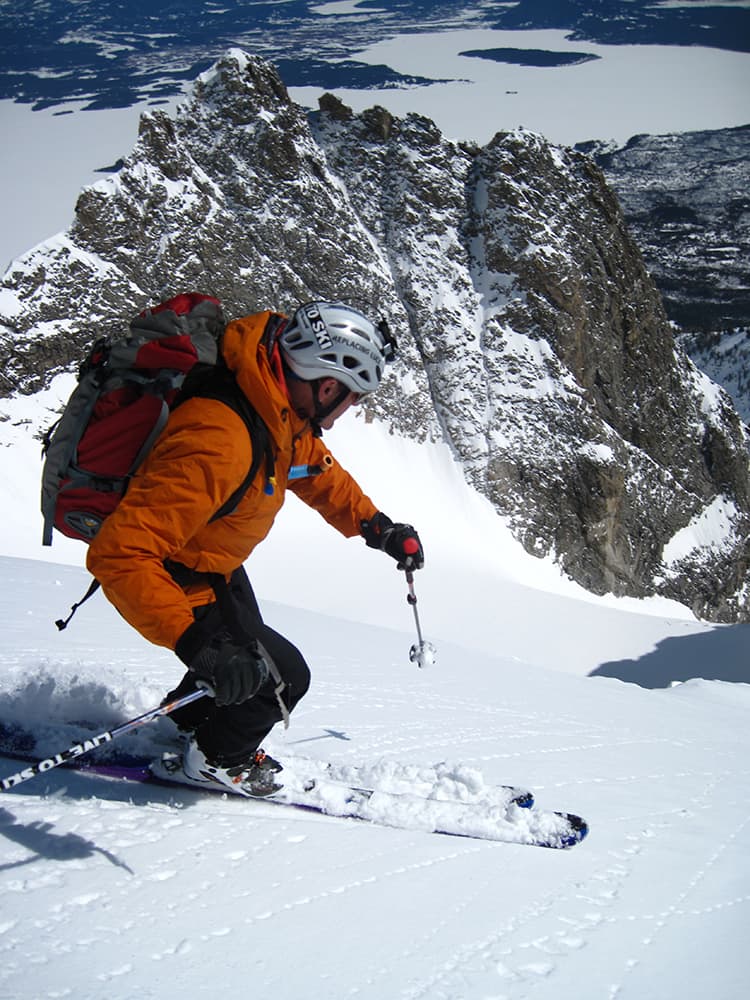
But at the same time its success allowed him more time for skiing, which was more important to him than anything else, Heemstra said. The blog’s popularity netted Romeo money from advertising, in particular for The North Face. It’s also how he earned sponsorships from companies such as Dynafit, Black Diamond, and Gu Energy Gel.
Romeo, born in Connecticut, learned to ski when he was about 3 years old. He put on his skis and pointed them down the bunny hill, crashing spectacularly at the end. But he immediately fell in love with the sport, his mother said. It was Romeo’s father who encouraged him to move to Jackson after he finished a degree in environmental studies and biology in 1993. Romeo spent six seasons refining his skiing technique while working at Jackson Hole Mountain Resort.
People sometimes criticized Romeo for his risk-taking in the mountains, but Heemstra said he was calculated. It took Romeo seven attempts before he finally skied the Grand Teton.
“He was hands down the most sequential person I’ve ever met in the backcountry,” she said. “He felt so strongly that you didn’t ever ski anything you didn’t have the ability to ski. If you didn’t ski it with style, he felt you shouldn’t be on it.”

Romeo dedicated his life to spending time in the mountains. As soon as he finished a trip, he planned the next. It wasn’t just completing an objective — although that was incredibly important to Romeo. It was also about moments like catching the sunrise. He’d get frustrated if they were even a few minutes late and missed the moment at a certain spot where the sun popped pink over the mountains.
“It was so clear that was where he was alive,” Heemstra said. “It wasn’t just a want, it was a need for him. The Tetons were so important to him for his existence really.”
Romeo knew the risks of the mountains, but he was always as careful as possible when chasing his dream. Shortly after he died people, including searchers in Grand Teton National Park, harshly criticized Romeo and Onufer’s decisions that day. But that isn’t Romeo’s legacy, Heemstra said.
His legacy is the extraordinary adventures and his unmatched passion for skiing that he documented on his website. His legacy also lives on in the work of the Steve Romeo Memorial Fund for avalanche education. The fund has provided training for more than 450 Jackson students. The fund has also helped support Avalanche Awareness Night and the Teton Pass Ambassador program.
Romeo always wanted to go bigger and better, and those who loved him want the same for his legacy and the foundation.
On the three-year anniversary of Romeo’s death, Heemstra and Steve’s good friend Reed Finlay camped at Waterfalls Canyon near where Romeo died. They spread some of his ashes as they climbed a steep couloir Romeo wanted to ski, but never got the chance. It was a beautiful line deep in the northern part of the park Heemstra wasn’t ready to publicly name.
“I realized,” Heemstra said, “the two of us were going to ski down, but Steve was going to stay.”

Think of him all the time
Excellently written I grew up with Steve means a lot
Beth Ostafin