

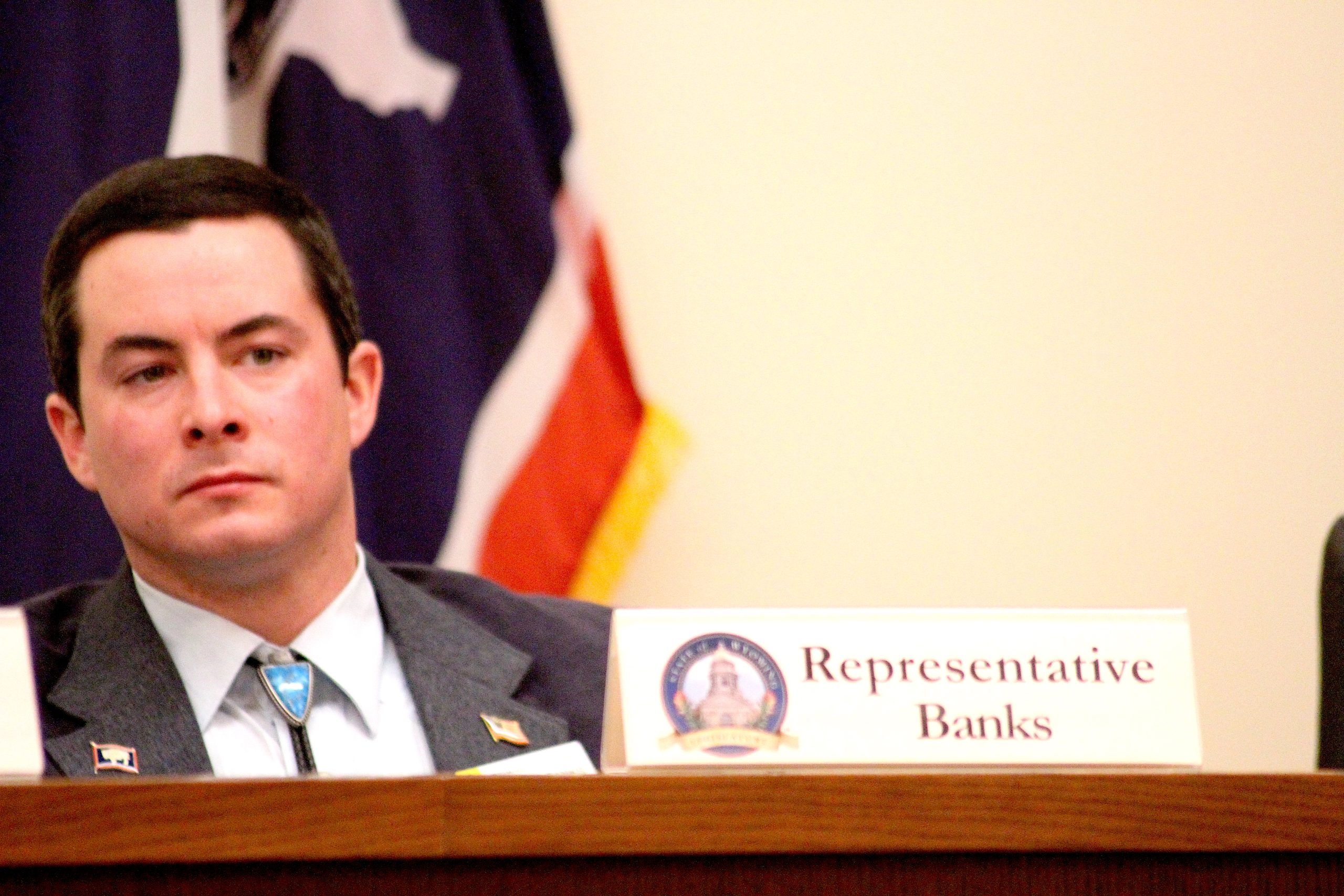
CHEYENNE—Rep. Dalton Banks, a twentysomething Republican rancher from Big Horn County, was clear about his goals for a measure that could inhibit Wyoming’s ability to pull off land deals with the federal government: He wants to ensure something like the divisive, $100 million Kelly Parcel deal doesn’t happen again.
“I don’t think that it’s in the best interest of Wyoming that we let them gain more access to our ground,” Banks told fellow lawmakers Thursday. “I also think it’s in the best interest of Wyoming that we don’t allow just outright sales of state ground.”
Banks’ House Bill 118, “Limitations on net land gains for the federal government,” proposes one short addition to the current statute. “No exchange executed under this section shall result in a net gain of surface rights or mineral rights to the federal government,” the bill states.
The slate of all-Republican co-sponsors includes Reps. Ocean Andrew of Laramie, Jeremy Haroldson of Wheatland, Reuben Tarver of Gillette, John Winter of Thermopolis and Sens. Bob Ide of Casper, John Kolb of Rock Springs and Cheri Steinmetz of Torrington. Banks and most of his cosponsors are counted among the hard-line cohort that includes the Wyoming Freedom Caucus and its Wyoming Senate allies.
If enacted unchanged, the bill would add a new legal directive for Wyoming land managers, who often pursue land sales and swaps with the federal government. Some of those deals are compelled by the Wyoming Constitution, which requires officials to maximize revenues from school trust lands to fund public education.
“We have rules and regulations, and we also have statutes that have been provided to us, and they’re a little bit contrary to what the intent of the bill is,” Wyoming Office of State Lands and Investments Acting Director Jason Crowder told the House Agriculture, State and Public Lands & Water Resources Committee Thursday as the panel took public comment and expert testimony on the measure.
The Office of State Lands and Investments, he explained, is charged with protecting and increasing the value of “the whole corpus” of the state’s lands and associated trust accounts.
“Land transactions are the best way for us to do that,” Crowder said.

In the case of the Kelly Parcel, the $100 million Wyoming received for 640 acres was $38 million more than the property’s appraised value. When the State Board of Land Commissioners OK’d the sale in a 3-2 vote, Treasurer Curt Meier said that, through investments, his office could turn the proceeds into $1.6 billion.
“That could be a perpetual, actually generational fund that would benefit the students and the education system of the state of Wyoming,” the treasurer said at the time.
Not all of his board colleagues agreed. Superintendent of Public Instruction Megan Degenfelder contested the sale, pushing instead for a land swap that would return fossil-fuel-rich federal land in the Powder River Basin.
Degenfelder, the daughter of an oilman, spoke in support of Banks’ bill.
“I fundamentally agree with the concept that we cannot continue to increase federal ownership of the state of Wyoming,” the superintendent told the House Ag committee. “48% of the surface is owned by the federal government, 65% of mineral acreage is owned by the federal government. We cannot afford to increase that number.”
Lawmakers echoed displeasure with federal land management inside Wyoming’s borders. Banks cited both the Bureau of Land Management’s recent revisions of resource management plans for the Red Desert region and the Powder River Basin.
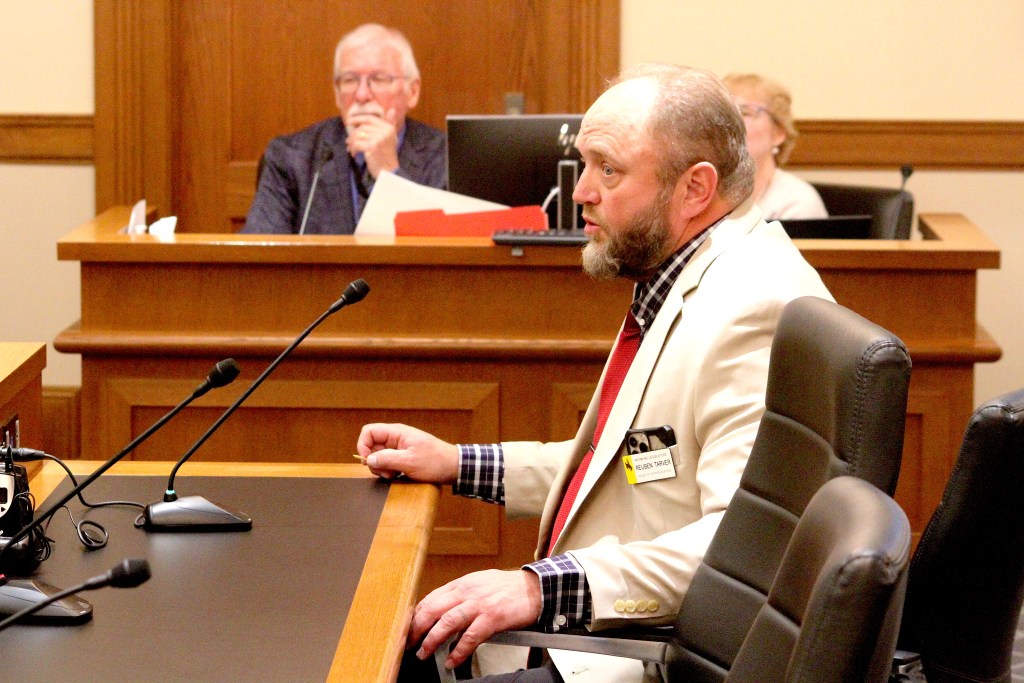
Tarver, a co-sponsor representing Gillette, wasn’t on the committee and couldn’t move to amend it, but suggested sweetening the pot for Wyoming and requiring a 10-to-1 or 100-to-1 acre requirement for any land deals.
“I don’t see where the federal government manages absolutely anything very well,” Tarver said. “Everything they touch turns into a problem for the state of Wyoming.”

Rep. Karlee Provenza, D-Laramie, asked her fellow representative if he’d be OK with the bill if it infringed on private property owners’ rights to sell their land to the federal government.
Tarver didn’t hesitate. “Absolutely,” he said.
Even a 1-to-1 acre requirement — as the bill is written — could dismantle some deals in the works. Crowder, with the Office of State Lands and Investments, cited the proposed land exchange with the Medicine Bow National Forest, as a potential casualty. The deal would enable construction of a 264-foot-high dam that would benefit a few dozen irrigators.
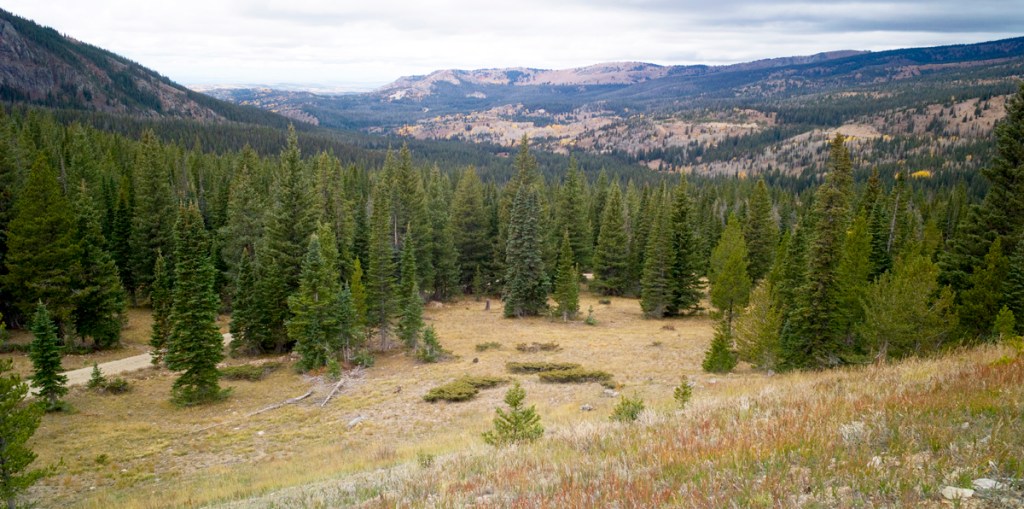
The Medicine Bow deal’s benefit to an agricultural community didn’t sway Kelly Carpenter, a lobbyist for the Wyoming Farm Bureau Federation, who testified in support of the legislation.
House Bill 118 passed through the House Agriculture Committee in an 8-1 vote after minimal debate, with Provenza opposed. It heads next to the Wyoming House of Representatives, where it’ll need to be read, and voted on, three times on the lower chamber’s floor.


Why do these people keep getting voted in who represents the interests of very few Wyomingites? The majority of Wyomingites love to hunt, fish, camp, etc on federal lands.
God forbid we voted in some new people who actually represented the majority of the publics interests.
This is ridiculous.
“I don’t see where the federal government manages absolutely anything very well,” Tarver said. “Everything they touch turns into a problem for the state of Wyoming.” Seriously dude, want to cite some examples that back up that statement, or are you just blowing smoke? I got news for you, Mr. Tarver , if I or any other private landowner wants to sell or exchange private property with the federal government or anyone else for that matter, that is none of your business. Period!
As for Representative Banks, your total lack of fore sight and that of the other co-sponsors and Degenfelder is mind boggling. Let’s cut off our nose to spite our face. Furthermore, since when did the sale of the Kelly parcel become divisive, seems to me there was overwhelming public support for this transaction.
Land sales/swaps have always been, and should continue to be considered on a case by case basis. Having a blanket policy restricts transactions that actually can be beneficial, such as the Marton Ranch sale.
The result of all this performance theatre is that possibly *NO* land exchanges / transactions will get done in the future involving public land agencies (including State Lands, IMO) and both private property rights, taxpayers and legitimate interests of the recreating public (which includes US citizens from other states, and foreign tourists with the “…right papers…”; the kind that pay a lot of sales & lodging taxes on their visits to Wyoming) will suffer because of it.
Land exchanges will simply become too politically charged…anyone with a functioning brain will quickly realize it’s a pointless exercise in futility.
SMH…some common sense to go around, please
Parcels like the Kelly land deal are very beneficial to Wyoming. This kid looks like another one to vote out of office. I hope you Wyoming voters are paying attention to the party that supports federal land-your playground.
I used to strongly support no net gain of federal land in Wyoming but that all changed over the Kelly fiasco, the Marston Ranch purchase and the development on State of Wyoming land near Jackson. Seems the federal land managers are capable of making better decisions about land use than our current State of Wyoming team. In addition, land swaps can produce remarkable results by blocking up private, state and federal land holdings thus minimizing our problem with fragmented land ownership.
I’d like to hear some feedback from the users of the public lands with respect to the Marston Ranch purchase by the BLM. The public was loudly demanding more access to land locked federal land and the Marston ranch purchase opened up almost 36,000 acres of federal land to the public whilst the Marstons still retained the grazing rights. How many of you were able to access 8.2 miles of Platte River frontage on the east bank of the Platte. On the other hand, have the various County Commissioners and the State of Wyoming used their regulatory powers to improve access to federal lands that are land locked – seldomly if it all.
And, the public strongly supported conserving sizeable blocks of federal land in the Rock Springs RMP – but, our state government was only interested in exploitation of the federal lands – grazing excluded since those grazing rights are well over 140 years old. We need a more mature attitude out of Cheyenne about the use of state and federal lands in Wyoming – and an administration that listens to the public.
Simple answer to stop the destruction of our public lands. Quit trying to ranch on public lands. Our wild animals and our wild horses are being abused because all of you are trying to make the Western ranges what they were never meant to be. Greed IS destroying the Western states ecological systems. Greed of land grabbing, money grabbers are destroying our land. Humans destroy the land wherever they go and soon it will be unrecognizable.