

This story is part of WyoFile’s collaborative legislative initiative — a coordinated effort by partner newsrooms to deliver comprehensive coverage of Wyoming’s 2025 general session.
Wyoming K-12 school cellphone ban dies on Wyoming Senate floor
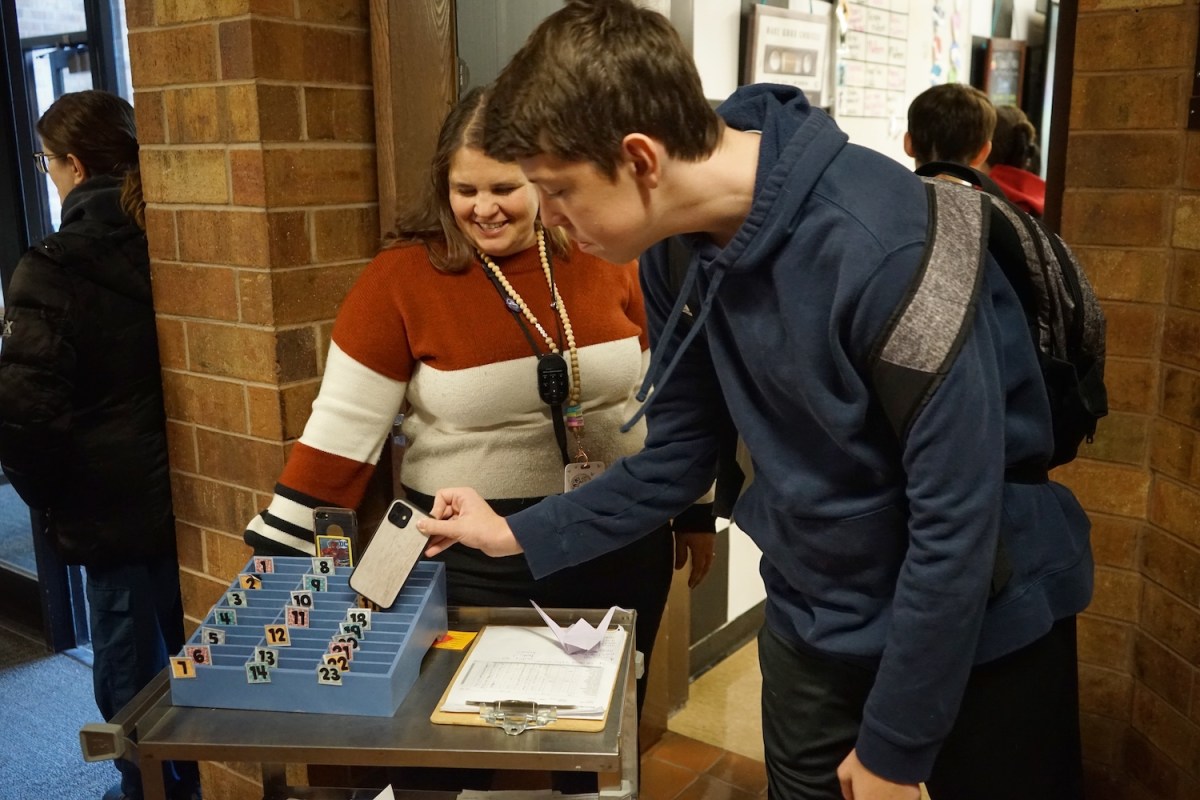
CHEYENNE—Tuesday afternoon, the Wyoming Senate rejected a measure that would have required local school boards to craft a cellphone policy to restrict use during instructional time.
Senate File 21, “Ban on cell phone use in schools,” died in a 17-11 vote on the Senate floor. Bill co-sponsor Wendy Schuler, R-Evanston, said the bill would not have dictated to local districts what their policy would say, but only that the districts have one.
Citing issues like cyberbullying and increased anxiety and depression, the former teacher said the bill would include exemptions for emergencies.
Senate President Bo Biteman, R-Ranchester, asked fellow senators what is happening in schools such that a teacher can’t simply take a phone away or send a student to the principal for violations. Sen. Bob Ide, R-Casper, said he believes it is the parents’ purview to restrict access to technology, saying the bill would “further displace the primacy of the parents.”
However, Sen. Larry Hicks, R-Baggs, voiced support for SF 21, saying that in a school district he represents, several parents insisted on their child having constant access to their phone. This caused disruption to other students, Hicks said, continuing that the school board — which he did not identify by district — failed to stand up for the teacher who wanted restricted cellphone use.
“The Legislature has to step in when the school board fails to stand up for the teacher,” Hicks said.
Sen. Charles Scott, R-Casper, said that when it is the parents who are “causing chaos,” or in cases of “competing sets of parents,” SF 21 would offer a state law as “extra backup” for schools who wish to restrict cellphone use during instructional time.
Non-citizen ID moves forward with wording, no color change
CHEYENNE–The Senate approved Senate File 33, “Noncitizen driver’s license and ID card-revisions,” on second reading, but removed a provision to change the identification cards to green at an estimated cost of $250,000 to the state.
Sen. Ed Cooper, R-Ten Sleep, called the measure a “small and straightforward bill” to keep non-citizens from voting. The identification cards, of which the state issues around 9,000, will now read “not U.S.,” in black text at the top of the card.
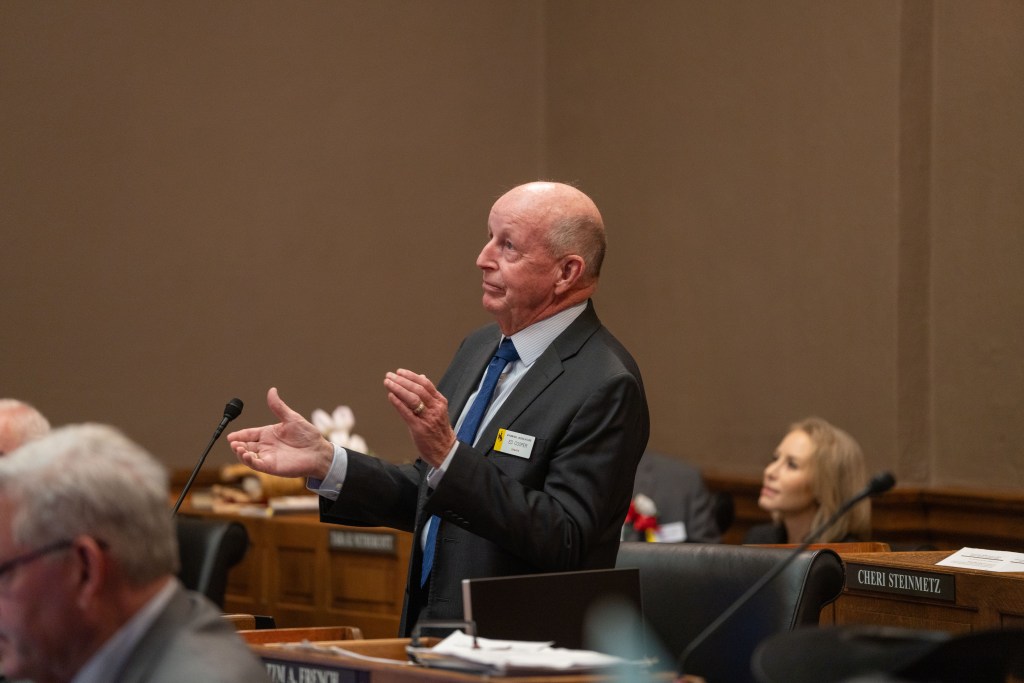
In the Senate Transportation, Highways and Military Affairs Committee last week, Secretary of State Chuck Gray said he preferred a clearly marked card identifying someone as ineligible to vote. He suggested the color green for such cards. However, senators rejected the color change due to the cost attached.
“In my opinion, the words, printed plainly on the card, ‘not U.S.,’ would be clear enough for anybody at the polls to look at the card and see you are not U.S. and can’t vote,” Sen. Stephan Pappas, R-Cheyenne, said.
Imagination Library program dies in the Senate
CHEYENNE–On Tuesday, the Senate killed a bill that would have meant free books in the mail for children up to age 5.
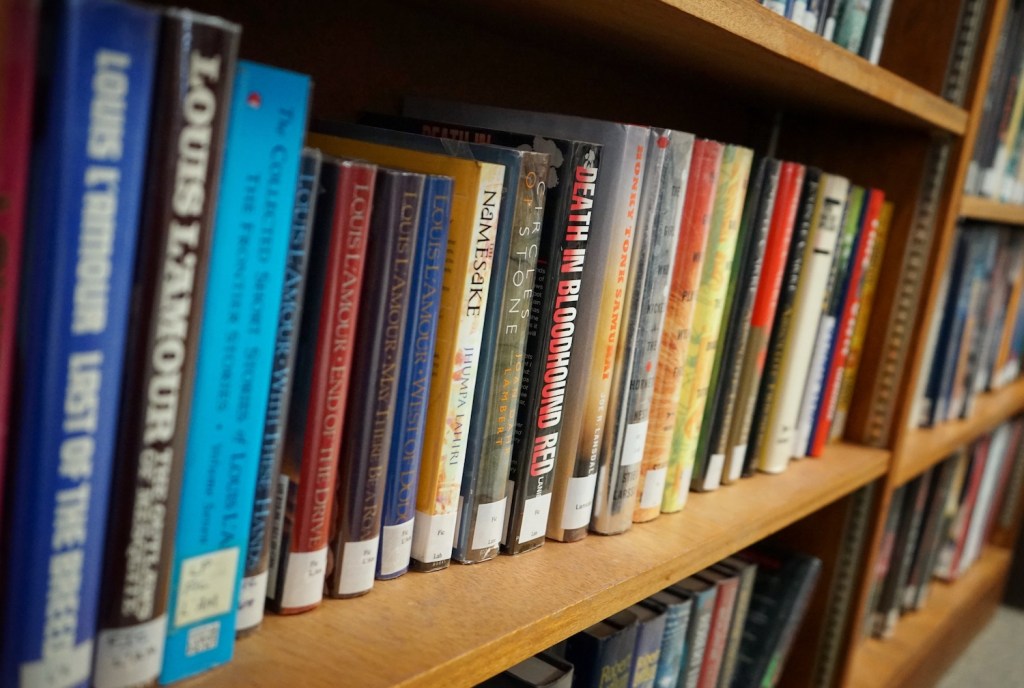
Senate File 14, “Wyoming imagination library program,” failed in a 23-6 vote during Committee of the Whole. SF 14 was sponsored by the Joint Education Committee, and would have allocated $320,000 in general fund dollars for both administration costs and book costs to establish a statewide Wyoming imagination library program in partnership with Dolly Parton’s Imagination Library.
Currently, Dolly Parton’s Imagination Library only exists in Wyoming on a county-by-county basis. Only 22% of Wyoming’s eligible children, from birth through age 5, are enrolled in the program. SF 14 would have expanded the program statewide, so all qualifying and enrolled children could receive free books in the mail.

Several senators expressed concern over the state funding something that they said should be done by the private sector.
“The state and private sector mixing … the best intentions, yes, but boy, we will start going down a slippery slope,” Senate President Bo Biteman, R-Ranchester, said.
The bill would have required a 50/50 match from participating counties.

Several senators expressed concern over the state funding something that they said should be done by the private sector.
“The state and private sector mixing … the best intentions, yes, but boy, we will start going down a slippery slope,” Senate President Bo Biteman, R-Ranchester, said.
I sure hope these senators remember this when/if the education voucher bill hits the senate.