


CHEYENNE—After a historic wildfire season depleted Wyoming’s firefighting coffers and multiple contingency accounts, lawmakers voted Tuesday to cut millions from recovery efforts.
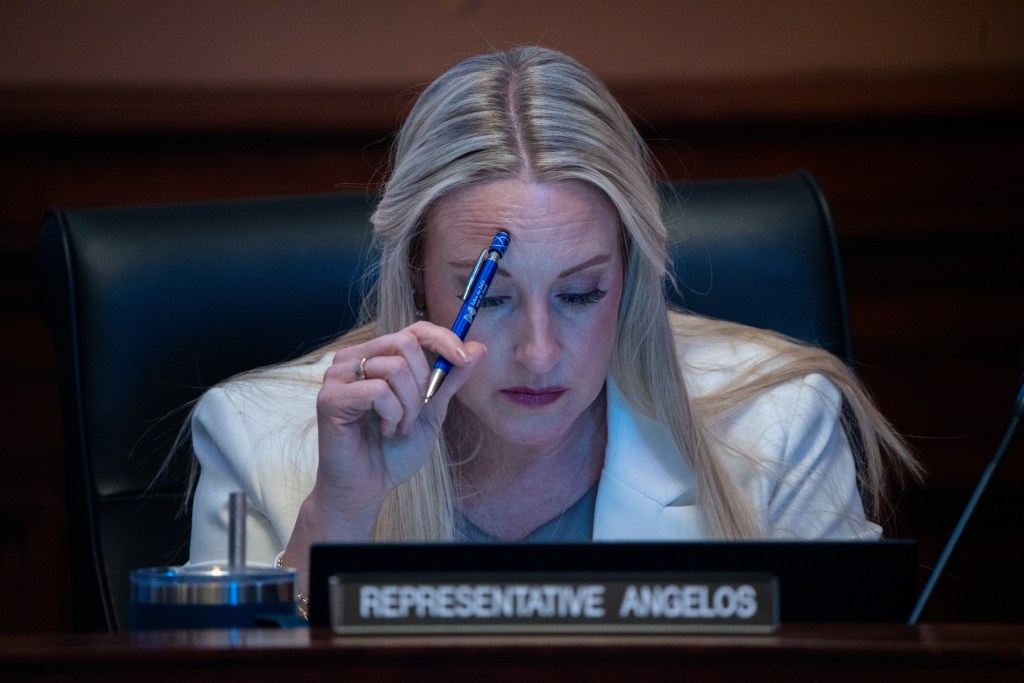
Rep. Abby Angelos, a Wyoming Freedom Caucus Republican from Gillette, brought a motion during a Joint Appropriations Committee meeting to reduce Gov. Mark Gordon’s $130 million recovery request to $100 million and to make the money available through a loan program instead of grant funding.
Last year’s historic wildfire season charred about 810,000 acres across the state, with about 70% of the destruction affecting private and state lands. Battling those flames first depleted the state’s firefighting funds, before wiping out the governor’s contingency account, Homeland Security’s contingency funds and virtually all of the governor’s authority to borrow from the Legislative Stabilization Reserve Account or so-called “rainy day” fund.
“I am not sure any of us imagined all of that capacity would be used up that quickly,” Gordon said in his budget message.
He asked that lawmakers replenish the accounts “to enable a timely response to fires that could happen in the coming year” and “to address other potential emergencies such as flooding, severe snowstorms, or other emergencies that may arise over the rest of the biennium.”
But putting out the fires and responding to future disasters is one thing, Gordon wrote. Recovery is another.
A catastrophic season
The House Draw Fire in Johnson County, for example, consumed nearly 175,000 acres of mostly private land, including cattle and sheep ranches, and was estimated to cause $25 million in economic damage. Around the same time, the Flat Rock and Constitution fires burned a combined 77,000 acres near Gillette.
Wyoming is one of five western states without a state-funded disaster recovery program to address calamities that do not meet the requirements for federal disaster assistance.
As such, Gordon recommended $130 million to be set aside in the Wyoming Wildlife and Natural Resource Trust for “treatment of invasive grasses, to help restore watersheds, habitat, and replace lost agricultural infrastructure through targeted relief that would not otherwise be available to those hurt by this year’s catastrophic fire season.”
The governor also envisioned the funds as grants, which the Wyoming Wildlife and Natural Resource Trust stood prepared to administer without an extra cost to the state, according to the Wyoming Budget Department. But Angelos’ motion moved the funds to the Wyoming Business Council to be loaned at 2% interest.

Lawmaker response
Angelos gave the committee no explanation for the reduction, but most committee members found the motion convincing enough.
Reps. Jeremy Haroldson, R-Wheatland, Bill Allemand, R-Midwest, Ken Pendergraft, R-Sheridan, John Bear, R-Gillette, and Sens. Tim Salazar, R-Riverton, Ogden Driskill, R-Devils Tower, Dan Laursen, R-Powell, Darin Smith, R-Cheyenne, and Mike Gierau, D-Jackson, supported the motion.
Reps. Trey Sherwood, D-Laramie, and Scott Smith, R-Lingle, were the only two opposition votes.
While Angelos’ motion was successful, the committee rejected a similar but more drastic motion by Laursen. The motion failed by a 6-6 vote.
Laursen’s motion sought to cut the $130 million request to $60 million while also shifting the funds to a loan program. A motion by Pendergraft also failed but would have prohibited the funds from being used to repair private fencing.
Angelos told WyoFile her motion was a compromise between the governor’s recommendation and Laursen’s motion, and was a decision “made collectively with the committee.”
“How much fire relief funding will be needed or applied for is unknown,” Angelos said. “The loan is a way of recognizing that this is the people of Wyoming’s money, and we are accountable to them for it. Offering low interest loans for those affected by the fires offers an opportunity for them to rebuild, if they choose not to take any federal aid.”
The committee’s decision is not final since the supplemental budget must still gain the approval from both chambers. It also requires the governor’s signature.
Salazar, who chairs the Senate Appropriations Committee, told reporters Tuesday that “there is a role for government in some things” while some situations should require the landowner to be “responsible for those events that are unforeseen, but obviously need to be taken care of.”
“I think the loan rate was at 2%, so it is a very generous loan,” Salazar said.
Senate President Bo Biteman’s neck of the woods was hit particularly hard by the Elk Fire. He told reporters he “didn’t agree with the grant idea.
“That’s just giving money away,” he said.
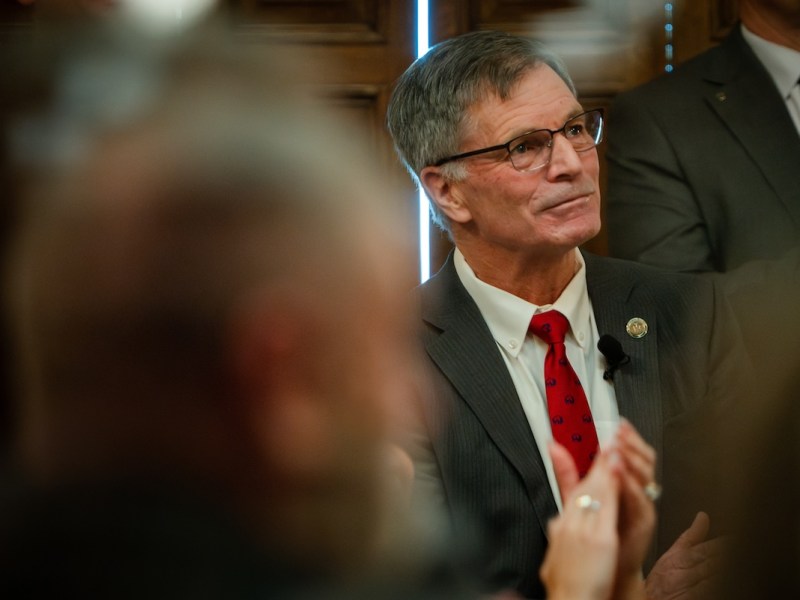
Biteman also said he has a bill in the works to set up what would function as a small business emergency loan program for natural disasters.
Next week, Gordon will visit Gillette and Sheridan for a pair of community forums about recovery funds.
“It is my intention to move as quickly as possible to alleviate the devastation to our Wyoming landscape and assist landowners in their recovery, which is why I have requested funding from the Wyoming State Legislature,” Gordon said in a Wednesday press release. “This is a top priority.”

Has the legislature developed a plan if FEMA goes away and federal disaster management and funding are delegated to the states? Will be interesting to see how the DOGE manages the USDA, also.
Well so much for being “Ag friendly”. Are people disappointed in how they are being represented yet>
If my house burned down, would the state give me a 2% loan? No
No you would not receive a 2% loan…however we’re not necessarily talking structures here, we talking infrastructure (think fences), we’re talking dollars to reseed native grasses, we’re talking dollars to combat invasive weeds……these are all things that most landowners don’t have insurance coverage on. Yes, certainly there will be USDA programs that will help these people, but geez if you can’t turn to your own state to find a little empathy and some support during a natural disaster like this, why are we even here. Being a scrooge is not the Cowboy way. The emotional trauma and stress that our neighbors went through and continue to live with is debilitating. We give grants to local governments for infrastructure maintenance, give grants to restore historical buildings, give grants to help with water issues. This action taken by the Joint Appropriations Committee disgusts me. It’s just not right.
Just a few years ago, I would have said give it to them. In the last few years, people in this industry have beed asking for more and more. I can’t speak for these particular folks, but in general this industry is less friendly to the public and are all about themselves. What if Elk Mountain range burned down? Should we pay him for NOT letting the public on it.
A 2% loan with strings attached is a slap in the face. Look at what the AG industry dose for Wyoming and what they pay in taxes and bring to the table ” pun intended ” you know that if they decide that it’s not worth it, you may find you’re neighbors are corporations out of China. One doesn’t have to look to hard to see the family ranch and farm’s are fewer and fewer. And it is event’s like this that are the turning point, right now our AG families need the support of our Wyoming government and communities. The community’s have shown their support now it’s time for our Wyoming lawmakers to show their support. Did you enjoy you’re lunch today??? Thank a Farmer and Rancher. Gas, oil and coal might put money in you’re pockets but AG families put food on you’re plate.
It is sad that private individuals like Wyoming Rancher Fire Relief programs with the help of others gave time, services and monitory value to help Wyoming AG families, and lawmakers in Wyoming feel that cutting $30 million dollars and giving out loans instead of grants is not right. I thought Wyoming was bigger then that. This sends a message to a big part of Wyomings industry you don’t care about them.