
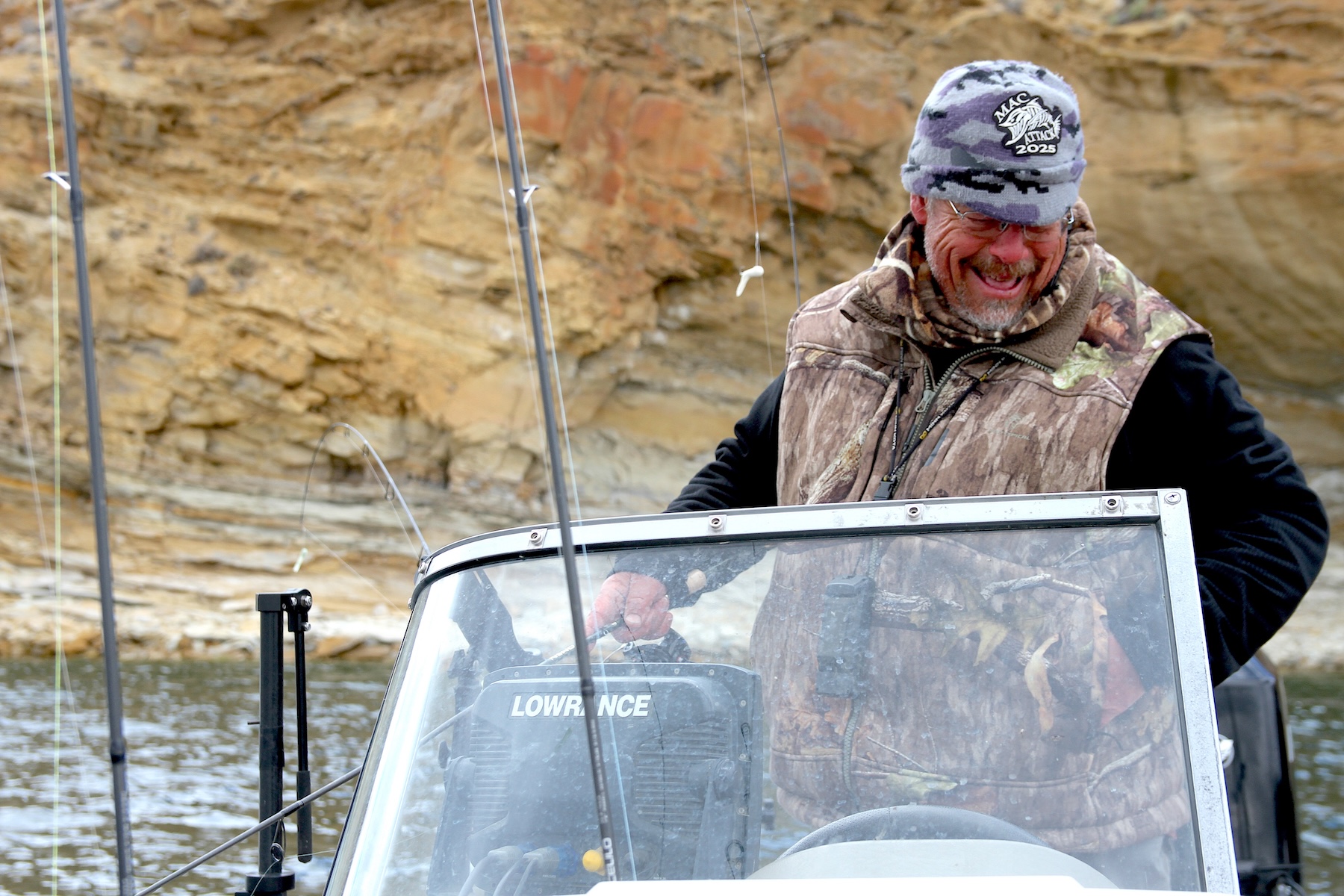

FLAMING GORGE RESERVOIR—A fingernail-sized hunk of sculpin meat that tipped a white tube jig descended steadily into the water, dropping 10 feet, then 50 feet, then 100 feet toward a cluster of dancing dots on the screen of a fish finder.
Robb Keith, whose rod controlled the baited jig, was fishing for young lake trout “puppies.” It was midday on April 30, and his hook was plunging toward what could have been the 455th lake trout he landed so far in 2026.
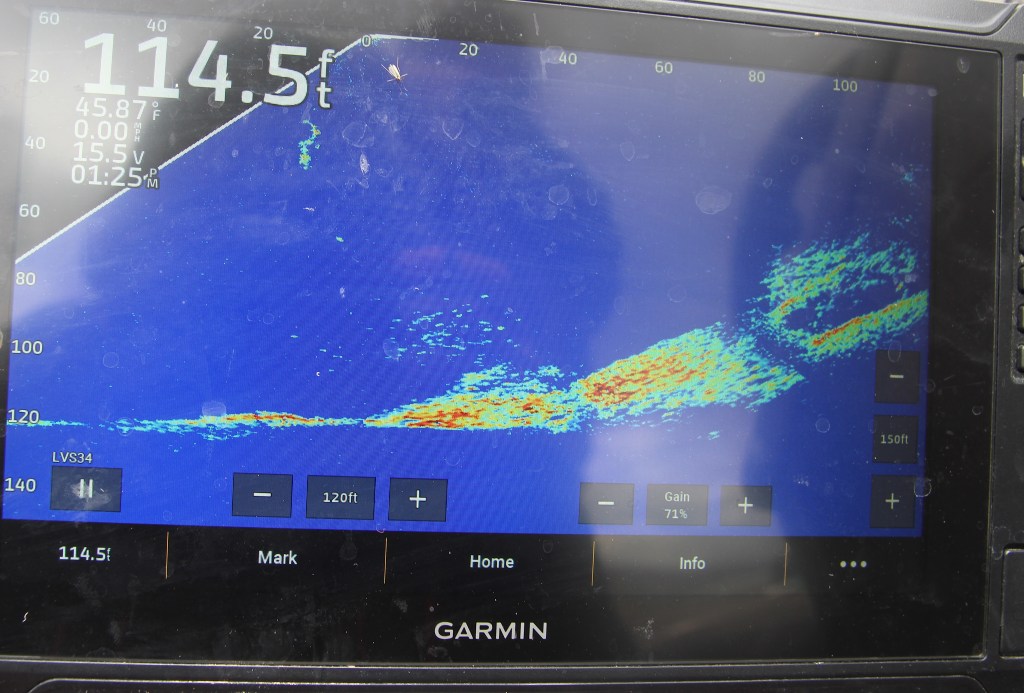
At 1:25 p.m., once the jig reached the dot cluster on Keith’s Garmin LiveScope, a little mac broke from the pack and grabbed a hold of a tiny piece of sculpin meat.
Bingo. He set the hook.
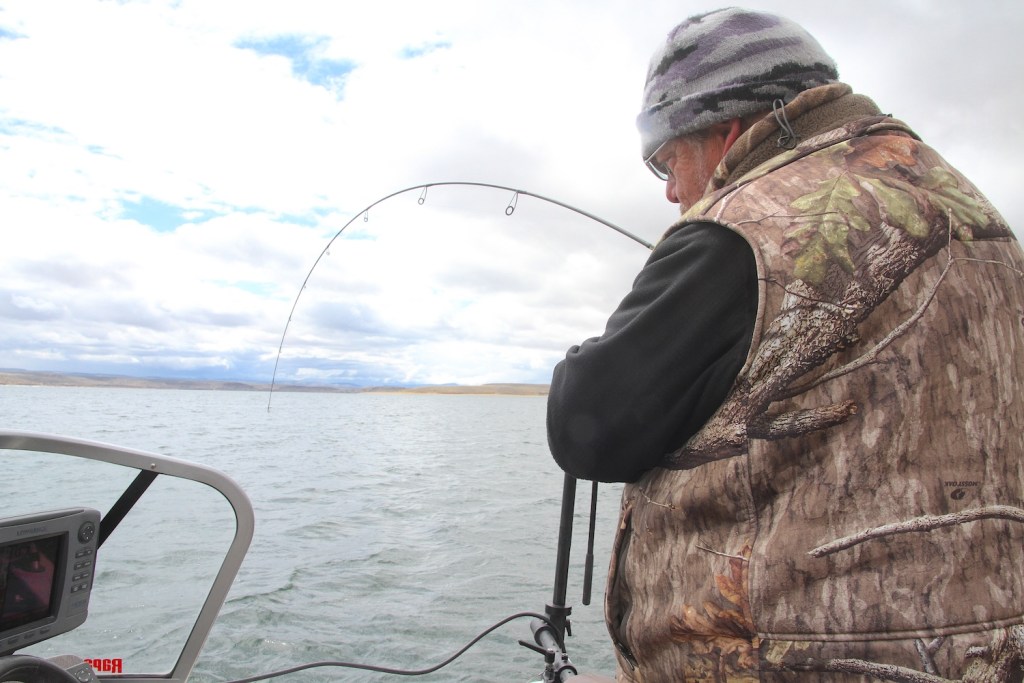
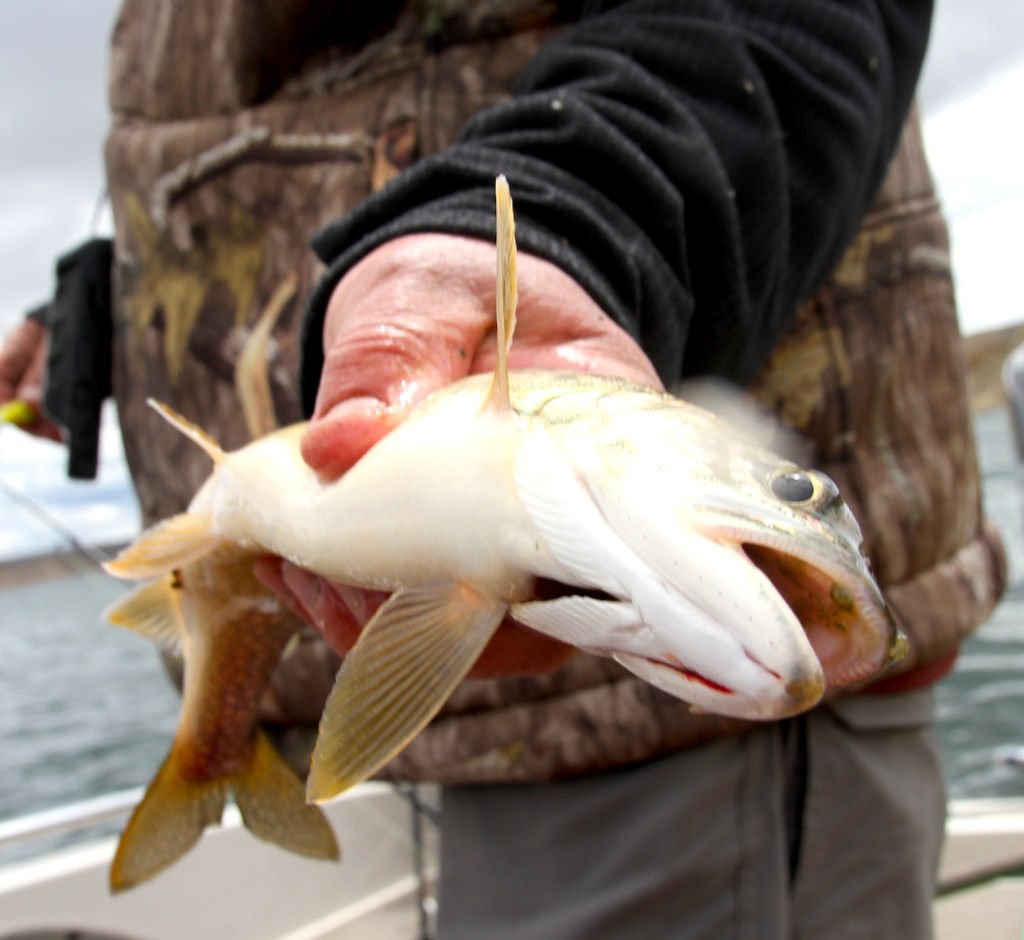
“Last meal,” Keith said.
Keith is a Wyoming Game and Fish Department retiree who supervised the Flaming Gorge fishery for a quarter century, and he has this pursuit down to a science. He clubbed the little lake trout in the head, slit its gills and threw its remains in a yellow pail. Then the grizzled Sweetwater County resident immediately caught another. Then another. Legally, he could continue as long as he wanted. There’s no limit on lake trout under 28 inches in Flaming Gorge, where they’re managed as a nongame species.
Keith spent a good chunk of winter and spring crushing little lake trout for a few reasons. One, he was newly retired and had free time. There was also a little bit of a financial incentive: The Flaming Gorge Chamber was debuting a new program that promised a check for turning in a bunch of lake trout heads. But mostly, Keith just believed in the cause of helping out a fishery that’s near his Green River home and is a major southwestern Wyoming tourism draw.
“Really,” he said, “it’s one fish at a time to try to reduce their numbers.”
Flaming Gorge has good company among western fisheries in its struggles with an overabundance of lake trout. The nonnative piscivore can grow especially large and buckle a rod, but also be a prolific predator of other game fish.
Now, managers are pulling out all the stops to turn Flaming Gorge’s fishery around. In waters like Yellowstone Lake, Idaho’s Lake Pend Oreille and Colorado’s Blue Mesa Reservoir, lake trout have become enough of a problem that fisheries managers have made big investments — paying anglers, and even commissioning commercial-style fishing crews — to curb lake trout populations.
Winning hearts and minds
There’s an argument that Flaming Gorge is still on the front end of its lake trout fight. Yet, even to get here, it took decades of convincing anglers that loosening regulations and intensifying the mackinaw harvest would help the fishery, bolstering numbers of other prized species that anglers target, like kokanee salmon.
“In the ‘70s, ‘80s and ‘90s, lake trout anglers were king, and they drove a lot of the management decisions on this reservoir,” Keith said. “Even though the biologists at the time knew that there was a problem growing, they didn’t dare do anything about it.”
In 2003, Keith took the reins as the fisheries supervisor for Game and Fish’s Green River Region, which includes Flaming Gorge. He launched an “aggressive” outreach campaign, sharing data, lake trout recipes and encouraging anglers to kill as many mackinaw as possible.
“We’re able to sway most of the public, [convincing them] we need to do something,” Keith said. “It wasn’t any one person. It was a big team.”
In the early 2000s, fisheries managers carved out a separate creel limit for lake trout and boosted the maximum daily harvest to eight. Then, in 2019, the limit bumped up again to 12 fish. In late 2024 came the reclassification of Flaming Gorge lake trout to “nongame,” a change that lifted the limit altogether for fish under 28 inches.
“I pushed and pushed and pushed,” Keith said. He pitched the idea to his old boss, Game and Fish Fisheries Chief Alan Osterland, and also to Brian Nesvik, then the agency’s director. Together, they brought the Game and Fish Commission on board.
“And here we are,” Keith said.
The management changes came as “things were going south really quick,” he said.
Small lake trout themselves were increasing steadily in number, as older trophy-sized fish became less and less numerous. Meanwhile, kokanee — a landlocked sockeye salmon — were struggling and becoming less and less numerous, even as the number Game and Fish was stocking into Flaming Gorge surged.
This created a lose-lose situation where anglers had few big lake trout and tasty kokanee to catch. Instead, there were superabundant small lake trout. And even those fish showed signs that they weren’t getting enough food.
“They looked like they were old and were really thin — just not in good condition,” said John Walrath, the Game and Fish’s current Green River Region fisheries supervisor.
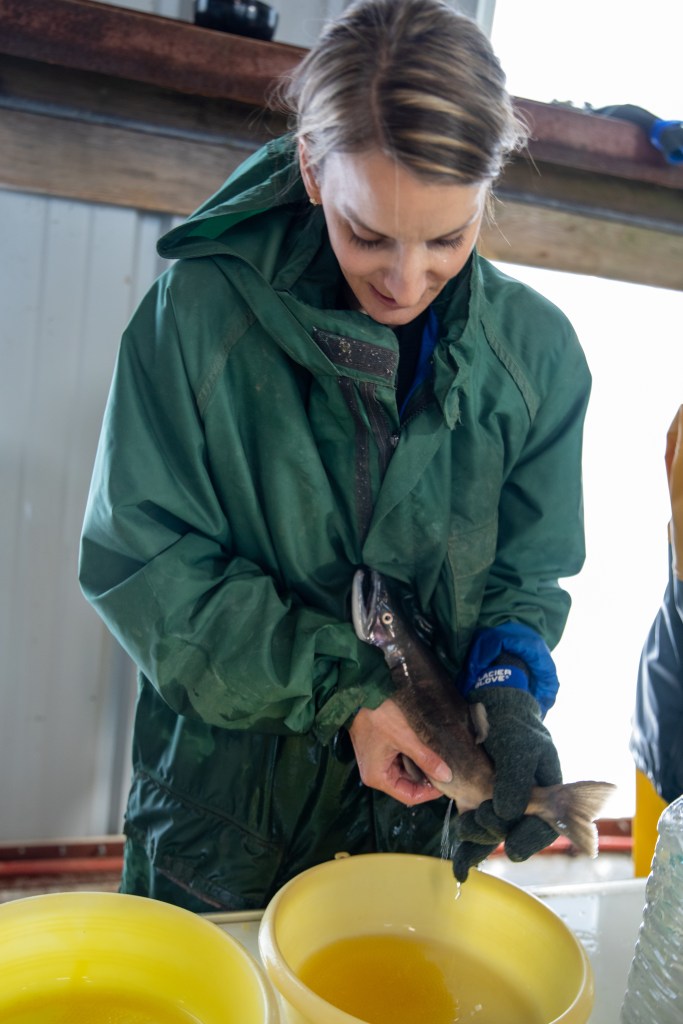
Fisheries biologists embarked on an age study to understand what was going on. By analyzing the chemistry of lake trout ear bones known as otoliths, they were able to determine that growth rates had slowed down significantly, Walrath said.
Through the age analysis, it also became clear that Flaming Gorge was home to lake trout that employed two different growth strategies. One group, known as “humpers,” grew steadily as the years lapsed and would eventually reach trophy proportions — the Flaming Gorge record exceeds 53 pounds. But another variant, known as “leaners” or “pups,” would stretch to about 23 inches and then stop growing.
“We relayed that to the public,” Walrath said. “There’s a big chunk of fish out here that, when you release them, you’re really doing more harm than good.”
Out on the water, Keith was targeting an even earlier life stage of lake trout. The 100-foot-deep schools that cast clusters of dots on the screen of his live-scanning sonar system were sexually immature lake trout “puppies” that were generally less than 17 inches.
The message that some small lake trout will never grow into trophies, all the while competing with everything else, landed with some avid anglers. Dan Bolton, a 9-year veteran guide who runs boats out of the Cedar Springs Boat Ramp on the Utah side of the reservoir, heard an analogy from a biologist friend who helped him come around on regulation changes he initially “wasn’t for.”
“You can look at the lake like a jar of cookies,” Bolton said. “You can have the jar full of big giant cookies, or you can have the same jar full of more little baby cookies. That sort of turned a light on.”
Some skepticism
But Bolton’s not fully on board with the new lake trout-killing efforts at Flaming Gorge. He doesn’t, for example, go out of his way to kill all the pup and puppy lake trout that he or his clients land. (The Utah Division of Wildlife has mirrored Wyoming’s regulations in its own rules.)
“I didn’t buy it enough where I’m going to sell it,” Bolton said.
Although Bolton isn’t convinced that open season on little lake trout is going to achieve Flaming Gorge managers’ goals, he’s willing to wait and see.
“Maybe we trust them for a minute,” he said, “before we send out the lynch mob.”
Some aspects of the regulation changes strike some anglers’ nerves. By changing lake trout to “nongame,” Wyoming also lifted wanton waste laws. Anglers, in other words, no longer have to eat all the lakers they catch. It’s a rule change that’s led to outraged Facebook posts. Bolton admits it doesn’t personally sit well.
“Being a responsible human, eating what you catch, don’t take too many — that’s the way I was raised,” he said.
The prospect of unlimited lake trout meat has intrigued some anglers.
“Right when they changed the rules [to unlimited], my phone was ringing off the hook,” Bolton said.
Operating out of the Buckboard Marina, Recon Angling guide Shane DuBois also encountered a surge in interest.
“I do a lot of, we call them ‘pup trips,’” DuBois said. “We’re pretty booked in the fall for guys to come out and do that. It’s a good way to kind of fill the freezer, and the lake trout here are actually pretty good eating.”

DuBois is simultaneously skeptical that anglers alone can alter the lake trout fishery.
“There’s a handful of guys that you know can go out and catch 60, 70 fish a day,” DuBois said. “But the average angler, if they catch five or six, that’s a lot.”
At 90 miles long, Flaming Gorge is Wyoming’s largest reservoir, and it’s home to roughly 143,000 lake trout under 28 inches, according to one recent estimate.
“The only way they can turn the tide on this is commercially netting,” DuBois opined.
Catching big numbers of small lake trout is a highly technical endeavor.
Keith’s eyes stay focused on his screens out on the water. A GPS system connected to his trolling motor helps keep his boat on top of a school, and he rarely drops his line if he’s not immediately on top of a cluster of pups he knows are foraging below him in real time. It’s quite the change from the old days of casting a lure, he remarked at one point.
Is it working?
Flaming Gorge managers do have goals for the fishery, though at present they’re nowhere close to meeting them. Lake trout population estimates have about tripled since the 1980s, and catch rates remain much higher than Walrath and his colleagues would like to see.
When Game and Fish crews set their standard gill nets to sample fish densities, their goal is to catch 0.3 small lake trout per hour. The catch rate in 2025 was 1.1 lake trout per hour, Walrath said, so more than triple the ideal number.
Kokanee, meanwhile, have stayed well below managers’ goals. Numbers estimated through a hydroacoustics sampling method declined for seven straight years after 2018, Game and Fish data show, and remain well below the objective of 600,000 fish age two and younger.
Yet, fisheries managers past and present do believe they can move those trajectories in the desired direction.
Their optimism is buoyed in part by their experiences with other species.
“The same thing happened with the burbot,” Keith said.
This illegally introduced freshwater cod proliferated in Flaming Gorge and other Green River Basin reservoirs after being discovered in the early 2000s. Fisheries managers lifted the regulations, requiring the killing of any caught burbot, and hosted through-the-night derbies to stimulate interest in removing as many as possible.
Those tactics worked. Burbot catch rates in the Gorge fell off, according to Wyoming Wildlife magazine.
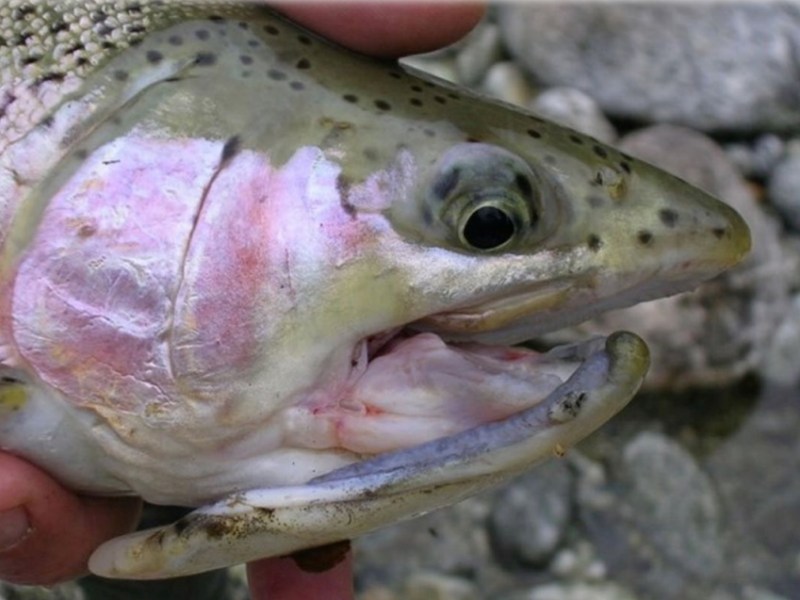
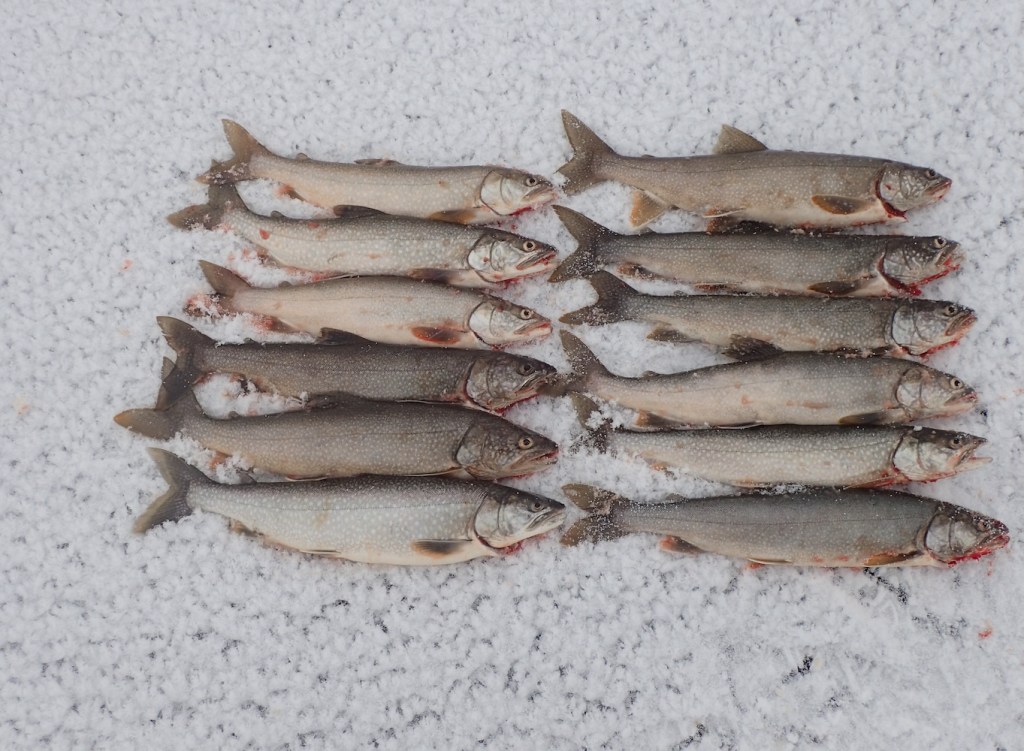
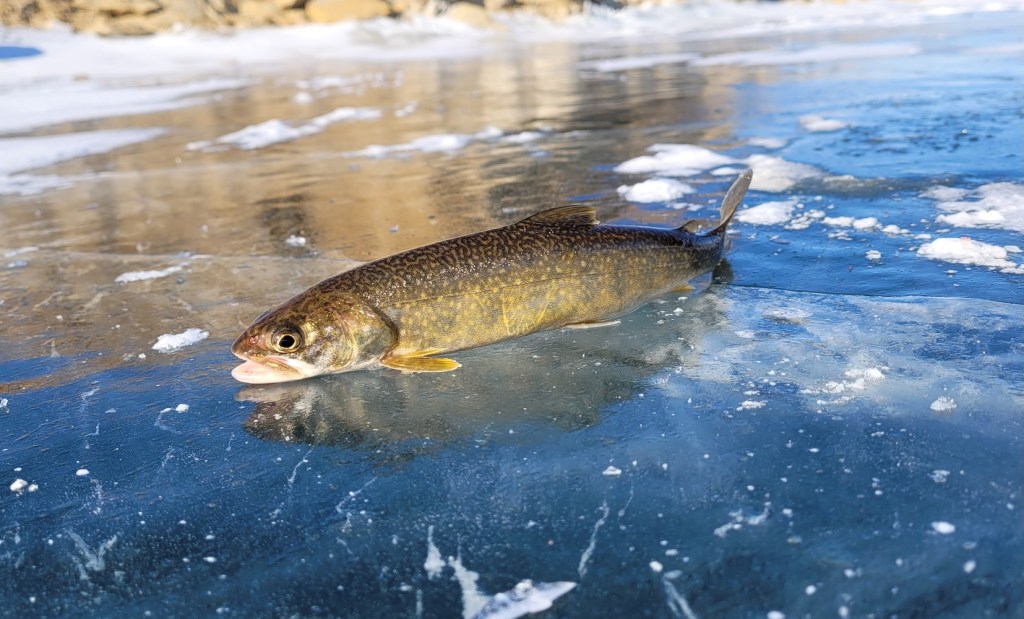
Some of the same strategies are in place to stimulate interest in catching hauls of pup lake trout. An annual “Mac Attack” tournament (formerly the “Pupulation Control” contest) draws anglers to the ice each winter.
Due to the record heat and scarcity of ice, it was called off this year. Those conditions — the ice fishing season was fleeting at best — hurt the Flaming Gorge managers’ cause, because 70% of the lake trout catch comes through the ice.
“If we don’t have a good winter,” Walrath said, “we don’t get a good harvest on lake trout.”
Mandatory drawdowns of Flaming Gorge this summer will hurt the cause even more, Keith said. The smaller reservoir concentrates the species together, increasing predation rates on kokanee. The drawdowns can also hurt their spawning success, he said, if they come after eggs are in the gravel.
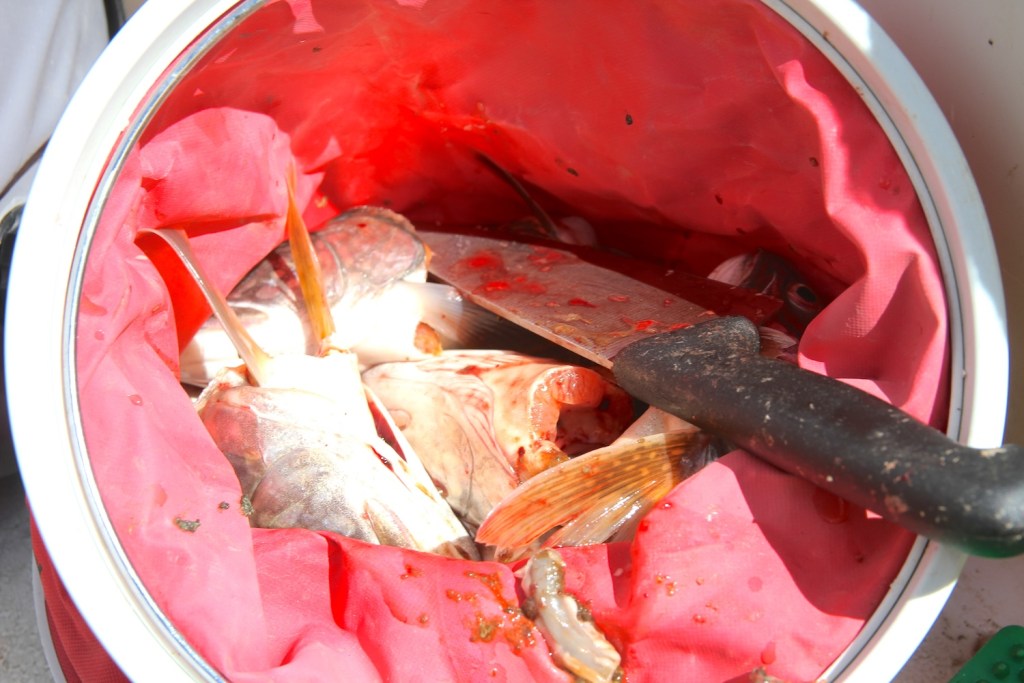
The “angler harvest program” Keith partook in this winter and spring is also designed to help get lake trout numbers on the run. Out on the water on April 30, the Game and Fish retiree was crushing not only lake trout, but also his competitors. By the end of the day, he reeled up 37 puppy lake trout, bringing his catch count for the year up to 471.
Later, he’d receive a check for his pup-killing efforts. There was a $1,500 first place award for the most lake trout heads turned in, but a random draw for each caught fish proved to be the real moneymaker. Keith, who turned in nearly as many heads as the rest of the field combined, won another $2,100 in the draws, for a total winnings of $4,100.
“I might be the only one taking advantage of it, but it’s an opportunity for people to help the fishery,” Keith said of the competition. “All this is about helping the fishery. Every individual lake trout removed is a savings in kokanee.”

Rather than a random draw, it would be better to pay a bounty on Lake Trout. Oregon pays a bounty, $6-10 a fish, for Pike Minnows. Random draws feels like things have things are left to chance. If a good fisherman can catch 60-Lakers and make $360, he’s going to go do it. And his friends will want to go and learn how to make some cash. Random draws feel like playing the Lottery.
If we wait long enough, we can pick them up off the bottom in hip waders.