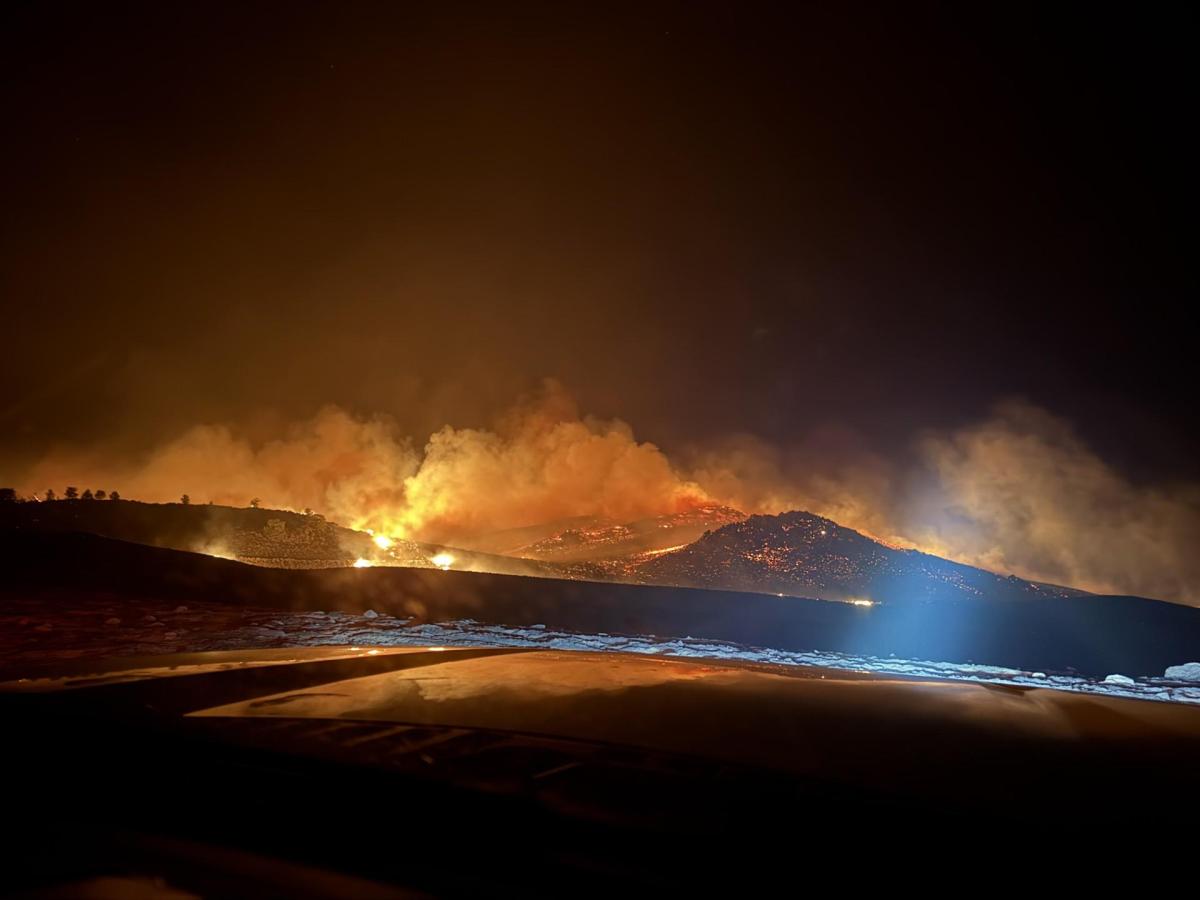
After almost 70 years, I still remember it quite clearly. We were on our way to the home place one evening when my dad told me about a forest fire nearby. For some reason, I concluded that if the people fighting the fire saw us, they would conscript my father into helping them. That scared me. I can still recall driving along the north side of Little Prospect Mountain in the dark, watching the glow from the fire above us and wondering if we were going to be OK.
Opinion
I guess you can’t grow up in a family like mine without having some consciousness about wildland fires. The country around the home place hasn’t had a major fire for a century. But you can still see the scars from the old burns. When we were riding or hiking, I thought about them and wondered what it must have been like when our part of the country burned. That was a little bit scary too.
Somewhere along the line, I discovered I wanted a career in wildlife conservation. In college, I learned about the role of fire in Wyoming ecosystems. I was pretty familiar with the effects of fire, and it all made sense to me because it was linked to science. Science took the fear factor out and made fire more of a natural process — just a part of the country, like rain or photosynthesis. But like most things academic, the real world turns out to be a little more complex.
I remember the first controlled burn I worked. It was in Sunlight Basin, just east of Yellowstone National Park. We were creating more winter habitat for elk, which was a great idea. But I was ill-prepared for the reality of being close to fire on that scale. I was part of a crew that set the first drip line. It was well-planned and well-executed. We carefully monitored all the conditions — wind speed and direction, humidity, soil moisture, etc. And then, drip torches in hand, we set the first fire line. Everything proceeded just like it should. The fire advanced slowly across a wide sagebrush flat. We followed it, and the teams with the fire trucks were close at hand. The perimeter was secure. It was kind of fun to watch until I saw a juniper tree explode. The fire line was still 20 or 30 yards from that old tree, but it must’ve increased the temperature remarkably. Long before the flames ever got near the juniper tree, it exploded with a sound like 50 gallons of gasoline going off. I was humbled and amazed.
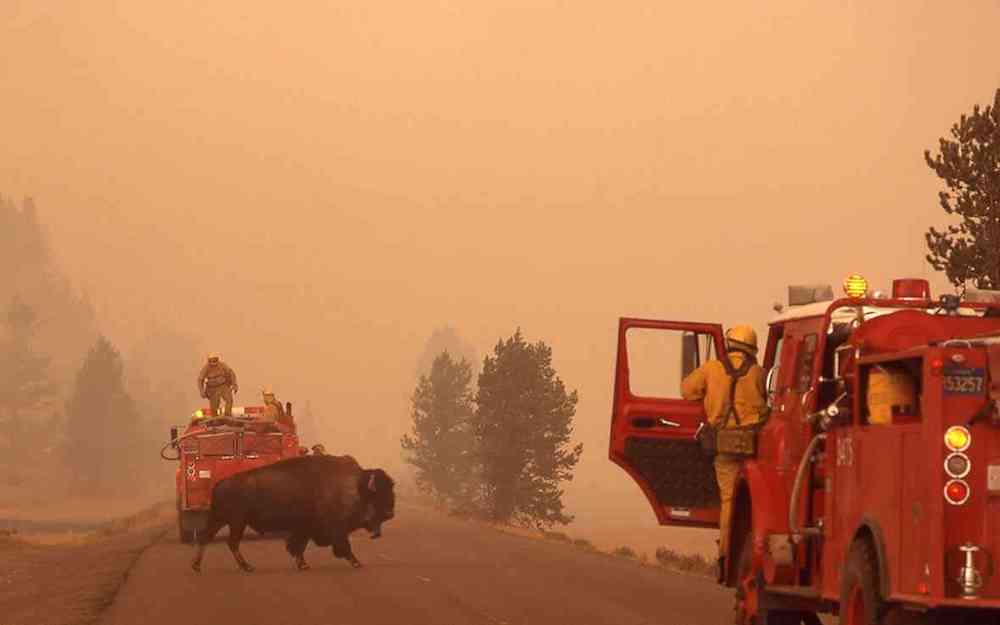
Since then, I’ve been around other fires — some big, and some small. And the truth is, they still amaze me. In my head, I know that they’re an important part of landscape and that they have been so since the beginning. Our forests in the West evolved with fire, and they depend on it to propagate. Indigenous folks burned lots of places for a variety of reasons, from grasslands and sagebrush country all the way up to timber line. The country grew up with fire. I guess I did, too.
Kim and I now find ourselves in the position of wrangling hundreds of public land users in a Forest Service campground. Our campground is at elevation 10,500 feet. The trees are mostly Engelmann spruce and subalpine fir, and about 50% of the standing trees are dead — victims of an insect epidemic years ago. We came out of a very dry winter into a very hot, dry summer. There hasn’t been a major fire anywhere near us in my lifetime. So when it comes to fires in the campground, we’re very cautious right now.
And that causes some consternation among the campers. Most of them are from someplace else, and a lot of them aren’t very connected to wild lands.
They come to us with a bundle of firewood from a convenience store and the expectation that they will have a campfire. Many consider that campfire an absolute must, indeed a right. Only a few of them recognize the irony in coming here from the Front Range to escape the smoke, while feeling entitled to a fire in a tinderbox. But our job is not to win a popularity contest. It is to keep all of us safe.
Recently, a good friend posed an interesting question when a big sagebrush fire burned thousands of acres near his place. He’s as Wyoming as you can be, and he’s not afraid of anything. He makes a living selling outdoor gear and supplies. But after a day of helping his neighbors move livestock out of harm’s way, he asked the rhetorical question, “What if we all just stayed home for a while, until we get some rain and the fire danger goes down?”
If we posed that question in the campground, we’d be the least popular campground hosts ever. Most of our campers come from urban or suburban places, comfortably disconnected from wildland fires. But that doesn’t change the fact that safety beats entitlement every time. Someone has to lead. So right now, the s’mores are going to have to wait for some rain.