


Two months before Wyoming voters will decide whether to further reduce the state’s residential property taxes, the Legislature’s Joint Revenue Committee rejected a plan this week to repeal the tax altogether, marking a shift in a years-long effort to revamp the state’s tax system.
The legislation would have given voters the opportunity to amend the Wyoming Constitution to eliminate property taxes altogether, while a companion bill would have raised sales taxes to backfill the resulting revenue loss. The committee backed the same measure last year, but the legislation died after the House ran out of time to consider it.
The panel’s decision Tuesday to rebuff additional cuts came amid the release of new data showing that the majority of Wyoming homeowners did not take advantage of a major tax cut that was recently implemented by lawmakers.
Residential property taxes have been a focal point for lawmakers for the last four years amid a jump in home values and subsequent rise in property tax bills. Since 2022, the Legislature has expanded the state’s tax refund program, capped annual increases and amended the constitution — with the support of voters — to put residential property into a separate tax class. Lawmakers also added several exemptions to statute statute, creating a complicated web in the process.
While homeowners once packed committee meetings demanding lawmakers take action and ease residential property taxes, that’s since changed. Last year, about two dozen Natrona County homeowners urged the Revenue Committee to skip further cuts, citing impacts to public services. In Wyoming, property taxes do not fund state government but instead support local services like education, law enforcement, libraries, water and sewer. Following the tax cuts, municipalities around Wyoming reported making cuts to various services.
At the committee’s meeting Tuesday in Casper, no homeowners testified one way or the other, prompting Rep. Liz Storer, D-Jackson, to ask the committee, “What is the purpose of these bills?”
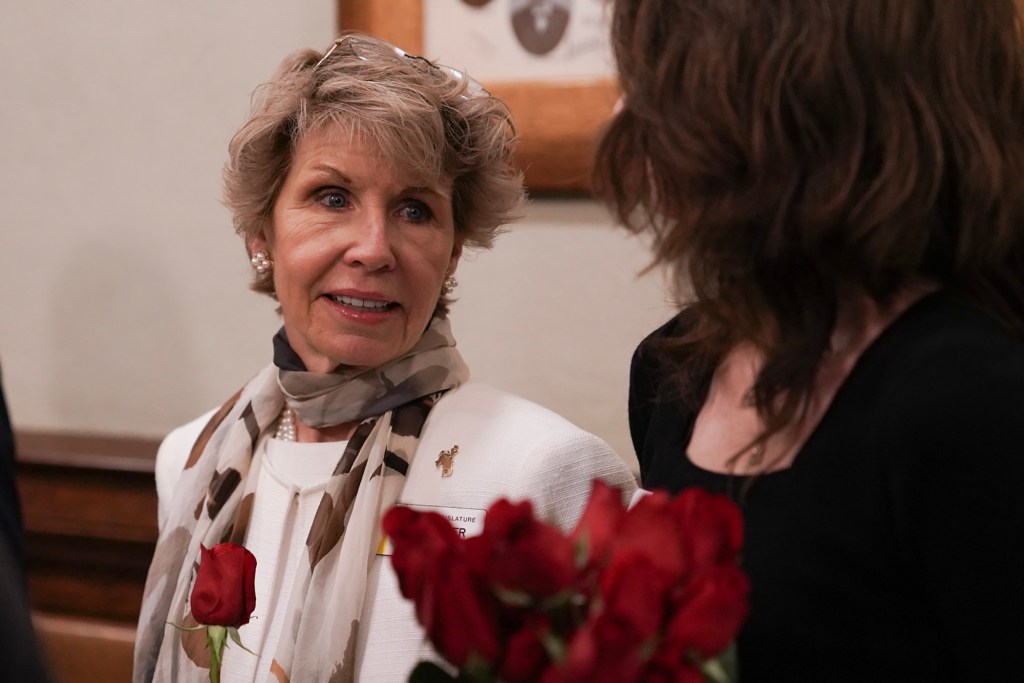
“And why would we take the time to continue to move them forward, also given that I do not think they will be met with success in the next Legislature?” Storer said. “So help me understand your reasoning.”
The incoming Legislature will indeed look very different from the one represented on the committee after voters largely rejected candidates aligned with the Wyoming Freedom Caucus, which led much of the charge to cut property taxes. That included Republican Sen. Bob Ide, who first brought the idea to eliminate property taxes to the committee in 2025. Ide lost his reelection bid to Casper’s Senate District 29.
“I think it’s a fair question from Representative Storer,” he said at Tuesday’s meeting, before pointing to property tax reform in Florida and Tennessee.
“The motivation here is property ownership is not really true right now,” Ide said. “You pay your house off and you still rent from the government.”
“Biblically,” Ide added, “I think you were always supposed to — you never taxed the land. They had a jubilee — tax the fruits of the land.”
Sen. Cale Case, a long-time Lander Republican who won his primary election, pushed back.
“I don’t really buy the argument that you don’t really own your house because the government taxes your property,” he said. “We have had property taxes the entire history of America.”
Property taxes are fundamental to communities, Case added.
“That’s why they fund local services,” he said. “And it’s very important to have people that live in those communities fund those communities.”

The committee voted 7-6 with one excused not to sponsor the bill. Five of the six “aye” votes were lawmakers who lost their reelection bids, including: Ide and Reps. Gary Brown, R-Cheyenne; Jayme Lien, R-Casper; Robert Wharff, R-Evanston; and Tony Locke, R-Casper. All five lawmakers are either members or allies of the Freedom Caucus.
Meanwhile, the committee also rejected legislation that would largely prohibit mill levies from being assessed on residential property, and voted to table three other property-tax related bills until lawmakers meet in November.
One of the tabled bills relates to the citizen-initiated ballot measure that voters will settle in the general election. On Nov. 3, voters will have the final say over whether to create a 50% residential property tax exemption for qualified homeowners.
A 25% exemption is already on the books after lawmakers passed such legislation in 2025. The exemption was applied automatically in its first year, but homeowners had to apply for the reduction in 2026. Only about 44% of eligible homeowners applied, the Department of Revenue told the committee Monday.
The single residential property tax bill the committee voted to sponsor this week would advance a decision by voters from two years ago.
In 2024, voters approved a constitutional amendment to segregate residential real estate from other forms of property for taxation purposes. Previously, the Wyoming Constitution grouped residential with commercial and agricultural property, which made it difficult for lawmakers to respond to surging home values with changes that only addressed how homes are taxed.
The success of the amendment, however, cleared the constraint for lawmakers, though they haven’t taken advantage of it yet. That could soon change after the committee voted to sponsor legislation that would separate residential property in state law and lower its assessment rate from 9.5% to 8.3%.
The committee’s next meeting will be Nov. 19 and 20 in Cheyenne.

I hate to admit this but I would have missed out on the the 25% tax break myself if the JC County Treasure hadn’t reminded me. I don’t think most folks were aware of how or the deadline to apply. People are busy & unless it is out there in plan sight, it can easily go by the way side.
Stunning.
Wyoming property taxes are high. And now the legislature is taking the liberal, easy way out. Why is our property what carries the taxes weight. Not business, not income, not energy – residential property.
My guess, too many government workers,elected town and county officials – elected and employed.
My bet, the government coalition will bury property tax reduction and will increase taxes instead of cutting fat government spending.
My bet, watch this and begin the discussion to add income tax, just a little meaningless one.
Yeah sure.
🤣
Finally people are understanding that without any property taxes, our county services will dry up.
Thanks for your thoughtful and valued commentary. Your interview with Rachel Maddow was splendid. Your contribution to the public dialogue is appreciated.
Nice to see that people are getting it through their thick skulls that taxes = services. There is no road fairy to pave the streets.
The problem is not the property tax rate. Wyoming actually has very reasonable property tax rates, among the lowest among the 50 states.
The problem is the assessed valuation of property. People who transact property have this really bad habit of overvaluing it at the point of sale , because they can. The classic example is the pioneer 3 room single story log cabin on 1 acre in Teton County selling for $ 3 million . Compare and contrast to the 5 room “purged mobile home” on a permanent foundation ( no basement) with a modest steel building shop on 1 acre across the river from Cody built only 20 years ago. It is currently assessed for tax purposes at $275,000 , which to my mind seems high. I just don’t see how the land value of an acre of bare brown ground with no lawn or even a tree , with hints of alkali showing , appraises at nearly $100,000. The $175,000 assessed for the house and shop seems gratuitous for a family home I know has been moved at least twice before it got cemented to the Earth’s crust.
The Cody manufactured home owner b_tches to high heaven about his property tax bill. The Teton County property owner thinks his tax bill is a real deal , all things considered , in context with the surrounding McMansions and various Nouveau Riche domicile. The irony is once you’re indoors, the former mobile home is the more comfortable and livable of the two when it comes time to pay for water, heat, and light and such. It’s also got better services and is only 4 minutes from the city limits; 8 minutes from Wal-mart but so far from Gawd.
Bottom Line: We cannot have an even handed discussion about fair and equitable Property Tax in Wyoming unless and until they develop a vaccine for Greed to cure the affliction of astronomically overpricing property way beyond its intrinsic worth.
Lacking that miracle vaccine, I might suggest something else to treat the symptoms of extreme avarice. Wyoming should look into adopting some serious rigorous Real Estate Transfer Taxation. Who in the marble halls has the courage to bring up THAT when talking about property values ?
Amen to that.
‘“Biblically,” Ide added, “I think you were always supposed to — you never taxed the land. They had a jubilee — tax the fruits of the land.”’ Thank God this blockhead was voted out. Someone explain to Bob that we are not a theocracy.
Hear, hear!
I know of no one who did not take advantage of the tax break advantage. The article says the majotity of eligible did not take advantage. I dont believe it.
Actually I believe it is true that not many took advantage of that tax issue. We didn’t because we failed to see the back sheet of the tax statement that said you had to fill out a form prior to March or something similar. It was sneaky and I blame the FC Legislature. We are not the only ones in our relatively small circle of acquaintances.
First of all and not to my knowledge, Wyoming has not always had property tax. Second of all, home prices are now up with Colorado prices. That means homeowners pay several thousands of dollars each year as there assessed value keeps going up. I was told by a Casper state represented that the 25% reduction effected Caspers budget by a very small amount. Newspaper portrayed that Casper had to cut some budget items such as park maintence, school budgets, and other things. Concerning school budgets, an amount was awarded to schools for teachers salary. However, the money was spent on school administration. Don’t believe everything you read in printed articles. I encourage Casper citizens to do your own investigations to come up with what is true and what is not.
Wyoming has had property tax continuously since it was a territory. It is in our state constitution and has been since statehood.
The recalibration money for teachers was siloed and was not and cannot be used for administration.
Bob ide was lying to you