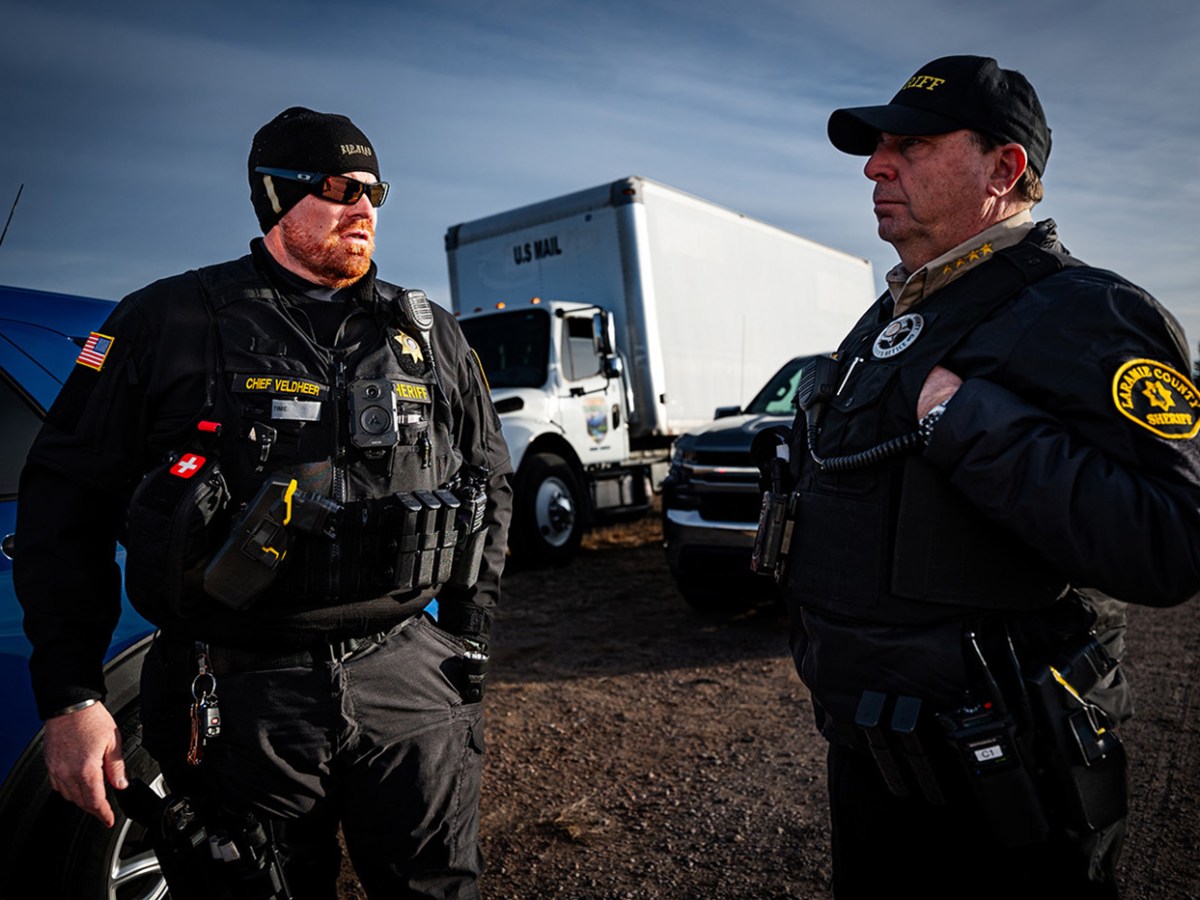
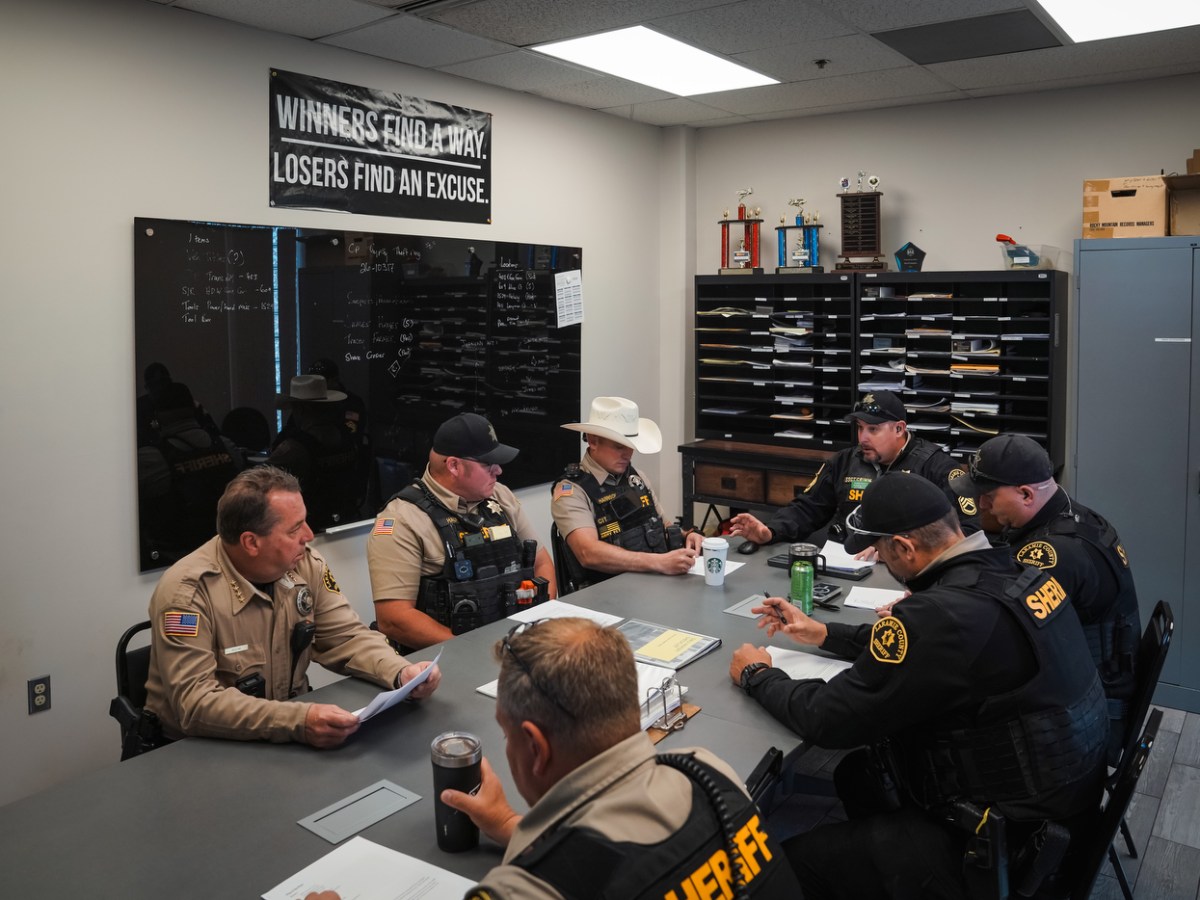
The American Civil Liberties Union will appeal its immigration case against Laramie County Sheriff Brian Kozak to the Wyoming Supreme Court after a judge dismissed the matter last month.
The timing of the appeal is still up in the air, a Wyoming ACLU spokesperson told WyoFile.
Kozak said the group should instead drop the matter.
“The public has already put this frivolous [lawsuit] in the past; the ACLU should do the same,” Kozak said in a text message. “We will continue our mission to impact drug, sex, and labor trafficking.”
The lawsuit alleges Kozak broke the law when he partnered with U.S. Immigration and Customs Enforcement without Laramie County commissioners’ approval. Laramie County District Judge Robin Cooley struck down the lawsuit in August, stating in her dismissal order that the plaintiffs lacked standing because they didn’t demonstrate direct harm from the actions they were challenging in court.
“We’re disappointed that the court found that our plaintiffs lacked standing and dismissed our lawsuit challenging Laramie County’s contracts with U.S. Immigration and Customs Enforcement,” Wyoming ACLU Executive Director Libby Skarin said in a statement to WyoFile. “We respectfully disagree with the court’s decision, and we intend to seek an appeal at the Wyoming Supreme Court.”
While Cooley dismissed the lawsuit, she noted that the question of whether Kozak exceeded his legal authority when he entered the agreements without commissioners’ approval is still unresolved.
“The commissioners are not party to this action and have not asserted any resulting injury,” Cooley’s decision states. “Although plaintiffs allege concrete harms arising from immigration enforcement, they have not alleged a particularized injury arising from the alleged infringement of the commissioners’ authority. Accordingly, the underlying question of defendant Kozak’s authority and statutory authority remain unresolved.”
Wyoming ACLU attorney Andrew Malone and Cheyenne attorney Elizabeth Lance filed the lawsuit in May on behalf of a local barbershop, a nonprofit advocacy group and a church that said they had suffered as a result of Kozak’s 287(g) contracts, which are named after section 287(g) of the Immigration and Nationality Act and allow local and state law enforcement to perform some immigration enforcement under ICE’s oversight.
The Laramie County Sheriff’s Office is one of two law enforcement agencies in Wyoming — the other being the Sweetwater County Sheriff’s Office — that has signed all three voluntary immigration enforcement agreements that ICE offers. The most controversial of the three types, the Task Force Model, was phased out during the Obama administration following documented civil rights violations but resurrected in 2025 under Trump.
The ACLU has pushed back against 287(g) agreements across the country, bringing legal challenges against these immigration enforcement partnerships in other states like Minnesota and Pennsylvania.
Malone, the Wyoming ACLU attorney, previously said the organization may file lawsuits against other Wyoming law enforcement agencies with 287(g) contracts, depending on the outcomes of this case. Skarin reiterated that the group’s effort to push against these partnerships isn’t over.
“The ACLU of Wyoming will continue to push back against 287(g) agreements and efforts to unlawfully use local resources, such as jails and law enforcement officials, to facilitate mass detention and deportation in Wyoming,” she stated.
The Laramie County commissioners didn’t immediately respond to WyoFile’s inquiry about the case.