


The federal government threw its support behind the Laramie County Sheriff’s Office’s immigration work as a judge Monday mulled whether to dismiss a lawsuit challenging the office’s federal 287(g) immigration enforcement agreements.
“Although the Federal Government possesses broad power over immigration, enforcing the immigration laws is a formidable challenge,” a statement of interest from the federal government, signed by Wyoming U.S. Attorney Darin Smith, states.
The federal government “regularly” works with “state and local governments” to meet this challenge, the document, filed in Laramie County District Court earlier this month, explains. On a broad scale, this cooperation enables the federal government to find and remove “hundreds of thousands of aliens who violate immigration laws (and other laws) each year.”
The Laramie County Sheriff’s Office’s cooperation with federal immigration enforcement “serves important federal and public interests that would be undermined” if the lawsuit, filed by the American Civil Liberties Union, is successful, the statement says.
The filing notes that between October 2020 and January 2024, ICE arrested more than 2,700 “convicted criminals” in its Denver area of responsibility, which includes Laramie County. Most of those arrests occurred during the Biden administration. Immigration arrests have surged during the second Trump administration. The majority of people arrested by ICE agents between Jan. 20 and June 26, 2025, in Colorado and Wyoming didn’t have any criminal convictions, according to ICE data.
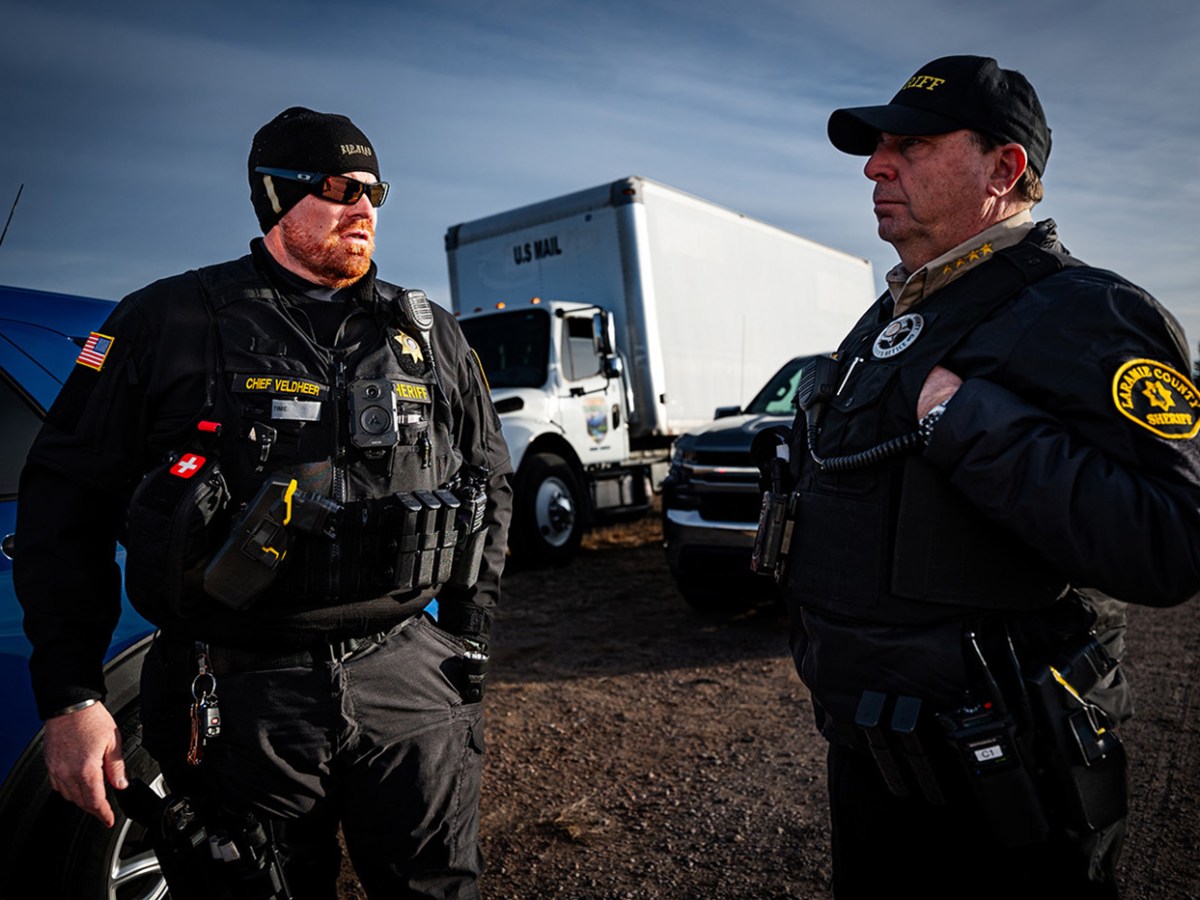
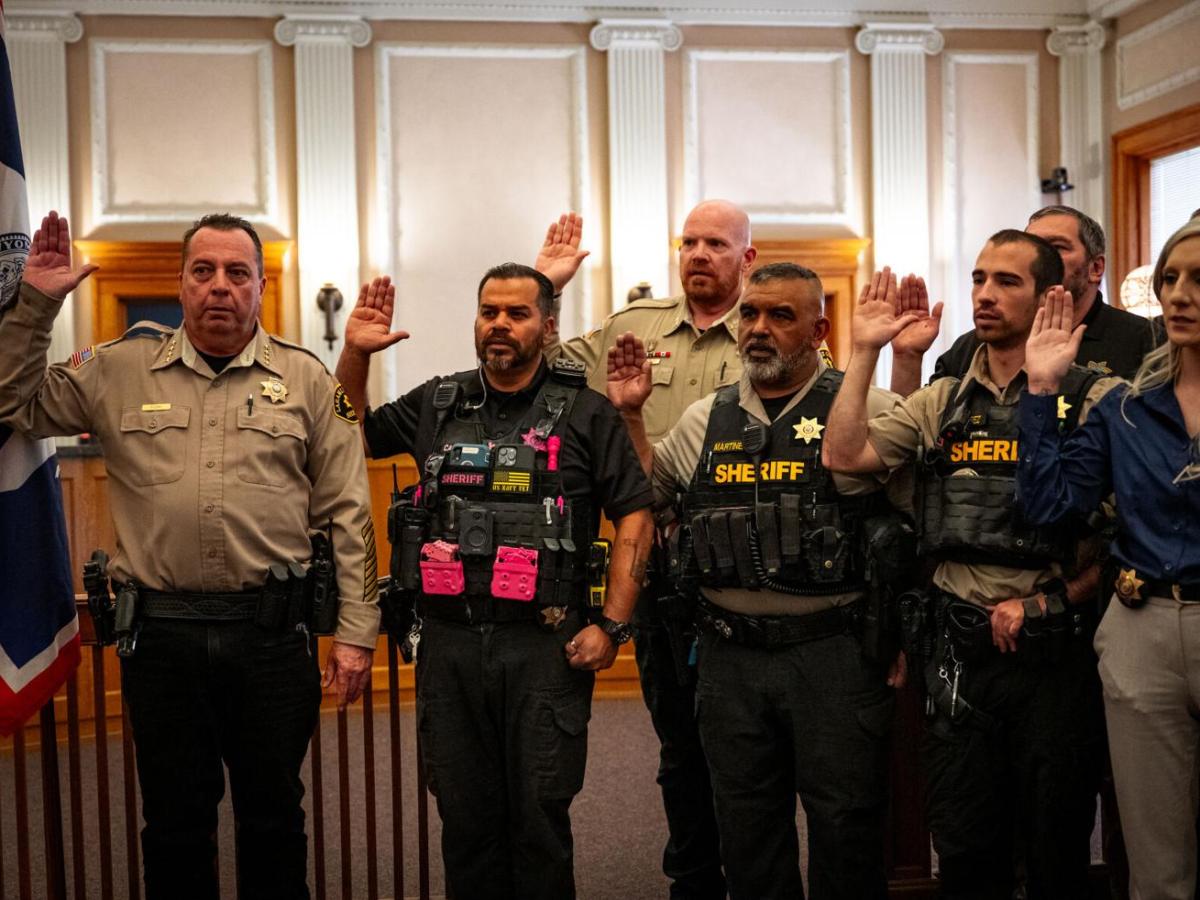
In May, a Cheyenne church, a nonprofit advocacy group and a Cheyenne barbershop, represented by the American Civil Liberties Union, sued the Laramie County Sheriff’s Office and Sheriff Brian Kozak over their 287(g) agreements with U.S. Immigration and Customs Enforcement.
The lawsuit accuses Kozak and his office of violating legally required procedures and exceeding their legal authority when entering into the contracts. The plaintiffs have suffered financial and other resource burdens as a result, the complaint states.
The group asked the court to void the 287(g) agreements, which are named after a section of immigration law and allow local and state law officers to perform some immigration enforcement under ICE’s oversight.
Kozak’s lawyer, Casper attorney Amy Iberlin, asked the court to dismiss the case, arguing that the plaintiffs didn’t follow notice requirements under the Wyoming Governmental Claims Act, making their case “fatally defective.” Iberlin also argued that the plaintiffs “lack standing” — that the contracts haven’t caused them “concrete, particularized, and legally protected injury” that would give them reason to sue.
In court Monday, Iberlin argued that some of the plaintiffs allege “only self-inflicted harms” caused by their “own, independent decision” to reallocate resources. “These are not harms inflicted by the sheriff or the sheriff’s office,” she said.
Laramie County District Judge Robin S. Cooley questioned how the 287(g) agreements could be blamed for causing injury, given that if the sheriff’s office didn’t have 287(g) agreements with ICE, then federal agents themselves might instead be in the community enforcing immigration.
ACLU Staff Attorney Andrew Malone argued that 287(g) is a “force multiplier,” and that ICE currently doesn’t possess the resources to have a constant presence in the community like sheriff’s deputies do. He noted that Carlos Montes, a former employee of one of the plaintiffs, was initially pulled over by a sheriff’s deputy for a broken taillight before he was questioned and detained for his immigration status. An ICE officer, on the other hand, doesn’t have authority to stop people for traffic violations.
Cooley mulled the request to dismiss the case at Monday’s court hearing, but didn’t immediately make a decision. ACLU Wyoming Spokesperson Janna Farley said that, if the case is dismissed under the Wyoming Governmental Claims Act argument, the organization will likely refile the lawsuit while following whatever procedures under the act that the court finds are required.


Ah the “broken tail light”, another unintended consequence of passing the MADD DUI laws in 2000. Yes law enforcement always “finds a way” to put “losers” in jail or to deport brown people with callous disregard. It is too bad journalists cannot connect the dots about law enforcement doing anything possible to keep their jobs and perks even as crime including drunk driving declines.
Darin Smith wanted a decimated Park and Forest Service to go after pot smokers on Federal Lands and now he is backing this Sheriff to ruin people’s lives over a tail light at the whim of some unknown bureaucrat instead of a Judge. Sad.
I used a little Ai to evaluate the impact of that 2000 DUI law and it’s changes in law enforcement have had a negative downstream impact on our rights and have allowed LEOs to wreck lives. In my opinion we voters have been sold fear and that is being used by these so called winners to act inhumanely toward humanity.
https://ghunter33.substack.com/p/human-condition-iii
Normal cooperation between federal and state law enforcement agencies is one thing. But formal agreements enlisting our local sheriffs offices to assist ICE in exchange for money is something entirely different and involves important policy issues that a community should debate before accepting. ICE has not approached our county commissioners about these agreements for a reason and has instead gone directly to our sheriffs, who should not have the authority to unilaterally deputize our local law enforcement to assist with this federal responsibility—especially given ICE’s incredibly aggressive and sometimes violent approach to “immigration enforcement.” Whether the judge upholds these agreements or not, our County Commissioners should get involved and require they only be authorized with their consent and after public discussion.