


The federal government broke environmental laws when it leased 179 square miles in Wyoming for oil and gas drilling, threatening already-diminished migrating big game herds, two conservation groups assert in a lawsuit filed this week.
The Wilderness Society and Wilderness Workshop sued Interior Secretary Doug Burgum, the BLM’s acting Wyoming Director Kris Kirby and others on Tuesday asking the U.S. District Court in Colorado to revoke leases sold in Wyoming and Colorado in June. The lawsuit claims the federal agencies violated their own regulations and a slew of environmental laws by prioritizing oil and gas development over all other uses on federal public land that belongs to all Americans.
The BLM sold leases on 102 parcels in Wyoming for $34.7 million, money that is split between the federal government and the state. Conducted under last year’s One Big Beautiful Bill Act, the sales collected revenue through a 12.5% royalty rate, discounted by the act from 16.67%.
The reduction makes “oil and gas development more economically attractive to industry,” the BLM said in June.
“[D]ecades-old safeguards … ensure we hand our public lands down to our children, not over to industry.”
Julia Stuble
The leases threaten the Baggs mule deer and Sublette pronghorn migration corridors and other big game migrations east of Rawlins, Julia Stuble, Wyoming state director for The Wilderness Society, said in a statement. The lawsuit also challenges acreage leased in northwest Colorado, making the total contested area 430 square miles.
“This administration’s energy dominance agenda shows a flagrant disregard for the rule of law and is trampling on decades-old safeguards that ensure we hand our public lands down to our children, not over to industry,” Stuble stated.
The suit asks the court to halt any action authorized by the challenged sales, set aside the sales themselves and return the issue to the BLM for reconsideration.
In selling the leases over an area more than twice the size of the District of Columbia, the BLM prioritized oil and gas development over all other uses, said Mike Freeman, one of the conservationists’ attorneys.
“That’s just flatly illegal,” he said.
Mischaracterization?
The fossil fuel industry disputes the lawsuit’s central claims.
The lawsuit “mischaracterizes the federal oil and natural gas leasing process, which is only the first step in development on federal lands,” said Ryan McConnaughey, interim president of the Petroleum Association of Wyoming. “Actual development requires additional review and approval by the BLM,” he wrote in a statement.
The BLM “does not have a comment at this time due to current litigation,” an agency spokesperson said in a statement.
The lawsuit, which spans 52 pages, alleges the BLM violated its own requirements to first lease areas outside the valuable migration routes and winter ranges. Pronghorn herds in the leased areas ranged from about 37% to 66% below objectives, the suit states, and mule deer herds ranged from about 25% to 62% below.
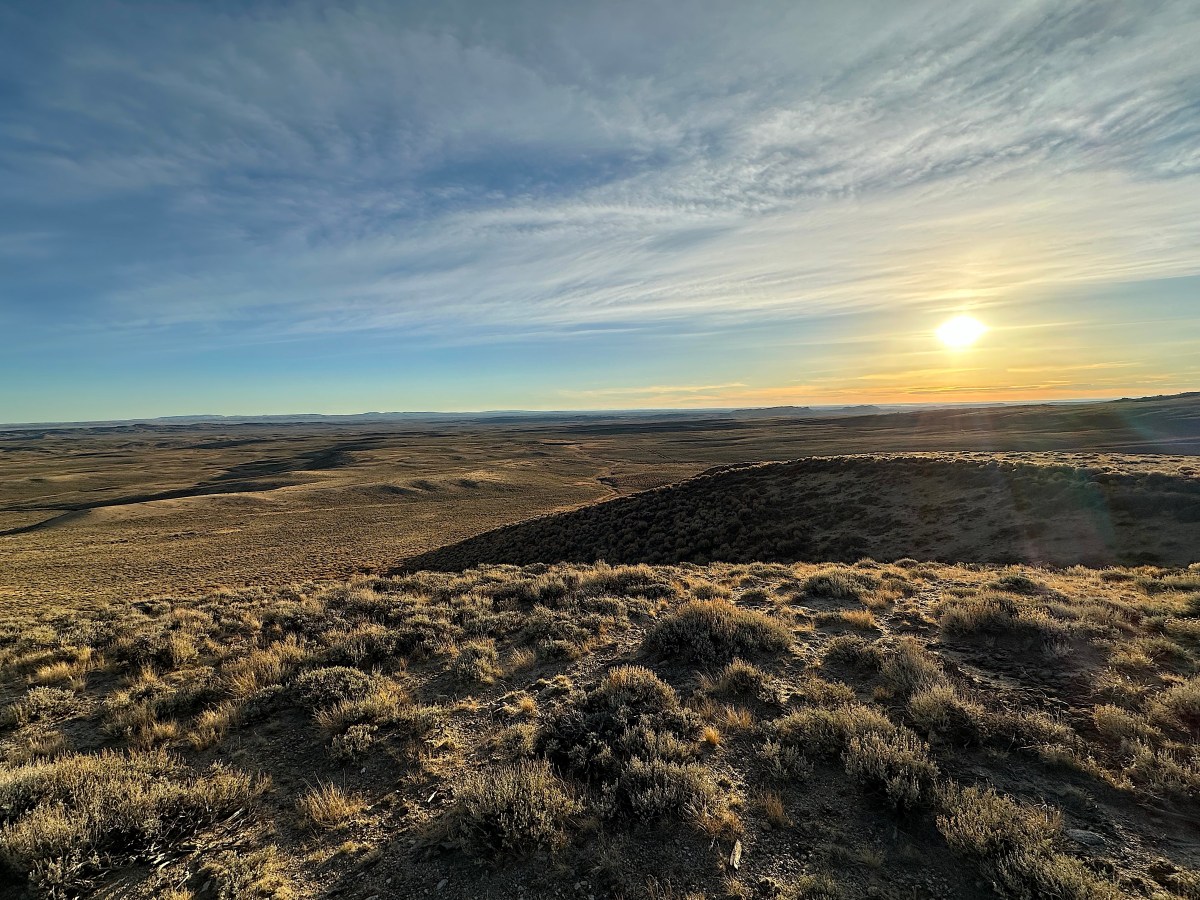

Energy development in migration corridors curtails habitat use by wildlife by about 39%, the lawsuit says, referencing one 14-year study of mule deer in Wyoming.
An environmental analysis authorizing the lease sale claims that established BLM plans have already dealt with the effects of drilling on wildlife, the lawsuit states. But those established BLM plans themselves say the effects will be addressed in the environmental review, which does not deal with them, according to the lawsuit.
A federal environmental law “squarely prohibits playing this sort of ‘shell-game’ with impacts analysis,” the conservationists’ lawsuit states.
Leasing gives developers contractual rights, are an “irreversible commitment” of land and resources, and cannot be properly mitigated once issued, according to The Wilderness Society and Wilderness Workshop.
McConnaughey disagreed.
“The June lease sale included environmental analysis and resource-protection stipulations, and BLM’s established process provides for additional site-specific review before development can occur,” he stated. “Calling that a ‘shell game’ assumes that every environmental question must be resolved at the leasing stage, regardless of whether the specific development proposal, location, timing or impacts are even known.”
Already gone
Freeman, the conservationists’ attorney, said the BLM is supposed to balance oil and gas development with other uses. “The Trump administration has been taking the opposite approach,” he said.
In his first term, Trump and his administration tried to ignore land management plans designed to protect greater sage grouse, he said. Courts invalidated numerous lease sales because of the administration’s faulty reasoning, Freeman said.
In one instance, a court ordered the federal government to refund $109 million for illegal oil and gas leases sold in sensitive grouse habitat in 2019. Those contested leases covered 3,906 square miles in Wyoming, an area larger than Delaware.
Energy development already has affected wildlife in the Equality State, Freeman said.
“They’re in trouble in large part because of oil and gas disruption,” he said.

Shocking, the oil and gas industry doesn’t believe extraction has any effect on the ecosystem. Hey Wyoming, someone explain to me why the antelope herd is 70% of what is used to be, even before the brutal 2022-23 winter. Do you want deer, elk and antelope in 20 years? Do something now.
Go here to see a map of the parcels:
https://eplanning.blm.gov/documents/?id=1bece1f2-a7f2-f011-8407-001dd80db62a&spid=3e1c2496-a8f2-f011-8406-001dd80ef717#