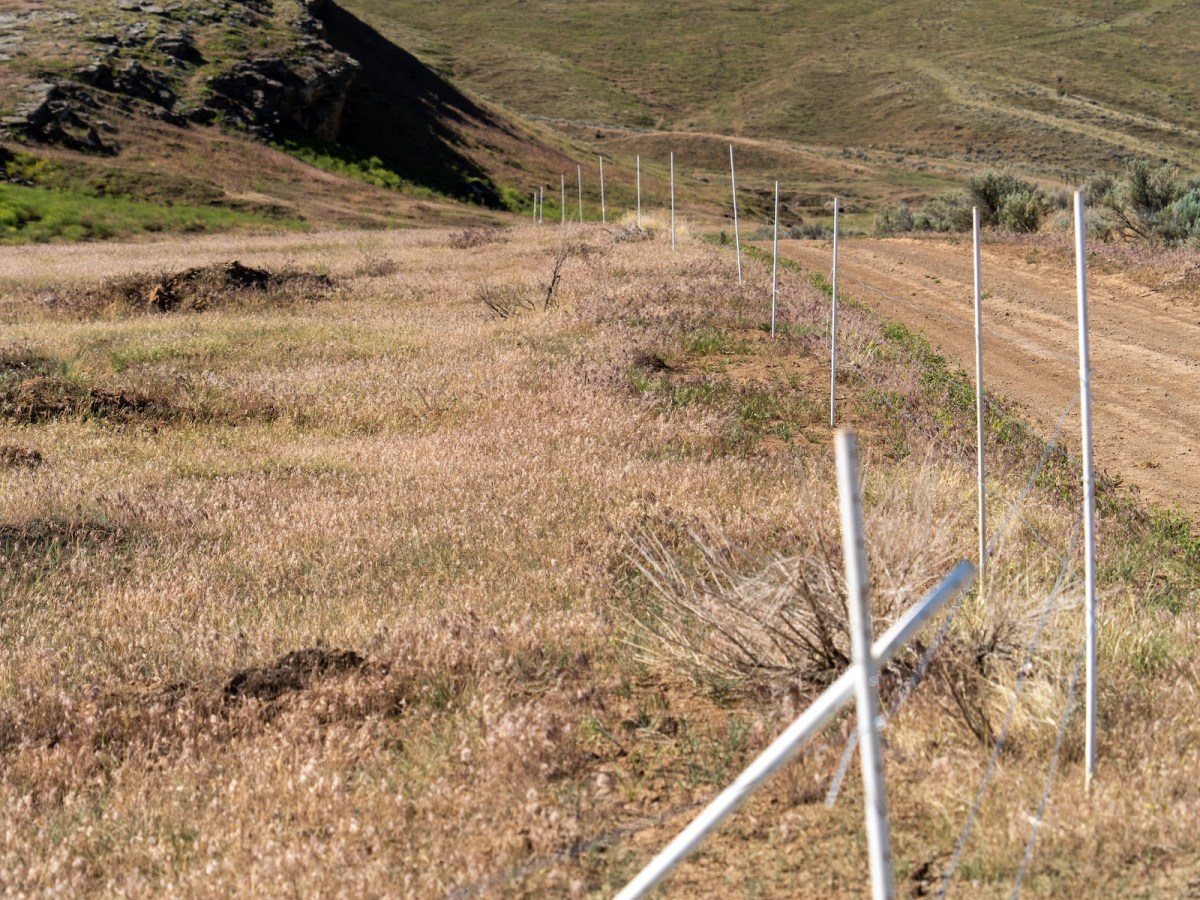
SOUTH PASS—Terrestrial habitat biologist Amy Anderson sounded pleased Thursday about the “huge, communitywide effort” to help the Wind River Range foothills recover from a wildfire that almost completely wiped out 25 square miles of the sagebrush ecosystem in a blink last August.

The Wyoming Game and Fish Department staffer also saw some promising ecological signs. The landscape surrounding her was impressively green, the result of drenching and welcomed rains that coaxed native wheatgrass and native wildflowers like prairie smoke and western yarrow into sprouting in October. 

Although optimistic, Anderson was also a realist about the immense challenge the area faces. For shrub-dependent species like sage grouse, the Weiser Knoll Fire caused almost total habitat loss, she said. Three known lekking grounds, where the birds mate, burned up. 

“We’re doing our best,” Anderson said. “But it’s going to be a long road to get this back to serviceable habitat.”
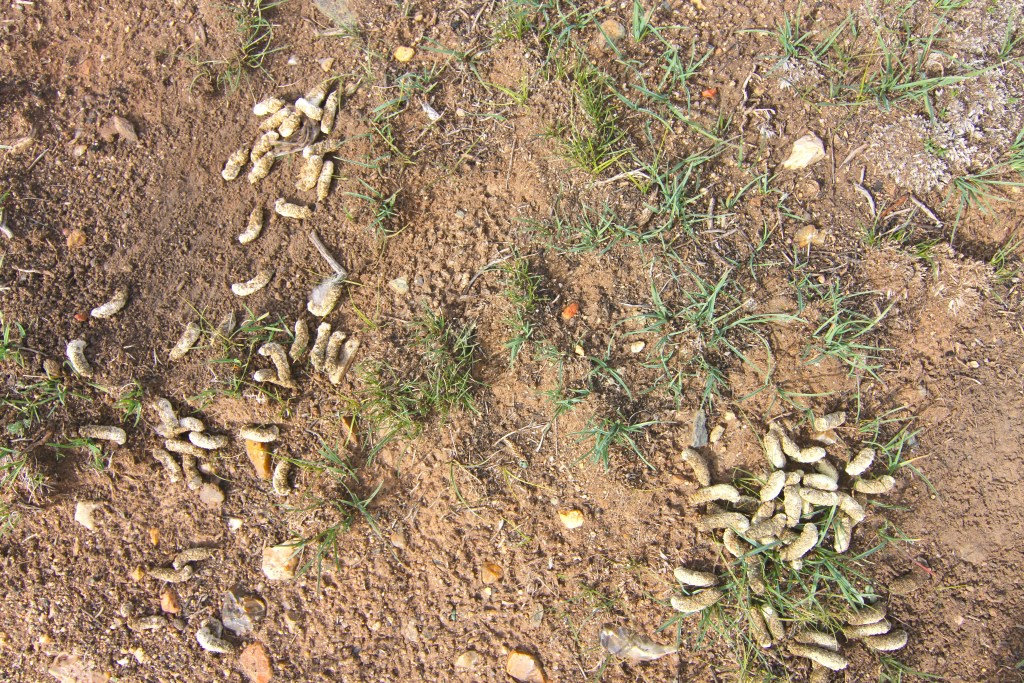
On the scale of wildfires across the West, Anderson said she knows Weiser Knoll was “small potatoes.” Still, it was a crushing blow to the native flora and fauna in this little corner of the southern Greater Yellowstone Ecosystem 

“It’s devastating,” Anderson said. “This was a lot of really productive sagebrush, bitterbrush habitat that a lot of wildlife used.” 

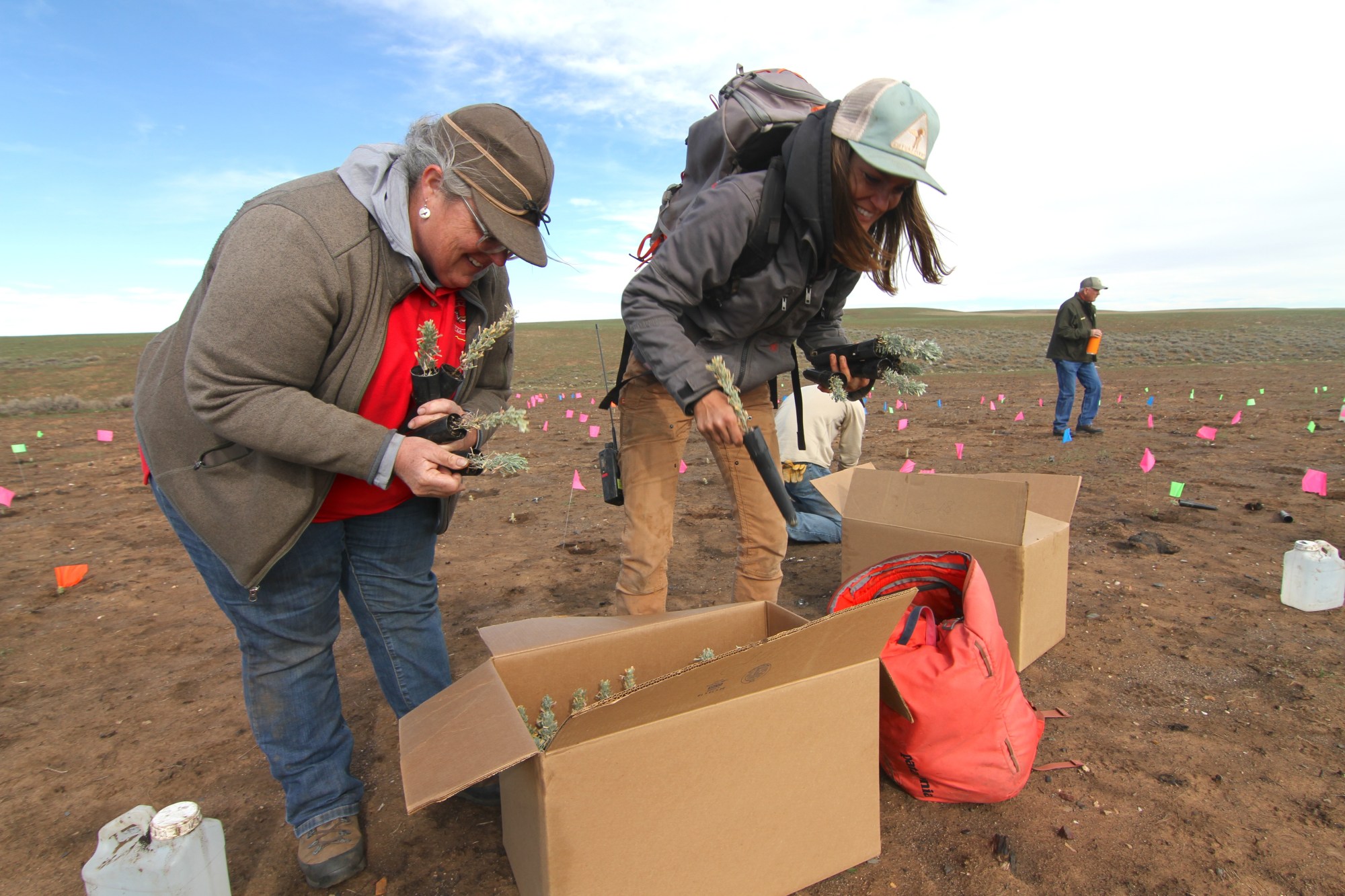
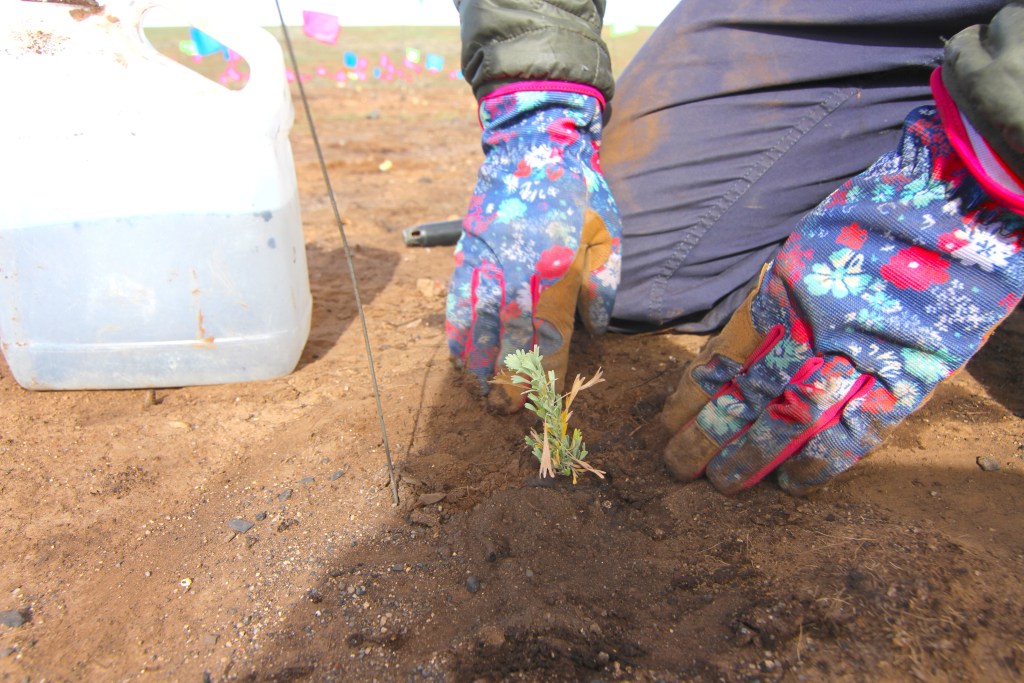
The task of getting it back, a painstakingly slow process, was unfolding all around her. Her Game and Fish colleagues were on their hands and knees planting seedlings, trying to help Wyoming’s big sagebrush stage its slow comeback. 

One seedling at a time, the young shrubs went into the dirt amid banter from biologists. Emma Freeland, a Bureau of Land Management biologist, scored an unexpected surplus of 7,000 seedlings from the Wyoming Honor Farm, which donated them to the fire scar recovery. 

While the Game and Fish crew planted away, other crews of state and federal employees were doing the same, out of sight in the South Pass hills. Wyoming State Forestry’s new Gannet Peak wildland firefighting team was out there planting seedlings, and so was a crew of Shoshone National Forest staffers. 
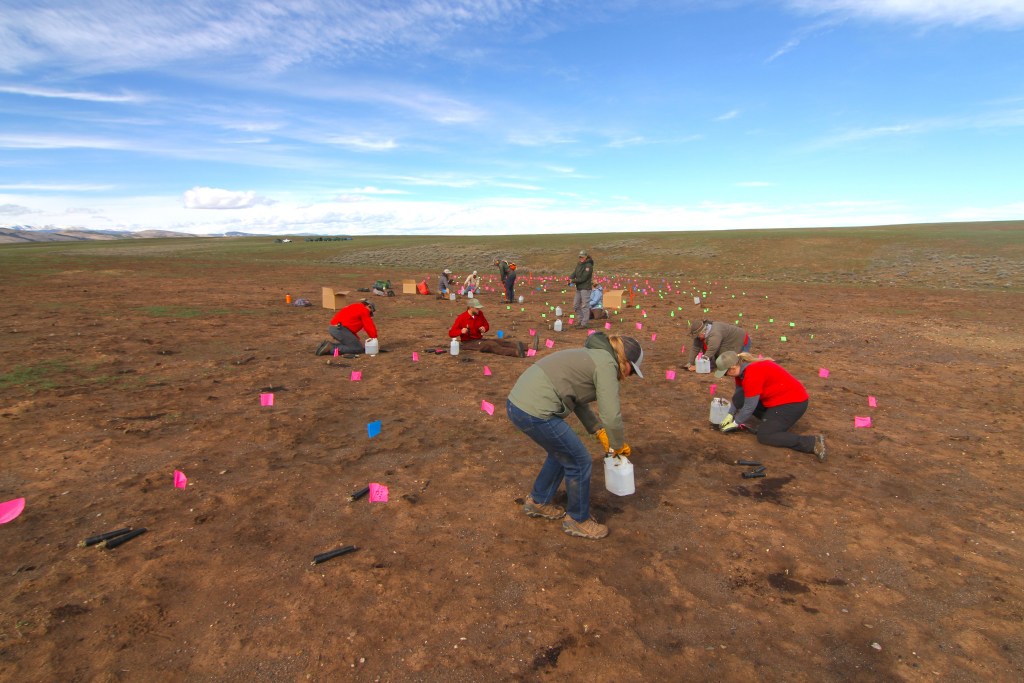
A crew of Wyoming Game and Fish Department volunteers plus Bureau of Land Management biologist Emma Freeland plant sagebrush seedlings on a slope where the dense sagebrush caused the Weiser Knoll Fire to burn hot, eliminating almost all vegetation. (Mike Koshmrl/WyoFile)

Altogether on Thursday, the three crews were on pace to plant nearly 2,000 seedlings. They went into the ground in “islands” of several hundred plants sited where the blaze burned the hottest, inhibiting other growth. 

There’ll be a lot more recovery work in the months and years ahead. Anderson helped pull together a Wyoming Wildlife and Natural Resource Trust grant application for $2 million to treat the area for destructive cheatgrass, which grows in thick lower on South Pass and in trace concentrations higher up. 

So far, at least on the fire scar’s western flank, the preponderance of regrowth has been native species. 

“Which is excellent,” Anderson said. “But the huge loss here was the shrubs. They were so productive, and fed a lot of wildlife in the winter.” 
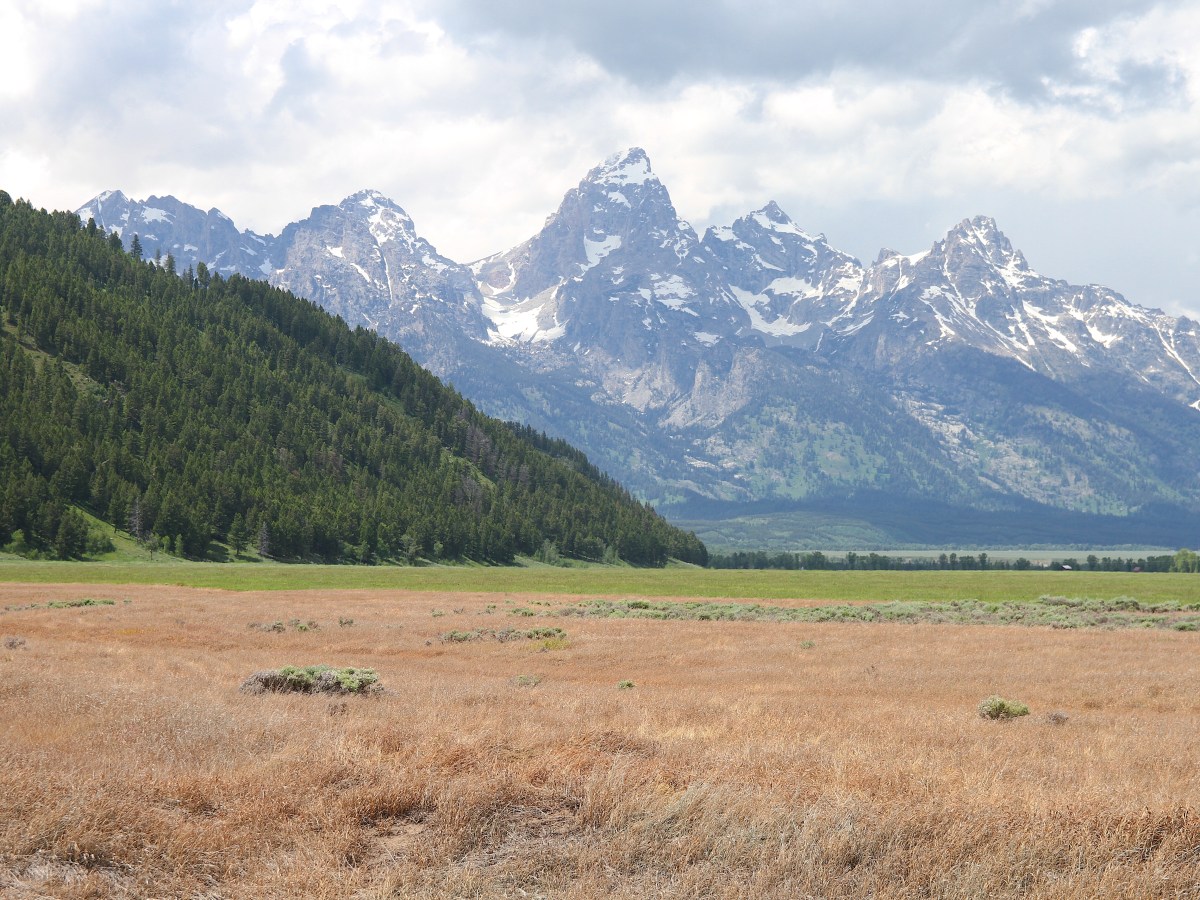
Mike Koshmrl reports on Wyoming's wildlife and natural resources. Prior to joining WyoFile, he spent nearly a decade covering the Greater Yellowstone Ecosystem’s wild places and creatures for the Jackson...

Leave a comment

WyoFile's goal is to provide readers with information and ideas that foster constructive conversations about the issues and opportunities our communities face. One small piece of how we do that is by offering a space below each story for readers to share perspectives, experiences and insights. For this to work, we need your help.

What we're looking for: 

  • Your real name — first and last. 
  • Direct responses to the article. Tell us how your experience relates to the story.
  • The truth. Share factual information that adds context to the reporting.
  • Thoughtful answers to questions raised by the reporting or other commenters.
  • Tips that could advance our reporting on the topic.
  • No more than three comments per story, including replies. 

What we block from our comments section, when we see it:

  • Pseudonyms. WyoFile stands behind everything we publish, and we expect commenters to do the same by using their real name.
  • Comments that are not directly relevant to the article. 
  • Demonstrably false claims, what-about-isms, references to debunked lines of rhetoric, professional political talking points or links to sites trafficking in misinformation.
  • Personal attacks, profanity, discriminatory language or threats.
  • Arguments with other commenters.

Other important things to know: 

  • Appearing in WyoFile’s comments section is a privilege, not a right or entitlement. 
  • We’re a small team and our first priority is reporting. Depending on what’s going on, comments may be moderated 24 to 48 hours from when they’re submitted — or even later. If you comment in the evening or on the weekend, please be patient. We’ll get to it when we’re back in the office.
  • We’re not interested in managing squeaky wheels, and even if we wanted to, we don't have time to address every single commenter’s grievance. 
  • Try as we might, we will make mistakes. We’ll fail to catch aliases, mistakenly allow folks to exceed the comment limit and occasionally miss false statements. If that’s going to upset you, it’s probably best to just stick with our journalism and avoid the comments section.
  • We don’t mediate disputes between commenters. If you have concerns about another commenter, please don’t bring them to us.

The bottom line:

If you repeatedly push the boundaries, make unreasonable demands, get caught lying or generally cause trouble, we will stop approving your comments — maybe forever. Such moderation decisions are not negotiable or subject to explanation. If civil and constructive conversation is not your goal, then our comments section is not for you. 

Your email address will not be published. Required fields are marked *