Opinion
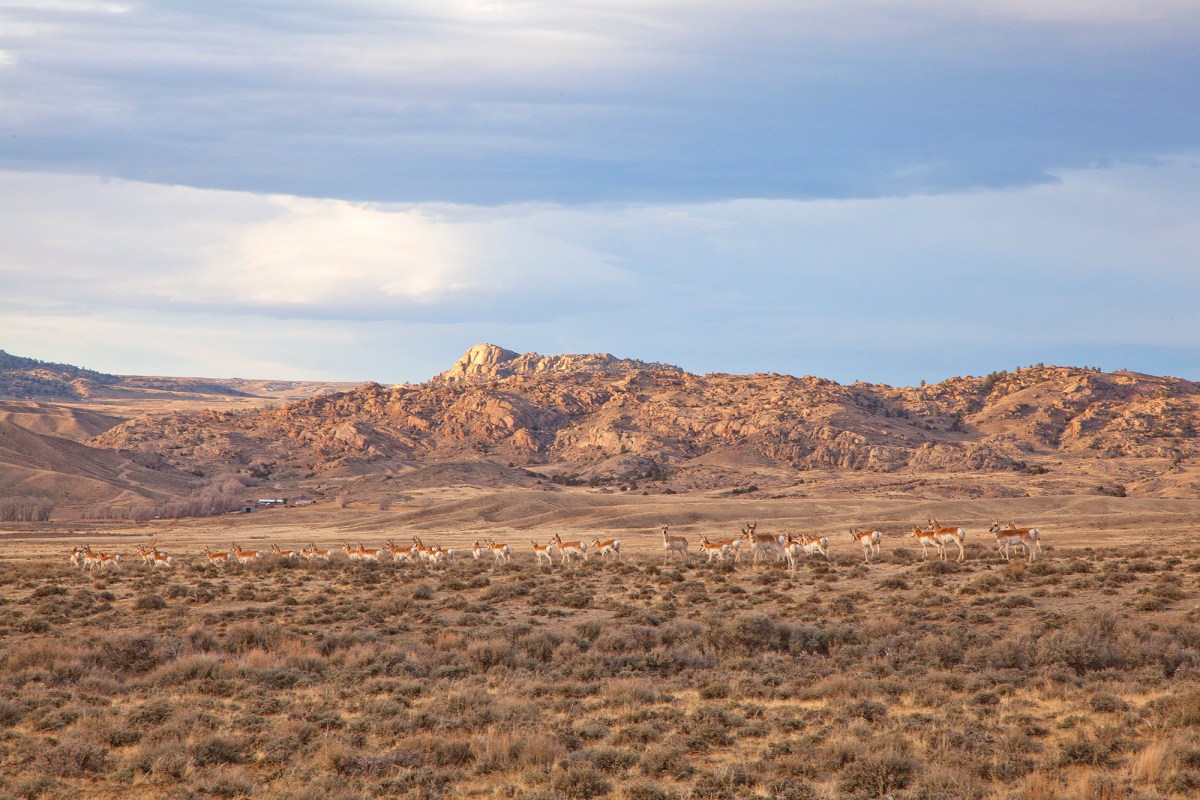
The horrific winter of 2022-23 has recently crept back into the news. The people who went out into the sage country south of Pinedale when the snow finally released its grip that year were appalled at the sight of scores of pronghorn carcasses scattered across the landscape. Estimates of the winterkill ranged as high as 70%. The Wyoming Game and Fish Department set the loss at roughly 50%, which meant that the weather had claimed something like 20,000 pronghorns in the Sublette Herd.
Some have said that it was the worst winter in living memory in that part of the world. I guess that depends to a marked degree on how long your memory is. The winter of 1983-84 was a ring-tailed screamer with temperatures in Pinedale as low as 37 below and average snow cover well over a foot. I won’t argue that it was worse than 2022-23 because I wasn’t there, but I think it’s fair to say it was comparable in its intensity and effect on big game, especially the smallest of our big game animals, the pronghorn.
In its most recent analysis of the Sublette Pronghorn Herd’s condition, Game and Fish commented: “Now three years after that winter [2022-23], better than average fawn ratios have let this herd start to recover and regain some of the ground that it lost during that winter.” The “ratio” referred to here is the ratio of fawns per 100 doe pronghorns in the herd. In the 2025 report, that ratio was 70 youngsters per 100 does, which is, as the biologists report, a ratio that may well result in more pronghorns in the Sublette Herd, assuming there isn’t another killer winter in our immediate future.
But the description of this ratio as “better than average” bothered me a little. I spent 30 years looking over the shoulder of the biologists who literally risk their lives collecting data on Wyoming’s big game herds, and the idea that 70 fawns per 100 doe pronghorns was “better than average” strikes me as more than a little myopic. This would be nothing more than a quibble among professionals — except that the fawn-doe ratio reflects a lot of ecological, physiological, meteorological and geographic variables that are particularly critical to the well-being of pronghorns. When the ratio is low, it whispers of management problems that have little or nothing to do with the length of a hunting season or the number of permits issued.
The winter of 2022-2023 was a classic example of the effect weather can have on a pronghorn herd. It was exceptionally long, exceptionally cold and exceptionally snowy. Pronghorns lose weight during the winter, even a mild one. How many survive depends largely on the amount of fat they have when the first storm hits, how much forage they can find to augment their fat stores and the amount of energy they lose to the cold as they look for that forage.
The colder it gets and the longer the cold lasts, the more energy they need. The more energy they burn finding forage, the less they have to keep warm. In 2022-2023, nearly half the adult pronghorns in the Sublette Herd lost more energy than the combination of forage and fat could furnish — those animals died.
There is a lingering side effect to the winter energy audit. Pronghorns mate in September and early October, which means that does are carrying the next generation through the winter. In the most extreme winters, some does will resorb their growing embryos in a desperate attempt to survive. The does that deliver their young the next spring may not be able to produce enough milk to support the newborns, and the newborns themselves may be unusually small and weak. The fawn-doe ratio drops after a bad winter, reflecting the loss of reproductive potential.
Historically, there has often been a tiny silver lining in the black cloud of a killer winter. Deep snow and extended cold often result in a wet spring, which brings a smorgasbord of forage for the pronghorns that have survived. In addition, there is less competition for that forage since a large part of the herd has been erased. The bountiful supply of groceries allows adult does to fatten up for the fall rut, and the stored fat helps them survive the winter with their fawns safe in the womb and well-nourished with milk after birth the following spring.
In such years, nearly every doe will bear twins. Biologists who have watched pronghorn populations recover after a bad winter call it “the bounce,” an increase in population almost as startling as the reproductive potential in a population of rabbits.
The winter of 1983-1984 was one of the epic killers of the last century. The population estimate for the Sublette pronghorn herd dropped by more than 13,000 animals after that winter. The fawn-doe ratio in the fall of 1983 was 72:100. In the fall of 1984, it dropped to 52:100 because the does in the herd were in such poor condition coming out of the winter. A year later, the ratio rose to 72:100. In 1986, it climbed again to 84:100. In 1987, it hit 90:100. The bounce.
The veteran biologists who have followed the ups and downs of Wyoming’s pronghorn population for decades and documented these meteoric recoveries are expressing concern these days.
“The bounce,” they say, is gone.
Editor’s note: This is the first in a two-part look at the Sublette Pronghorn Herd. Check back tomorrow for Part 2.