

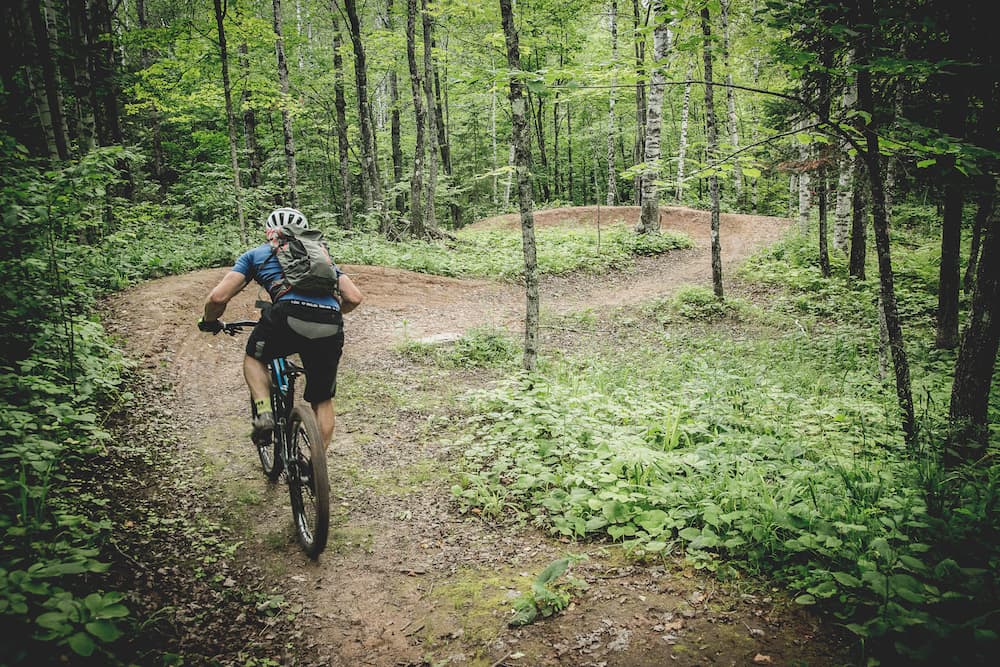
Timidly banking my fat bike into a snow-covered turn on the single track, I thought, “People were right, I do love Duluth.”
I’d arrived in Duluth, Minnesota, in late January for a board meeting. When I thought of Duluth, I thought of recreation, probably in part because it won Outside Magazine’s annual “Best Town Ever” contest in 2014. I did not know as we nodded to the surprising number of people out winter biking on the trails, that the award officially marked a new identity for the town. Duluth long was known for iron mining, timber harvesting and industrial manufacturing; then for its sudden collapse into an economic bust.
Its story has similarities to the course Wyoming is navigating as coal demand slows and companies like Arch Coal, Alpha Natural Resources and Peabody Energy file for bankruptcy and leave hundreds of workers jobless.
When iron mining stopped and manufacturing plants closed, instead of clinging to its industrial identity hoping for another boom, Duluth reinvented itself, said Hansi Johnson, director of recreational lands with the Minnesota Land Trust. While recreation isn’t the only thing that saved Duluth, it played an important role in revitalizing its economy and redefining its identity.
Many other cities in the Rust Belt wilted. Duluth is thriving. This week, Peaks to Plains looks at how Duluth became a bastion of recreation. Next week we’ll examine similar efforts underway in Wyoming.
Duluth was once one of North America’s richest cities, sending timber down the St. Louis River to lumber mills, mining iron in the nearby hills and manufacturing steel in the city.
After World War II’s demand for machinery dwindled and most of the ore had been mined from the mountains, the need for industrial manufacturing declined. Duluth entered its economic downturn in the 1960s. By the 1980s, Duluth was considered one of the “most distressed cities in America,” according to an annual survey by the Economic Innovative Group. The population declined by more than 20,000, from a peak of nearly 107,000 in 1960 to an estimated 86,265 residents in 2016, according to the U.S. Census Bureau. Minnesota Public Radio reported unemployment reached about 20 percent in the depth of the city’s downturn.
Someone placed a billboard on Interstate 35 reading “Will the last one leaving Duluth please turn out the light.”
But instead of hoping those industries would return to their glory days, a group of visionaries saw another future.
When Johnson moved to Duluth in 1989 from southern Minnesota to attend school, he could name everyone doing anything interesting outside, whether it was paddling, biking, climbing or fly fishing.
It was a small group. Some of the activity was hush-hush as people started climbing without permission in the abandoned rock quarry, or riding through spaces where manufacturing once occurred. Duluth had thousands of acres of open space once slated for development, or abandoned by industry.
“We were playing in those spots all the time,” Johnson said.
Word spread about Duluth’s underground recreation scene and the ranks of participants grew. But it took a concerted effort to make recreation a priority in the city. The effort started with a group of mountain bikers who dreamed up an idea for a 100-mile trail system that would connect thousands of acres of park and open space.
“We’re not Jackson Hole. We’re not Vail. We’re not a place that has these in-your-face mountain experiences, but that doesn’t mean we can’t have really awesome and interesting things to do,” Johnson said.
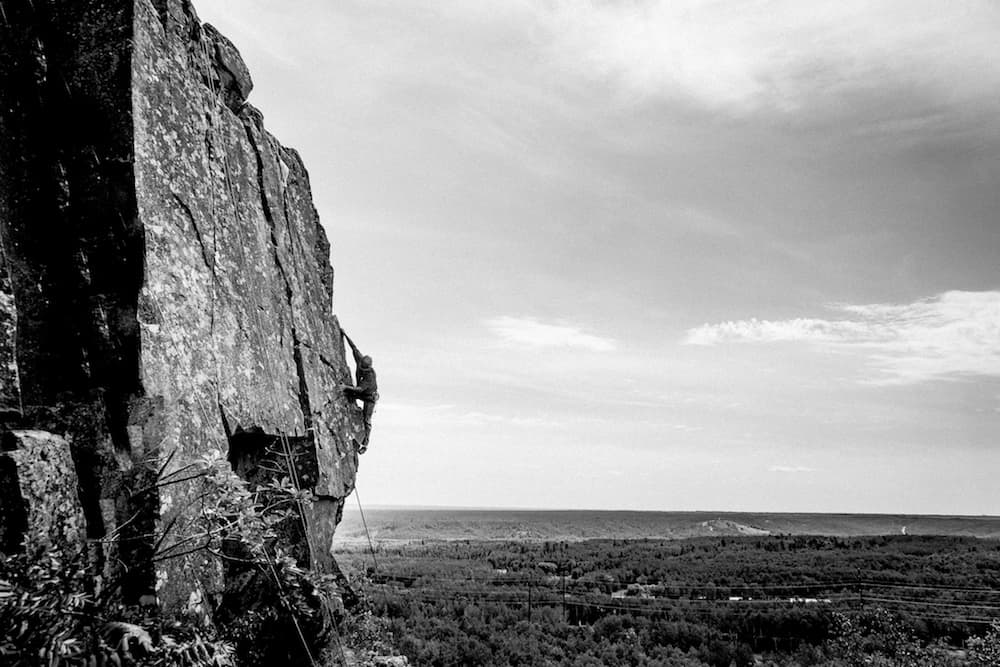
The mountain bikers started working on what is now called the Duluth Traverse in 2008, the year Duluth-native Don Ness became mayor. About 90 percent of the trails are finished and it is only one of six ride centers in the world to receive a gold rating (the highest) from the International Mountain Biking Association.
Ness saw potential in the abandoned sites once slated for development around town. He saw a chance to make Duluth an Asheville, North Carolina, or a Bend, Oregon, a small city with outdoor recreation that would draw people regionally.
He started investing city funds and staff into helping with the Duluth Traverse and $20 million for other recreation projects as an effort to revitalize the economy.
There was pushback at first, especially when Ness was quoted as saying “We’re not going to chase smokestacks any longer,” something some long-term residents found offensive. Some held out hope industry would return.
Ness said he’s proud of the city’s industrial and mining history, but the city needed to diversify its economy and build a new identity.
“It’s a difficult story to tell, because it’s not a ‘Here’s a dollar, we’re spending it on this,’” he said. “It’s, ‘Here’s a dollar and we are going to invest it in a concept and in the long run it’s going to benefit us economically.’”
He thought that by creating a community where people wanted to live, Duluth would attract more businesses and grow the tax base and economy.
That is the focus of the city today, said Emily Larson, the city’s current mayor who took office after Ness in 2016.
Larson arrived in Duluth from St. Paul, Minnesota, about 25 years ago to attend college. There had long been recreation opportunities in the area. Duluth is situated on Lake Superior and is a gateway to the Boundary Waters Canoe Area Wilderness. They wanted some of those recreationists to see Duluth differently.
Never miss a Peaks to Plains — subscribe to WyoFile’s free weekly newsletter
“It was more that we decided we aren’t a pass-through community, we are a destination,” she said.
Larson said she knows a great bike trail doesn’t pay someone’s mortgage, but it might lure a business to town.
“When people have options of where they can live, they choose communities where they have chances to be active,” she said.
The biggest changes in Duluth aren’t the trails or new people in town, Larson said.
“It’s optimism,” she said.

