



MOOSE, Wyoming—Second Gentleman Douglas Emhoff announced Wednesday a $44 million investment in National Park Service climate-resilient conservation projects, including protection of troubled whitebark pine.
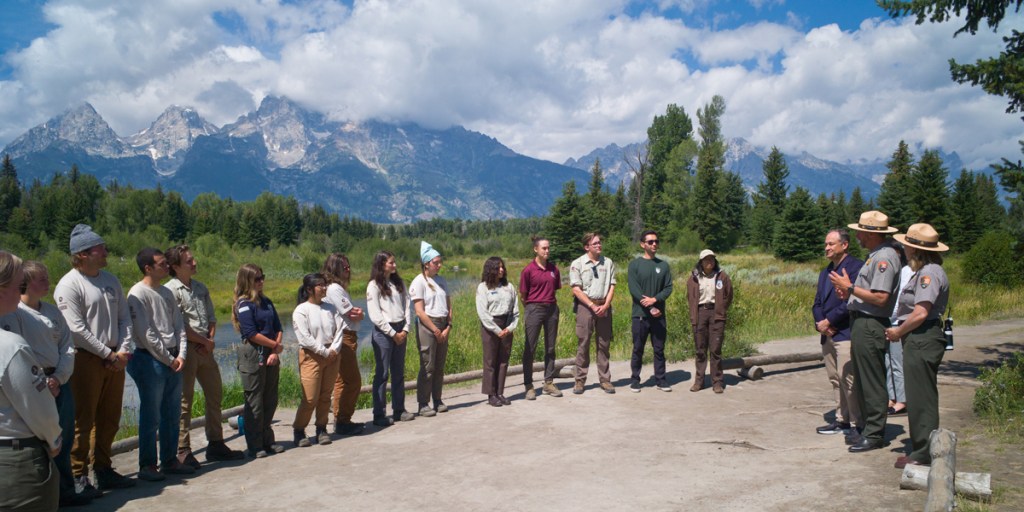
With the Teton Range as a backdrop, Emhoff said President Joe Biden’s new earmark for his “Investing in America Agenda” will “improve our parks, protect endangered species, provide clean air and water for all Americans.” The funds will enable 43 projects to make parks and communities in 39 states, Washington D.C., Puerto Rico and the U.S. Virgin Islands more resilient to climate change.
“Since day one of our administration, President Biden and my wife, Vice President Harris, have been fighting back against this climate crisis,” Emhoff said amid a sea of sagebrush at Antelope Flats. A climate crisis is ongoing everywhere, he said.
“We must act now before it’s too late — too late to preserve this incredible, iconic landscape of Grand Teton.”
Second Gentleman Douglas Emhoff
“There’s no disputing it,” Emhoff said. “There’s no denying it.”
He pointed to wildfires “happening all over the country,” to rising tides, flooding and extreme heat.
“We must act now before it’s too late,” he said, “too late to preserve this incredible, iconic landscape of Grand Teton.”
Sagebrush restoration
In addition to whitebark pine, a once-major part of the threatened grizzly bear’s diet that’s widely diminished by infestation and disease, the funding will help restore sagebrush across parts of Antelope Flats that were cultivated into hayfields by now-gone pioneer homesteaders.
Emhoff and Shannon Estenoz, the Department of Interior’s assistant secretary for fish and wildlife and parks, visited historic ranch buildings on the park’s Mormon Row, where they viewed the monoculture hayfields that will eventually be replaced by Artemisia tridentata.
“Sagebrush provides food and shelter for the animals who reside in Grand Teton,” Emhoff said. In the park, the investments will build on decades of successful sagebrush and whitebark pine restoration partnerships, Estenoz said.
Yellowstone and Grand Teton will receive $712,665 this year from the Inflation Reduction Act and Bipartisan Infrastructure Law for restoration and climate-change impacts, according to information provided by the administration.
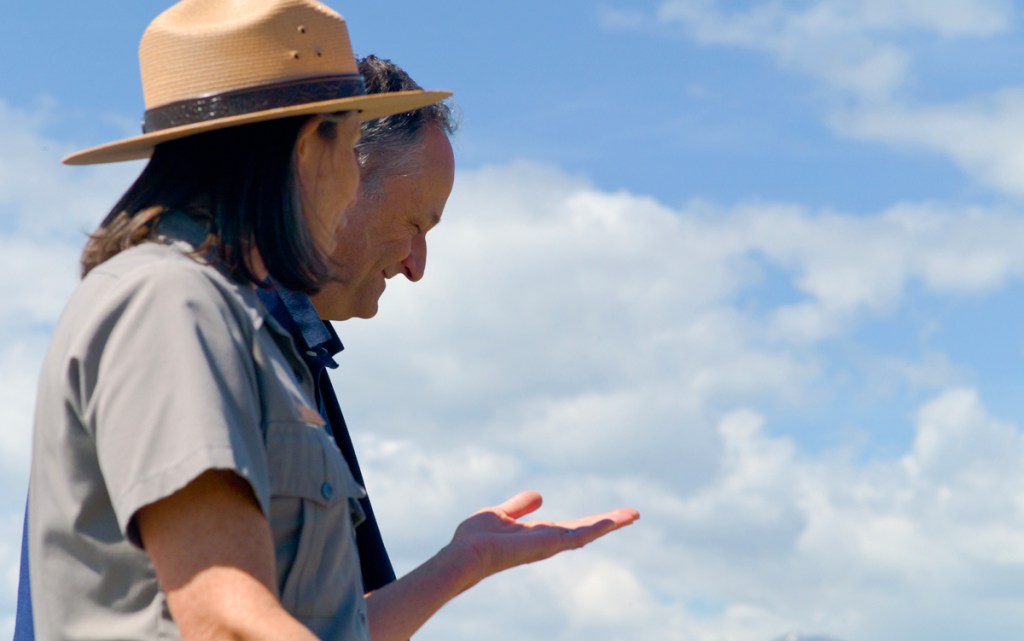
Sagebrush restoration at Antelope Flats “is fundamental to our mission to preserve this place for future generations,” said Laura Jones, Grand Teton vegetation ecologist, who guided Emhoff through the sagebrush landscape, where he stooped to smell the flowers. Among the species that would benefit is the greater sage grouse, a bird that’s severely diminished in Grand Teton and Jackson Hole.
“The human connections to the plants and wildlife found here go back at least 11,000 years,” Jones said. The restoration effort will generate native seeds and plants and provide workers to accomplish the tasks.
The funding will expand and accelerate sagebrush restoration to “a landscape scale,” Jones said. “We are making this core sagebrush habitat area more resilient in the face of climate change,” she said.

Just think what $44 million or so could do for a certain sovereign nation’s southern border that she is supposed to be responsible for vs. promoting the globalist climate agenda.
“Second Gentleman…” How silly. This aint s’posed to be a monarchy.
Thank you Mr Emhoff. Thank you Augus for great reporting.
I imagine this reporter had to bite his tongue, being right next to the concrete and asphalt airport monoculture in prime sage grouse habitat.Those rascally hayfields. Quality environgelic reporting.