


In 2024, Wyoming became one 15 states to opt out of a new federal program to supplement the meals of needy children during the summer months. In 2025, the Legislature opted out again when it killed a bill to sign up the state for the SUN Bucks program. And in March, lawmakers once again declined — this time quashing the governor’s $1.8 million budget request to administer it.
Citing a “vital” need for healthy meals all year round, Gov. Mark Gordon on Wednesday announced one-time funding secured to implement SUN Bucks in Wyoming this summer.
“While the Legislature was unwilling to make sure our young children get food throughout the summer months,” Gordon said, “we have stepped up to ensure it happens.”
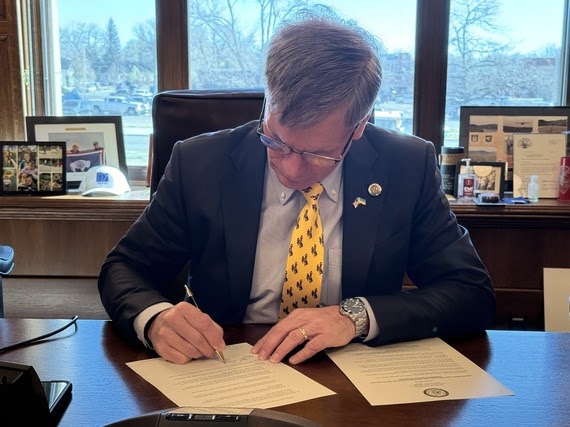
The governor signed Executive Order 2026-02, which directs the Department of Family Services to develop and implement a Wyoming SUN Bucks program starting in June.
The federal grocery benefit loads a debit card with $120 per child to buy groceries during the three-month summer, the idea being to fill the gap when free and reduced-price lunches aren’t available because school isn’t in session.
Critics of SUN Bucks — who in Wyoming have included Superintendent of Public Instruction Megan Degenfelder and Wyoming Freedom Caucus lawmakers — have likened the federal assistance to a welfare program in disguise.
Supporters, meanwhile, say it can add one more layer of crucial support for hungry children in a state where one in six people experience food insecurity.
Summer supplements
The Biden administration launched the USDA-funded summer program in 2024. The program requires states to pay 50% of administrative costs. School-aged children whose families receive SNAP or other income-based benefits are automatically enrolled when a state participates.
Summer electronic benefit transfers reduce child hunger and improve diet quality, according to evaluations of a multi-year demonstration project cited by the agency. The project decreased the number of kids with very low food security by about one-third and supported healthier diets, USDA said.
Degenfelder, however, said she preferred to improve Wyoming’s existing program rather than sign on.
“I will not let the Biden administration weaponize summer school lunch programs to justify a new welfare program,” Degenfelder told WyoFile in early 2024. “Thanks, but no thanks. We will continue to combat childhood hunger the Wyoming way.”
Along with participating in the National School Lunch Program, a federally assisted program that provides low-cost or no-cost lunches to children living in eligible areas each school day, Wyoming also participates in the federally assisted Summer Food Service program.

The summer program feeds kids by opening meal sites — hosted by sponsors like schools or camps — where children can get a meal. Meal sites are located in areas where the local school or census block has a population with greater than 50% eligibility for free and reduced lunches.
In 2025, there were 88 Wyoming summer sites in 32 communities across 18 of the state’s 23 counties under the program, according to the Wyoming Department of Education.
Due to distance, working parents’ schedules or other factors, not all children can reach those meal sites, food security advocates say.
“The reach of such programs is limited, and the program does not allow for choice in the same way as the SUN Bucks program, which is intended to supplement — not replace — the summer feeding program,” according to the American Friends Service Committee, which advocates for nationwide SUN Bucks participation.
The number of states participating in SUN Bucks has grown to 38.
Lacking legislative support
After the Wyoming House killed House Bill 341, “Summer nutrition assistance for children,” in 2025, First Lady Jennie Gordon appealed to lawmakers to reconsider. Gordon has made food security a top priority in recent years with the Wyoming Hunger Initiative.
“Here’s the reality: 35,000 of our kids who face food insecurity will do so in the summer,” First Lady Gordon told members of the Legislature’s Joint Education Committee. “It’s not their fault, their families are struggling and can’t pay bills, and we can debate why that is or how we can get those families back on track, but in the meantime, those children should not be left [hungry].”
When Gov. Gordon unveiled his original budget proposal in November, it included a request for $1.8 million of state funding for SUN Bucks. He reiterated the request in his February State of the State address, asking: “What kind of people are we if we won’t feed our kids?”
Though it spurred rigorous debate, the request did not gain enough support to pass.

Representing common opposition stances, Rep. Scott Smith, R-Lingle, questioned the role of the government to take care of people from cradle to grave and wondered where social safety net expansion ends.
“I think there’s an element where communities have already taken this up,” Smith said during House debate on the budget request in February, referring to school programs and food banks. He also warned about the consequences of entitlements growing too generous.
“There’s an element of pride that comes when a parent can go to work, take care of their child, feed their child,” he said. “When they get a handout, we take that away from them.”
After the Legislature declined to fund his request, Gordon went to work on an alternative for implementing SUN Bucks. The executive order he signed Wednesday directs the Department of Family Services to develop a plan consistent with federal guidelines that will reach all 23 of Wyoming’s counties.
The program will allow participants to purchase foods based on SNAP purchasing rules, according to Gordon’s order. It will run from June through August.
“We have been able to cobble together a one-time-only, bare bones effort, using current Wyoming Supplemental Nutrition Assistance Program (SNAP) data and Department of Education data, to ensure current eligible children will be fed,” Gordon said in a press release.
Gordon’s staff did not supply WyoFile with an estimated cost and source of the funds by press time.
First Lady Gordon championed the effort in a release. “Expanding access to nutritious food for families in our rural communities makes our entire state stronger,” she said.

What the heck is Ms. Degenfelder talking about? How did feeding children become any kind of weapon? And what state sponsered program is she talking about? I don’t recolect the state coming up with any supplimental food program for children during the summer. Is this going to be in Ms. Degenfelder’s stump speach, that she is for denying food to hungry less fortunate children in the summer? And where are communities in Wyoming taking this up Rep. Scott Smith? Give us some details instead of pulling this garbage out from who knows where. There are pleanty of parents that go to work and don’t come home with enough to feed their children, and they must feel swell watching there kids go hungry.
It’s disheartening to me that Degenfelder, the head of the WDE and member of the Catholic faith, gladly throws out non-sensible rhetoric rather than supporting an initiative to feed children.
That’s why I won’t vote for her. I won’t!
Hopefully the freedumb caucus members and supporters are losing sleep over hungry kids getting fed….
Unfortunately, their morals and conscious would make them think withholding food from children is just and noble
Bonnie: Very true. I can hear the FreeDumb Caucus types now pompously bloviating. But if you give children food, they will just get in the habit of eating every day.
Kudos to Gov. Gordon and first lady Gordon.
Thanks again Governor Gordon for being one of the few decent, old school Republicans left in Wyoming. This is how Wyoming used to be run before so many out of state, far right nut-jobs moved here and ran for office.
What hypocrisy by these sycophantic republicans. Because bill was initiated by Biden, they let kids go hungry? What type of human does this atrocity? I thank the Governor; I abhor these republicans.
Finally, a decent executive order.
In the wealthiest country of the world government should absolutely be a part of the social safety net. Thanks to the Governor and First Lady for stepping up when our Wyoming Legislature fails to deliver. Don’t forget this in the upcoming primary elections and also remember what Megan Degenfelder would likely do if she is successful in her bid to be governor.