


Last winter killed most of western Wyoming’s mule deer.
That prompted calls to kill predators, and wildlife managers listened — even though there was little scientific support to prove it would work to bring deer back.
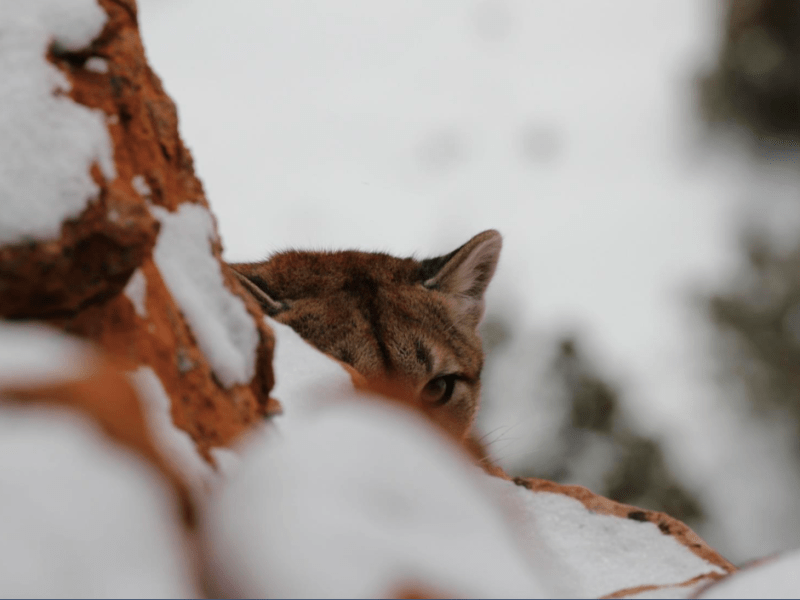
Because of speculation that mountain lions would hold the deer population low, more were targeted — and killed — in the regions where winter hit mule deer the hardest.
There were outfitter calls to kill more black bears, too, though the Wyoming Game and Fish Department did not update its quotas to grant that request, citing the already heavy bear harvest.
The ecological and political implications of the historically severe winter that lasted well into spring 2023 still linger. For another predator species — coyotes — the implications remain as well.
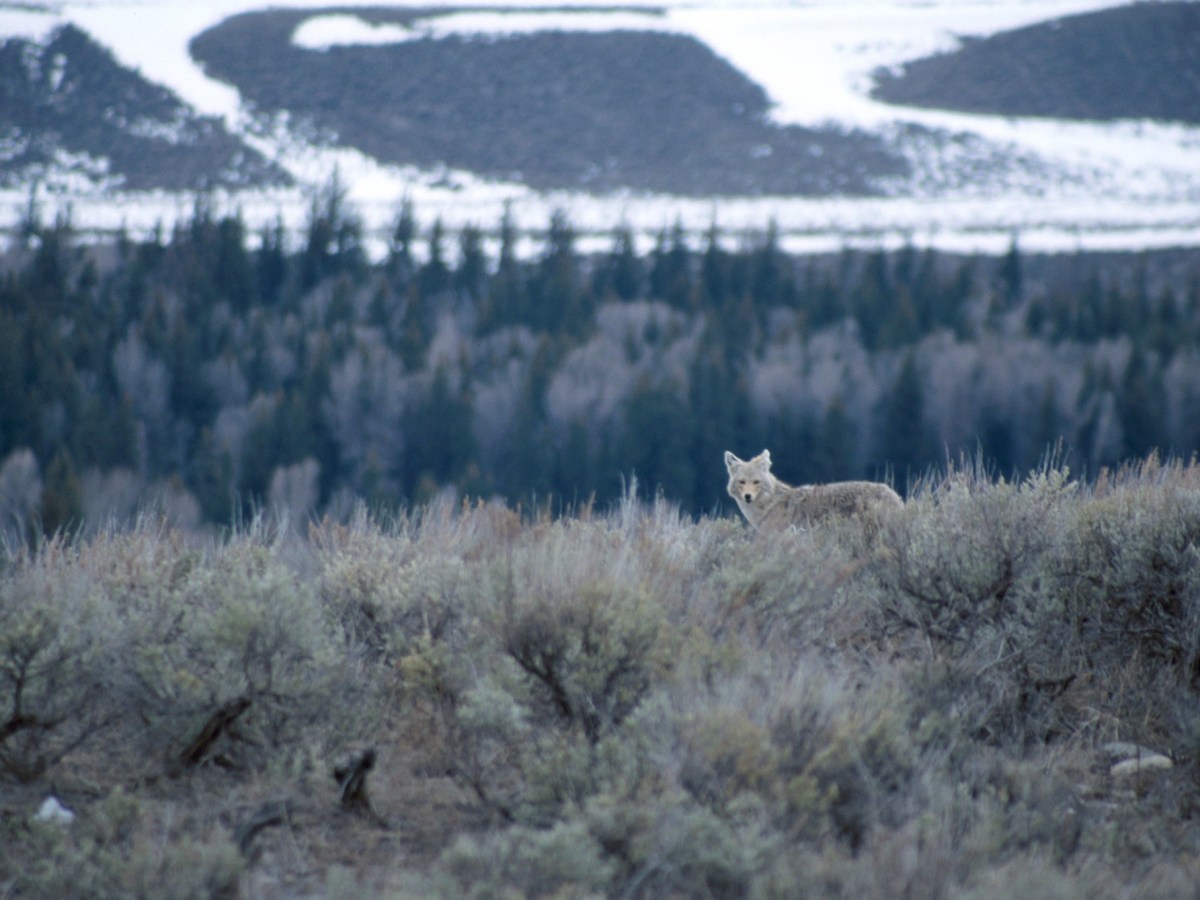
Meeting Jan. 16 in Cheyenne, the Wyoming Game and Fish Commission approved a $200,000 sum requested by wildlife managers to supplement existing aerial gunning of coyotes in western and south-central parts of the state. Like lions and bears, coyotes dine on mule deer, especially fawns.

“Last spring we recommended it would not be the time to go do it because we had [deer] coming through the winter in such poor condition,” Game and Fish Chief Warden Rick King told the commission. “We recommended that we wait and reevaluate that this winter, and we’ve done that. We feel that this would be the time, if any, to do predator control work action like this.”
Although it hasn’t been decided where and when the funds will be expended, King did specify that the funding would be routed to the federal government: specifically, a branch of the U.S. Department of Agriculture known as Wildlife Services.
“We would contract with Wildlife Services to do the work,” King said. “Our local managers would identify key fawning areas to go do that work. They’d get started this spring, and implement that control action before, during and potentially just after the fawning.”
The Wyoming Game and Fish Department putting its budget, which is funded through hunting and fishing license revenue, toward aerial predator gunning is nothing new. The $200,000 will come from the agency’s discretionary pot of money, Game and Fish director Brian Nesvik said in the meeting.
Game and Fish has routinely helped fund the Wyoming Animal Damage Management Board, which had an overall budget of $4.2 million last year — a record. Projects the wildlife management agency have paid for include research, but also special predator-killing efforts aimed at protecting species like mule deer, pronghorn and sage grouse.
There’s also precedent for extra Game and Fish spending on coyote killing in the aftermath of severe winters that hit ungulate herds hard. After the big winter of 2016-’17, the agency spent $100,000 to shoot coyotes from aircraft on mule deer fawning grounds in the Little Mountain area and southern Wyoming Range. That effort, also contracted to Wildlife Services, yielded 177 dead coyotes, which pencils out to $565 per canine.
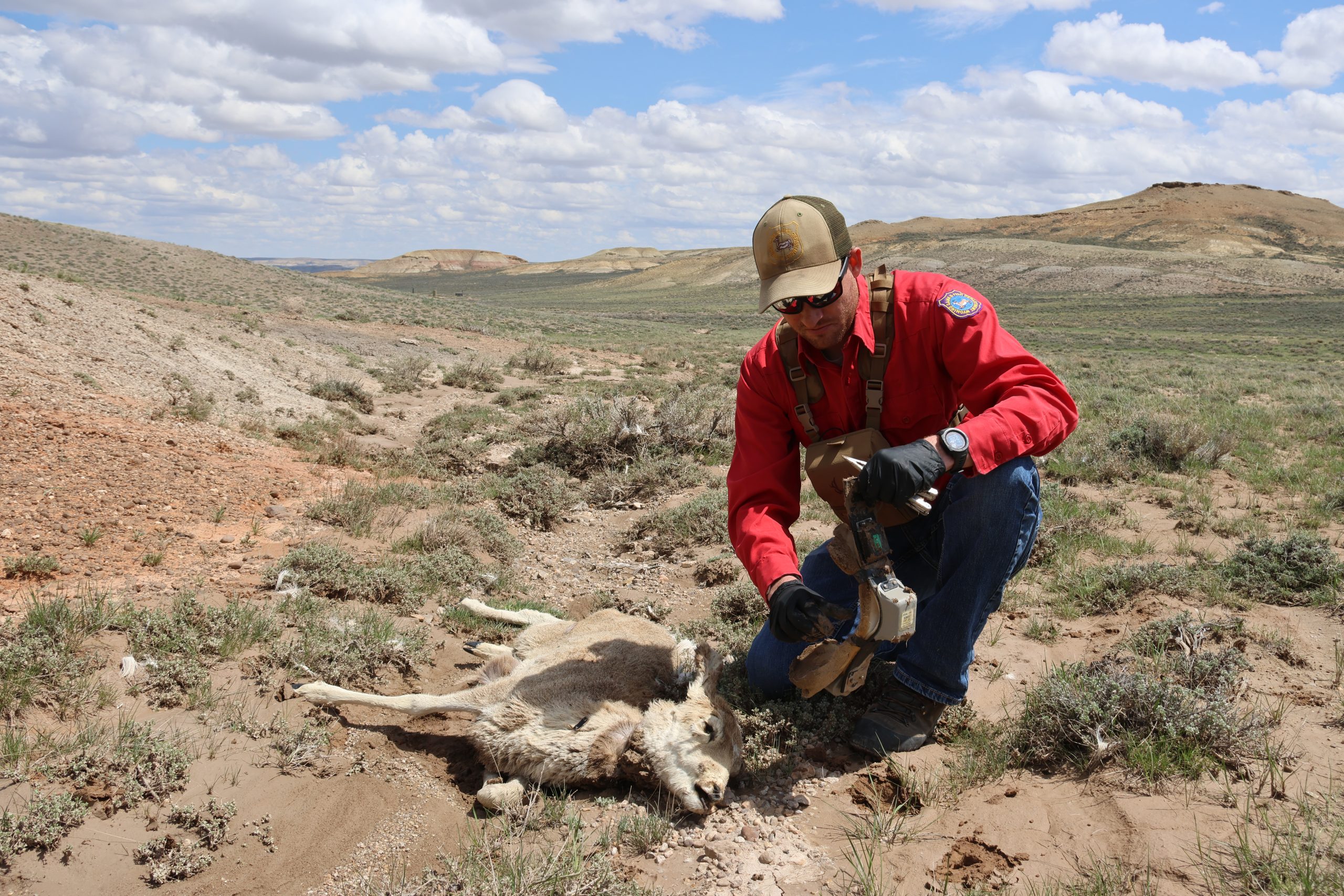
Before his board unanimously approved the $200,000 in extra 2024 funding, Game and Fish Commission President Ralph Brokaw asked if the 2016-’17 coyote gunning had any effect on mule deer fawn survival.
“What bang did we get for our buck?” Brokaw asked.
There’s no evidence, the chief warden told him, that it helped.
“We don’t have any direct correlation to show that predator control work created any kind of spike in fawn numbers,” King said. “We just don’t have that data, it’s really tough to tease that out.”

Aerial gunning shows how ignorant our leaders are. No science or data to support their decisions. We just keep doing the same old dumb things and hope for different results.
Wyoming Statutes Annotated. Title 11. Agriculture, Livestock, and Other
Animals. Chapter 6. Predatory Animals. …………..”Article 3 outlines the Wyoming animal damage management program. In that section ” predatory animal is defined as any coyote, jackrabbit, porcupine, raccoon, red fox, skunk or stray cat; and gray wolves except where they are designated as trophy game animals.”
Many people don’t understand that the Wyoming Dept. of Agriculture is the primary agency for coyotes, prairie dogs, and the other listed predatory animals. Wyoming Game and Fish does not have the primary management authority over these animals but still retains a keen interest in their populations. This is why our local Weed and Pest Districts control prairie dogs and the County Animal Damage Management boards address preator control. There seems to be some confusion about The role Game and Fish plays with respect to coyote control in the Green River Basin – coyote predator control is not their primary duty but they certainly can exert a lot of influence. Once a species is declared a predator in Wyoming that generally means they can be hunted year around without a Game and Fish hunting license. sound familiar?? Gray wolves outside of their designated habitat can be shot anytime as long as they are a designated predator. If I remember correctly, the legislature voted 68-1 to declare wolves outside of their designated habitat as a predator overriding Game and Fishes recommendation that they be classified as a trophy animal – hope I got that right. coyotes have long been a designated predator in Wyoming – under Department of Agriculture control – Game and Fish certainly wouldn’t want to assume management of coyotes – what a headache!!
There’s a lot on the internet about how predator animal control is administered and the regulations governing it – for instance, aerial hunters need a license issued by the Department of Agriculture – not by Game and Fish.
Please note that feral cats are designated as a predator and can be thinned out in order to increase game bird populations and other tweety birds.
Sad situation where there’s no data showing effectiveness and ignoring the role of coyotes, carnivores and scavengers in helping control disease by selecting sick animals, eating cwd contaminated carcasses, brucellosis contaminated fetuses etc.
Then there is the ignoring of the effect helicopters or planes cruising near treetops will have on the deer and their fawns as their security is destroyed by the noise.
Amazing that it seems no one involved knows anything except to kill things with no rationale.
The deer have a massive die off from a bad winter, so lets go kill a bunch of coyotes to solve the problem . Really !! How about we start evaluating the winter ranges and see how bad they have been grazed by livestock before the deer need come on them ! How about we enforce the winter closure laws for EVERYONE and quit making exceptions for ranchers to run all over hell with there snow machines and helicopter running the hell out of everything with hair on it ! How about we start making ranchers accountable for their guard dogs running where ever they want and chasing whatever they want ! If predators were the sole problem for the downfall of the deer population then aerial hunting is a waste of time because there has been millions of dollars spent by the predator boards in western Wyoming for years and it hasn’t brought the deer population back yet ! Oh but im sure this year will be different .
With all that shooting before, during, and after fawning–did the deer herd move to protect their fawns?
Naaaa…probably not….I’m sure they killed all the fawns too…..that’s the whole point right?….that’s what these people like to do…..kill
Its just a fact – we control coyotes in Wyoming – at one time 1080 was legal and that really suppressed the coyotes I’ve come upon dozens of kill sites where coyotes killed fawns – the worst i ever saw was about 25 sheep killed by coyotes just for fun – they didn’t eat them just a killing frenzy. If you’d take time to talk to the people who live on the land and make a living from livestock – you would hear of hundreds of horror stories about coyote kills. The Wyoming counties have animal predator boards that vigorously control coyotes. One of our county commissioners who is on the predator board told me his whole ranch was coyote free the last time it was flown – that’s a ranch that is almost entirely private land. It isn’t just Game and Fish that encourages some predator control it includes the State of Wyoming Agriculture Department, the Farm Bureau, Stockgrowers, Wool growers and some wildlife advocacy groups such as the Mule Deer Foundation and Rocky Mountain Elk Foundation and the US Department of Agriculture. These are the groups that fully understand what actually happens to ungulate populations without predator control.
When I read YELLOWSTONE KELLY I was amazed at the poor conditions the deer, antelope and elk populations were in back in the 1870-1880s – wolf packs could reach over 40 wolves and game was scarce – native Americans had to travel hundreds of miles to find good hunting grounds – its an excellent read which documents the actual conditions on the prairie.
Predator control is a must in Wyoming and will continue.
$565/canine with no “direct correlation to show that predator control work created any kind of spike in fawn numbers” sounds like a loser of a plan. I’m not a wildlife biologist or anything of the sort, but why not let the lack of food source do the killing? Costs nothing.
Well,that’s because it wouldn’t be any fun for the people who like killing animals.
There’s no doubt that coyotes can cause damage but to blow money and shooting coyotes is a complete waste and you and any person that understands about coyotes knows it. Coyotes have been hammered since the 1840s bounties poison traps snares you name it and there’s more coyotes in more places than ever before including Wyoming. And to say that the elk and deer herds were hampered by wolves on the plains in the 1870s and 80s is ridiculous. Please find a history book, the vast majority of wildlife in the Great Plains were wiped out by humans at that time, not wolves.
Kill a Coyote, and two will take its place.
Too often I wish that Wyoming Game & Livestock had some other implement in their wildlife management toolbox besides a rifle…
Agree 100%
Why does everyone think that you solve a problem by throwing more money at it? Too bad they didn’t take that $200K and put it toward a feeding program to reduce the catastrophic die off in the first place. The gate is open and the cows have left the pasture, too late to close the gate now. Trying being pro-active and not re-active. SD GF&P has no data to show whether all the $$ they have spent on the predator “tails” program has improved pheasant populations either. What do these people do with their time?
If there is any personal bias and speculation in the article, it is from WY G & Fish, not Koshmrl. It would have been better to include a predator specialist’s opinion in the article, if any were willing top speak up. There is published literature about coyote predation on fawns too, that a more in-depth article could have included. Chancy Brown points that out — thanks.
Read “They are few. They are fat. They are Western Wyoming’s deer. A decrease in competition for exceptionally lush, nutritious vegetation has created a population of exceptionally porky mule deer. by Mike Koshmrl January 26, 2024 In wyofile.
Appears to indicate if the deer herds were thinned out the health of the individual deer improved.
Once again the Wyoming Game and Fish reacts to a vocal group, this time outfitters without good science behind their proposed actions.
Put a $565.00 bounty on coyotes and every Tom, Dick and Harry with a gun will be out killing them, if you wait them dead? Don’t waste my money on airplanes and government gunners.
$565 per coyote? Seriously? Once again, Game and Fish proves that they’ve morphed into a poorly managed and bloated bureaucracy and horrid stewards of the $ that sportsmen and women have contributed. This is the same agency that idly stood by as all those deer and other wildlife succumbed to brutal winter of last season. Now they’re going to throw another $200,000 at the “problem”, what? The problem is poor leadership. It appears as if the goal of Game and Fish is to constantly update that fleet of new green vehicles. If you want to see a fenced off yard of millions of dollars of equipment and vehicles, drive by that new $10 million dollar Cody region headquarter
“What bang did we get for our buck?” Brokaw asked.
There’s no evidence, the chief warden told him, that it helped. “….what do you know, Chief Warden Rick King? There seems to be a pattern of you “not knowing” when it comes to serious Game and Fish issues. And, we’re still waiting for you to issue the Elk Mountain owner and ranch manager Hunter harassment tickets regarding their hazing and harassing of the four Missouri hunters. Do you “know” about that, Mr. King?
Too much of your article is related to personal bias and speculation. If you contact a biologist or predatory specialist you will find that coyotes rarely kill healthy fawns. Its your kind of false reporting that starts more turmoil.
Dewey is correct. Shooting or trapping coyotes will not reduce their numbers in the long run but reducing their numbers or forcing them to new locations during fawning season will reduce predator mortality and can help a fawn reach that 4 week age where they become less vulnerable. Sorry Chancy. Coyotes don’t discriminate. They eat any and all newborns they can catch without too much of a fight: deer, elk, cattle, sheep, antelope and house pets. They aren’t evil. That’s just what predators do.
Let’s just kill all predators (excepting humans of course) and let the ungulates join wild horses in stripping the west bare. Also, wolves kill coyotes. Just sayin’. Such ignorant management. Maybe revisit The Wolves of Chernobyl. Oy.
You forgot livestock in your stripping the west bare comment .
Well said
Focused on small but crucial fawning areas, this predator reduction plan seems conservative and reasonable. Anything that can give deer a little boost in those hard-hit, winter-killed habitats is probably a good thing.
Hunting and watching big game is such an important cultural event in Wyoming, I think most Wyomingites appreciate the Game and Fish Department’s efforts to speed up the deer herd recovery process.
The deer population has been pummeled in western Wyoming. If thinning out some coyotes will help them make a come back that’s a good thing. Thank you Wyoming Division of Wildlife.
Did you actually read the article’s conclusion?
Before his board unanimously approved the $200,000 in extra 2024 funding, Game and Fish Commission President Ralph Brokaw asked if the 2016-’17 coyote gunning had any effect on mule deer fawn survival.
“What bang did we get for our buck?” Brokaw asked.
There’s no evidence, the chief warden told him, that it helped.
“We don’t have any direct correlation to show that predator control work created any kind of spike in fawn numbers,” King said. “We just don’t have that data, it’s really tough to tease that out.”