

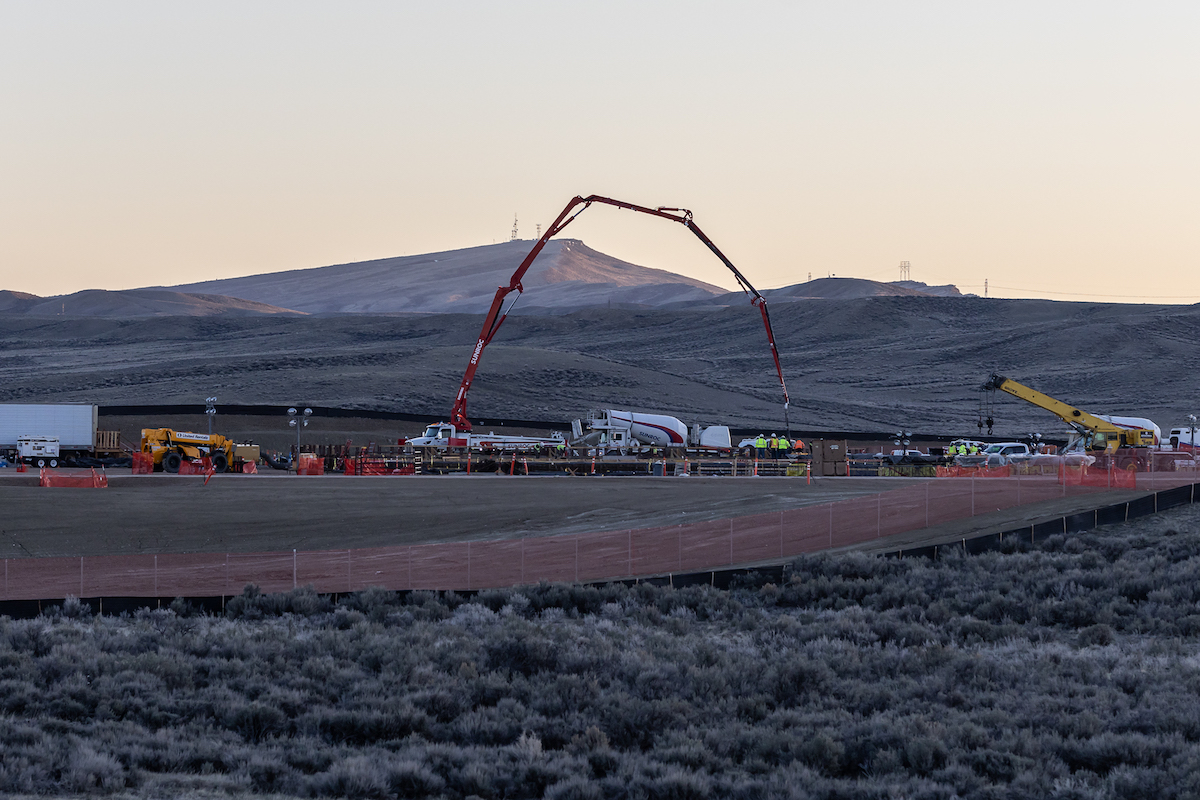
LARAMIE—With one nuclear power plant already under construction, Wyoming will soon be home to high-level nuclear waste storage unless the federal government builds a centralized facility.
When TerraPower proposed building its first advanced, liquid sodium-cooled Natrium power plant outside Kemmerer, lawmakers quickly carved out an exception in the state’s otherwise blanket storage ban to allow spent nuclear fuel that comes from any in-state nuclear power plant.
But the conversation about nuclear waste storage in the Cowboy State is far from over.
The industry is gearing up for what advocates say is a global nuclear energy revival, and some in Wyoming — including Gov. Mark Gordon, the Wyoming Energy Authority and Wyoming Business Council — are actively recruiting developers. TerraPower, backed by Microsoft billionaire Bill Gates, is considering more Natrium power plants in the state. Other players have considered setting up nuclear microreactor manufacturing facilities here, which could include storing spent fuel from portable units deployed around the world and returned to the state.
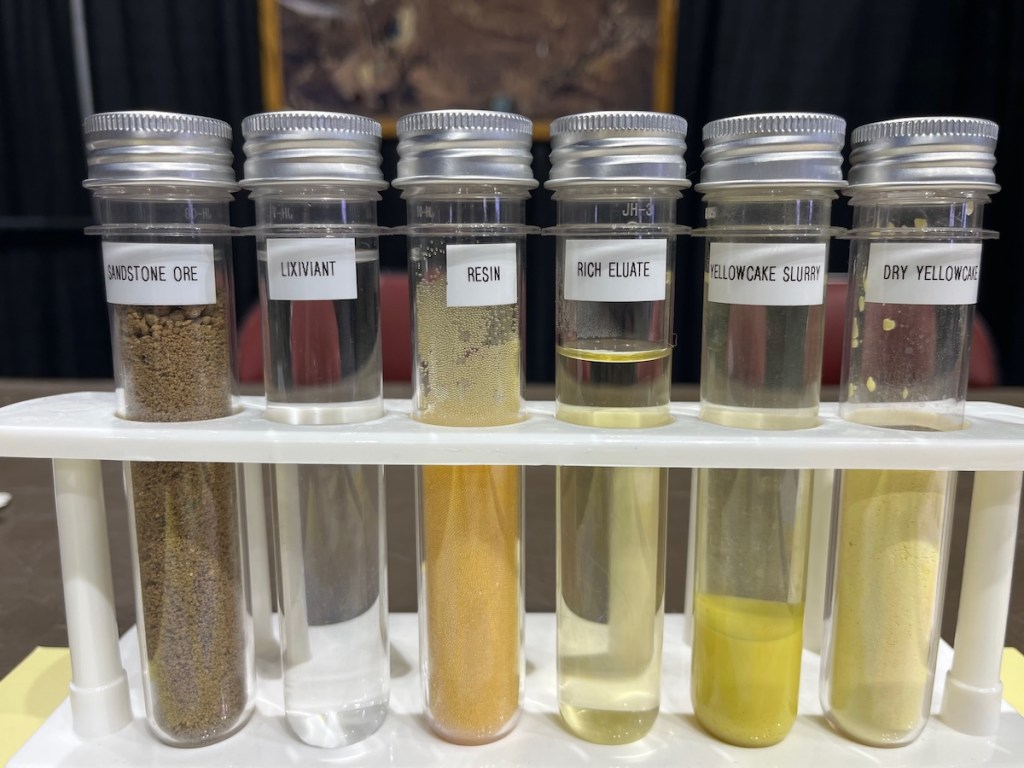
Building on those ambitions, state officials are eager to connect Wyoming’s reawakening uranium mining industry with the U.S. Department of Energy’s Nuclear Lifecycle Innovation Campuses initiative. Though it is “not an expression of interest in nuclear waste storage,” Wyoming “welcomes the opportunity to partner with DOE, national laboratories and private industry to strengthen the domestic nuclear fuel cycle,” the Energy Authority recently told the Department of Energy.
But do Wyoming communities want to crack the door open wider to the industry and, potentially, its radioactive waste?
“There’s all this risk, and we’re trying to make sure that those risks are minimized,” Big Wind Carpenter, a member of the Northern Arapaho tribe, said, adding, “What is the benefit for the community? I think those are good discussions to start to happen.”
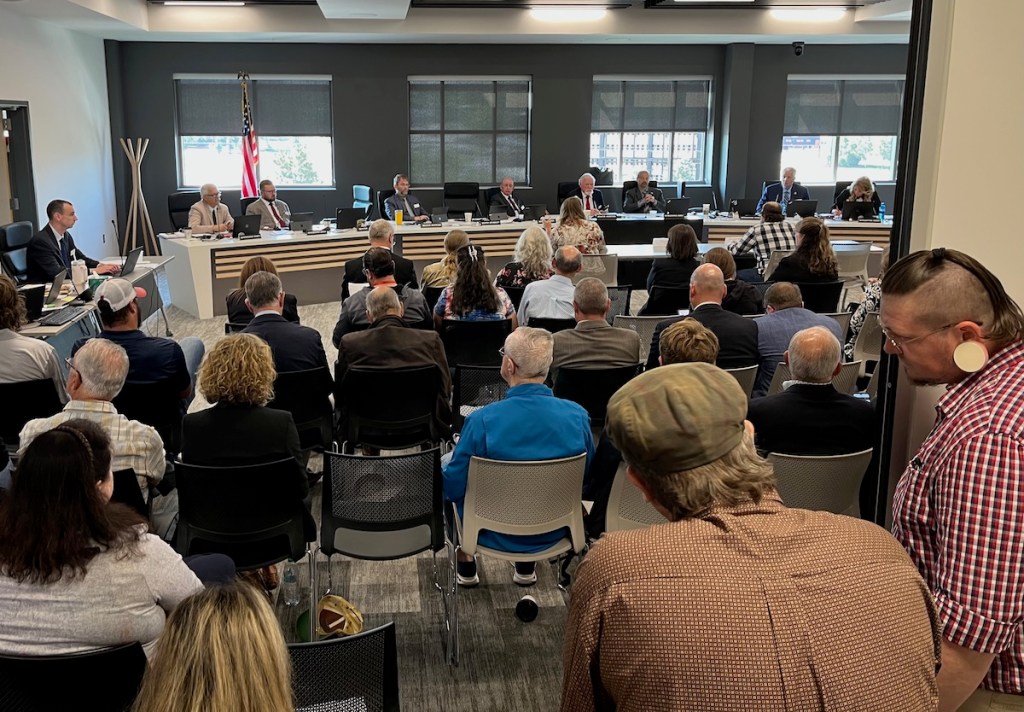
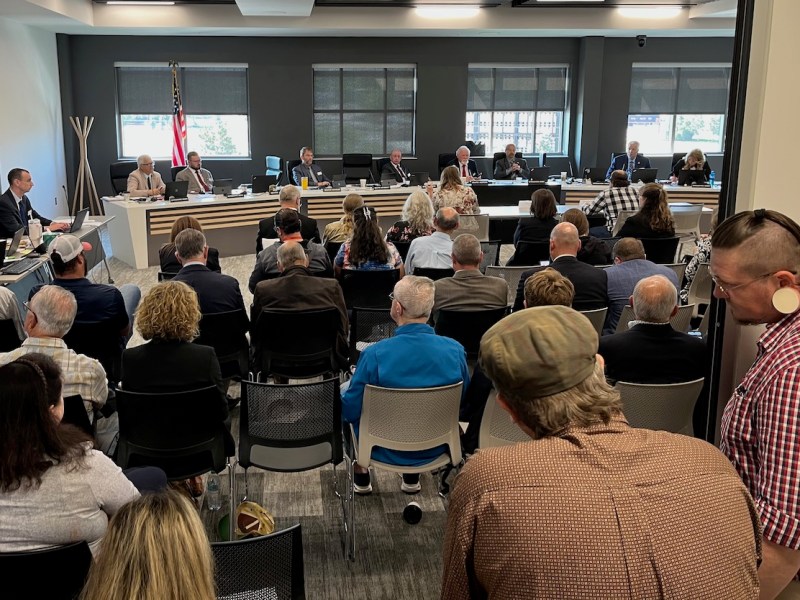
Carpenter, who serves as tribal engagement coordinator for the Lander-based Wyoming Outdoor Council, took part in a nuclear energy forum this week hosted by the University of Wyoming’s School of Energy Resources, Ruckelshaus Institute and the Wyoming Energy Authority. A major focus was on how to educate and empower communities to engage with the industry, with federal officials and, ultimately, to decide whether or not they want the industry in their backyards.
That conversation happened very quickly in Kemmerer — from TerraPower announcing its site selection in November 2021 to lawmakers amending the state’s waste storage ban a few months later in 2022. There’s been a series of legislative attempts since to further amend Wyoming’s ban on nuclear waste storage or do away with it completely — all have failed amid intense disagreement that has divided some communities.
Radiant Industries withdrew its proposed nuclear microreactor manufacturing facility from Natrona County in November after a contentious year of trying and failing to get assurances that the state might further loosen its waste storage ban. The episode spurred Gordon to dub opponents — and the far-right Freedom Caucus, in particular — “Club No,” describing “a new culture of no matter who began or who commenced it, we’re against it.”
Such high tensions are a sign of moving too quickly, said Jennifer Richter, who has studied why some communities have chosen to welcome nuclear waste storage and other aspects of the industry while many others have not. It’s a years-long process that cannot be rushed, Richter said, noting that the federal government has tried for more than 40 years to get buy-in from communities for a central U.S. nuclear waste repository, “and that has not gone particularly well.”

Why can’t the U.S. get comfortable with nuclear waste storage, like Finland or Sweden?
“It’s because we have a much longer and more complicated history with nuclear,” said Richter, an associate professor at Arizona State University’s School for the Future of Innovation in Society.
Lax regulations led to radioactive contamination of soils and water throughout the American West that resulted in increased cancer rates — pollution and repercussions that remain unresolved in many cases, including on the Wind River Reservation. The boom-and-bust nature of uranium mining also built many ghost towns, adding to skepticism of the industry.
“How to reckon with that history is actually what a lot of communities are asking,” Richter said, “rather than just going forward.”
Technology, safety and trust in oversight
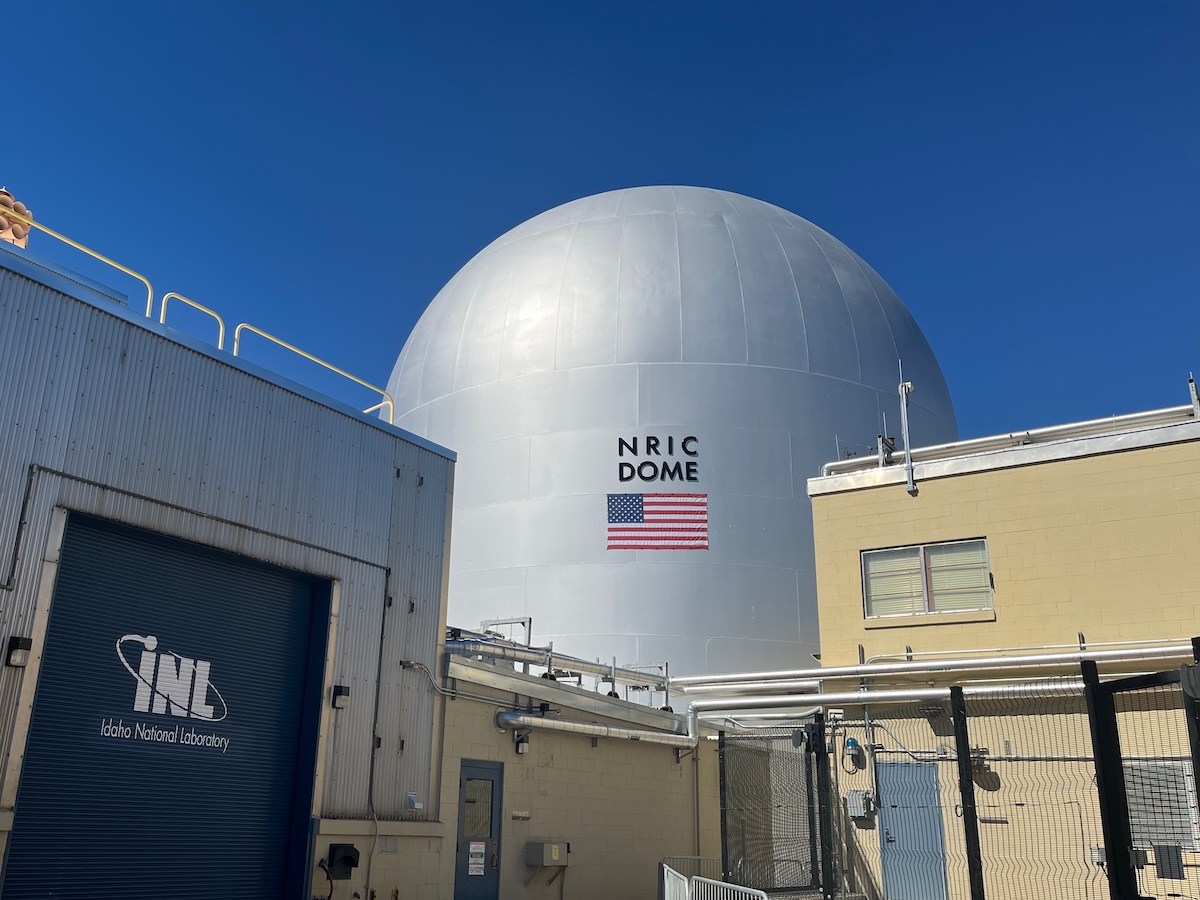
Every type of “advanced” nuclear reactor technology being pursued today is not entirely new. It’s all been tried and tested — at least in a controlled research setting, said Christine King, director of the Idaho National Laboratory’s Gateway for Accelerated Innovation program.
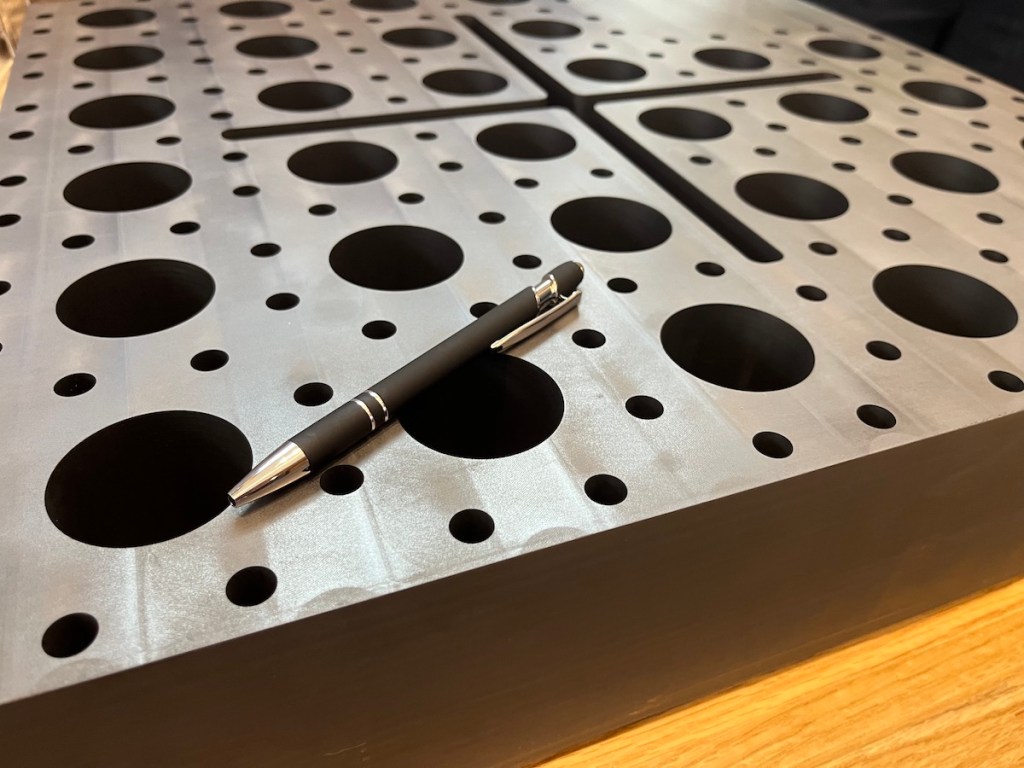
“We’ve tested over 52 experimental reactors over the years at INL,” King said, adding that cooling systems such as liquid sodium and new fuel types such as tri-structural isotropic pellets, or TRISO, that encase enriched uranium are designed to add layers of safety.
But whatever the fate of spent nuclear fuel — whether it’s eventually processed for reuse, stored onsite or in a central repository — and whatever the nuclear power generation type proposed, “It’s not up to anybody to tell you whether nuclear power or how much or how little is right for Wyoming,” King said. “These are 100-year relationships you’re going to have with these projects.”
Whether the federal government has the patience that most communities require is another question.
Confident in human health and safety technology advancements, the Trump administration has ordered a major overhaul of the U.S. Nuclear Regulatory Commission, primarily to speed up permitting. The “wholesale revision” of regulations and permitting timelines is moving quickly, said Tison Campbell, a partner at industry market analysis company K&L Gates who previously worked for more than 19 years at the Nuclear Regulatory Commission.
“That’s in process right now,” Campbell said. “Only a few of those proposed rules [changes] have been issued. Seventeen or 18 more are going to come out in the next few weeks for a 30-day comment period each.
“They’re planning to finalize everything by the end of November,” Campbell said, “so there could be a new regulatory regime in place.”
At the same time, Wyoming’s boom-and-bust uranium mining industry is on the upswing with previously idle operations coming back online and new mining projects in the works. For its part, the Wyoming Department of Environmental Quality says it is equipped with the staff and institutional knowledge to usher the mining industry’s expansion.

In fact, both the Department of Environmental Quality and its permittees go above and beyond federal standards, including Nuclear Regulatory Commission regulation of milling facilities that distill raw uranium ore to uranium oxide, or “yellowcake,” Wyoming’s Land Quality Administrator Brandi O’Brien said. The Department of Environmental Quality assumed primacy of that federal oversight in 2018.
A Converse County resident, however, quizzed O’Brien about a wastewater pond at the Smith Ranch-Highland uranium facility that is allegedly not up to standards and leaking. Maria Katherman also alleged that the company, for years, has avoided fixing the problem despite state regulators being made aware of the problem.
O’Brien acknowledged the problem, and noted “we also did inherit sites that [were previously] licensed by the Nuclear Regulatory Commission. Not that they did anything wrong, but it was a different regulatory requirement for the time they were licensed.”
“If our industry is going to expand,” Katherman said, “and you talk about, ‘How can we convince the public?’ Well, in Converse County, I’m the public, and no amount of regulations on paper are going to convince me.”
CORRECTION: The caption on the map in this story has been corrected. —Ed

Wyoming’s apprehension about leaving the Past to reside in the Present has always been a ball and chain. We want it to be 1892 forever here in the Cowboy State.
I offer this much towards the debate about nuclear energy in the 21st century . The United States Navy has operated over 500 nuclear reactors and/or cores since the first one back in 1948. All are so-called ” small ” nuclear plants. Presently the U.S. nuclear Navy has 99 reactors on line . Every aircraft carrier has two. The remaining 69 ships have one reactor apiece. The remainder are spares or working R & D units.
Five hundred nuclear reactors across 78 years time. That’s a pretty sizeable database and real world experience to draw on . Can we just for once skip over the Reinvent the Wheel mindset and the ” All Atomic Power is Evil ” stigma ?
Nuclear energy is the dirtiest energy source there is.
https://en.wikipedia.org/wiki/List_of_nuclear_power_accidents_by_country
First paragraph in above:
“Worldwide, many nuclear accidents and serious incidents have occurred before and since the Chernobyl disaster in 1986. Two thirds of these mishaps occurred in the US.”
France produces about 70% of it’s electricity via nuclear generation (the highest percentage in the world). France currently has 56 reactors operating. The U.S. currently has about 94 reactors operating. France has had 13 nuclear accidents or incidents (a classification of degree) since 1969. The U.S. has had 56 since 1955 and 52 since 1975. There’s a story in those numbers.
https://en.wikipedia.org/wiki/Nuclear_power_in_France
https://world-nuclear.org/information-library/country-profiles/countries-a-f/france
Death, taxes, and nuclear waste can kill a party. Where and when possible, they ought to be put off.
It’s not too late for the people of Kemmerer stop this disease in it’s tracks.
Correction to your caption about the past Fremont County nuclear waste effort: the original proposal in 1991 was a Department of Energy facility, as authorized under the Nuclear Waste Policy Act. The Owl Creek project was proposed by Riverton businessmen in 1994 as a private facility…all which led to creation of Wyoming’s Radioactive Waste Storage Facilities law, which the legislature passed in 1995.