


The Wyoming Board of Land Commissioners on Thursday voted unanimously to explore how the state might negotiate with a gravel mining company to voluntarily “relinquish” leases that allow it to pursue a mining project at the base of Casper Mountain and possibly compensate the developer for fees already paid to the state.
How much the state might have to compensate the company, and where the money might come from, is still an open question for the state.
The surprise action came after several hours of public comment and testimony from state regulators, despite the fact that the board did not provide prior public notice that any action might be taken on the matter.
Negotiations may already be off to a bad start.

It was an “embarrassing day for our state,” said Kyle True, who manages Casper-based Prism Logistics, the company that legally acquired exploration leases on several state trust land sections last year.
True’s testimony to the commission drew a chorus of mocking laughter from some opponents in an audience of about 300 at the Thrya Thomas Building in Casper, spurring Gov. Mark Gordon to call for “some decorum.” True said he is committed to submitting detailed mining plans later this year and addressing neighbors’ concerns in a series of future public forums that are not mandated.
After the meeting, however, True told reporters he was “surprised” at the commission’s actions.
“What we just heard is people brought questions,” True said. “The company was willing to respectfully address those questions. And instead of waiting for those questions to be addressed, [it] was assumed that what the company was doing was nefarious.
“And now the state land board is trying to find a way to undo the leases,” True continued, “or [Secretary of State] Chuck Gray wants to open lines of attack. And we were personally referred to as two of the seven deadly sins: greed and avarice.”
The Board of Land Commissioners is made up of Wyoming’s top five elected officials: the governor, auditor, treasurer, secretary of state and superintendent of public instruction. Gray brought several failed motions before the commission unanimously approved one directing Office of State Lands and Investments Director Jenifer Scoggin to “explore how [the agency] could enter into an agreement to relinquish [the] leases.”

All five commissioners voted last year to approve the lease requests, which were not debated but included on a consent list.
To date, Prism Logistics has dug several small exploration pits to measure the potential gravel resource, and it has done so in full compliance with state rules and regulations, according to a fact sheet compiled by the Board of Land Commissioners staff. Prism has yet to submit permit applications with state regulatory agencies to move forward with a mining operation.
“I think we’d like to move forward with that [permitting and review] process,” True told commissioners before the surprise motions were introduced. “As we complete our analysis, we are working to minimize any cultural and social impacts that may be unique while still harvesting the valuable resources there and working with [the Wyoming Department of Environmental Quality] in protecting all of the natural resources and water.”
Mining opposition
The state trust lands targeted for potential gravel mining sit at the base of Casper Mountain and encompass Platte Creek, Wolf Creek and several other small drainages to the nearby North Platte River. The state lands are also surrounded by hundreds of homes and several ranching operations, which rely on shallow water wells for domestic and agricultural use.

The greater Casper Mountain area is a popular destination for hiking, skiing and camping.
Residents were unaware the state had issued gravel mine exploration leases on the state lands until some noticed a trackhoe digging in the area, resulting in a flood of phone calls and emails to state officials and lawmakers in February.
Since then, opponents have formed the Casper Mountain Preservation Alliance and have collected more than 5,000 signatures opposing any state or local actions to approve gravel mining in the area. The group is also calling for reforms regarding public notice and reviews of such actions on state trust lands.
What are state trust lands?
Upon granting statehood in 1890, the federal government bestowed some 4.2 million acres of “state trust lands” to Wyoming, and it currently manages about 3.4 million acres of trust land. The Wyoming Constitution prescribes that the primary use of those lands, which are scattered throughout the state in a checkerboard pattern, is to generate revenue to support public schools.
The Office of State Lands and Investments commonly leases those lands — often referred to as “school sections” — for grazing and industrial development such as mining and oil and gas drilling.
Residents are concerned that mining in the area may impact water wells, generate clouds of dust and hammer roads that are not built for industrial traffic.
Water “is the most valuable resource that our world actually has — not gravel,” area resident Jason Knopp told the commission. “Water is what we need to survive. We don’t go around eating rocks.”
The Office of State Lands has been derelict in its duty to state residents to notify them of potential impacts resulting from leasing actions, Casper Mountain Preservation Alliance organizer Carolyn Griffith said.
“It’s difficult for me and others to understand why is it now the responsibility of the homeowners, city of Casper and adjoining county citizens to bear the burden of proof that leasing state lands to a gravel mining operation on the face of Casper Mountain is unsuitable,” Griffith said.

The prospect of an industrial mining operation in the area is “stressing these people to death,” area resident Tracy Lamont said. “Let’s find an alternative for Kyle [True] to mine gravel because we need it, but I’m just asking you, Kyle, to give it some reconsideration.”
Residents also criticized a complex web of divided authorities and duties related to permitting such operations, including a “limited mining operation” exemption that precludes the Department of Environmental Quality from requiring extensive environmental reviews for mining operations smaller than 15 acres.
Wyoming DEQ officials noted that, even with a limited mining exemption, a proposed gravel mining operation must still undergo reviews for air emissions, stormwater drainage and surface water quality. Questions regarding whether such an operation might disturb aquifers, water wells or water rights must be taken up with the State Engineer’s Office.
True said Prism Logistics plans to comply with existing rules and regulations and will try to address residents’ concerns, telling reporters, “If there were concerns that I thought we couldn’t address, we wouldn’t move forward.”
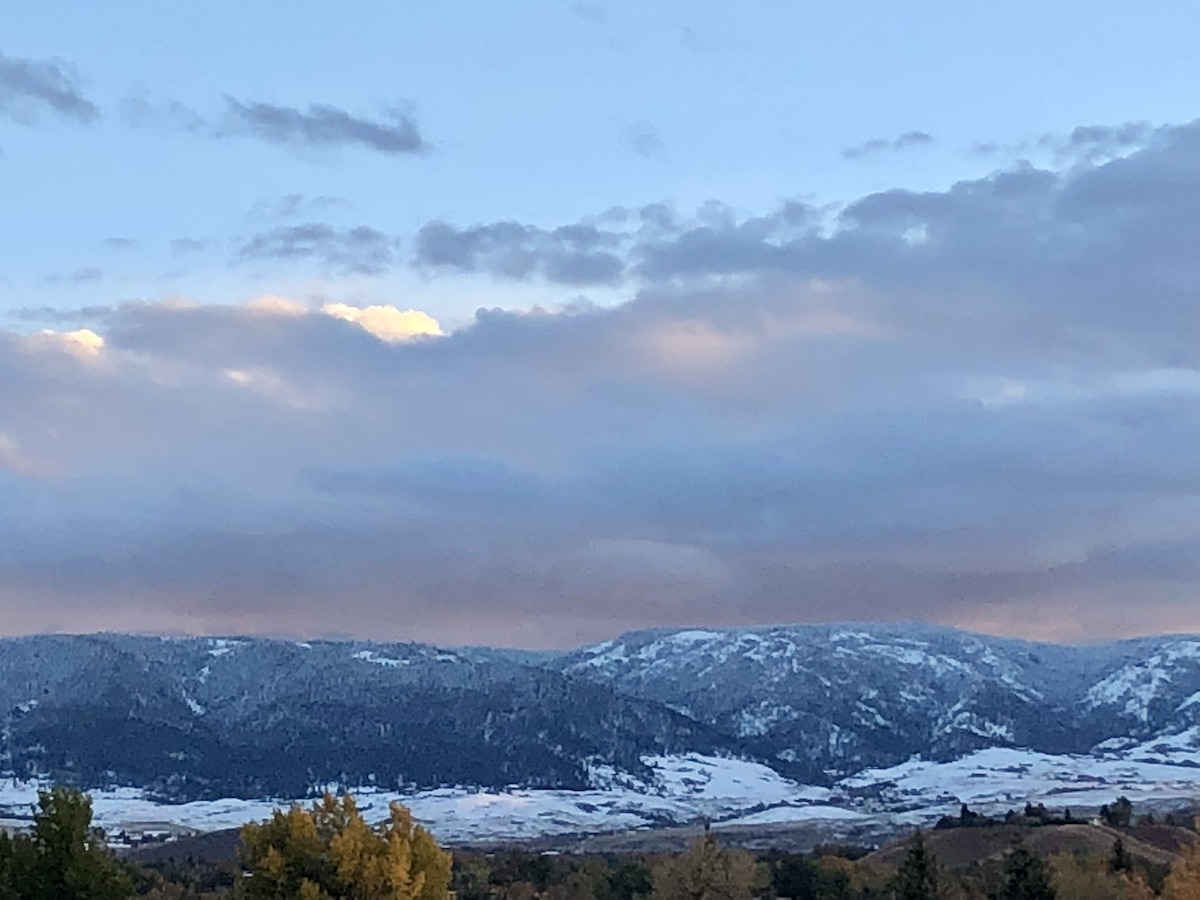

Correction: Platte Creek replaced the name of a creek no longer used by the U.S. Geological Survey. —Ed.

well in 2022 when rob hendry was about to lose his seat on county commissioner, December 19, 2022. bocc worked on the land plan revision that took out requirements for a conditional use permit for mines. accident? or or purpose. you decide. peter, milne and hendry all did this revision. but they worked on this revision up to 20 minutes prior to passing it. making it an illegal revision. no 45 day notice to the public as required by law. so its essentially an illegally adopted document. now i as well as roze czbon have been screaming this the rafters to the bocc and they simply dont care to do things the legal way… this could be used in court to perhaps test the avoiding the conditional use permit that has 5 requirements and the mine would fail 3 at least: all 5 must be met to obtain a CUP.
The State considers gravel mining to be a simple process and has very little environmental review of such operations. That really needs to change. In the Casper gravel mine, there is a huge problem. It isn’t just the NIMBY thing though. There are hundred of private water wells north and downdip from where the gravel permits are. Many of those wells are 30 feet or less in depth. What Mr True does not seem to understand is that he is planning to exhume the very aquifer that hundreds of Casper residents rely on. Even his exploration trenches can modify the flow of water through the aquifer. Just think what a full on mining operation will do. Casper Mountain has crystalline Precambrian rock forming much of the mountain. The material eroded from those formations is very complex. On the south side of Casper Mountain is a uranium mining operation and the source of the uranium is primarily from the Laramie mountains that have the same Precambrian rocks as Casper Mountain. Digging up the aquifer north of Casper Mountain for gravel will mobilize a lot of potentially harmful minerals. Mr True may have hundreds of lawsuits in his future if he continues with his planned gravel project.
Oops, we didn’t mean to approve that lease. Oops, we didn’t do our due diligence in this matter……..Sorry, Prism Logistics…we take it back, how much will it cost us to undo this lease that should have had more research done in the first place before the bumbling idiots approved it. State Lands and Investment office, what do you people do all day? Once again I ask, do these people check their brains at the door.
Ms. Katherman’s comment is spot on. Mr. Lawson presents some interesting points…….all good stuff. Thank you for posting here.
Lawrence County in South Dakota approved a CUP for a small gravel operation on private land…..citizens gathered signatures for a petition to bring that decision back to the public. When the special election was held, the CUP was over turned. Perhaps it is time for elected officials and other public employees to remember who they work for. Good fences make good neighbors……goes for more than just fences, communication is the key for success in any endeavor.
What I find amazing about the coverage and the informed comment is how little introspection by the people that voted for this very expedited process associated with these decisions. The hypocrisy is absolutely astounding for me to behold. Less regulation equals more jobs and profits is at the heart of Wyoming philosophy and yet not a whiff of irony except by Kyle True and Ezra Peterson down thread.
Maria Katherman provides an excellent description of living next to a mining operation; however, she does not describe what could have been done to prevent those poor practices from continuing. Wyoming actually enforcing the current laws on the books. The Wyoming public have been taught to despise environmental, health and safety laws and the SLIB has been rubber stamping accordingly. Storm water, Air Quality and MSHA requirements are in place for a reason but ignoring them on these small mining operations is that it takes what Wyoming doesn’t have which is water.
If Casper residents want to prevent this use then it seems they should pay a tax to cover the lost revenue to the State?
I wrote the Governor two weeks ago suggesting that the Office of State Lands and Investments (OSLI) promulgate new rules which would require a 30 day public notification period and a 30 day public comment period prior to leasing. This would require OSLI to notify all owners of record within one-half mile of any lease being considered that involves any surface disturbances or permanent installation of infrastructure. Additionally, I recommended to Governor Gordon that OSLI also create a local citizen’s advisory group in each county, made up of local citizens knowledgeable about their respective county, that could advise the OSLI, prior to leasing, of potential problems like those that have created this firestorm of opposition in Natrona County.
To date, I have not received a response from the Governor regarding my suggestions.
Clearly, OSLI failed to provide the State Board of Land Commissioners (SBLC) any kind of maps showing the locations of the contested leases in relation to the City of Casper; homes along Garden Creek; Valley Hills; Wolf Creek homes; Squaw Creek homes; Coates Road residents; Skyline Ranches homeowners; Boot Hill subdivision; Westland Park homeowners; and Webb Creek homeowners. This could have been provided by OSLI with a simple map using digital aerial photography. And OSLI internally has the geographic information system, computers, and staff to produce these maps. But they didn’t claiming they didn’t have the time and resources to provide this to SBLC.
The OSLI Director and Deputy Director should be fired for creating this fiasco!
Excellent ideas, Bruce! You are trying to help mitigate this obvious issue and for future similar problems. Thank you for your expertise and sharing it.
It appears that this whole process was a “done deal” before the public knew anything about it. I’ve seen this sort of thing many times before. It’s much more difficult to mount any kind of opposition when commercial interests are allowed to do much of their prep work long before the public is aware of what’s potentially going to happen. Commercial interests shouldn’t be allowed to go through the permitting process without letting the public know.
Good article. Environmental impacts of a aggregate or gravel mine are not zero. Visual impact is not great and there will be fugitive dust emissions. Natrona county is blessed with a lot of gravel in other locations. State land staff asleep at the switch. There should be a way to preserve Casper Mountain area and do gravel mining on other less sensitive state lands for a win-win solution.
Remind those 60’s burn outs what material is under the paved streets they drive on.
“All five commissioners voted last year to approve the lease requests, which were not debated but included on a consent list.”
Yep, Gordon is a sneaky SOB.
When teaching biology or botany at Casper College, I always had 3 or 4 labs at the these state lands as well as the several parks and access points along Garden Creek. I often thought: Wow, these parcels are indeed supporting Wyoming’s schools! Close enough for students to car pool & still have time to see the place but get back for the next class. Many students reported going back on their own to enjoy them.
Like many of you, I’ve been going there all my life—horseback, afoot & biking. I love seeing those cottonwoods, chokecherries and hawthorns along the little creeks & the healthy community of sagebrush. It’s a great spot for birding & seeing spring flowers & views of mountain, river & town.
I now live on a ranch between Douglas & Glenrock where we have experienced these 15 acre gravel mines, upwind 300 feet from our fence line. Yes, the dust (I could have leased our house for dust mining!) & the trucks are all that, but there are two really big impacts nowhere yet mentioned. THE NOISE & THE PITIFUL RECLAMATION.
Turning rocks into gravel is an all day long, huge noise-making, dust generating operation. They start at day break, so 5:30 or 6am & can be heard 2 miles away. This lasted for 5 years. The reserved “top soil” piles were over-grown every year with tumble weed, thistles & cheatgrass. Which spread for miles down wind.
After another 2 years there was the “reclamation”. What had been a willow, cottonwood and buffalo berry riparian area is now a graded flat, barren nothing; filled with, yes, cheatgrass and tumbleweed among the barely growing seeded wheatgrass. Habit for nothing.
I’d like to thank our Land Board members for listening to the local outcry that we do not want True to get the chance to ruin this place so he can make some more money with “cheaper” gravel. Not many cities have such gems so close. Think how we now cherish our river—the foothills of the mountain are equally important to the future of Casper. The Land Board members have seen that a mistake was made allowing this permit to slide through.
Thank you, also, all who are stepping up to speak for this special place!
Hi Maria, Thank you for this testimony. I am curious if you’d be willing to read this at our next County Commissioner meeting or if you’d be comfortable with myself or someone else in our group who is currently fighting this proposed mining operation? Thank you.
Thank you, Dustin, for a comprehensive and accurate article. The article in the Casper Star-Tribune was quite misleading.
It’s a really bad idea and not sure how it ever got this far in the first place. Once again money at the sake of the environment.
Sounds like the state needs rethink its ‘ready, fire, aim’ protocol for approving these leases
These leases were approved under a consent agenda meaning they were approved in bulk without any maps or recognition of sensitivity or proximity to Casper; therefore, the Board was not totally informed. Another fact is Chris Fare that testified on behalf of Prism Logistics and introduced as a manager of Prism is on the Air Quality Advisory Board within the WDEQ policing any application for mining.
Thank you again Dustin for your coverage. The only embarrassment here is Kyle True wanting to carve up our crown jewel of Casper Mountain with complete disregard to the residence. As evidenced by the smirk he’s had at these meetings during testimony. Certainly driven by avarice.
I would like to address the size of this proposed pit mining operation according to the map spans the base of Casper Mountain from Wolf Creek to Webb Creek. This does not appear to be a small mining operation and will most likely negatively affect all who live or travel in west Casper. It’s only fair that these residents are given a voice in this decision.
Wow!!! Two large groups of concerned citizens prevailed at the State Board of Land Commissioners meeting Thursday – seems there might be a message here. Couple that with the thousands of opposing letters to the Kelly school section attempted auction and its starting to look like Wyoming’s citizens are having to become activists related to natural resource issues. And that’s a good thing. Seems like the citizenry can’t trust the government employees to make the right decisions with respect to natural resource issues and that includes the federal agencies such as USFS, BLM, EPA, USFWS and the list goes on and on. I sense a new age of activism expanded to include wildlife migration corridors, wildlife habitat, water quality , air quality, the impact of large solar farms, new rare earth mines, power transmission lines, etc. Certainly Wyofile and Cowboy State Daily are leading the effort to educate the public and involve them in decision making and keeping them informed. I couldn’t believe the number of articles that each journalist was writing during the recent legislative session – 2-3 per day per journalist was common. And the coverage leading up to the Thursday meeting of the Board of Land Commissioners was very helpful – and the Governor is starting to take note after getting a black eye over the Kelly school section matter. Keep it up folks, read as much as you can and get involved otherwise you will get steam rolled by “progress”.
Nice story, Dustin, thank you. In hindsight it’s easy to see the 5 elected officials of the State Land and Investments Board dropped the ball when they let this proposal go through on a consent list. Or their staff did. You’d think an alert SLIB staff, at least, would anticipate strong public opposition to gravel pit(s) on land right along the base of the mountain and so close to town . And Kyle True, it looks like, is holding all the cards. Except one–he’s hurting his reputation. It will be interesting to see if he’s willing to change his mind.
Tom: When I was HSC Planner we were contacted by a staff member of State Lands that someone had nominated the buffalo pasture in Hot Springs State park for an oil and gas lease – the staff member did anticipate that local government, State Parks and citizenry might be interested and contacted us on her own initiative. The County Commissioners under Brad Basse immediately took an interest in the matter and I drafted a letter of opposition for their approval; and, I contacted State Parks in Thermopolis and Cheyenne, send them a copy of the HSC Commissioners letter of opposition and they joined us in opposition. As a result the nominated parcel of land was not leased out – but only because a staff member of State Lands had brought the matter to our attention.
Anything to screw progress and jobs.. Me thinks these people protest too much.
How about the residents that face losing their water and air quality? Quality of life in general. You call this progress? Put this in your backyard and tell me you wouldn’t be upset.
If it was always not in my backyard then where would any industrial development be? Put it in the middle of Yellowstone Park? There is always going to be someone downstream. When you buy or inherit land next door to state or BLM land there is always a chance of development. Let the process play out, do studies on the drainage and groundwater in the area. The opinion of a neighbor who is apparently an engineer or mining expert is obviously a conflict of interest. Materials are needed for modern life. Seems like there are people who decry other states environmental policies that hinder mineral development out of one corner of their mouths and then do the same here out of the other.
There are MANY other places that gravel could be mined without impacting a residential area the way this location would. I am not against mining. I work within that industry as many of us do. Ezra Petersen, do you not believe that Chris Fare, the manager of Prizm logistics, being on the Air Quality Advisory Board within the WDEQ might be a conflict of interest? You must not be completely aware of what is at stake here. Common sense says don’t put a gravel mine in this location.
Ezra, The NIMBY thing is not the important factor in my opinion. The main issue is that there are hundreds of water wells down-flow from where the gravel mining will be done. Many are less than 30 feet deep. Digging up gravel is basically digging up the aquifer that the water wells produce from. Many wells will dry up or become contaminated due to the disruption of the aquifer.