

I once wrote a poem that included information about a friend. I mean true information — nonfiction, real life. Another friend who read the poem said, “Just don’t ever put me in one of your poems. I never want to relive what I’ve been through, not even in poetry.”
I said, “Don’t worry. No one much reads poetry.”
Opinion
That’s generally true, but every once in a while, a poem reaches more people than you’d think. One of the ways this used to happen was through a National Public Radio program called “The Writers’ Almanac,” a daily five-minute-long feature offering information on the life of a well-known poet, usually a dead one, along with a reading of a single poem, usually one by a living writer. Over the years, several poems of mine were read on this program, and when this happened, people would send me messages of congratulations or stop me on the street to say, “I heard your poem on the radio.” I assume that if they didn’t like the poems, they kept quiet.
After one of these radio presentations, I received a handwritten letter from a listener telling me he’d heard my poem and loved it. Indeed, he loved it so much that he went online to the NPR store and bought a copy of the book from which the poem was taken. But when he read the rest of the book, he wasn’t so pleased.
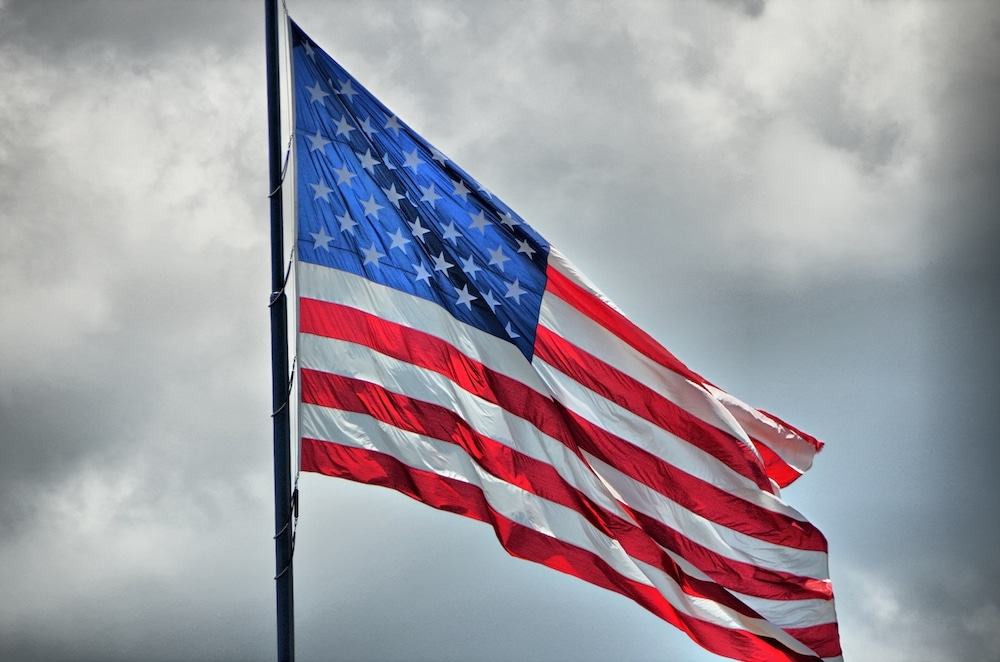
There was one poem in particular that offended him. This poem both questioned the usefulness of patriotism and included vulgar language in its title — the f-word. When I say the writer was offended, I mean really offended. He explained that he was a man in his eighties and a World War II veteran, one of the Americans who’d fought the Nazis to preserve democracy. If not for his patriotic efforts and those of so many other military veterans, he said, people like me would be living in a dictatorship and speaking German. We young people were at the root of what was wrong in our society. Ignorant and selfish, we were oblivious to the older generation’s sacrifices. His angry letter went on for several pages. And he called me an awful lot of names.
I stewed about what to do for days. Should I ignore the letter? What good could come of answering? Doubtful, I sent a response, also handwritten, saying that I did not dismiss the sacrifice of those who’d fought to defend democracy. I pointed out that I was not a young person. Indeed, I was pretty old. I wrote that while I hadn’t served in the armed forces, I’d twice worked in war zones on aid projects, risking my life as he had. I wanted him to know that I, too, was willing to make a sacrifice for democracy. I attempted to explain why I’d chosen to include the obscenity in the poem, noting that, as Samuel Johnson said, “Patriotism is the last refuge of a scoundrel.” And just as Johnson had, I hoped to separate love of one’s homeland from the ways political leaders sometimes use patriotism as a cover for their crimes or to get people to do something they know is wrong.
Some weeks later, I received a reply to my letter. The tone was completely different — no anger, no name-calling. The writer expressed a genuine and open desire to understand what I thought. He asked me questions: Why do I believe patriotism is destructive? How is it destructive? Shouldn’t we love and defend our homelands? It was as if two very different people had written the two letters. And perhaps he observed something similar about me — that the author of the poem and the writer of the letter seemed to be two different people.
I wrote a second letter. And he wrote a third. When is war justified? What is the proper place of patriotism in our lives? What should we do when we recognize that people in power are using patriotism to manipulate us?
The two of us kept at it for many letters, each letter feeling more sincere, more open and unguarded than the last. I have no idea if my reader had changed his view of the poem that had originally angered him so deeply. After the first letter, we never spoke directly about the poem again. Rather, we came to be long-distance friends, even if a little tentative. I couldn’t have hoped for anything more.

David is a poetic jewel in our State. I enjoy his books.
This is a beauty. It reminds all of us to speak not in anger and not merely to defend our point of view but to lean into language to understand each other. Rather than bombarding someone with hate and spite and I’m right You’re wrong, but with love and truth-seeking and a commitment to mending. Sometimes calm, straightforward words work magic. Sometimes an F-word can start the conversation. Bravo to the correspondents.