

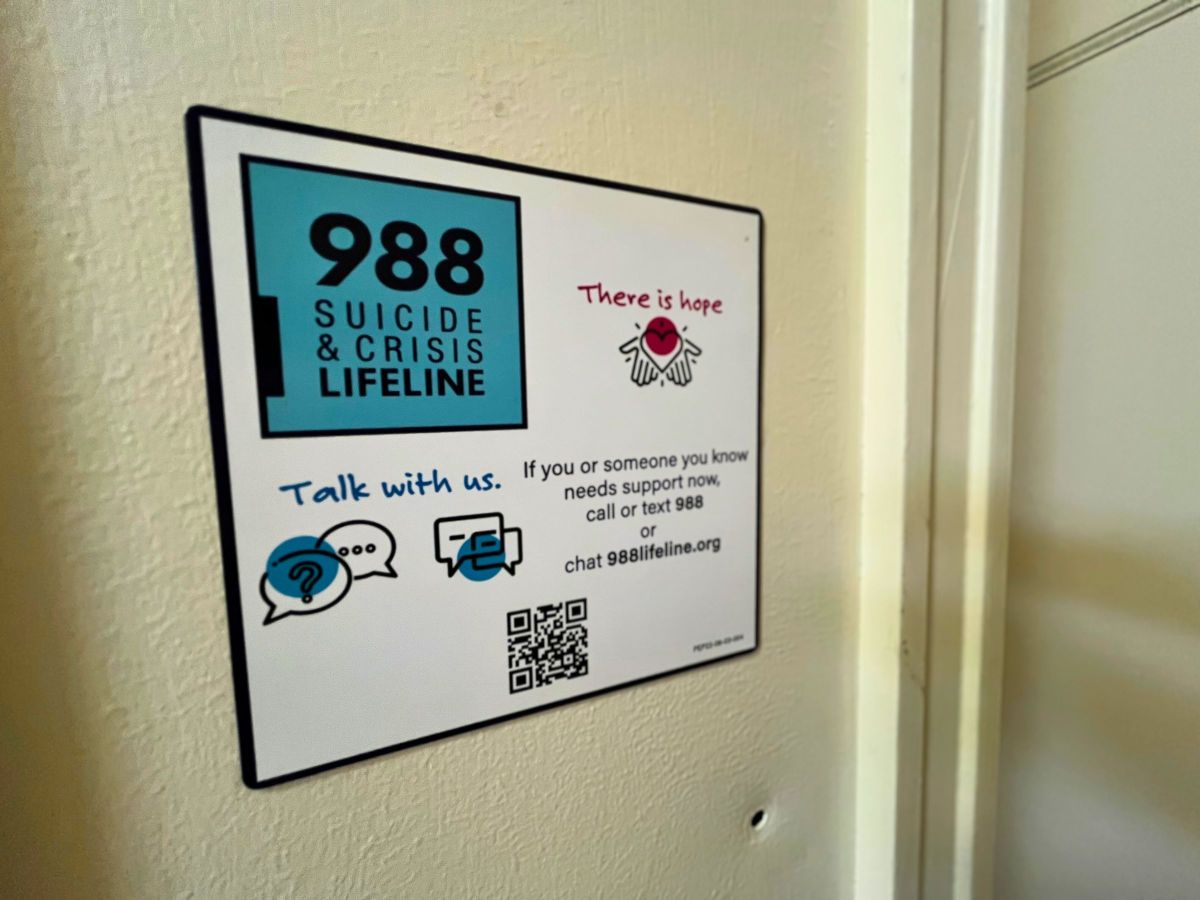
This story discusses suicide. If you or someone you know is having suicidal thoughts, call or text the Suicide and Crisis Lifeline at 988.
CHEYENNE—“Persistence, I think, is one of the most important things we have on our side.”
That is Brittany Wardle’s attitude in regard to addressing suicide in Laramie County as she serves as the community prevention project director at Cheyenne Regional Medical Center.
The Wyoming Institute of Population Health released its 2026 Suicide Fatality Review last week. The review analyzed suicide cases in order to provide recommendations that can translate into meaningful community impact. The review was conducted by the Laramie County Suicide Fatality Review team, made up of a multidisciplinary group of professionals who work to address gaps in Wyoming’s system of care.
Wardle gave insight into what information is used to inform the team’s recommendations.
One component is the suicide consolidated risk assessment profile, which is standard information collected on every suicide in Laramie County.
The other component is a review process in which, with the consent of the family or loved ones, a thorough review is conducted of a person’s suicide to understand the context and factors that led to his or her eventual suicide. Wardle expressed gratitude to families who willingly participate and noted how brave that choice is, as they are asking the team to “review the case of my loved one and change the outcome for families in the future,” she said.
“Those two components really give us both a quantitative and qualitative view of what’s happening in our community around suicide,” Wardle said. “And that process is really what drives our recommendations.”
The team then works to either implement its recommendations in the community or pass them onto the Wyoming Department of Health, if the issue is statewide.
Pet care and animal welfare were areas that showed a need for additional resources in the 2026 review due to people experiencing emotional distress over their sick or dying pets, coupled with an inability to afford care.
Wardle emphasized the importance of “physically getting out into the community and making sure that resources are publicly and obviously available in places where we know that risk might be present.”
The review also called attention to the need for improved communication among different branches of the healthcare system to minimize the burden on people struggling. This ensures patients are not solely responsible for their care, especially when they are in the process of transitioning from inpatient to outpatient care.
Wardle gave examples of agencies communicating if a patient missed a referral appointment, and following up to determine whether a patient’s need had been met.
The review also identified the primary risk factors in suicides over the past year. The top three were social isolation at 34%, an intimate partner problem at 34% and family relationship stress at 34%, or an overlap of one or more issues.
Wardle noted that all of these issues involve how humans connect with other humans, but that the actual context of each particular situation could be wildly different. She touted both 988 Lifeline and 211 Wyoming as connectors and support systems to help people who are struggling. The 988 Lifeline is the suicide and crisis hotline that allows people to call or text a crisis intervention specialist to receive support and guidance, whereas 211 Wyoming helps people find solutions to address health and human services needs.
Wardle explained how each program is beneficial in its own way, and that 988 is not only for an absolute crisis because staff are trained for many different situations.
“Our call centers have trained their staff, they’re folks who are caring, they’re folks who will listen, they’re folks who can help walk through, like, ‘Hey, I’m concerned about a friend, what should I do,’” she said.
Wardle then touched on how 211 can address the social needs that tend to accompany suicide — related issues such as job loss, loss of transportation or inability to feed one’s family.
Wardle explained how losing one’s job can compound into a multitude of issues, leading to financial distress and family tension that then lead to conflict and frustration.
The review also found that 69% of individuals experienced a crisis in the two weeks before their death and that the primary factors were a mental health problem at 47%, an intimate partner problem at 37% or an alcohol problem at 34%, or a combination of one or more issues.
Wardle noted the importance of providing appropriate training and resources to the agencies that interact with a person in the midst of a crisis, such as law enforcement.
“Part of it is making sure that our partners interacting with people during a crisis have what they need to provide that support or to be able to refer to that support,” she said.
Another major concern is the role alcohol and firearms play, and how availability and accessibility to firearms is a major risk factor across Wyoming.
The review notes that 3,500 firearm locks have been distributed, and that safe storage of firearms is repeatedly encouraged to mitigate potential risks.
“The discussion is always firearms are not good or bad, but we know firearms are deadly,” Wardle explained.
Overall, Wardle believes this review helps everyone in Laramie County better understand the issue of suicide and how everyone plays a role in making a positive difference.
“I think at the end of the day, our hope really is that people have an understanding of what suicide risk looks like in our community, and they understand what they personally or what their organization professionally can do to support well-being here in Laramie County,” Wardle said.
She concluded by emphasizing the importance of hope and the role this review plays in the larger picture of improving suicide outcomes.



I found this article meaningful because it looks at suicide prevention through community-level information rather than treating each case as an isolated event. The 2026 Laramie County review highlights social isolation, intimate-partner problems, and family relationship stress among the factors identified, while also discussing the role of community resources and coordinated support. https://www.mayabutalid.com/
Re: baseball in the park
People should look at the deed reverter clause in the deed from the grantor to the feds for the park
Should say something like if the land is used for other than a park all the land will revert to the grantor