

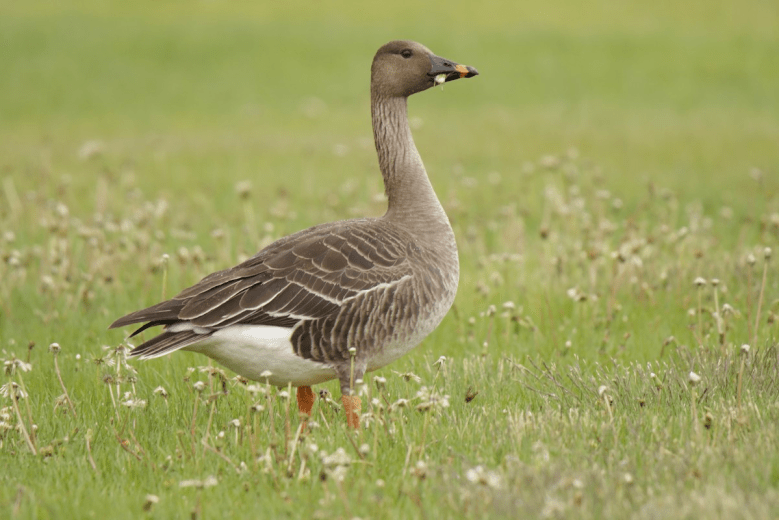
Lander resident Frank Stetler was driving eastbound over the Boysen Reservoir bridge in mid-May when he got a call from a fellow serious bird nerd.
“He was like, ‘Where are you right now? You should really consider making your way to Casper,’” recalled Stetler, a nongame biologist with the Wyoming Game and Fish Department.
Excellent timing. Already on his way to Casper for fieldwork, Stetler jumped on his friend’s tip of an especially rare bird sighting. A tundra bean goose — a species that’s typically at home in Northern Europe and Siberia — was kicking it with native feathered friends in urban Natrona County.
“It was just hanging out in the park with some Canada geese and a turkey eating dandelions,” Stetler said.
The Game and Fish biologist made it in time to savor what’s called an “accidental” or “vagrant” species, describing the biological phenomenon of birds that head in unexpected directions. Entire books have been devoted to the topic.
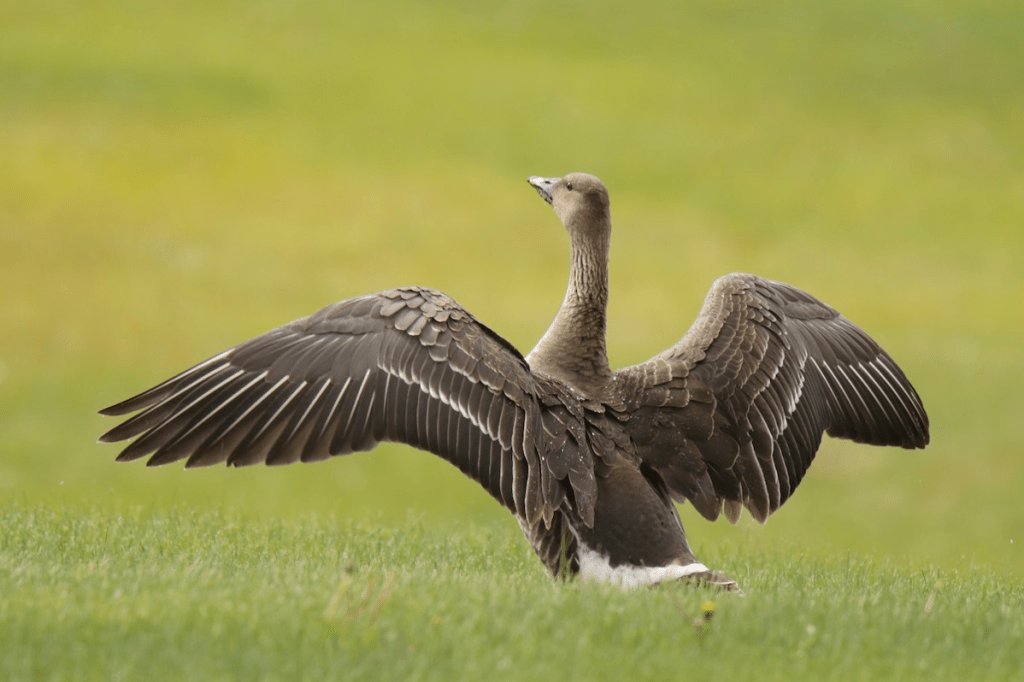
Stetler only has hunches about what sent the Casper bean goose to the opposite side of the Pacific Ocean. But based on its condition — no leg bands and intact wing and tail feathers — the past chair of the Wyoming Birds Records Committee was confident it was a wild bird.
“It probably ended up with either a Canada goose or gray- or white-fronted goose flock,” he said. “My guess would be, by way of Alaska, it got mixed up and then moved with the flock.”
The May 19 sighting marked the first time on record that a vagrant tundra bean goose had ever been observed in Wyoming.
Reasons for vagrancy are many. Aberrant weather patterns, powerful storms like hurricanes, wildfires and changes in food availability can all cause “accidental” birds to fly to unusual haunts, Stelter said.
“Sometimes they’ll migrate in the opposite direction,” he said.
Other times, they get human assistance, like an accidental ride on an oceanliner or even an RV. Another theory is that vagrancy is necessary for species survival.
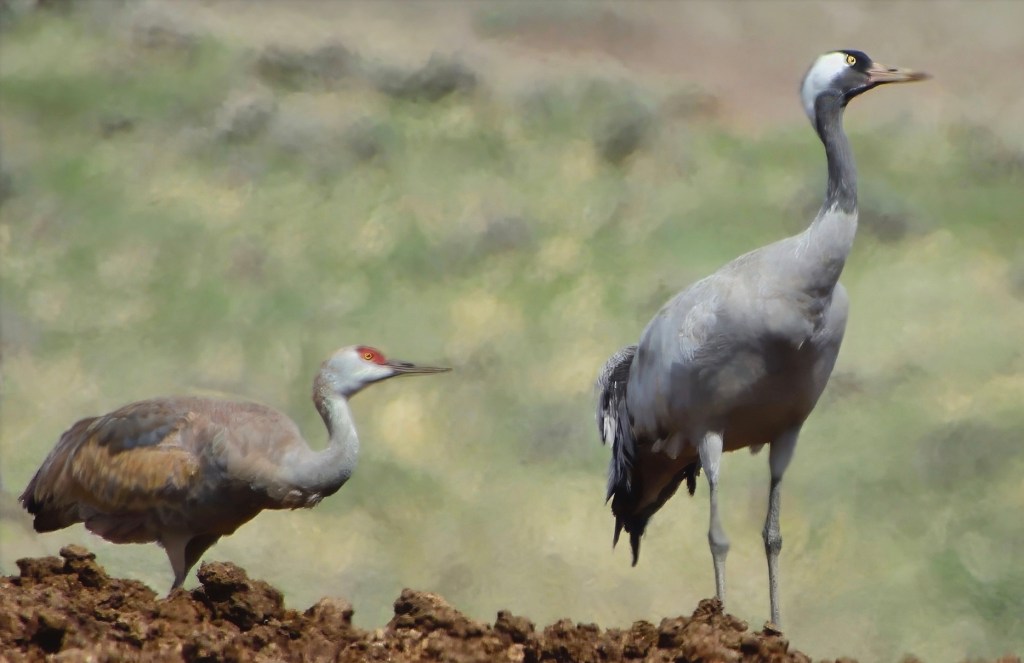
For whatever reason, Wyoming was the recipient of an unusually high number of vagrant birds this year. Typically, there are two or three a year, but Stetler’s aware of five documented during the spring migration alone.
A common crane — another Eurasian visitor — kicked off this year’s list after being photographed outside of Sheridan. A handful of birders reported the sighting, according to eBird, a global database of bird observations.
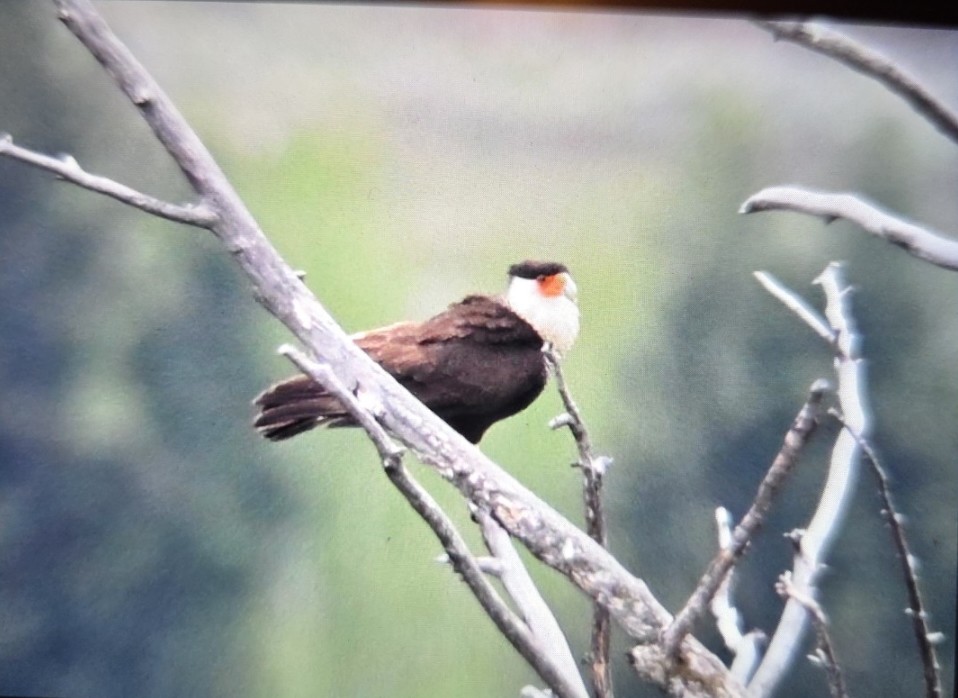
Then came the bean goose a few weeks later. The next odd-for-Wyoming sighting followed the next day. A Yellowstone National Park visitor photographed a crested caracara in Lamar Valley.
That’s a unique-looking falcon, typically at home in Central and South America, that has a particular knack for vagrancy, according to TikToker birdman222.
Stetler suspects the caracara was an Equality State denizen for some time.
“A guy sent me cell phone pictures of a caracara outside of Farson. I want to say it was in February,” he said. “The chances of that bird being the same bird that ended up further north are super likely.”
Songbirds round out Wyoming’s list of 2025 accidentals.
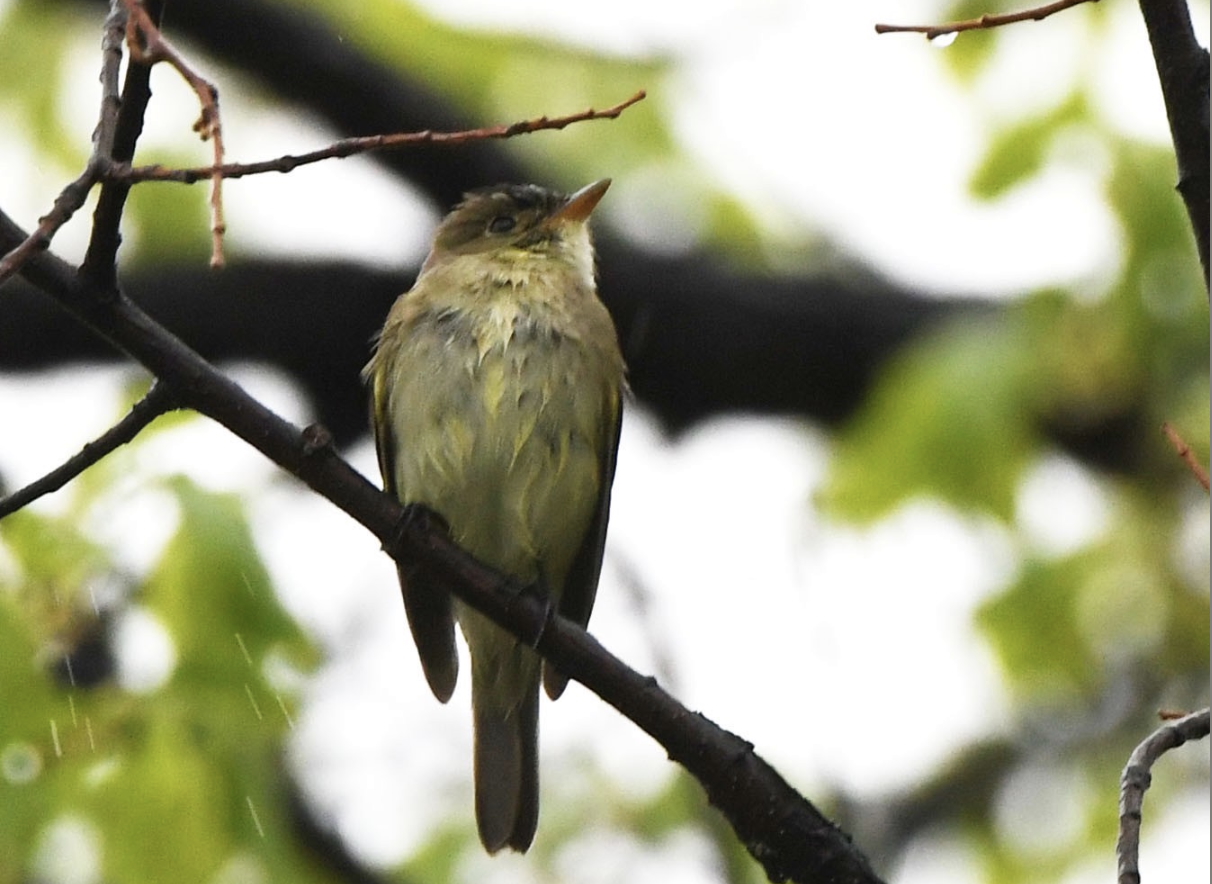
In late May, a yellow-bellied flycatcher was photographed in Goshen County. That’s a boreal forest dweller that typically migrates through the continental United States well to the east, distribution maps show. It was the first of its kind ever officially documented in Wyoming, according to observers.
Then in the closing days of May came a Grace’s warbler, spotted just south of Casper foraging in Ponderosa pine and tussling with Audubon’s warblers, its observers reported.

That mature pine-dependent bird is usually at home in the southwest U.S. down to Nicaragua — and it’s slipping into a concerning decline, according to the Cornell Lab of Ornithology.
Stetler sought out the Grace’s warbler while he was in Casper, but no dice. He did, however, see the bean goose at the city park — just in the nick of time.
“It was a one-day wonder,” Stetler said. “We had a big storm come over, and then no one saw it after that.”

Nice article and great salute to a new Giant in birding for the state.. Frank Stetler
Long tailed Jaeger yesterday 16 at Ocean Lake and an outstanding Curlew Sandpiper at Goldeneye Reservoir today near Casper hope Frank and others got to see it.. Ron Horn got fine fotos of each bird