

Shepherds, often of Mexican, Basque, Greek or Irish descent, have long spent summer months high in Wyoming’s mountains, their only company the animals they are tasked to steward.
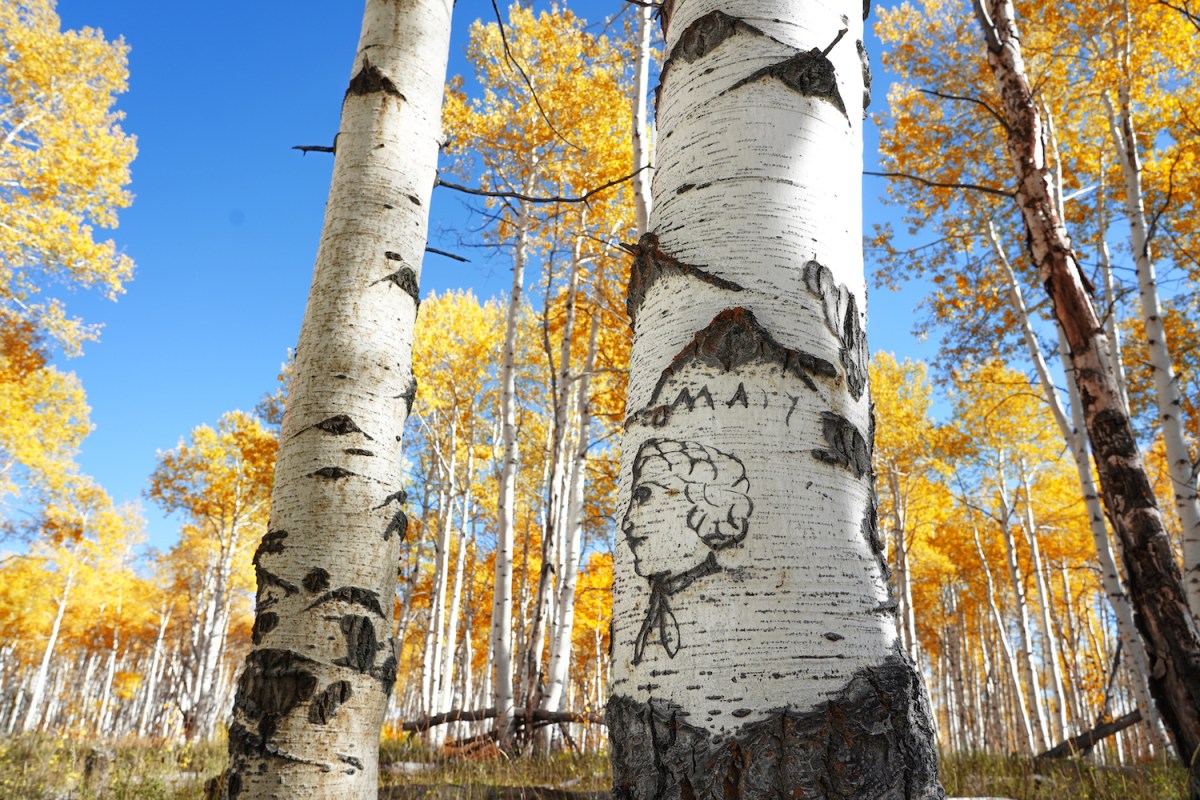
In the 19th and 20th centuries, many left their marks on the bark of aspen trees as they traveled through, and camped in, groves accompanied by herds of hundreds or thousands of sheep. Their etchings, often depicting women, hometowns, religious symbols and loved ones’ names, are known as arborglyphs.
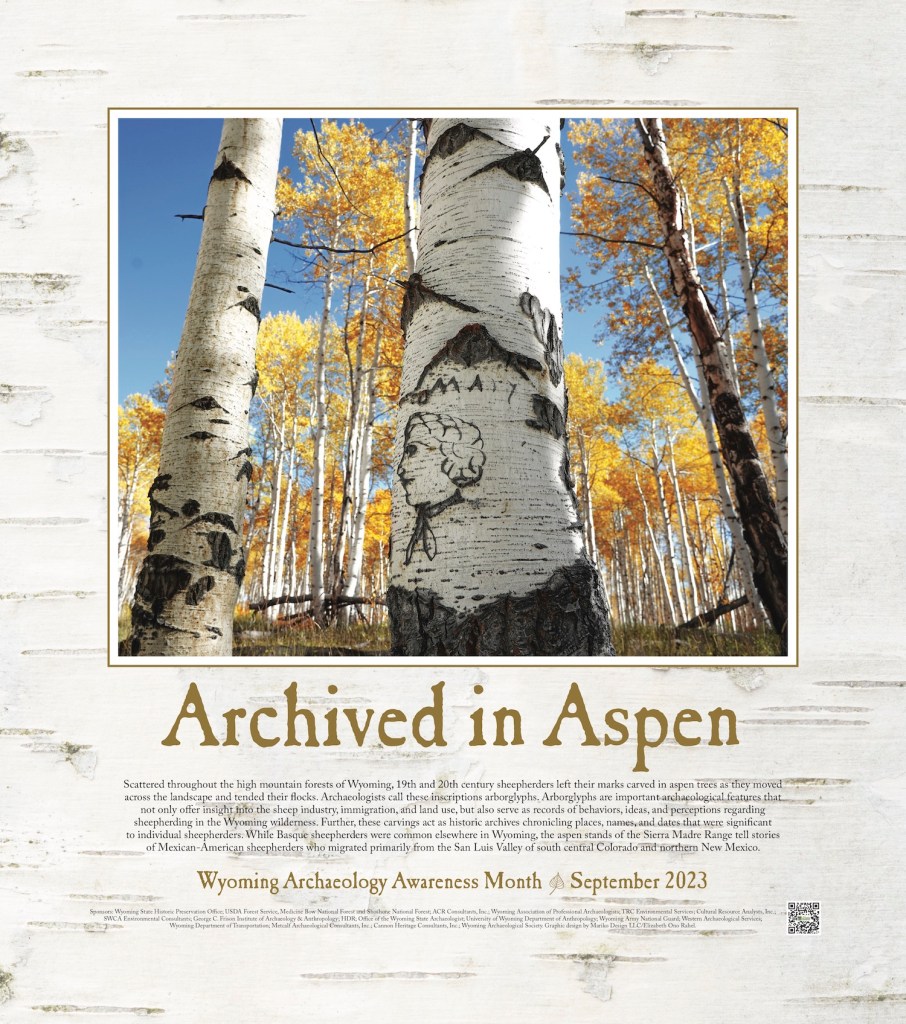
Arborglyphs are important archaeological features for their insights and records into the sheep industry, immigration and land use, according to Wyoming Archaeology, which featured an image of one such glyph in its 2023 annual poster. The etching of a woman with a scarf tied around her neck was found in the Sierra Madre Range.
While Basque shepherds were common elsewhere in Wyoming, the aspen stands of the Sierra Madres tell stories of Mexican-American sheepherders who migrated primarily from the San Luis Valley of south-central Colorado and northern New Mexico, according to Wyoming Archaeology. Some of the oldest arborglyphs in the region date to the early 1900s.
Wyoming’s poster is currently a contestant in the annual Society for American Archaeology State Archaeology Celebration Poster contest. Wyoming has participated in the contest since its inception in 1996 and has been a formidable contender. Of the state’s 27 submissions, 12 have received first prize, eight have received second prize, and five have received third prize.
There are a couple reasons why the state has done so well, according to archaeologist Gwendolyn Kristy with the Wyoming State Historic Preservation Office. The first is longstanding financial support for the poster program, she said. The second stems from the state’s abundance of intact or well-preserved sites.
“Wyoming has really incredible archaeological resources,” Kristy said.
People can vote for the poster until April 19. It’s also available for free from the historic preservation office.

May grandfather Manuel de Atocha Quintana, his brother Eliu Quintnana and nephew Alfares Quintana from Llano de San Juan, Taos County, New Mexico, USA were sheepherders near Green River, Wyoming around 1938.
This was an incredibly interesting piece of history. Thank you!
Good luck on the contest! We have a project called Following the Manito Trail, where our producer Adam Herrera made a video about Wyoming arborglyphs – you can check it out here ! https://youtu.be/C5LXsSwhfuQ?si=rrzlY3GnT2lyl_xK
The herders from southern Colorado and northern New Mexico were not Mexican, they were from old Hispanic settlements in the region. A subtle but important difference. Many people from those communities also came to Wyoming to work on railroads and in the sugar beet industry, and their descendants still live here.
Thank you for that distinction, Andrea!
Sheep was excellent fire suppression as well.